
Every rugby match brings moments of high tension, but few are as significant as the conversion kick. After a try is scored, the conversion can mean the difference between a win and a draw. For many fans and new players, the conversion kick can seem confusing.
But once you understand its rules and strategy, it becomes one of the most exciting parts of rugby.
What Is A Conversion Kick?
A conversion kick is a scoring opportunity in rugby union and rugby league. It happens right after a try is scored. The team that scored the try gets a chance to add extra points by kicking the ball between the goalposts and over the crossbar.
This kick is not just a bonus—sometimes, it decides who wins. In tight games, a successful conversion can turn the scoreboard and shift momentum.
How The Conversion Kick Works
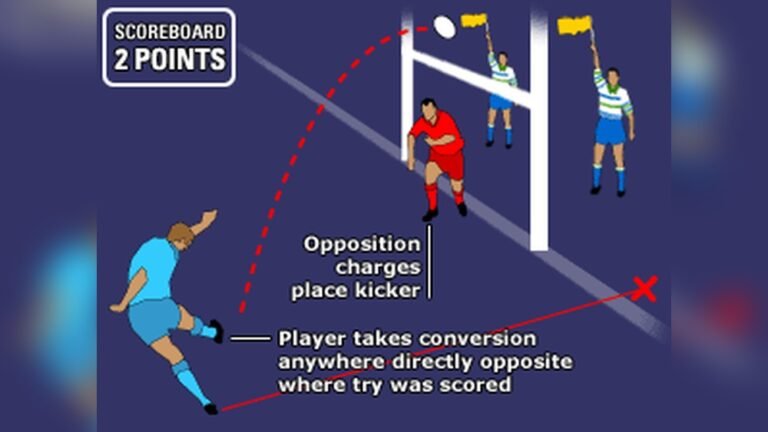
After a team scores a try (which gives 5 points in rugby union and 4 in rugby league), the referee gives them a chance to take a conversion kick. The kicker places the ball on the ground (on a tee or on sand), lines up with where the try was touched down, and aims to kick the ball through the posts.
The Conversion Kick Process
- The try is scored.
- The ball is brought out in line with where the try was touched down.
- The kicker sets up the ball at any distance back, on that line.
- The kicker attempts to kick the ball over the crossbar and between the uprights.
- If successful, the team is awarded extra points (2 points in both rugby union and rugby league).
Key Conversion Kick Rules
- The kick must be taken on a straight line from where the try was scored to the posts.
- The kicker can choose how far back to place the ball.
- The defending team cannot try to block the kick.
- The kick must be taken within a set time limit (usually 90 seconds in rugby union).
Why Conversion Kicks Matter
Conversion kicks might seem simple, but they are often game-changers. In the 2015 Rugby World Cup, New Zealand’s Dan Carter kicked 19 conversions and helped his team win the title. In close matches, teams remember missed conversions more than missed tries.
A successful conversion can:
- Extend the lead and make the opponent chase harder.
- Change team strategy—sometimes a coach will ask for tries to be scored closer to the posts to make the conversion easier.
- Boost morale by rewarding the scoring team with extra points.
Types Of Kicking Techniques
Players use different techniques for conversion kicks. The most common are:
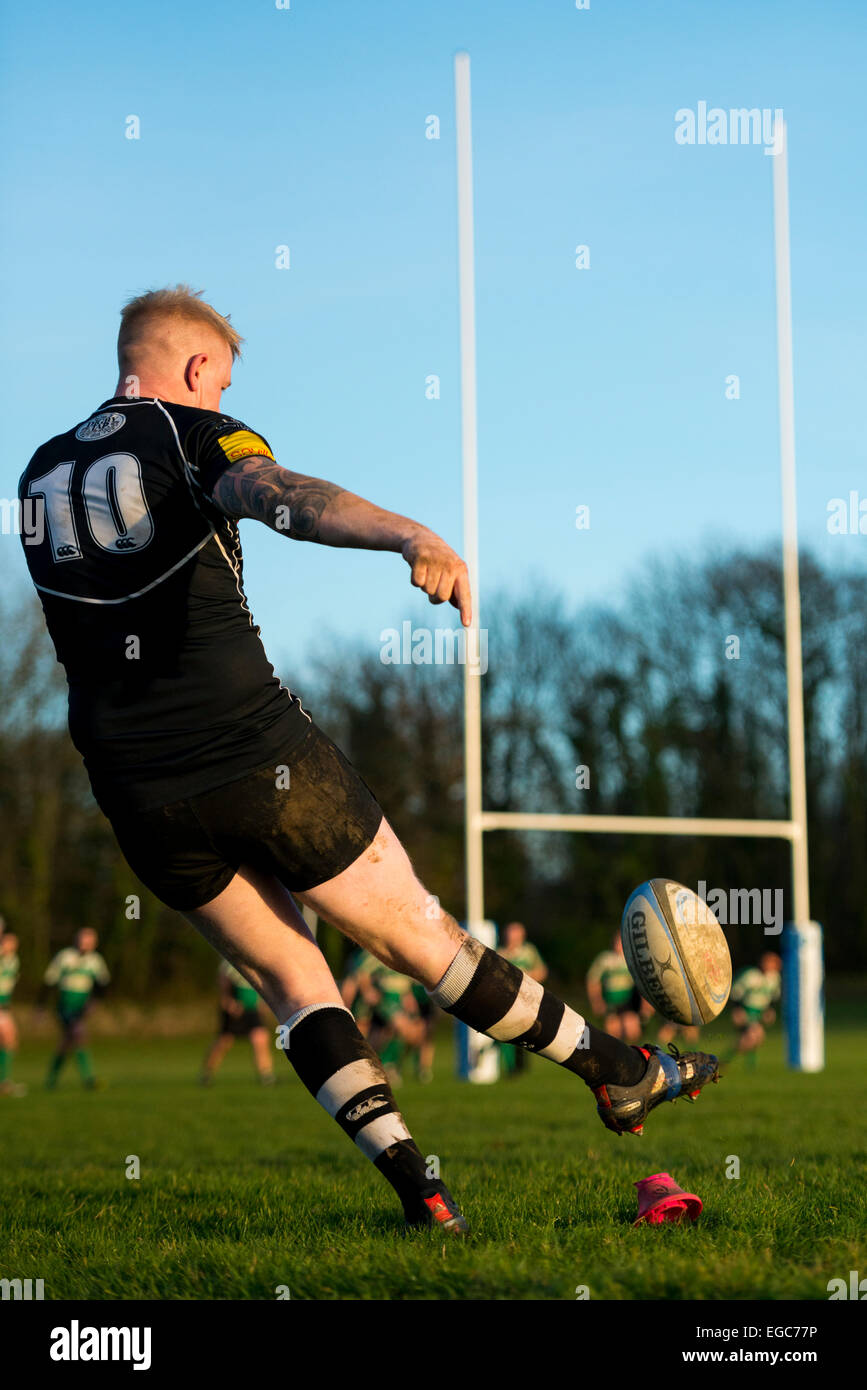
- Place Kicking: The ball is placed on a tee or mound, and the kicker takes a run-up to strike it.
- Drop Kicking: Less common for conversions, but used in some situations (like in rugby sevens).
Most professional kickers prefer place kicking, as it gives more control and power.

Comparison: Rugby Union Vs Rugby League Conversion Kicks
The rules for conversion kicks are similar in both codes, but there are some small differences.
| Feature | Rugby Union | Rugby League |
|---|---|---|
| Points for Try | 5 | 4 |
| Points for Conversion | 2 | 2 |
| Ball Placement | In line with try, any distance back | In line with try, any distance back |
| Time Limit | 90 seconds | 60 seconds |
Factors Affecting Success
Not all conversion kicks are equally difficult. Here are some factors that make a difference:
- Angle: A try scored near the touchline makes for a sharp angle and a tougher kick.
- Distance: The kicker chooses how far back to set the ball. Some prefer a longer run-up, others a shorter one.
- Wind and Weather: Rain, wind, or muddy ground can make the ball harder to kick accurately.
- Pressure: In a close game, nerves can affect even the best kickers.
Real-world Example
Imagine a rugby union game. Team A scores a try in the corner. Their kicker sets up the ball 25 meters out but at a sharp angle. The crowd is silent. The kicker steps up, swings his leg, and the ball sails just inside the post—two more points.
In another match, a kicker misses two conversions, and their team loses by three points. Those missed kicks can haunt a player for years.
Common Mistakes And Insights
Many beginners believe the closer you are to the posts, the easier the kick. But angle matters as much as distance. A short, sharp-angle kick can be harder than a longer, straight kick.
Another insight: the kicker’s routine is crucial. Top kickers practice their run-up and mental focus, repeating it every time. Small changes in footing or wind can make a big difference.

Conversion Success Rates
At the professional level, the average conversion rate is about 75-80%. The best kickers, like Owen Farrell or Leigh Halfpenny, succeed over 85% of the time.
Success rates drop sharply for wide-angle kicks:
| Angle from Posts | Success Rate |
|---|---|
| Straight in front | 90% |
| Mid-range angle | 75% |
| Near touchline | 50% |
The Role Of The Kicker
Teams often select a specialist kicker, usually a fly-half or fullback. The kicker practices for hours, mastering not just power but also accuracy and consistency. A reliable kicker is a huge asset for any team.
Training Tips For Conversion Kicks
- Practice from different angles: Most tries are not scored in front of the posts.
- Develop a set routine: Consistency helps under pressure.
- Work on mental focus: Pressure kicks are as much about the mind as the body.
- Adjust for weather: Learn how to kick in wind and rain.
- Film your kicks: Watching your technique can reveal mistakes.
Impact On Match Strategy
Teams sometimes try to score closer to the posts to help their kicker. In some cases, players will run an extra few meters to ground the ball closer to the center. Coaches analyze opponents’ kickers and may plan their defense to make conversions more difficult.
Famous Conversion Kicks
Some conversion kicks are legendary. In the 2003 Rugby World Cup final, Jonny Wilkinson’s kicks helped England win in extra time. In the 2019 final, South Africa’s Handré Pollard kicked crucial conversions under pressure. These moments show the high stakes and drama of the conversion kick.
Frequently Asked Questions
What Happens If A Conversion Kick Misses?
If the conversion kick is missed, no extra points are awarded. The game restarts with a kickoff.
Is There A Difference Between A Penalty Kick And A Conversion Kick?
Yes. A penalty kick is awarded for a foul, while a conversion kick follows a try and is taken in line with where the try was scored.
Can Any Player Take The Conversion Kick?
Any team member can take the conversion kick, but usually the best kicker does it.
How Do Teams Choose Their Kicker?
Teams pick a specialist kicker based on accuracy and past success in practice and games.
Where Can I Find Official Rugby Rules For Conversions?
The official rules are published by World Rugby. You can read them at Wikipedia.
A conversion kick is more than just a chance for extra points—it’s a test of skill, nerve, and preparation. Understanding its importance helps you appreciate the drama of rugby and the pressure every kicker faces. Whether you’re a player or a fan, the next time you see a conversion, you’ll know just how much is at stake.
