Ice hockey is one of the fastest and most exciting sports in the world. The combination of speed, skill, and strategy makes it thrilling to watch and challenging to play. For beginners, the rules may seem confusing at first. But once you understand the basic structure, you can follow the action easily and enjoy the game even more.
This guide will break down the basic rules of ice hockey. You’ll learn how the game is played, what the main penalties are, and key terms every fan should know. By the end, you’ll have a clear understanding of the sport—whether you want to play, watch, or just join a conversation about hockey.
Objective And Team Structure
The main goal of ice hockey is simple: score more goals than the opposing team. Players use a stick to hit a small rubber puck into the other team’s net. The team with the most goals when time runs out wins.
Each team has six players on the ice at a time:
- 1 goaltender (goalie)
- 2 defensemen
- 3 forwards (left wing, center, right wing)
Teams can substitute players during play, which keeps the game fast and intense.
Rink And Game Layout
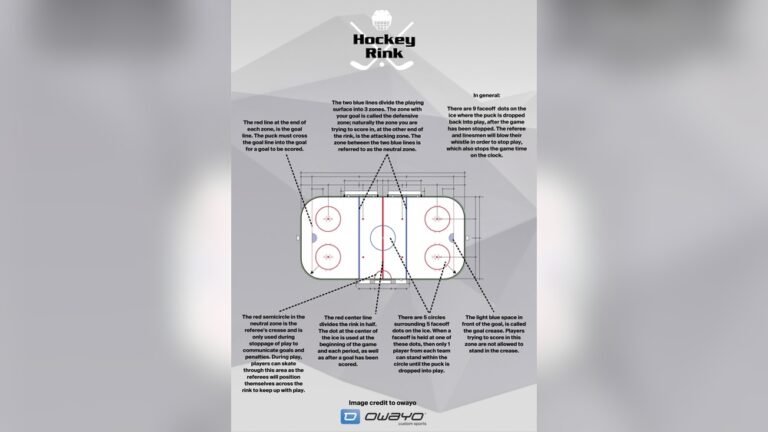
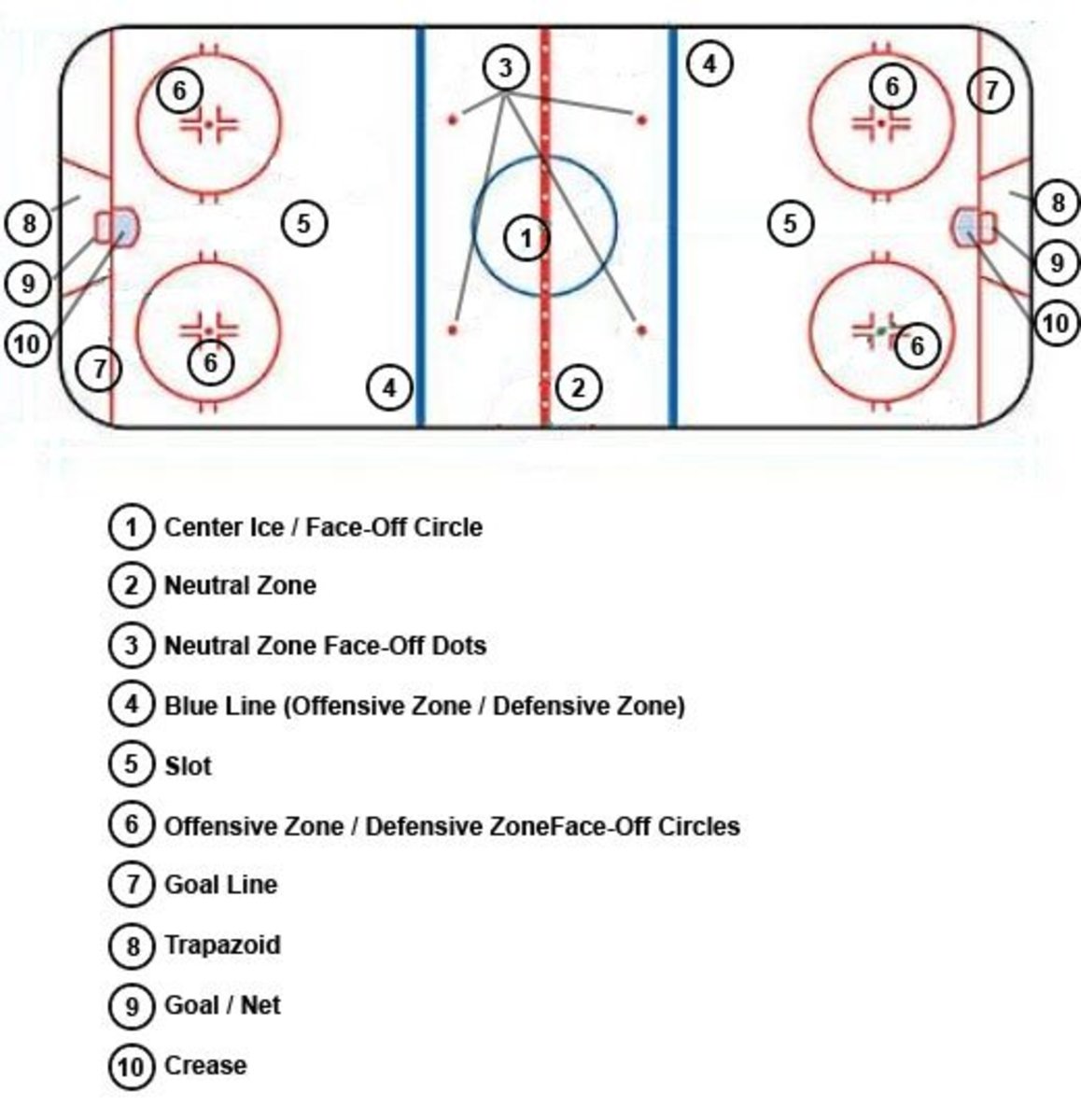
Ice hockey is played on a rectangular rink. The rink has several important areas:
- Center ice: Where play starts and restarts
- Goal creases: Areas in front of each goal that protect the goalie
- Blue lines: Divide the rink into three zones—defensive, neutral, and attacking
Games are played in three periods, each lasting 20 minutes. If the score is tied after three periods, overtime or a shootout can decide the winner, depending on league rules.
Ice Hockey Rink Dimensions
To give you a clearer idea, here’s how a standard NHL rink compares to an international rink:
| Rink Type | Length | Width |
|---|---|---|
| NHL (North America) | 200 feet (61 m) | 85 feet (26 m) |
| International | 197 feet (60 m) | 98.4 feet (30 m) |
Starting Play And Faceoffs
Every ice hockey game begins with a faceoff at the center of the rink. A faceoff is when two players face each other and the referee drops the puck between their sticks. Faceoffs also restart play after stoppages.
Faceoffs can happen at nine different points on the ice. The location depends on why play was stopped.
Scoring A Goal
A team scores a goal when the puck crosses the goal line between the goalposts and under the crossbar. The puck must be hit with the stick, not kicked, thrown, or carried into the net.
Sometimes, goals are reviewed using video to make sure the puck fully crossed the line and no rules were broken.
Offside Rule
The offside rule stops players from gaining an unfair advantage. A player is offside if both skates cross the opponent’s blue line before the puck does. If this happens, play is stopped, and a faceoff happens in the neutral zone.
Some beginners get confused because a player can skate backwards into the zone if they have the puck, but not without it.
Icing Rule
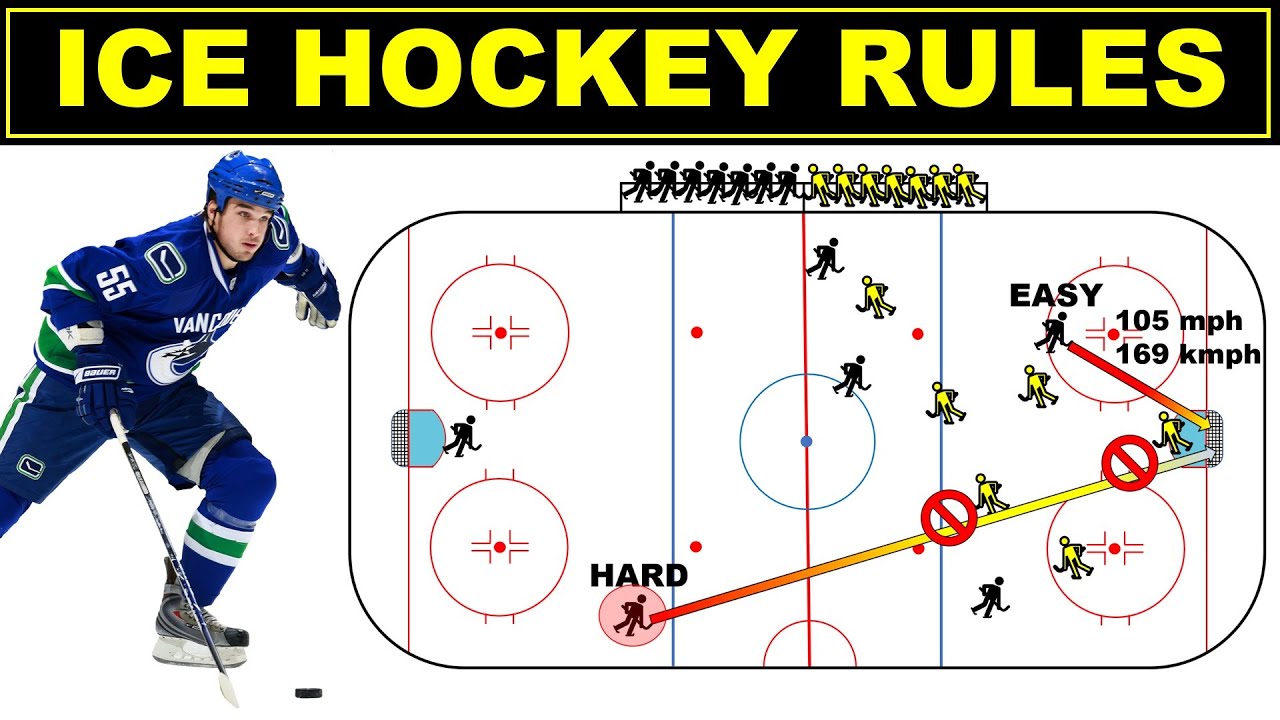
Icing is when a player shoots the puck from their side of the center red line across the opponent’s goal line without it touching another player. When icing happens, play is stopped and the puck returns to the defending end for a faceoff.
Icing is meant to keep teams from just dumping the puck down the ice to waste time or relieve pressure. There are exceptions, such as when a team is short-handed (killing a penalty).
Penalties And Power Plays
If a player breaks a rule, they get a penalty. Most common penalties are minor (2 minutes), but major penalties (5 minutes) are given for serious actions like fighting.
When a player gets a penalty, they go to the penalty box and their team plays short-handed. The other team gets a power play, which gives them a better chance to score.
Common Penalties
Here are some typical penalties and their meanings:
| Penalty | Description | Penalty Time |
|---|---|---|
| Tripping | Using the stick or body to make an opponent fall | 2 minutes |
| Hooking | Using the stick to slow or stop an opponent | 2 minutes |
| Slashing | Swinging the stick at an opponent | 2 minutes |
| Fighting | Engaging in a physical fight | 5 minutes |
Player Positions And Roles
Understanding the main positions helps you see how teams work together:
- Goaltender: Protects the net and blocks shots.
- Defensemen: Stop the opposing team’s attacks and help move the puck forward.
- Forwards: Create scoring chances and try to score goals.
Each role is important, and successful teams rely on all players to contribute.
Substitutions And Line Changes
Unlike many sports, ice hockey allows unlimited substitutions during play. Players change “on the fly” without waiting for a stoppage. This keeps the game moving quickly.
A typical player shift lasts about 45 seconds to 1 minute because of the high intensity. Knowing when to change lines is a key part of the game’s strategy.
Overtime And Shootouts
If the game is tied at the end of regulation, extra time is played:
- Overtime: Usually 5 minutes, sudden death (first goal wins), often with fewer players (3-on-3).
- Shootout: If still tied, teams take penalty shots one-on-one with the goalie.
Different leagues have their own rules for overtime and shootouts.
Equipment And Safety
Players need special equipment for protection:
- Helmet with face shield or cage
- Shoulder pads
- Elbow pads
- Gloves
- Padded shorts
- Shin guards
- Skates
- Stick
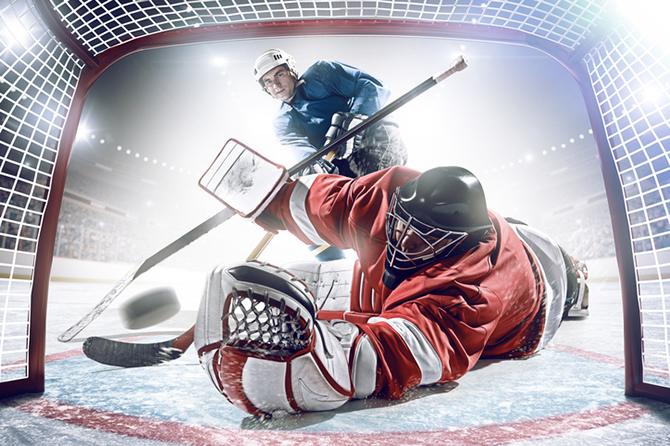
The goaltender wears extra gear, including a chest protector, larger pads, and a special mask.
Skating is a skill that takes time to learn. Beginners often forget that strong skating and balance are just as important as stick skills.
Key Insights For Beginners
Many new fans miss these details:
- Puck Movement: The puck can move faster than players. Teams use quick passes to outsmart opponents, not just skate fast.
- Line Changes: Poor timing on substitutions can leave a team vulnerable, creating scoring chances for the other side.
Understanding how penalties affect the flow of the game is also crucial. Power plays often decide close games, so watching how teams handle these situations can help you appreciate the strategies involved.
Comparing Ice Hockey To Other Sports
Here’s a look at how ice hockey compares with soccer and basketball regarding team size, game duration, and substitutions:
| Sport | Players on Field/Ice | Game Duration | Substitutions |
|---|---|---|---|
| Ice Hockey | 6 per team | 3 x 20 min periods | Unlimited, anytime |
| Soccer | 11 per team | 2 x 45 min halves | Limited, only at stoppages |
| Basketball | 5 per team | 4 x 12 min quarters | Unlimited, only at stoppages |
Frequently Asked Questions
What Is The Most Common Penalty In Ice Hockey?
The most common penalty is tripping, where a player uses their stick or body to make another player fall. Tripping usually results in a 2-minute minor penalty.
How Many Periods Are There In An Ice Hockey Game?
There are three periods in a standard game, each lasting 20 minutes.
Can Players Use Their Hands To Play The Puck?
Players can use their hands to catch or knock down the puck, but they cannot hold, throw, or pass it to a teammate. Only the goalie can use their hands freely in the goal crease.
What Happens If The Puck Leaves The Rink?
If the puck leaves the ice, play is stopped, and a faceoff occurs at the nearest faceoff spot, unless a player shot it out of play from their defensive zone—then a penalty may be called.
Where Can I Find The Official Rules Of Ice Hockey?
You can read the full official rules at the National Hockey League (NHL) Official Rules page.
Ice hockey’s basic rules are simple once you get to know them. Watching games and learning the terms will help everything make sense. The fast pace, skillful play, and unique strategies make it a sport that’s both fun to follow and rewarding to play.
Whether you’re on the ice or cheering from the stands, knowing the basics will help you enjoy every moment.
