

Tennis is fast, exciting, and full of intense action. Whether you play for fun or compete seriously, one thing is clear: tennis puts a lot of stress on the body. Players jump, sprint, twist, and swing repeatedly. These movements test your strength, speed, and coordination. But they also increase the risk of injury. Knowing about common tennis injuries can help you stay safe, play longer, and improve your performance. In this article, you’ll learn about the most frequent injuries in tennis, why they happen, how to spot them, and what you can do to prevent them.
Why Are Tennis Injuries So Common?
Tennis is a sport that combines quick stops, sharp turns, and repetitive arm movements. Every stroke, from a powerful serve to a tricky volley, uses many muscle groups. Players often practice for hours, repeating the same actions. The court surface can be hard, and matches may last for hours without much rest. All these factors lead to stress and small injuries building up over time.
Research shows that between 21% and 49% of tennis players get injured each year. The most affected areas are the shoulder, elbow, wrist, knee, ankle, and lower back. Some injuries happen suddenly (acute injuries), while others develop slowly (overuse injuries).
Most Common Tennis Injuries
Below, you’ll find the main injuries tennis players face. Each injury is explained in simple terms, with symptoms, causes, and prevention tips.
1. Tennis Elbow (lateral Epicondylitis)
Tennis elbow is the classic tennis injury. It affects the outside of the elbow, causing pain and weakness.
- Symptoms: Pain on the outer elbow, weak grip, pain when lifting or twisting.
- Why it happens: Repeated backhand swings put stress on the forearm muscles and tendons. Over time, small tears form.
- Prevention: Use proper technique, avoid gripping the racket too tightly, and strengthen your forearm muscles.
Many people think only professionals get tennis elbow, but beginners are at risk too. Using the wrong racket size or poor form increases your chances.
2. Rotator Cuff Injuries
The rotator cuff is a group of muscles and tendons that stabilize the shoulder. Injuries here are common in tennis, especially with overhead shots.
- Symptoms: Shoulder pain, weakness, trouble lifting the arm, clicking sounds.
- Causes: Repetitive serving, smashing, and overhead strokes. Poor warm-up and muscle imbalance also play a role.
- Prevention: Strengthen shoulder muscles, stretch before playing, and avoid overtraining.
Ignoring shoulder pain can make the problem worse. Early treatment leads to faster recovery.
3. Wrist Sprains And Tendinitis
The wrist absorbs a lot of force with each shot. Wrist sprains and tendinitis are frequent in tennis, especially for those who use heavy topspin.
- Symptoms: Pain, swelling, and reduced movement.
- Causes: Forceful wrist movements, sudden twists, or falling on the hand.
- Prevention: Use the correct grip, don’t over-bend the wrist, and rest if you feel pain.
A weak or tired wrist is easier to injure, so regular strengthening exercises matter.
4. Ankle Sprains
Running, stopping, and changing direction quickly puts pressure on the ankles. Ankle sprains are among the most common injuries in all court sports, including tennis.
- Symptoms: Swelling, bruising, pain, and trouble walking.
- Causes: Landing awkwardly, slipping, or rolling the ankle during a quick change of direction.
- Prevention: Wear supportive shoes, do balance training, and always warm up.
Not all sprains are the same. A severe sprain may need weeks to heal, so never play through serious ankle pain.
5. Knee Injuries
The knee takes a beating in tennis due to sudden starts, stops, and pivots. Common knee injuries include patellar tendinitis (jumper’s knee), meniscus tears, and ligament sprains.
- Symptoms: Pain around the kneecap, swelling, stiffness, clicking, or locking.
- Causes: Repetitive jumping, abrupt stops, or twisting the knee unnaturally.
- Prevention: Strengthen leg muscles, improve flexibility, and wear proper shoes.
Knee pain that doesn’t go away should be checked by a doctor. Playing with an injured knee can make things worse.
6. Calf Strains
The calf muscles help you sprint and move quickly on the court. A strain happens when you overstretch or tear these muscles.
- Symptoms: Sudden pain, swelling, and difficulty walking or running.
- Causes: Explosive movements, not warming up, or playing while tired.
- Prevention: Warm up properly, stretch your calves, and avoid overexertion.
Older players are at higher risk, especially if they skip stretching.
7. Achilles Tendinitis
The Achilles tendon connects your calf muscles to your heel. In tennis, repeated jumping and running stress this tendon.
- Symptoms: Heel pain, swelling, stiffness, and tenderness.
- Causes: Overuse, sudden increases in playing time, or tight calf muscles.
- Prevention: Stretch calves and Achilles regularly, wear supportive shoes, and increase activity gradually.
If ignored, Achilles tendinitis can lead to a rupture, which needs surgery.
8. Lower Back Pain
Tennis involves twisting, bending, and reaching. This puts strain on the lower back.
- Symptoms: Dull or sharp pain in the lower back, stiffness, pain when bending or twisting.
- Causes: Poor core strength, bad posture, or sudden movements.
- Prevention: Strengthen core muscles, keep good posture, and avoid over-rotating during strokes.
Most back pain improves with rest and stretching, but persistent pain may point to a more serious issue.
9. Muscle Strains
Any muscle can be strained, but in tennis, the hamstrings, quadriceps, and groin are most at risk.
- Symptoms: Sudden pain, swelling, bruising, and limited movement.
- Causes: Quick sprints, lunges, or overstretching.
- Prevention: Warm up, cool down, and stretch regularly.
A common beginner mistake is not cooling down after play. This increases the risk of muscle strains.
10. Blisters
Blisters form from friction between your skin and shoes or racket grip.
- Symptoms: Painful, fluid-filled bubbles on the hands or feet.
- Causes: Ill-fitting shoes, sweaty socks, or gripping the racket too tightly.
- Prevention: Wear proper socks, use moisture-wicking materials, and check your grip size.
Blisters may seem minor but can become infected if not cared for.
11. Stress Fractures
A stress fracture is a tiny crack in the bone, often caused by overuse.
- Symptoms: Gradual pain that worsens during activity, swelling, tenderness.
- Causes: Repetitive impact, sudden increases in training, or weak bones.
- Prevention: Avoid overtraining, eat a balanced diet, and cross-train with other activities.
Teenage players are more at risk, especially during growth spurts.
12. Groin Pulls
The groin area is used during side-to-side movements. A groin pull is a strain of the inner thigh muscles.
- Symptoms: Pain in the inner thigh, swelling, bruising, and limited motion.
- Causes: Quick side steps, lunging, or sudden stretching.
- Prevention: Strengthen the groin muscles and always include side lunges in your warm-up.
Returning to play too soon can lead to repeat injuries.
13. Shoulder Impingement
This injury happens when the tendons in the shoulder rub against the bones.
- Symptoms: Shoulder pain, weakness, trouble reaching overhead.
- Causes: Repetitive overhead strokes, poor shoulder mechanics.
- Prevention: Strengthen and stretch the shoulder, avoid overplaying, and use correct technique.
Ignoring early signs can result in long-term damage.
14. Plantar Fasciitis
Plantar fasciitis is inflammation of the tissue on the bottom of the foot.
- Symptoms: Sharp heel pain, especially in the morning or after rest.
- Causes: Overuse, flat feet, wearing unsupportive shoes.
- Prevention: Stretch the feet and calves, use arch supports, and replace worn-out shoes.
This injury is common in players who spend a lot of time on hard courts.
15. Hamstring Injuries
The hamstring muscles help with explosive sprints and lunges.
- Symptoms: Sharp pain at the back of the thigh, swelling, bruising.
- Causes: Sprinting, sudden stops, or overstretching.
- Prevention: Warm up, stretch, and strengthen the hamstrings.
Hamstring injuries often recur if not fully healed.
16. Eye Injuries
Tennis balls can travel over 120 mph. If a ball or racket hits the eye, it can cause serious injury.
- Symptoms: Pain, swelling, blurry vision, redness.
- Causes: Getting hit by a ball or racket.
- Prevention: Always watch the ball, use protective eyewear if needed.
Eye injuries are rare but can be serious. Professional players sometimes wear sports goggles for extra safety.
17. Concussions
Though less common, head injuries can happen if a player falls or is struck by a ball or racket.
- Symptoms: Headache, confusion, dizziness, nausea, memory problems.
- Causes: Falls, collisions, or being hit by equipment.
- Prevention: Be aware of surroundings, avoid risky dives or jumps.
Immediate medical attention is needed for any suspected concussion.
18. Hip Injuries
The hip is involved in nearly every tennis move. Common injuries include labral tears and bursitis.
- Symptoms: Hip pain, stiffness, clicking, or locking.
- Causes: Repetitive twisting, lunging, or overuse.
- Prevention: Strengthen hip muscles, stretch, and avoid overplaying on hard courts.
Ignoring hip pain can lead to loss of mobility.
19. Finger And Hand Injuries
Fingers and hands are exposed during play and can get jammed, sprained, or cut.
- Symptoms: Pain, swelling, bruising, or reduced movement.
- Causes: Mishits, catching a finger in the racket, or falling.
- Prevention: Use proper grip, keep hands dry, and pay attention to technique.
Proper taping can protect vulnerable fingers.
20. Sunburn And Heat Illness
Tennis is mostly played outdoors. Sunburn and heat exhaustion are common, especially during summer tournaments.
- Symptoms: Red skin, pain, blisters, dizziness, headache, dehydration.
- Causes: Long exposure to sun, high temperatures, not drinking enough water.
- Prevention: Wear sunscreen, hats, light clothing, and drink plenty of fluids.
Heat-related problems can quickly become emergencies. Always listen to your body.
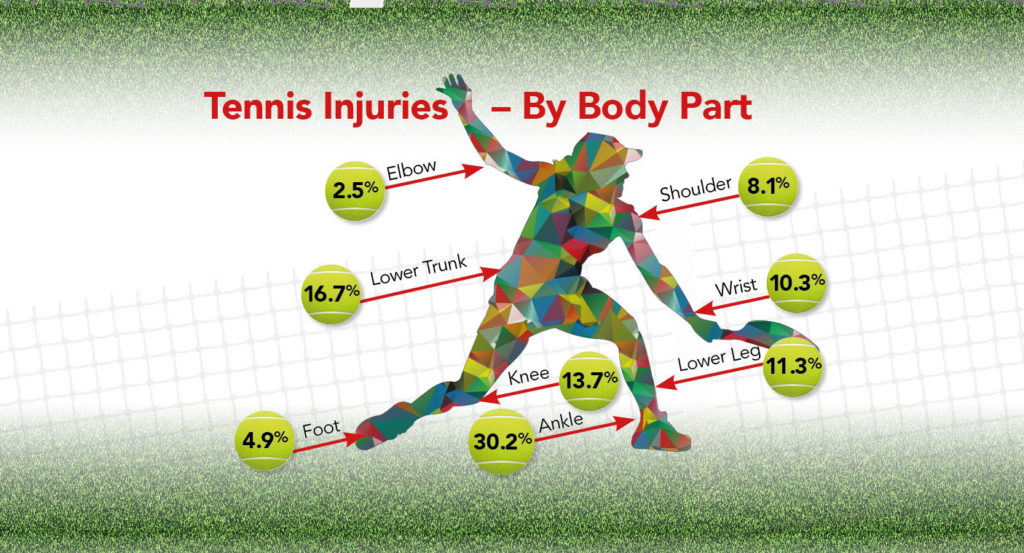
Injury Locations: A Visual Summary
The most frequent tennis injuries affect certain parts of the body more than others. This table shows the most common injury locations and their main causes:
| Body Part | Main Injuries | Main Causes |
|---|---|---|
| Elbow | Tennis elbow | Repetitive backhand, poor grip |
| Shoulder | Rotator cuff, impingement | Overhead strokes |
| Wrist | Sprains, tendinitis | Heavy topspin, sudden twists |
| Knee | Tendinitis, meniscus tear | Sudden stops, pivots |
| Ankle | Sprains | Quick direction changes |
| Lower Back | Strains | Twisting, poor core strength |
Acute Vs. Chronic Tennis Injuries
Tennis injuries can be divided into two main types:
| Injury Type | Description | Examples |
|---|---|---|
| Acute | Happens suddenly, often from a single event | Ankle sprain, muscle tear, eye injury |
| Chronic | Develops over time from repeated stress | Tennis elbow, rotator cuff tendinitis, stress fracture |
Acute injuries need immediate care to prevent more damage. Chronic injuries often start as mild pain but can become serious if ignored.

Who Is Most At Risk?
Certain groups have a higher risk of injury:
- Beginners – They may use poor technique or equipment.
- Older players – Aging muscles and joints are less flexible.
- Children and teens – Their bodies are still growing, making some injuries more likely.
- Competitive players – More hours on court means more stress on the body.
Younger players, for example, are more likely to suffer from growth plate injuries, while older players face more degenerative injuries like arthritis.
How To Prevent Tennis Injuries
Most tennis injuries can be avoided with the right approach. Here are key steps:
- Warm up and cool down: Spend at least 10 minutes warming up before playing and cooling down after.
- Use proper equipment: Rackets should fit your hand size and strength. Shoes must support your foot and ankle.
- Learn correct technique: Take lessons or watch experienced players to avoid bad habits.
- Build strength and flexibility: Focus on core, shoulder, and leg muscles.
- Don’t ignore pain: Stop playing if you feel pain. Early treatment prevents worse injuries.
- Rest and recover: Take breaks between games and avoid overplaying.
- Stay hydrated and protect from sun: Drink water and use sunscreen to prevent heat illness.
A common mistake is thinking you only need to train your arms for tennis. In reality, whole-body fitness is essential for injury prevention.
When To See A Doctor
Seek medical advice if:
- Pain is severe or lasts more than a few days
- There is visible swelling, bruising, or deformity
- You cannot move a joint or walk properly
- Symptoms get worse despite rest and care
Fast, proper treatment helps you return to the court sooner and reduces the chance of a repeat injury.
Real-world Examples
Top tennis stars have also battled injuries. For instance, Rafael Nadal has suffered from knee and wrist problems, while Serena Williams has dealt with ankle and knee issues. Their careers show that even the best players must manage injury risks carefully.
Studies show that players who skip warm-ups are twice as likely to get injured. And those who play on hard courts face more foot and knee injuries than players on clay or grass.
Practical Tips For Safe Tennis
- Change shoes every 6-12 months, or sooner if you play often.
- Add cross-training (like swimming or cycling) to reduce overuse.
- Listen to your body: Fatigue increases injury risk.
- Use ice or compression after long matches to reduce swelling.
- Consider seeing a sports physiotherapist for personalized advice.
Frequently Asked Questions
What Are The Signs That An Injury Is Serious?
Look for severe pain, swelling, bruising, inability to move a joint, or any deformity. If you cannot walk or use your arm normally, see a doctor immediately. Persistent pain or symptoms that do not improve with rest should also be checked by a healthcare professional.
How Long Should I Rest After A Tennis Injury?
The rest time depends on the injury type and severity. Minor strains may heal in a few days, while serious sprains or fractures can take weeks or months. Always follow your doctor’s advice. Trying to play too soon can lead to more damage and a longer recovery.
Can I Prevent Tennis Elbow With A Different Grip?
Yes, using the right grip size and technique can reduce stress on the forearm. Avoid gripping the racket too tightly and make sure your hand position is correct. If you’re unsure, ask a coach or specialist to check your grip.
Are Clay Courts Safer Than Hard Courts?
Clay courts are softer and reduce impact on the joints, so they may lower the risk of knee and ankle injuries. However, they can be slippery, which increases the chance of falls. Hard courts put more stress on the body but offer better traction.
Each surface has different risks.

Where Can I Find More Information About Sports Injuries?
A good place to start is the Wikipedia page on sports injuries, which covers many types of injuries, treatments, and prevention strategies.
Playing tennis is a great way to stay active and challenge yourself. Understanding the most common tennis injuries—and how to avoid them—will help you enjoy the game for years to come. Remember, a little preparation and attention to your body go a long way toward keeping you safe on the court.
Stay healthy, play smart, and keep having fun!
