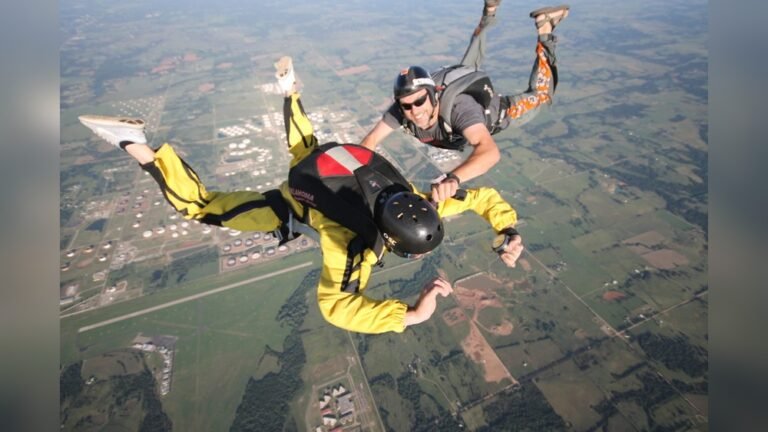
Skydiving is an adventure that mixes excitement, fear, and pure thrill. When you jump out of an airplane, you quickly realize that falling through the sky is not just about dropping straight down. The speed, the feeling, and the science behind it are fascinating.
Many first-time jumpers ask, “How fast do you fall when skydiving? ” The answer is not as simple as a single number. Your speed changes during the jump, and several factors affect how fast you fall. Understanding these details can help you enjoy the experience more and make safer choices in the sky.
The Basics Of Freefall Speed
The moment you jump from a plane, you start falling towards the earth. This falling motion is called freefall. In the first few seconds, your speed increases rapidly because of gravity. You may think you’ll keep getting faster and faster, but that’s not true. After a short while, your speed stops increasing. This happens when the force of gravity pulling you down equals the force of air resistance pushing up. At this point, you reach what is called terminal velocity.
For most tandem skydivers (a beginner jumping with an instructor), terminal velocity is about 120 miles per hour (193 km/h). But this number can change depending on several factors.
What Is Terminal Velocity?
Terminal velocity is the fastest speed you reach while falling, when gravity and air resistance are balanced. It is different for every person and situation. The main things that affect terminal velocity are:
- Body position: How you hold your body in the air
- Weight: Your mass, including gear
- Clothing and gear: How much drag they create
- Air density: How thick or thin the air is, which changes with altitude and weather
Let’s look at these factors more closely.
How Body Position Changes Your Fall Speed
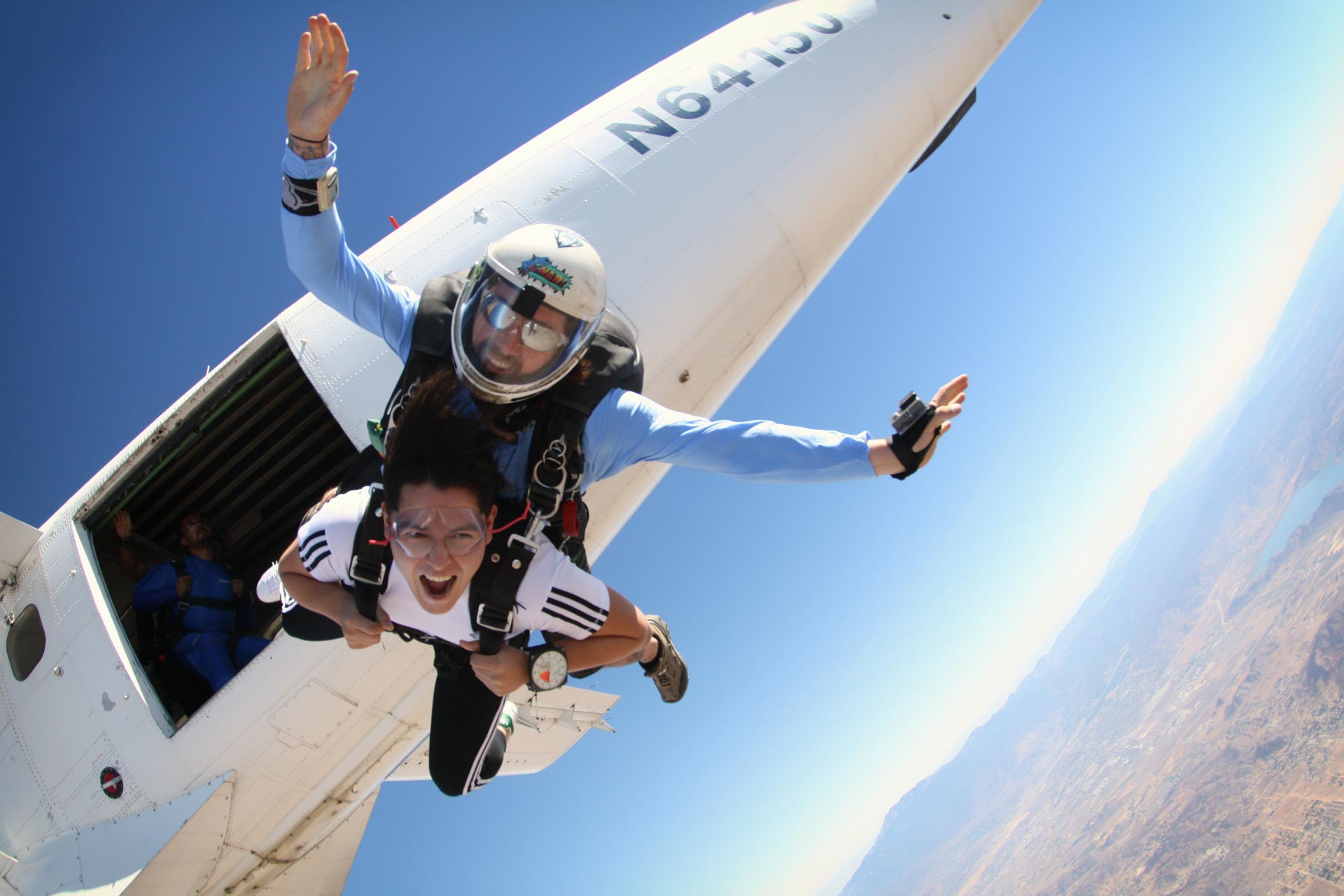
Your body shape in the air is one of the biggest reasons your speed changes. If you spread your arms and legs wide, you create more air resistance and fall slower. If you pull your arms and legs in tight, you become like a bullet and fall faster.
For example:
- Belly-to-earth position: This is the standard position for most skydivers. You lay flat, stomach facing the ground, arms and legs spread. Terminal velocity here is around 120 mph (193 km/h).
- Head-down position: Advanced skydivers sometimes dive headfirst. You have less surface area facing the air, so you fall much faster—often 150–180 mph (240–290 km/h).
- Sitting or stand-up position: These positions are between belly and head-down, with speeds around 140–160 mph (225–255 km/h).
This table compares typical freefall speeds for different positions:
| Body Position | Average Speed (mph) | Average Speed (km/h) |
|---|---|---|
| Belly-to-earth | 120 | 193 |
| Sit-fly / Stand-up | 140–160 | 225–255 |
| Head-down | 150–180 | 240–290 |
The Role Of Weight And Air Resistance
Heavier objects fall faster if shape and position are the same. This is because gravity pulls more strongly on them, but air resistance stays about the same. In skydiving, a heavier person in the same body position will reach a higher terminal velocity than a lighter person.
But the difference is not as big as you might think. Air resistance increases with speed, so a heavier person will reach a slightly higher speed before the forces balance.
Gear also adds weight and changes your shape. Large, loose jumpsuits create more drag and slow you down. Tight suits or small clothing let you fall faster. Some advanced jumpers use special suits to control their speed for group jumps or tricks.

How Air Density And Altitude Affect Speed
Air is thinner at higher altitudes. This means less air resistance, so you fall faster when you first jump out. As you get closer to the ground, the air gets thicker, and you slow down a little.
For example, if you jump from 13,000 feet (about 4,000 meters), your freefall starts in thinner air and is slightly faster at first. By the time you reach 5,000 feet (1,500 meters), the air is thicker and slows you down a bit.
Weather also plays a role. On hot days, the air is less dense, which makes you fall a little faster. On cold days, air is denser, and you may fall slightly slower.
Here’s a comparison of air density at different altitudes:
| Altitude (feet) | Approx. Air Density (kg/m³) | Effect on Fall Speed |
|---|---|---|
| 0 (sea level) | 1.225 | Slower (more air resistance) |
| 5,000 | 1.056 | Medium |
| 13,000 | 0.905 | Faster (less air resistance) |
How Long Does Freefall Last?
The time you spend in freefall depends on how high you jump from and when you open your parachute. Most recreational skydives start from 10,000–14,000 feet (3,000–4,200 meters). Parachutes are usually opened at about 4,000–5,000 feet (1,200–1,500 meters) above the ground.
A typical freefall lasts about 40–60 seconds. The higher you jump, the longer the freefall. For example:
- 10,000 feet: About 30 seconds of freefall
- 12,000 feet: About 45 seconds
- 14,000 feet: About 60 seconds
After the parachute opens, you slow down quickly to about 10–20 mph (16–32 km/h) and gently float to the ground.
What Does Skydiving Freefall Feel Like?
Many people think skydiving will feel like a roller coaster or that their stomach will drop. In reality, it feels different. Once you jump, you accelerate quickly for the first few seconds. After that, you reach terminal velocity and stop speeding up.
You feel a strong rush of wind, and it’s more like floating than falling.
One thing beginners miss is that you don’t feel “weightless” during freefall. You feel pressure from the wind against your body, which is actually air resistance keeping you from going faster.
Some jumpers describe it as flying or swimming in the air. Your cheeks may flap, and it’s hard to talk, but you can look around and even move your body to control your direction and speed.
The Physics Behind The Fall
Gravity pulls you toward the earth at 9.8 meters per second squared (m/s²). Without air, you would keep going faster and faster. But with air, resistance grows as you speed up. The equation for terminal velocity is:
Vt = sqrt((2 * m * g) / (ρ * A * Cd))
Where:
- Vt = terminal velocity
- M = mass (your weight plus gear)
- G = gravity (9.8 m/s²)
- Ρ = air density
- A = your body’s surface area facing the wind
- Cd = drag coefficient (how streamlined or flat you are)
This shows why body position, gear, and air density matter so much.
Tandem Vs. Solo Skydiving: Speed Differences
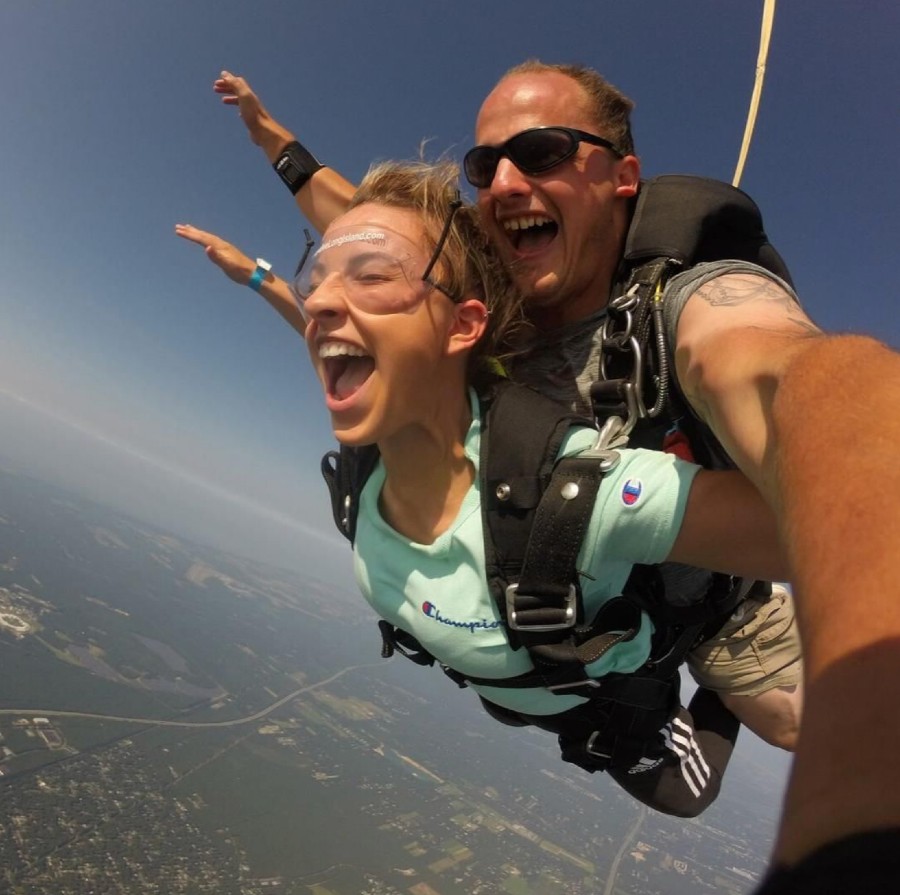
If you are doing your first jump, it’s usually a tandem skydive—you are strapped to an instructor. The combined weight is higher, but the instructor spreads out to maximize drag and keep the fall speed safe for beginners.
In solo skydiving, you can experiment with body positions to go faster or slower. Advanced jumpers often use “tracking” (pointing their body like an arrow) to move forward, not just down, or “head-down” for maximum speed.
Here’s a summary comparison:
| Jump Type | Typical Freefall Speed (mph) | Notes |
|---|---|---|
| Tandem | 115–125 | Instructor controls fall, more drag for safety |
| Solo (belly-to-earth) | 120 | Standard position for students |
| Advanced (head-down) | 150–180 | For experienced skydivers only |
Surprising Insights About Freefall Speed
Most beginners think skydiving is about “falling as fast as possible.” In reality, most jumps are designed to keep the speed safe and comfortable. In fact, some skydivers use large jumpsuits (called “drag suits”) to slow themselves down, so they can stay with a group in the air.
Another thing many people miss: while 120 mph sounds extremely fast, you don’t feel the same danger as driving a car at that speed. The air supports your body, and you don’t notice the ground rushing up at you until the parachute opens and you start to descend more slowly.
Common Mistakes And Safety Points
A few mistakes can lead to problems during freefall:
- Wrong body position: Tucking arms or legs too tight can cause you to spin or fall faster than planned.
- Ignoring gear fit: Loose or baggy gear can flap in the wind and change your speed unexpectedly.
- Not adjusting for weight: Heavier jumpers may need to spread out more to stay with a group or avoid falling too fast.
- Jumping in bad weather: Thin air on hot days or strong winds can affect your speed and safety.
- Opening the parachute at high speed: Pulling your chute above the recommended speed can damage the gear or hurt you.
The safest way to skydive is with proper training and by listening to your instructor. They know how to adjust for your weight, gear, and the day’s weather.
How Do Skydivers Measure Their Speed?
Most skydivers use an altimeter to measure altitude, not speed. Some advanced jumpers use electronic devices that record speed and other data. These are called dataloggers or audible altimeters. They help jumpers learn more about their fall and improve their skills.
For most beginners, knowing the average speeds and listening to instructors is enough. You don’t need to measure your exact speed to have a safe, fun jump.
Real-world Example: The Fastest Skydive Ever
The world record for fastest freefall was set by Felix Baumgartner in 2012. He jumped from 128,100 feet (39,045 meters), breaking the sound barrier. He reached a top speed of 843.6 mph (1,357.6 km/h). This is much faster than a normal skydive because he started in extremely thin air with almost no resistance. As he got closer to earth, his speed slowed down.
You can read more about this historic jump on the Wikipedia page for Red Bull Stratos.
Why Understanding Fall Speed Matters
Knowing how fast you fall helps you:
- Stay safe by using the right body position and gear
- Join group jumps without drifting away
- Understand what to expect on your first jump
- Appreciate the science and excitement of skydiving
If you ever want to try skydiving as a sport, learning to control your speed is a key skill. It lets you do tricks, join formations, and land safely every time.
Frequently Asked Questions
How Fast Do You Fall When Skydiving For The First Time?
Most first-time skydivers, in a tandem jump, fall at about 120 mph (193 km/h) in the belly-to-earth position. This speed is fast, but the experience feels more like floating on strong wind than dropping straight down.
Does Your Weight Change Your Skydiving Speed?
Yes, a heavier person falls slightly faster if everything else is equal. However, instructors adjust body position and gear to keep speeds safe for everyone, so differences are not usually dramatic.
What Happens If You Open Your Parachute While Falling Too Fast?
If you open your parachute above the safe speed (usually above 130 mph / 210 km/h), the opening can be hard and may damage the parachute or even injure you. That’s why jumpers track their speed and open at the recommended altitude and body position.
How Does Skydiving Speed Compare To Bungee Jumping?
Skydiving speeds are much higher. In bungee jumping, you may reach 40–60 mph (65–95 km/h) at the fastest point, while skydiving averages 120 mph (193 km/h) in freefall.
Is It Possible To Go Faster Than Terminal Velocity?
No, in normal skydiving you cannot go faster than your terminal velocity. The only exception is at extremely high altitudes, like Felix Baumgartner’s jump, where the air is so thin that resistance is almost zero for a short time.
Skydiving is a mix of science, skill, and pure adrenaline. Understanding how fast you fall not only satisfies curiosity but also helps you stay safe and confident in the sky. Next time you watch someone jump or consider trying it yourself, you’ll know exactly what’s happening as they rush through the clouds.
