
Keeping your surfboard in good condition starts with how you store it at home. Many surfers overlook this, but the way you store your surfboard can decide how long it lasts, how well it performs, and even how safe your home is.
Maybe your board just leans against the garage wall or sits in a corner of your room. That works—for a while. But if you want your surfboard to last for years and avoid repairs, you need a better plan. Let’s look at smart ways to store a surfboard at home, and what mistakes to avoid.
Why Proper Surfboard Storage Matters
Surfboards are not just sports equipment. They are often expensive and can be delicate. Most boards are made from fiberglass, epoxy, or foam. All can get damaged from sunlight, temperature changes, and even how they rest on a surface. Poor storage can lead to:
- Dings and cracks from falling or getting knocked over
- Yellowing or fading from sunlight
- Delamination when layers separate due to heat or pressure
- Warping if the board bends over time
Proper storage keeps your board ready for the next wave and saves money on repairs.
Choosing The Best Location In Your Home
The first step is picking the right spot. Not all spaces are equal for surfboard storage. Here’s how to decide:
Away From Sunlight
Direct sunlight can cause yellowing and weaken the board’s surface. Avoid windows, sunrooms, or any place with strong sunlight.
Climate Control
High heat or big temperature swings can cause the board’s materials to expand and contract, leading to cracks. A room with a stable, cool temperature is ideal.
Dry And Clean
Moisture can cause mold, especially on foam boards or inside dings. Store your board in a dry place, away from bathrooms or laundry rooms where humidity is high.
Safe From Pets And Kids
Surfboards can be tempting for kids to climb or for pets to scratch. Choose a spot out of reach, especially for longboards or heavy boards.
Non-obvious tip: Even short exposure to sunlight through a window can damage your board over time. Curtains or UV-blocking window film can help.
Types Of Surfboard Storage Solutions
There are many ways to store a surfboard at home. The right choice depends on your space, how often you surf, and how many boards you own.
1. Vertical Racks
Vertical racks let you stand your surfboard upright, usually against a wall.
- Pros: Saves space, easy access, good for multiple boards
- Cons: Needs a stable base to prevent tipping
These racks often have padded slots to protect the rails. If you build your own, use foam or soft cloth where the board touches the rack.
2. Horizontal Wall Racks
Horizontal racks hold the surfboard flat against the wall, either parallel or at a slight angle.
- Pros: Keeps the board out of the way, shows off graphics, prevents warping
- Cons: Requires wall space, some racks need tools to install
Horizontal racks are popular for living rooms or garages with free wall space. Make sure the rack supports the board at two points, not just at the ends.
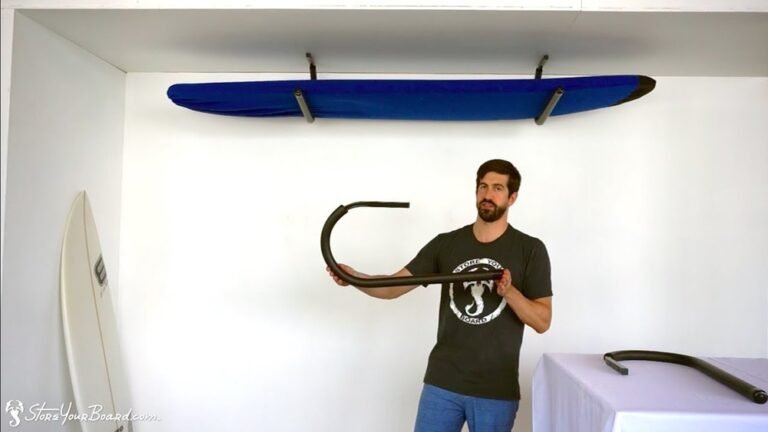
3. Ceiling Racks
Ceiling racks hang the board overhead, similar to how bikes are stored.
- Pros: Frees up floor and wall space, good for high ceilings
- Cons: Hard to reach, not ideal for daily surfers
Great for long-term storage or when you have multiple boards. Check that your ceiling can hold the weight.
4. Freestanding Stands
Freestanding stands are portable holders you can move around.
- Pros: No installation, easy to relocate, good for renters
- Cons: Takes up floor space, less stable if bumped
These are handy if you like to switch rooms or only have one board.
5. Surfboard Bags And Covers
A surfboard bag is not a “rack,” but using one adds protection. A bag shields from dust, sunlight, and knocks.
- Use a day bag for regular storage and transport.
- For long-term storage, consider a padded travel bag.
Non-obvious insight: Always dry your board before bagging it. Moisture inside a bag can cause mold and damage.
Comparing Popular Surfboard Storage Options
Below is a comparison to help you choose the right solution:
| Storage Type | Best For | Protection Level | Installation Needed |
|---|---|---|---|
| Vertical Rack | Small spaces, quick access | Medium | Low |
| Horizontal Wall Rack | Display, longboards | High | Medium |
| Ceiling Rack | Multiple boards, garages | High | High |
| Freestanding Stand | Renters, flexible storage | Medium | None |
| Surfboard Bag | Transport, extra protection | High | None |
How To Store A Surfboard On A Wall
Storing your surfboard on the wall is safe and space-saving. Here’s how to do it right:
- Pick the Wall: Choose a wall without direct sunlight or heaters.
- Find Studs: Use a stud finder to locate strong spots for mounting.
- Install Padding: Place foam or rubber where the rack touches the board.
- Support the Board: Use two arms or brackets, spaced apart to support the weight evenly.
- Rail Up or Down: Most surfers prefer rails (sides) up. This keeps pressure off the fins and tail.
Tip: Don’t use metal brackets without padding. They can dent or scratch your board.
How To Store A Surfboard Upright
Vertical storage is common, especially for shortboards. Here’s how to do it safely:
- Place the tail on a soft mat or foam block.
- Lean the board slightly against the wall.
- Make sure nothing heavy can fall on the board.
- If storing several boards, use a rack with dividers.
Hidden danger: If your floor is uneven, boards can slide. Use non-slip pads or a simple stopper.
Storing Multiple Surfboards
Many surfers collect boards for different wave conditions. Here’s how to store several:
- Use racks designed for multiple boards (often with 3–8 slots).
- Store heavier boards at the bottom, lighter at the top.
- Leave small gaps between boards to avoid pressure dings.
- If using bags, label each for easy grabbing.
Overcrowding is a mistake—boards can rub together and get damaged.
How To Store A Surfboard Long-term
If you won’t surf for months, extra care is needed:
- Clean the Board: Remove wax, sand, and rinse with fresh water.
- Dry Thoroughly: Make sure there’s no moisture.
- Repair Damage: Fix dings before storage.
- Bag It: Use a padded bag and zip loosely for airflow.
- Elevate: Keep off cold concrete or damp floors.
Long-term storage in a hot attic or shed is risky. If that’s your only option, wrap the board in a light-colored towel to reflect heat.

Common Mistakes In Surfboard Storage
Even experienced surfers make storage mistakes. Here are key errors to avoid:
- Leaning Boards on Hard Surfaces: This can crush the tail or nose.
- Stacking Boards Flat: Weight from above can cause pressure dings or warping.
- Ignoring Sunlight: Even indirect light can yellow a board over time.
- Not Checking for Pests: Mice or insects can nest in bags stored on the floor.
- Skipping Repairs: Small cracks can get worse during storage, leading to water damage.
Diy Surfboard Storage Ideas
Building your own surfboard rack is a fun project. Here are simple ideas:
- PVC Pipe Rack: Cheap, lightweight, and easy to build. Use pipe insulation for padding.
- Wooden Wall Brackets: Cut two arms from plywood, cover with foam, and attach to studs.
- Repurposed Furniture: Old bookshelves or coat racks can become creative board holders.
Pro tip: Always check that your DIY rack can hold the board’s weight before trusting it.
How Humidity And Temperature Affect Surfboards
Many people don’t realize how much climate matters. Here’s what happens:
- High humidity: Can cause mold on foam or under wax.
- Extreme heat: May cause delamination or soft spots.
- Cold temperatures: Less dangerous, but sudden changes can stress the materials.
If you live in a humid climate, consider a small dehumidifier in the storage room. In hot areas, avoid attics and sun-facing walls.
Best Practices For Everyday Surfers
If you surf often, you need storage that’s both safe and fast to access:
- Choose a spot near your exit door or garage.
- Use a simple wall hook or freestanding stand.
- Keep your leash, fins, and wax nearby in a small basket or box.
After surfing, rinse your board with fresh water and let it dry before storing. This keeps salt from damaging the board or rack.
When To Repair Your Surfboard Before Storage
Never store a surfboard with open dings or cracks. Here’s why:
- Water inside the board can cause rot or mold.
- Damage spreads during storage, especially with temperature changes.
- Small cracks can become big problems, costing more to fix later.
Quick repairs before storing save money and keep your board ready for the next session.
Comparing Surfboard Bags
If you use bags, not all are equal. Consider this comparison:
| Bag Type | Protection | Weight | Best Use |
|---|---|---|---|
| Sock | Low | Very light | Dust, light scratches |
| Day Bag | Medium | Light | Daily storage, car transport |
| Travel Bag | High | Heavy | Long-term storage, flights |
Extra advice: If you travel often, invest in a padded travel bag—even for home storage.

Safety Tips For Indoor Surfboard Storage
Surfboards are large and can fall if not secured. A few safety reminders:
- Never block exit paths with boards.
- Secure racks firmly to walls or ceilings.
- Store boards low if you have children at home.
- Avoid stacking anything on top of your surfboard.
Environmental Factors: Urban Vs. Coastal Homes
Where you live changes what matters most. For example:
- Coastal homes: More humidity and salt in the air, so rinse boards and check for rust on racks.
- Urban apartments: Space is tight. Wall racks or vertical stands are best.
- Basements: Often damp. Always elevate boards and use a dehumidifier.
Creative Surfboard Display Ideas
Your surfboard can be art, not just gear. Some ideas:
- Use colored wall racks to match your room’s style.
- Hang vintage boards in the living room or hallway.
- Add LED lights behind the board for a dramatic look.
Just be sure display racks are as strong as functional racks.
Essential Maintenance Before And After Storage
Good storage starts with good cleaning. Before putting your board away:
- Remove all wax (especially if storing for months).
- Rinse with fresh water.
- Dry completely.
- Check for dings or cracks.
- Store with the leash off to prevent tangles.
After storage, inspect the board before your next surf. Look for new dings, mold, or yellowing.
How Often Should You Check Stored Surfboards?
For long-term storage, check your board every few weeks:
- Look for signs of mold or pests.
- Make sure the rack is still sturdy.
- If in a bag, open it to let air circulate now and then.
This simple habit can prevent big surprises later.
Frequently Asked Questions
How Do I Store My Surfboard If I Live In A Small Apartment?
Use a vertical rack or a horizontal wall rack. Both save space. You can also store the board under your bed (in a bag) if needed, but check for dust and moisture.
Can I Leave My Surfboard In The Garage?
Yes, but pick a spot away from sunlight and cars. Garages can get hot, so avoid direct contact with concrete floors and check for humidity.
Should I Store My Surfboard With The Fins On Or Off?
For short-term storage, you can leave fins on. For long-term, remove them to avoid pressure on the fin boxes and make the board easier to store.
Is It Okay To Hang My Surfboard From The Ceiling?
Yes, ceiling racks are great for saving space. Just make sure the board is secure, the rack is padded, and you don’t need the board every day.
What’s The Best Way To Protect My Surfboard From Sunlight?
Store it away from windows or use a surfboard bag with UV protection. Even inside, indirect sunlight can cause yellowing over time. For more on board care, see this Wikipedia page on surfboards.
Taking time to store your surfboard properly keeps it in top shape for years. With the right rack, a safe spot, and regular checks, you’ll avoid most common problems and enjoy many more sessions on the water.
