
Ice hockey is a fast, thrilling sport where quick decisions and physical play are part of the game. With so much action happening at once, it’s easy to miss what’s happening on the ice—unless you know how to read the referees.
Referees are the silent guides of the game, using their arms and bodies to communicate penalties and keep the match fair. But how exactly do referees signal penalties in ice hockey? Understanding their signals is key for fans, players, and even new officials who want to follow the action closely.
Why Penalty Signals Matter
Referee signals are more than just tradition. They create a universal language understood in any rink, from youth leagues to the NHL. These signals help players know what the call is, inform coaches about player status, and keep fans aware of why a play was stopped. Without these signals, games would be confusing, and arguments would be more common.
The Basics Of Ice Hockey Penalty Signals
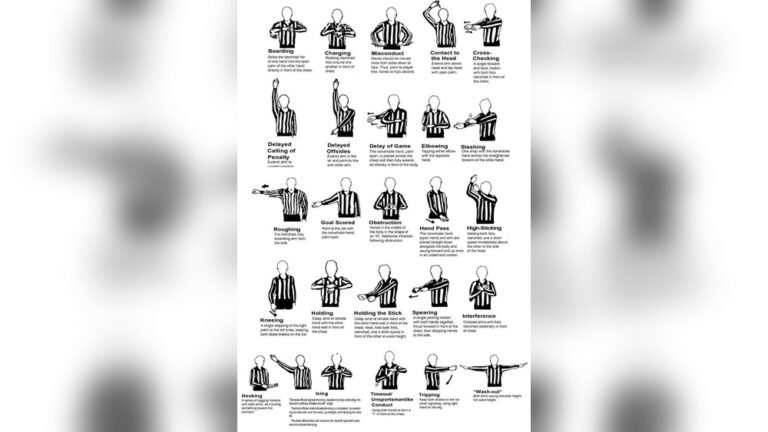
Referees use their arms, hands, and body movements to show each type of penalty. Each penalty has a unique gesture, which is always performed in a clear, visible way. Referees stand still and hold the signal for a few seconds, so everyone can see what penalty has been called.
There are more than a dozen official signals, but some are seen more often than others. Here’s a look at the most common ones you’ll see in any ice hockey match.
Common Penalty Signals And How They Are Performed
1. Tripping
The referee points with one hand at their own knee while swinging the other arm forward in a sweeping motion. This mimics the action of a player’s stick causing another player to fall.
2. Hooking
One arm is bent and pulled toward the waist, like pulling on the handle of an imaginary hook. This shows a player used their stick to pull back an opponent.
3. Slashing
The referee makes a chopping motion across their opposite forearm with one hand. This visualizes the swinging of a stick as if slashing an opponent.
4. High-sticking
The referee holds both hands together above shoulder height, simulating a stick being raised too high.
5. Holding
Both arms are wrapped around the chest, as if hugging oneself, signaling a player grabbed or held another player.
6. Interference
The referee holds both arms out straight in front of the body, mimicking blocking someone’s path.
7. Cross-checking
Both fists are clenched and held in front of the body, one above the other, as if holding a hockey stick horizontally.
8. Boarding
The referee strikes a closed fist into the open palm of the other hand, showing a player was hit dangerously into the boards.
9. Charging
The referee rotates both arms in a windmill motion, signaling a player took too many steps before checking an opponent.
10. Elbowing
The referee taps their elbow with the opposite hand, indicating illegal use of the elbow.
11. Roughing
A fist is pushed back and forth in front of the chest, like a small punching motion.
12. Delay Of Game
The referee places one hand flat on top of the other, like signaling a time-out.
13. Too Many Men
The referee puts both hands on their head, showing a team had too many players on the ice.
14. Unsportsmanlike Conduct
The referee puts one hand on their hip and waves the other arm in a dismissive gesture.
Not all signals are equally common. For example, high-sticking and tripping are seen more often than boarding or charging.
Comparison Of Common Penalty Signals
To help you quickly recognize and remember referee gestures, here is a side-by-side look at three popular penalty signals:
| Penalty | Referee Signal | Common Scenario |
|---|---|---|
| Tripping | Swinging arm at knee | Stick causes opponent to fall |
| Slashing | Chop across forearm | Stick hits opponent’s body/hands |
| High-Sticking | Hands above shoulders | Stick hits above shoulder height |
When And How Referees Signal Penalties
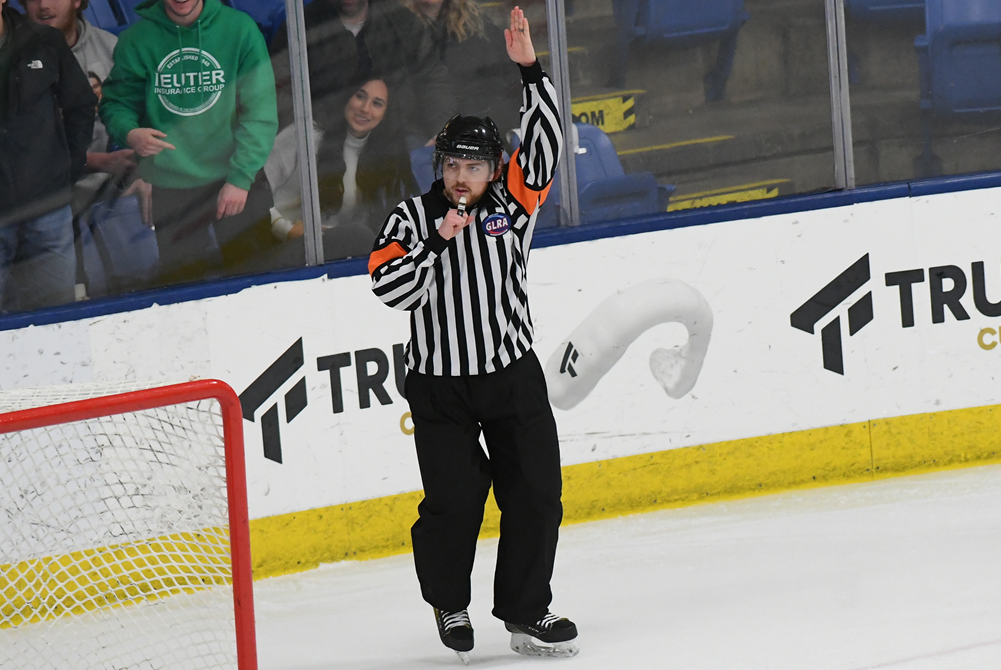
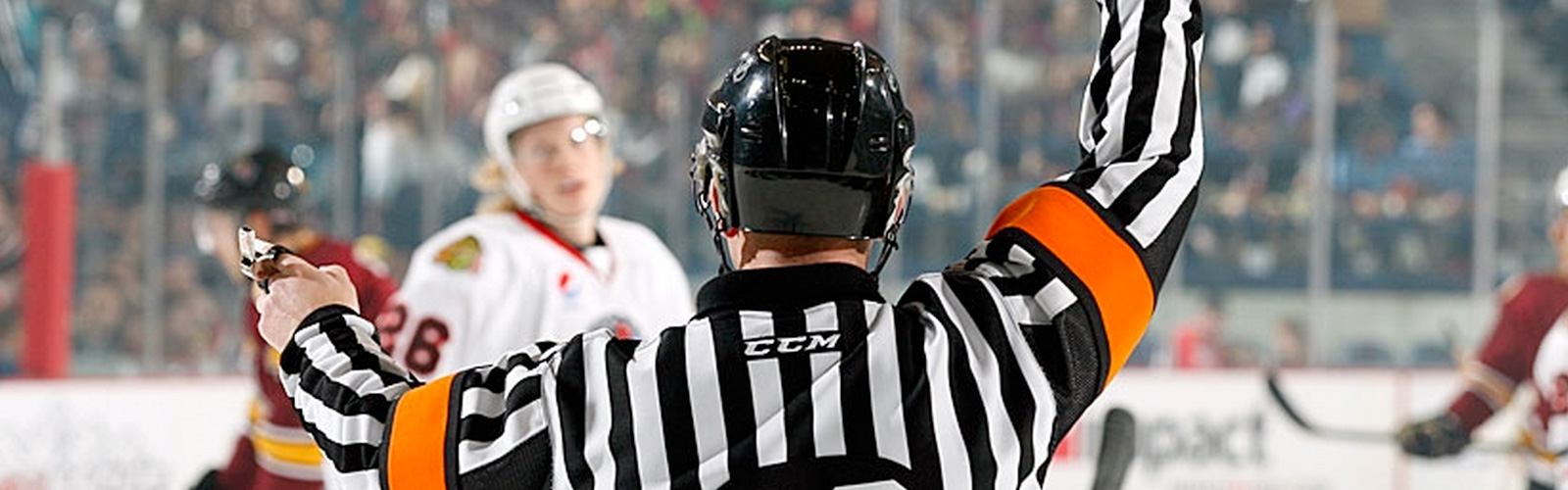
Referees usually raise one arm straight up when they see a penalty, signaling a delayed penalty. This tells everyone that play will stop as soon as the offending team gains control of the puck. After the whistle blows, the referee moves to the center of the ice or near the penalty box and performs the specific signal for the penalty called.
For major penalties or game misconducts, the referee may combine signals or use a longer gesture. The official scorer and penalty box staff watch closely so they can record the penalty correctly.
Differences Between Referee And Linesman Signals
Not every official on the ice makes penalty calls. Referees wear orange armbands and are responsible for penalty calls. Linesmen help with offsides, icing, and face-offs, but can only report major penalties.
Here’s a quick comparison:
| Official | Role | Can Signal Penalties? |
|---|---|---|
| Referee | Penalty enforcement, game management | Yes (all penalties) |
| Linesman | Offside, icing, face-offs | Only major/serious penalties |
Non-obvious Insights About Penalty Signals
Many fans are surprised to learn that signals are standardized worldwide. Whether you’re watching the Olympics or a local league, signals look the same. This helps international players and referees communicate clearly.
Another detail beginners often miss: referees practice these signals in training to make them crisp and easy to see. A sloppy or hidden gesture can lead to confusion on the ice.
Tips For Recognizing Penalty Signals Quickly
- Focus on the referee’s body position after the whistle.
- Watch for the raised arm during delayed penalties.
- Notice the location: Referees always move to open space for visibility.
- If you’re new, study video clips of penalty calls to build recognition.
Common Mistakes When Interpreting Signals
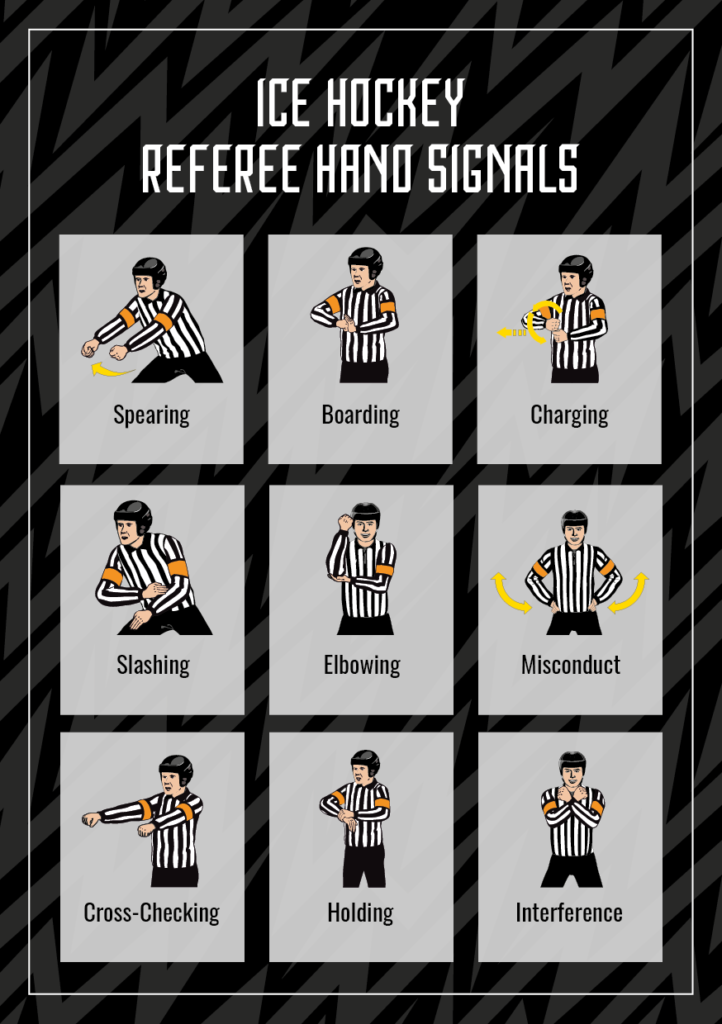
Some fans confuse boarding and charging signals, since both involve strong motions. Remember, boarding is a hand into the palm, while charging is a windmill motion.
Another mistake is thinking any official with a whistle can call penalties. Only referees with orange armbands have this power for most calls.
Why Accurate Signals Are So Important
Clear penalty signals keep the game fair, safe, and easy to understand. They help prevent arguments and build trust between players, coaches, and officials. For people learning the sport, understanding these signals is a big step toward enjoying and following hockey at any level.
For more on ice hockey rules and referee standards, the official IIHF guide is a reliable resource: IIHF Official Rule Book.
Frequently Asked Questions
How Many Penalty Signals Are There In Ice Hockey?
There are more than a dozen standard signals, covering common penalties like tripping, slashing, hooking, high-sticking, and boarding. International and professional leagues use the same set of signals.
Can Players Argue A Referee’s Penalty Signal?
Players can ask for clarification, but referees rarely change their calls. Persistent arguing can lead to an unsportsmanlike conduct penalty.
Do Penalty Signals Differ Between Leagues?
Most signals are the same in the NHL, Olympic, and international play. Minor leagues may have slight variations, but the basics remain consistent.
How Can Fans Learn Penalty Signals Quickly?
Watching games and reviewing official guides helps. Focus on the referee after the whistle and practice matching the gesture to the penalty.
Why Do Referees Hold The Signal For Several Seconds?
Holding the signal gives coaches, players, and the penalty box staff time to see and understand the call. This prevents confusion and keeps the game running smoothly.
Understanding how referees signal penalties in ice hockey lets you follow the action with confidence. Next time you watch a game, try to spot these signals and see how they shape the flow of play.
