Surfing is one of the world’s most exciting water sports. Many people dream of riding waves, feeling the ocean’s power, and enjoying the beach lifestyle. But for beginners, surfing can seem difficult and even a bit scary. Where do you start?
What equipment do you need? How do you learn to stand up on a board? These questions are common. The good news is that you don’t need to be an athlete to start surfing. With the right steps, anyone can learn and enjoy this sport.
Let’s break down everything you need to know to start surfing safely and successfully.
Understanding The Basics Of Surfing
Before you jump into the water, it’s important to understand what surfing is all about. Surfing means riding waves using a surfboard. The main goal is to catch a wave, stand up, and ride it towards the shore. But there’s more to surfing than just standing up.
You need to know about ocean safety, wave types, and how to handle your board.
One thing that surprises beginners is how much time surfers spend watching the ocean. Experienced surfers look for the right wave and study the water before paddling out. This skill is called “reading waves,” and it’s as important as balance or paddling. Another non-obvious point: most of the learning happens in the water, not on land. Books and videos help, but real progress comes from practice.
Choosing The Right Surfboard
For beginners, the right surfboard makes learning much easier. Many people start with boards that are too small because they look cool or are easy to carry. But a larger, stable board is best for learning.
| Surfboard Type | Size (feet) | Best For |
|---|---|---|
| Foamboard | 8-9 | Absolute beginners, safety |
| Longboard | 8-10 | Beginners, easy paddling |
| Funboard | 7-8 | Beginner to intermediate |
| Shortboard | 5-7 | Advanced surfers only |
A foamboard or longboard is perfect for beginners. These boards are wide and thick, which makes them stable. You’ll find it easier to paddle, balance, and catch waves. Shortboards are much less stable and only recommended after you’ve mastered the basics.
Essential Gear For Beginners
Besides a board, there are a few other items that make learning safer and more comfortable:
- Leash: This is a cord that connects your ankle to the board. It keeps your board nearby if you fall.
- Rash guard or wetsuit: These protect your skin from sunburn and board rash. A wetsuit also keeps you warm in cold water.
- Surf wax: You rub this on your board to avoid slipping.
- Fins: These are under the board and help with steering and balance. Most boards come with fins.
- Sun protection: Use waterproof sunscreen, as you’ll be in the sun for hours.
Never skip the leash, even in small waves. Losing your board can be dangerous for you and others.
Learning To Paddle And Pop Up
Paddling and standing up (called the “pop-up”) are the two key skills for beginners. Many people focus on standing, but paddling is just as important. If you can’t paddle well, you won’t catch many waves.
Paddling
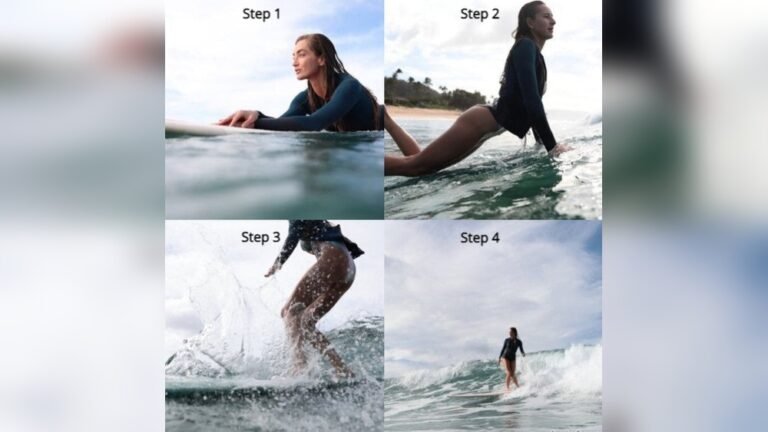
Lie on your board with your toes just touching the tail. Keep your body centered. Use long, deep strokes with your arms, and keep your fingers together. Don’t splash—smooth, quiet paddling is efficient. Beginners often paddle with their board too far out of the water (nose too high) or too deep (nose underwater).
Adjust your position until the board glides flat.
The Pop-up
Once you catch a wave, you need to stand up quickly and smoothly. Here’s a simple way to practice:
- Start by lying on your stomach.
- Place your hands flat on the board, next to your chest.
- Push your upper body up, like a push-up.
- Bring your feet under you in one quick motion.
- Stand with your knees bent and look forward.
Practice pop-ups on the sand before you go into the water. This builds muscle memory and confidence.
Finding The Right Spot To Learn
Not all beaches are good for beginners. You want a place with small, gentle waves and a sandy bottom. Avoid beaches with rocks, strong currents, or big waves. Many surf schools are located near beginner-friendly beaches.
Here’s a comparison of what to look for:
| Beach Type | Suitability for Beginners | Notes |
|---|---|---|
| Sandy beach | Excellent | Soft landings, fewer injuries |
| Reef break | Poor | Dangerous rocks and coral |
| Point break | Fair | Can have long waves, but sometimes crowded |
Ask local surfers or a surf shop for advice on the best beginner spots. Some locations are popular for a reason—they’re safe and have consistent waves for learning.
Taking A Lesson Vs. Teaching Yourself
Many beginners wonder if they should pay for a surf lesson or try to learn on their own. Both options work, but lessons give you a big advantage. An experienced instructor teaches you about safety, technique, and ocean awareness. You’ll learn faster and avoid bad habits.
If you choose to learn by yourself, watch online videos from reliable sources and spend time practicing on land first. But remember, nothing replaces feedback from a real instructor. Many beginners underestimate the value of surf lessons—one or two sessions can save you weeks of frustration.
Basic Surf Safety Tips
Surfing is fun, but the ocean can be dangerous. Always keep these safety rules in mind:
- Never surf alone when you are a beginner. A buddy can help if you get into trouble.
- Check the weather and waves before you go. Avoid big surf, strong winds, or storms.
- Know your limits. If you feel tired or scared, take a break.
- Stay away from rocks and piers. These are dangerous if you lose control.
- Respect other surfers. Don’t drop in on someone else’s wave.
- Learn basic surf etiquette. Wait your turn and be polite in the water.
A common beginner mistake is trying to surf in waves that are too big. Start small and work your way up.
Practicing In The Whitewater
When you first start, don’t rush out to catch big, unbroken waves. The whitewater—the foamy water after a wave breaks—is the best place to learn. Here you can practice paddling, balance, and pop-ups with less risk.
Start by paddling your board into the whitewater, then try to stand up and ride straight to the shore. Once you can do this easily, you can move out to catch “green” (unbroken) waves. Many beginners get frustrated and want to surf real waves right away, but time in the whitewater builds strong skills.

Building Strength And Fitness
Surfing uses many muscles, especially in your arms, shoulders, core, and legs. You don’t have to be super fit, but a basic level of fitness helps a lot. Swimming is great cross-training, as it improves your paddling and confidence in the water.
Try these exercises to get ready for surfing:
- Push-ups: Builds strength for pop-ups.
- Planks: Improves core stability.
- Squats: Helps with leg strength and balance.
- Swimming: Boosts endurance.
Even 2-3 weeks of light training before your first surf session can make a big difference.
The Learning Process: What To Expect
Learning to surf is challenging, but also very rewarding. Most beginners spend their first sessions just getting used to the board and the ocean. Don’t expect to stand up and ride waves on your first day. Progress is usually like this:
- Lying and balancing on the board
- Paddling smoothly
- Catching small whitewater waves
- Practicing pop-ups in the whitewater
- Riding straight towards shore
- Turning and steering the board
- Catching unbroken (green) waves
It takes most people 5-10 sessions to stand up and ride a wave for the first time. Stay patient and enjoy the process. Even small progress is exciting.

Common Mistakes Beginners Make
Many new surfers repeat the same errors. Here are the most common, and how to avoid them:
- Choosing the wrong board: Too small or narrow makes learning harder.
- Poor paddling technique: Splashing, slow paddling, or wrong body position.
- Looking down: Always look forward, not at your feet.
- Standing too early: Wait until you feel the wave push you.
- Stiff legs: Bend your knees for better balance.
- Ignoring safety: Skipping the leash or surfing alone.
If you catch yourself making these mistakes, don’t worry. Even pros started as beginners.
Progressing To The Next Level
Once you can catch and ride small waves, you’ll want to improve your skills. The next steps include:
- Learning to turn your board
- Paddling out past the breaking waves
- Reading waves and choosing the best ones
- Practicing in different surf conditions
It’s helpful to surf with people who are a little better than you. Watch and learn from their technique. Take more lessons if you hit a plateau. There’s always something new to learn in surfing.

How To Stay Motivated
Surfing takes time and patience. Some days the ocean is flat, or you fall again and again. To stay motivated:
- Set small, realistic goals (for example: Stand up once per session)
- Celebrate every success, even small ones
- Surf with friends or join a group
- Remember why you started—enjoy the beach, the exercise, and nature
Many beginners quit too soon because they expect fast results. Progress is slow but steady if you keep showing up.
A Few Words On Surf Culture And Respect
Surfing is more than a sport—it’s a culture. Surfers value respect, patience, and connection with nature. When you enter the water, you’re joining a community. Always be polite, share waves, and help others if you can.
One thing beginners often miss is the local rules at each beach. Watch how locals behave, ask questions, and show respect. This attitude will earn you friends and make your surfing journey more enjoyable.
Frequently Asked Questions
How Long Does It Take For A Beginner To Learn To Surf?
Most people need 5-10 sessions to stand up and ride their first wave. But everyone learns at a different speed. Practice, fitness, and wave conditions all play a role.
Do I Need To Know How To Swim To Surf?
Yes, strong swimming skills are essential. You should be able to swim at least 100 meters in the ocean, as you may fall off your board and need to get back to shore.
What Is The Best Age To Start Surfing?
You can start surfing at almost any age—from kids as young as 5 to adults over 60. The key is being comfortable in the water and able to swim.
Is It Safe To Surf Alone As A Beginner?
No, beginners should always surf with a buddy or in a group. This is safer in case of emergencies and makes learning more fun.
Where Can I Find More Information About Surfing Techniques?
A good place to start is the Wikipedia surfing article. You’ll find details on surf history, techniques, and safety.
Starting to surf is a big adventure. The first few sessions are challenging, but the rewards are worth it. With the right board, some practice, and respect for the ocean, anyone can become a surfer. Enjoy your journey—there’s nothing like your first wave!
