
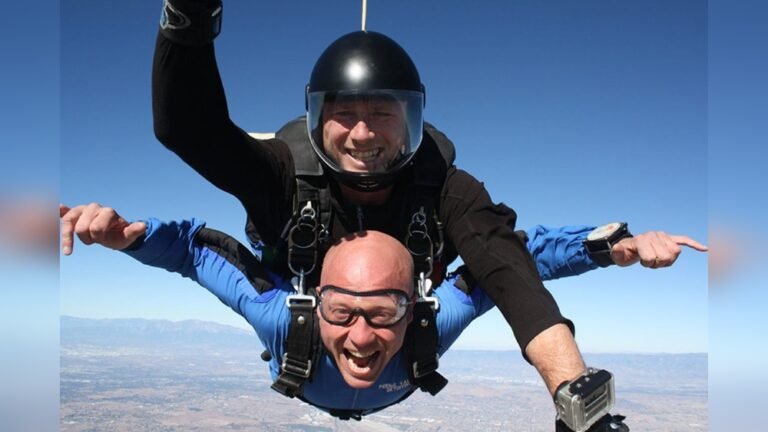
Have you ever watched a skydiver leap out of a plane and wondered, “Can you actually breathe up there? ” This question is more common than you might think, especially among first-time jumpers. The thought of falling from thousands of feet in the air, wind rushing past your face, and freefalling at speeds over 120 mph can make anyone wonder if breathing is possible—or even safe.
Let’s break down what really happens to your breath during a skydive, clear up some common myths, and give you the insights you need to feel confident before your jump.
What Happens To Your Body During A Skydive?
When you skydive, your body goes through a series of quick changes. After you leap out of the plane, you start freefalling, usually from around 10,000 to 14,000 feet above the ground. At this altitude, the air is a bit thinner than at sea level, but it’s not thin enough to cause problems for most people.
During the first few seconds, adrenaline floods your system. Your heart rate spikes, and some people unconsciously hold their breath because of the excitement or fear. However, your body can breathe normally once you relax. The wind is strong, but it doesn’t block your airways.
A useful way to compare: standing in front of a strong fan might make you feel like you need to catch your breath, but you can still breathe. The experience during freefall is similar, just more intense.
Is The Air Too Thin To Breathe?
It’s a common myth that the air is “too thin” to breathe while skydiving. In reality, oxygen levels at typical skydiving altitudes are lower than on the ground, but most healthy people adapt just fine.
To see how oxygen changes with altitude, here’s a simple comparison:
| Altitude (feet) | Oxygen Percentage | Effect on Breathing |
|---|---|---|
| Sea Level | 21% | Normal |
| 10,000 | ~14.3% | Slightly Less Oxygen |
| 14,000 | ~12.5% | Still Safe for Most |
At these heights, your body can handle the lower oxygen for the brief time you’re in freefall. Only jumps above 15,000 feet or staying at high altitude for a long time can cause real breathing problems—these require supplemental oxygen.
The Reality Of Breathing In Freefall
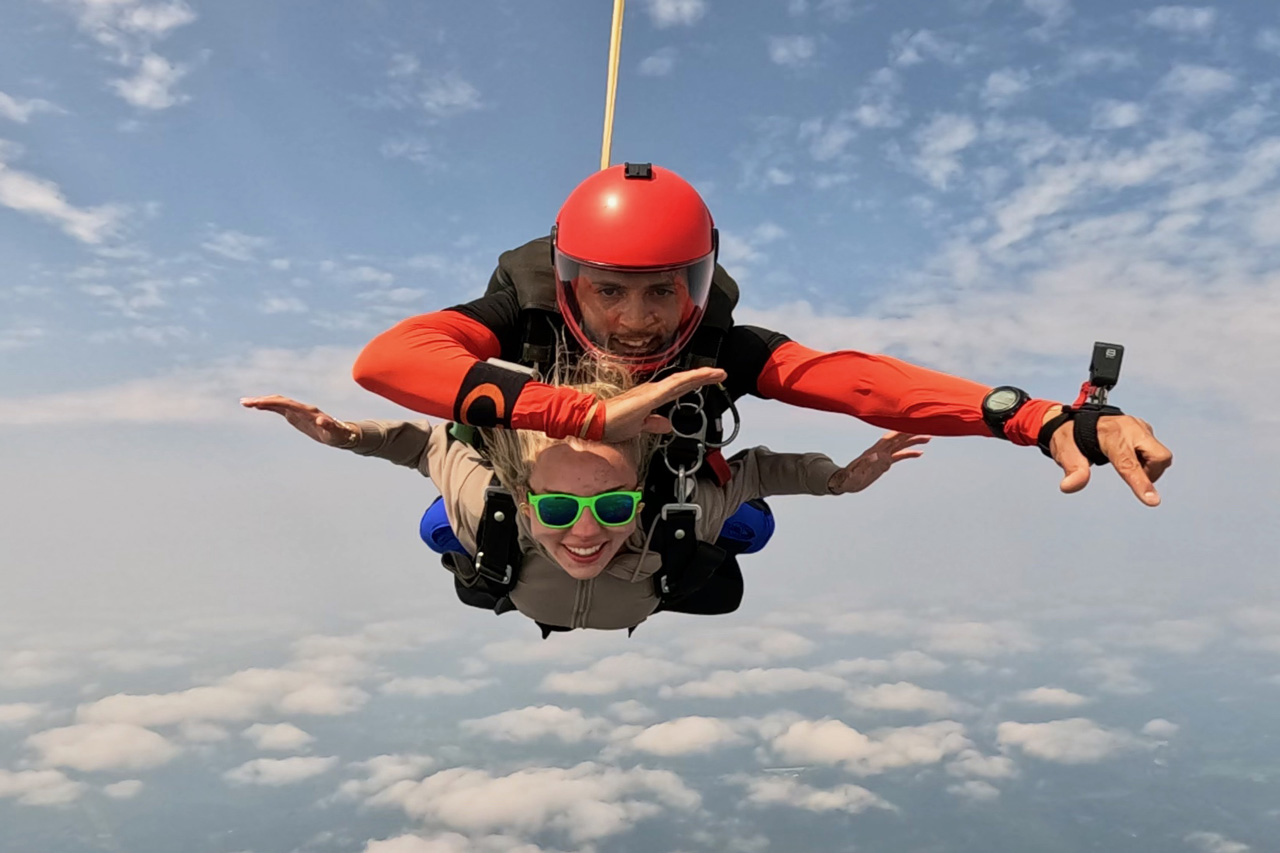
Freefall is intense. You’ll be falling at about 120 mph (193 km/h), and the wind noise is loud. Many first-time skydivers are surprised that the wind doesn’t actually stop you from breathing. Instead, it may feel odd—like air is rushing into your nose and mouth.
Some beginners feel like they can’t breathe because they subconsciously hold their breath. This is a reaction to stress, not a physical limit. Once you consciously try to take slow, deep breaths, you’ll find the air flows in just fine.
Here are a few things that help:
- Open your mouth slightly and let air in naturally.
- Exhale slowly—don’t force it, just relax.
- If you feel wind “blocking” your face, tilt your head slightly to the side.
A non-obvious tip: some people find breathing through their nose feels easier during freefall because it reduces the blast of air compared to the mouth.
After The Parachute Opens
Once your parachute opens (usually at about 5,000 feet), everything slows down. The wind noise drops, your fall rate decreases to about 15 mph (24 km/h), and breathing feels completely normal. You can talk to your instructor, look around, and enjoy the view without any problem.
Here’s a quick comparison of the two phases:
| Phase | Speed | Breathing Experience |
|---|---|---|
| Freefall | ~120 mph | Windy, unusual, but possible |
| Parachute Ride | ~15 mph | Easy and calm |
Common Fears And Myths About Breathing While Skydiving
Before their first jump, many people worry about not being able to breathe. Let’s clear up a few common myths:
1. Myth: “you Can’t Breathe Because You’re Falling Too Fast.”
Reality: Even at 120 mph, air is all around you. The wind might feel strong, but your lungs work just as well.
2. Myth: “the Wind Pressure Will Suffocate You.”
Reality: The wind doesn’t block your nose or mouth. Most people can breathe freely once they relax.
- Myth: “The air is too thin, so you’ll pass out.”
Reality: At normal skydiving altitudes, oxygen is lower but not dangerously low for short periods.
4. Myth: “panic Will Make You Stop Breathing.”
Reality: Fear can cause you to hold your breath, but training and reminders help you stay calm and breathe.
Who Might Have Trouble Breathing?
While most healthy people breathe just fine, there are some exceptions:
- People with severe asthma or lung disease should talk to their doctor before skydiving.
- Those with heart problems might find the adrenaline rush challenging.
- If you have a cold or blocked nose, the strong wind can make breathing uncomfortable.
- Some people with anxiety may feel short of breath because of nerves, not the altitude or wind.
If you’re not sure, speak with your instructor or a medical professional before booking a jump.
Practical Tips For Easy Breathing When Skydiving
If you’re nervous about breathing during your jump, these practical steps can help:
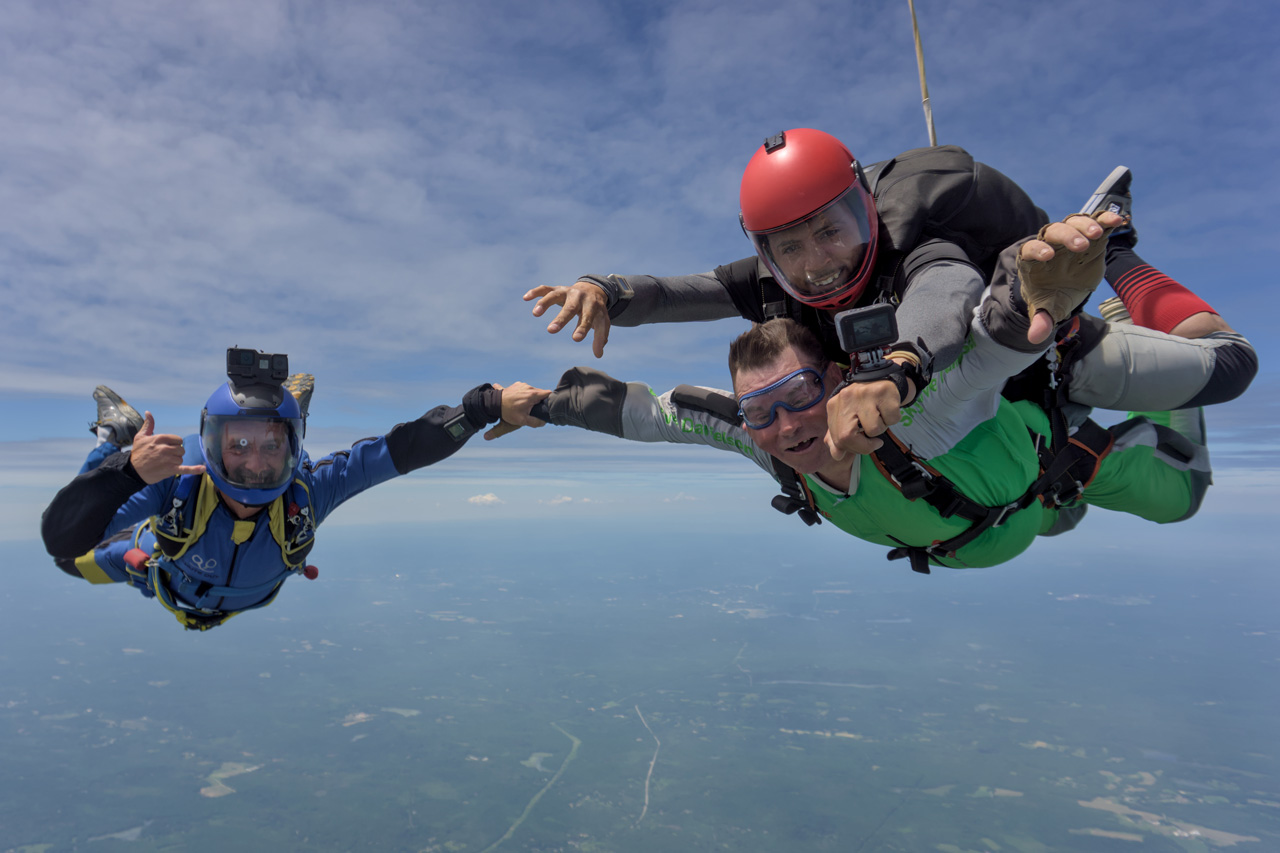
- Practice deep, slow breathing before the jump. This helps lower your heart rate and keeps you calm.
- Listen to your instructor’s pre-jump briefing. They often mention how to position your head and body for easier breathing.
- Try breathing through your nose during freefall if the wind feels overwhelming in your mouth.
- Don’t clench your jaw or lips. Keeping your mouth slightly open lets air flow naturally.
- Focus on the experience, not your breath. Often, worry makes breathing feel harder than it is.
A less obvious insight: wearing a full-face skydiving helmet can make breathing feel easier for some people, as it deflects wind and noise away from your face.
How Skydiving Compares To Other High-altitude Activities
It’s helpful to compare skydiving to other things people do at high altitude, like hiking or flying.
| Activity | Altitude (feet) | Oxygen Support Needed? | Breathing Difficulty |
|---|---|---|---|
| Commercial Flight | 30,000-40,000 | Cabin pressurized | Normal |
| High Mountain Hike | 10,000-14,000 | No (short periods) | Possible if unfit |
| Skydiving | 10,000-14,000 | No | Unusual, but manageable |
| High-Altitude Skydiving (18,000+) | 18,000+ | Yes | Can be difficult |
As you can see, skydiving from standard altitudes doesn’t require any special breathing equipment. The situation changes only for high-altitude jumps (above 15,000 feet), where jumpers wear oxygen masks.
Breathing Equipment In Special Skydives
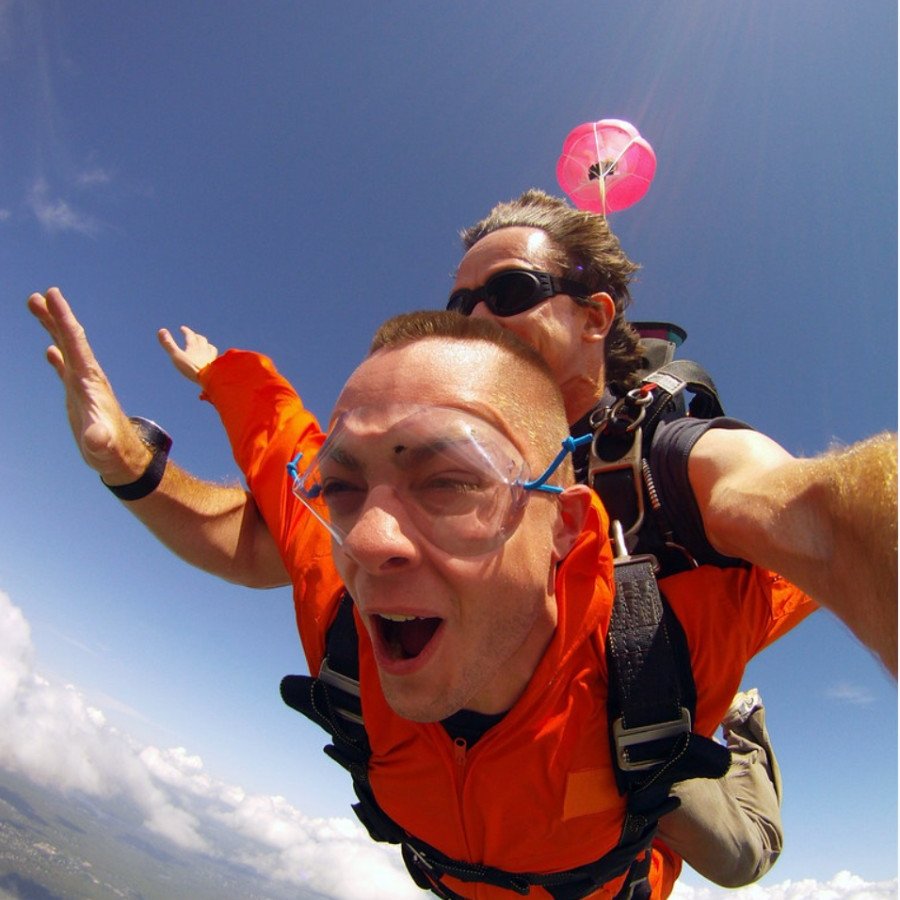
Most skydivers don’t use breathing equipment. But for jumps at extreme altitudes—like those done by military teams or record-setters—oxygen masks are essential. At these heights, the air’s oxygen is too low for safety.
For example, the famous Red Bull Stratos jump from 128,000 feet used a full pressure suit and oxygen supply. Regular sport skydiving doesn’t go anywhere near these heights.
If you ever do a high-altitude tandem jump (often called a “HALO” jump), your instructor will provide oxygen and explain how to use it. For all typical jumps, you just breathe normally.
Can You Scream While Skydiving?
A funny but common question: “Can you scream when skydiving?” Yes, you can! The wind is loud, so your scream might not be heard, but your lungs work just as well for shouting as for breathing. Some people even find screaming helps release tension and makes the experience more fun.
The Psychological Side: Why Breathing Feels Hard
Breathing trouble during a skydive is rarely physical—it’s almost always psychological. Fear and excitement can make you feel like you can’t get enough air. This is a normal reaction.
Here’s what helps:
- Trust your training. Remember the briefing you received.
- Remind yourself: The wind isn’t blocking your breath.
- Focus on slow exhales. This calms your body and helps you take in air naturally.
- Enjoy the view. Getting your mind off your breath usually makes everything easier.
An insight many miss: even experienced skydivers sometimes feel breathless at the start of a jump, especially if they haven’t jumped for a while. It’s normal to need a few seconds to adjust.
What Instructors Want You To Know
Skydiving instructors hear questions about breathing all the time. Their advice is straightforward:
- Relax your body. Tension makes breathing harder.
- Trust the process. You are surrounded by air, even if it feels wild.
- Communicate. If you have any worries, tell your instructor before the jump—they can help you prepare.
- Try not to overthink. Worrying about your breath often makes it feel worse.
Many instructors will even demonstrate breathing techniques or simulate the wind in a pre-jump class to help you feel more comfortable.
Real Experiences: What First-time Skydivers Say
Most first-timers say the fear of not being able to breathe disappears within seconds of the actual jump. Here are a few real comments:
- “I thought I wouldn’t be able to breathe, but after the first few seconds, I realized I was fine.”
- “The wind was strong, but I could breathe. I just had to remind myself to do it!”
- “It felt weird, but not scary. The hardest part was calming down enough to try taking a breath.”
These stories show that the worry is much bigger before the jump than during it.
Preparing For Your First Skydive: A Checklist
To make your skydiving experience as smooth as possible, keep these tips in mind:
- Stay hydrated—drink water before your jump, but not too much.
- Eat a light meal—don’t jump on an empty stomach, but avoid heavy foods.
- Practice deep breathing before you go up.
- Wear comfortable clothes that don’t restrict your chest or belly.
- Ask questions—instructors are used to nervous beginners.
- Remember: You can breathe, even if it feels strange at first.
Trusted Information And Research
If you want more scientific background on skydiving, breathing, and high-altitude effects, check out this detailed resource from the Wikipedia: Skydiving. It covers the technical side, safety records, and more.
Frequently Asked Questions
Can You Breathe While Skydiving Or Will The Wind Stop You?
Yes, you can breathe while skydiving. The wind may feel strong, but it doesn’t block your nose or mouth. Most people find breathing easy once they relax.
Do You Need Oxygen When Skydiving?
For standard jumps up to 14,000 feet, you don’t need extra oxygen. Only high-altitude jumps above 15,000 feet require supplemental oxygen.
What If I Feel Like I Can’t Breathe During Freefall?
This feeling is usually caused by nerves. Try to relax, open your mouth slightly, and take slow breaths. If you have breathing issues in daily life, talk to your doctor before jumping.
Is It Safe To Skydive With Asthma?
Many people with mild, well-controlled asthma can skydive safely. Check with your doctor and inform your instructor before your jump.
Why Do Some People Hold Their Breath During A Skydive?
Excitement or fear can make you hold your breath without realizing it. Practicing deep breathing before your jump helps, and most people adjust quickly once they’re in the air.
Skydiving is an incredible experience, and breathing is not something you need to worry about. With the right preparation and mindset, you’ll find that your lungs—and your courage—are ready for the challenge.
