
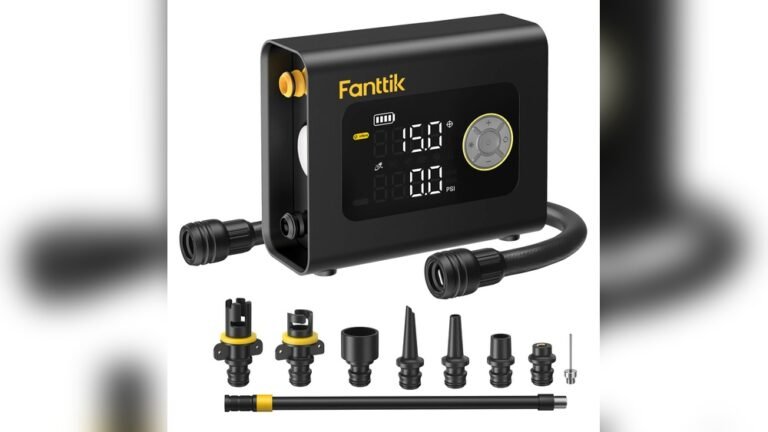
If you own an inflatable paddle board, you already know that keeping it at the right pressure is essential for a good ride. Maybe you’ve wondered if you can just use your car tire pump to inflate your paddle board and save money or space. At first glance, it seems logical—after all, both need air, and both use pumps. But are they really interchangeable? Let’s take a close look at how car tire pumps work, what paddle boards require, and whether this shortcut is smart, safe, or even possible.
How A Car Tire Pump Works
Before trying to inflate your paddle board with a car tire pump, it helps to understand what these devices are built to do. Most car tire pumps—especially the portable electric ones—are designed to quickly fill a car or bike tire with air. They focus on producing high air pressure but move a relatively small volume of air with each pump. For example, a standard car tire might need 30-35 PSI (pounds per square inch) but has a much smaller internal space compared to a paddle board.
Car tire pumps usually come in two main types:
- Manual hand pumps (like foot pumps or hand levers)
- Electric air compressors (powered by a car’s 12V socket or battery)
Both are built for the narrow, high-pressure needs of car tires. They also typically have a gauge showing PSI so you can monitor the pressure as you fill.
What Paddle Boards Need
Inflatable paddle boards (often called iSUPs) use a different kind of air requirement. They have a much larger volume—sometimes over 200 liters of air—and usually need to be inflated to a pressure between 12 and 18 PSI, depending on the board. While the PSI is lower than a car tire, the amount of air required is much higher.
Paddle board pumps are designed with this in mind. They push a lot of air with each stroke (high volume), but only up to a moderate PSI. Most come as:
- Manual double-action pumps (push air in both up and down strokes)
- Special electric iSUP pumps (designed for high volume, moderate pressure)
The valves on paddle boards are also quite different from car tire valves. Most paddle boards use a Halkey-Roberts valve, which is not compatible with the standard Schrader valve of car tires.

Comparing Car Tire Pumps And Paddle Board Pumps
To see the differences more clearly, here’s a quick side-by-side:
| Feature | Car Tire Pump | Paddle Board Pump |
|---|---|---|
| Air Pressure Range | Up to 100 PSI | 12–20 PSI |
| Air Volume per Pump | Low | High |
| Valve Type | Schrader/Presta | Halkey-Roberts |
| Best For | Car/bike tires | Paddle boards, inflatables |
| Compatibility | Not direct | Direct fit |
Will A Car Tire Pump Work On A Paddle Board?
This is the big question. Technically, a car tire pump can sometimes push air into a paddle board if you use the right adapter for the valve. However, the process is not simple, and there are important issues to consider.
Valve Compatibility
Most car tire pumps use Schrader or Presta valves (like those on car or bike tires). Paddle boards almost always use a Halkey-Roberts (HR) valve, which is larger and has a different locking mechanism. You’ll need a special valve adapter to even connect your car pump to your paddle board. These adapters are available online, but they are not always a perfect fit and may leak air.
Air Volume And Time
Car tire pumps are built for pressure, not volume. This means that while they can reach the PSI needed for paddle boards, they deliver air very slowly. Inflating a paddle board with a car tire pump can take 30–60 minutes or more, depending on the size of your board and the power of your pump. Manual car pumps can take even longer and are extremely tiring. Paddle board pumps, by comparison, often inflate a board in under 10 minutes.
Risk Of Pump Overheating
Electric car tire pumps are not designed to run for long periods. If you run them for 20 minutes or more, the motor can overheat. This could damage the pump or even cause a fire risk. Paddle board pumps are built for longer inflation times and usually have automatic shut-off features to prevent overheating.
Achieving The Correct Psi
Many car tire pumps have built-in pressure gauges, but they are often not accurate at the lower pressures needed for paddle boards. There’s a risk you might under-inflate or over-inflate your board, leading to poor performance or even damage.
Practical Experience
Many paddle boarders have tried using car tire pumps out of convenience. Most report frustration with slow inflation, overheating, or leaking adapters. Only a few models of heavy-duty air compressors can do the job reliably, and they are usually expensive and bulky—defeating the purpose of a simple solution.
Risks Of Using A Car Tire Pump For A Paddle Board
It’s important to understand the possible risks if you try to use a car tire pump for your paddle board:
- Valve Damage: Forcing air through a poor-fitting adapter can damage the paddle board valve, leading to leaks.
- Under-Inflation: If you give up midway because it takes too long, your board will be too soft, making it unstable on water.
- Over-Inflation: Some car tire pumps can easily go past the safe PSI range. Over-inflation can cause seams to split or the board to burst.
- Pump Failure: Running a car tire pump for too long can break the pump, leaving you with neither an inflated board nor a working car pump.
- Time Wasted: The process can take so long that you waste valuable time you could be spending on the water.
When Might A Car Tire Pump Be Useful?
There are a few rare scenarios where a car tire pump might help:
- As an emergency backup if your paddle board pump breaks and you have the right adapter.
- For top-ups—if your board is already mostly inflated and you just need a few more PSI.
- When using a high-volume portable air compressor designed for inflatables (these are different from standard car tire pumps).
Even in these cases, it’s usually better to use the right tool for the job.
Alternatives To Using A Car Tire Pump
Instead of struggling with a car tire pump, consider these options:
- Manual Double-Action Paddle Board Pump: These come with most boards and are designed for fast inflation.
- Electric Paddle Board Pump: These run off your car’s 12V socket and are built to deliver the right volume and pressure for paddle boards.
- Battery-Powered Inflator: Some modern inflators are portable, rechargeable, and work well for paddle boards. Always check the max PSI and volume.
- Borrow or Rent: If you’re traveling, some paddle board rental shops let you borrow pumps.
Here’s a quick comparison of typical inflation times for a standard paddle board:
| Pump Type | Average Inflation Time | Effort Needed |
|---|---|---|
| Manual iSUP Pump | 7–10 minutes | Moderate |
| Electric iSUP Pump | 8–12 minutes | Minimal |
| Car Tire Pump | 30–60+ minutes | High/Very High |
What Most Paddle Boarders Do
Experienced paddle boarders quickly learn that the best way to inflate their board is with a pump made for paddle boards. This saves time, effort, and avoids the risk of damaging your gear. Many also invest in a portable electric iSUP pump for convenience, especially if they paddle often.
Some beginners try to save money by using what they already have. But after one or two exhausting attempts, most switch to a paddle board pump. It’s a small investment for a much better experience.
Non-obvious Insights Beginners Miss
- Adapters Aren’t Magic: Many people think a valve adapter will solve all compatibility issues. In reality, adapters only help with the physical connection—they do not increase the air volume the pump can deliver. You’ll still face slow inflation, and in some cases, air leaks around the adapter.
- Air Volume Matters More Than Pressure: Paddle boards need lots of air quickly, not just high pressure. A pump with high PSI but low volume will struggle. This is why some small, high-pressure electric pumps (like those for car tires or basketballs) are almost useless for paddle boards.
- Pump Warranty Voids: Using a car tire pump on a paddle board (especially with non-recommended adapters) can void the warranty on both the pump and the paddle board. Manufacturers can tell if a valve has been misused.
- Battery Drain: If you use a car tire pump powered by your car’s battery, long inflation times can drain your car’s battery, especially if the engine is off.
Expert Tips For Inflating Your Paddle Board
- Always use a pump designed for paddle boards for best results.
- If using an electric pump, let it rest every few minutes to avoid overheating.
- Double-check your board’s recommended PSI, usually printed near the valve.
- Don’t under-inflate—soft boards are hard to paddle and can bend in the middle.
- Don’t over-inflate—too much pressure can damage the seams, especially in hot weather.
- Consider a pressure gauge made for paddle boards if your pump’s gauge seems inaccurate.
Environmental And Safety Considerations
Proper inflation is not just about convenience or performance. An under-inflated paddle board is harder to control and can fold or collapse in the middle, increasing the risk of falling. An over-inflated board is at risk of bursting, especially if left in the sun.
Always check your board after inflation for leaks, and never leave an inflated board in direct sunlight for long periods.
When To Invest In A Paddle Board Pump
If you paddle regularly or have more than one inflatable, a dedicated iSUP pump is worth the investment. Prices start around $30 for manual pumps and $60 for basic electric models. They are easy to use, portable, and some even have deflation modes for quick pack-up. For more information on paddle board pump types and care, you can visit the Inflatable Stand Up Paddle Board Wikipedia page.

Frequently Asked Questions
Is It Safe To Use A Car Tire Pump With An Adapter On My Paddle Board?
It’s technically possible with the right adapter, but not recommended. The process is slow, can overheat the pump, and may damage your board’s valve. It’s safer and faster to use a pump made for paddle boards.
What Happens If I Use A Car Tire Pump And Stop Before Reaching The Correct Psi?
Your board will be under-inflated, which makes it wobbly and hard to paddle. It may also bend or fold in the middle, making it unsafe on the water.
Can I Use A Bike Pump For My Paddle Board?
Bike pumps face the same challenges as car tire pumps: low air volume and incompatible valves. Unless the pump is specifically designed for inflatables, it will be very slow and may not reach the correct PSI.
Why Is The Valve Type Important?
Valve type determines whether the pump can connect securely and deliver air efficiently. Paddle boards use the Halkey-Roberts valve, while car and bike pumps use Schrader or Presta. Adapters help, but don’t solve all problems.
Are There Universal Pumps For All Inflatables?
Some high-end pumps come with multiple adapters and adjustable settings. However, a true “universal” pump is rare. For best results, use a pump designed for your specific inflatable.
Choosing the right pump is a small step that makes a big difference in your paddle boarding experience. While it’s tempting to use a car tire pump, the time and risk involved usually aren’t worth it. With the right equipment, you’ll spend less time inflating and more time enjoying the water.
