
Cricket is a sport with deep traditions, unique rules, and a vibrant global following. If you’ve ever watched a cricket match, you’ve probably heard the word boundary shouted excitedly by commentators and fans. But what exactly is a boundary in cricket? Why does it matter so much? This article will give you a clear, complete understanding of boundaries in cricket, including their types, rules, history, and impact on the game. You’ll also discover interesting facts, common misconceptions, and practical insights that help make sense of this important part of cricket.
Defining A Boundary In Cricket
A boundary in cricket is a scoring event that happens when the ball crosses the edge of the field, either after touching the ground or directly in the air, due to a shot played by the batter. The field’s edge is marked by a rope, line, or fence, and the way the ball crosses this edge determines the number of runs awarded.

Today's Exclusive Deals
Limited-time Exclusive Deals. Check current discount on Amazon.
Check Price on Amazon As an Amazon Associate I earn from qualifying purchases.Boundaries are important because they give teams a fast way to score, often shifting the game’s momentum. They are also crowd-pleasers, making cricket more exciting for fans.
Types Of Boundaries
There are two main types of boundaries in cricket:
- Four (4 runs): The ball crosses the boundary after touching the ground at least once.
- Six (6 runs): The ball crosses the boundary in the air without touching the ground inside the field.
Let’s look closer at these types and how they are scored.
Today's Exclusive Deals
Limited-time Exclusive Deals. Check current discount on Amazon.
Check Price on Amazon As an Amazon Associate I earn from qualifying purchases.Four Runs (ground Boundary)
A batter hits the ball, and it touches the field at least once before crossing the boundary rope or fence. The umpire signals this by waving an arm back and forth in front of their chest. The batting team is awarded four runs, no matter how far the batters have run.
Six Runs (over Boundary)
If the batter hits the ball over the boundary on the full (without the ball touching the ground inside the field), it is called a six. The umpire signals a six by raising both arms above their head. This is the highest scoring shot in a single delivery.
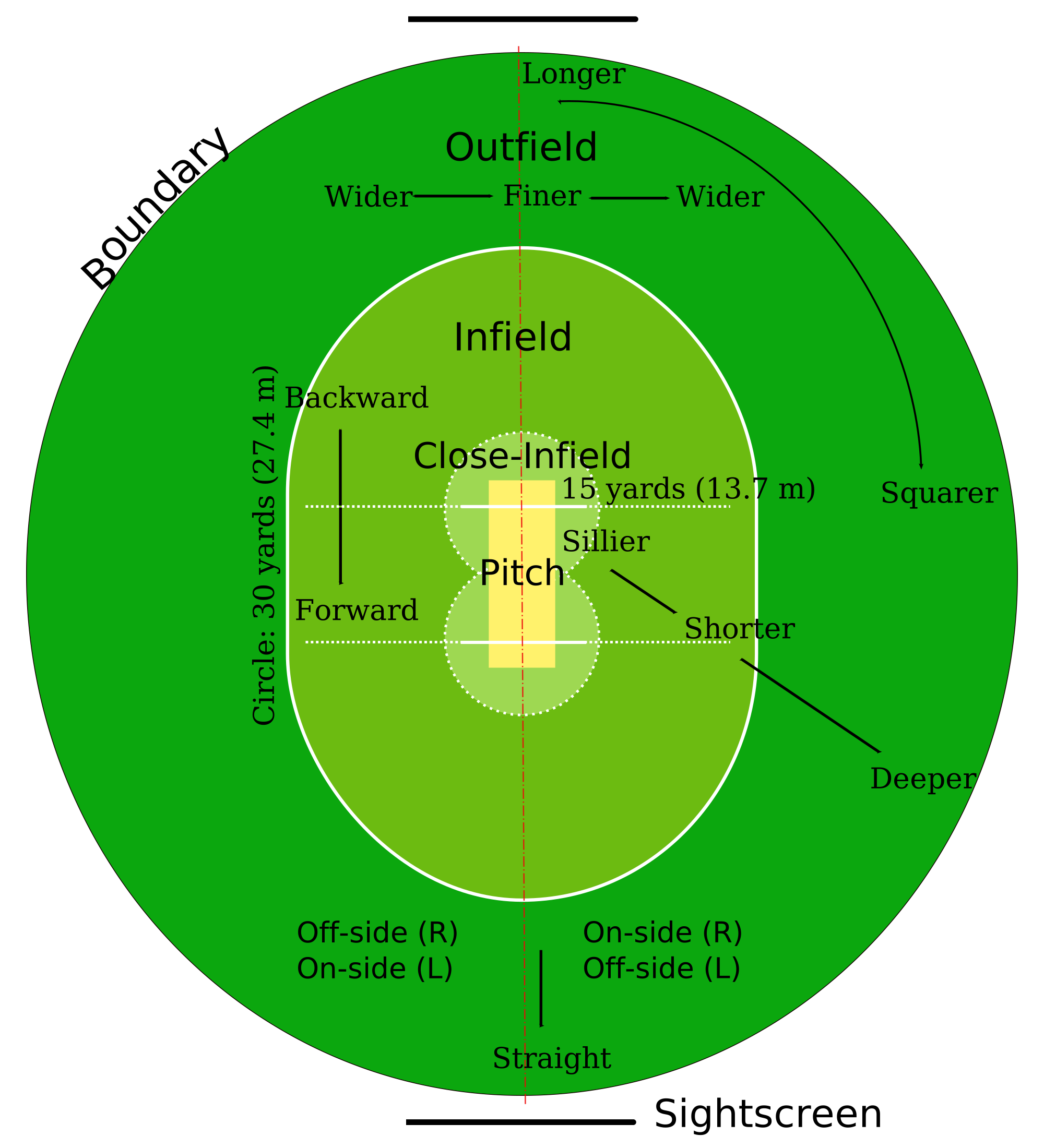
Boundary Markings And Field Setup
The boundary line is usually marked with a rope or a painted line, placed at a certain distance from the center of the pitch. The distance can vary, but in international matches, it’s often between 65 to 90 meters from the batting crease.
Today's Exclusive Deals
Limited-time Exclusive Deals. Check current discount on Amazon.
Check Price on Amazon As an Amazon Associate I earn from qualifying purchases.Boundary size is important for safety and fairness. Short boundaries can lead to more sixes and high-scoring games, while longer boundaries make it harder to hit fours and sixes.
Here’s a comparison of boundary lengths in different formats:
| Format | Minimum Boundary (meters) | Maximum Boundary (meters) |
|---|---|---|
| Test Matches | 65 | 90 |
| One Day Internationals (ODIs) | 65 | 90 |
| Twenty20 Internationals (T20Is) | 60 | 85 |
Stadiums may adjust boundary distances due to their unique size and shape, but must follow the official rules set by the International Cricket Council (ICC).
Rules Governing Boundaries
To score a boundary, certain rules must be met:
- The ball must touch or cross the boundary line or rope.
- If any part of the ball touches the rope or ground beyond it, it counts as a boundary.
- If a fielder touches the rope or goes outside the boundary while in contact with the ball, a boundary is given.
- The umpire decides if the shot is a four or a six, depending on how the ball crossed the boundary.
Boundary runs count for the batter’s score and the team’s total, but not for extras like byes or leg byes unless the ball reaches the boundary during these plays.
Special Situations
- If a fielder stops the ball and their body or any part of their equipment touches the boundary, it is still a boundary.
- If the batter runs while the ball is going to the boundary, only the boundary runs (four or six) count, not the extra runs taken.
The Role Of Boundaries In Scoring
Boundaries are a major part of a team’s total score. In modern cricket, especially in shorter formats like T20, boundaries often decide the outcome of matches. A team with more boundary hitters can score faster and put pressure on the opposition.
Look at this data from a recent T20 tournament:
| Team | Total Fours in Tournament | Total Sixes in Tournament | Average Runs per Match (from Boundaries) |
|---|---|---|---|
| Team A | 96 | 45 | 78 |
| Team B | 82 | 39 | 66 |
| Team C | 111 | 51 | 92 |
Teams that score more boundaries usually have higher totals and a better chance of winning.
Boundary Records And Milestones
Cricket history is full of memorable boundary moments. Players known for big hitting are called power hitters or boundary specialists. Let’s highlight a few records:
- Most Sixes in International Cricket: Chris Gayle holds the record with over 550 sixes across formats.
- Most Fours in ODIs: Sachin Tendulkar scored more than 2,000 boundaries in One Day Internationals.
- Fastest 100% Boundary Centuries: Some batters have scored hundreds where every run came from boundaries, a rare achievement.
These records show the excitement and impact boundaries bring to the sport.

Strategies Around Boundaries
Both batters and bowlers plan their game around boundaries.
Batting Strategies
- Targeting Short Boundaries: Batters aim for the shortest part of the ground, making it easier to clear the rope.
- Powerplay Overs: In limited overs cricket, fielding restrictions help batters find gaps and score boundaries.
- Shot Selection: Certain shots like cover drives, pulls, and lofted shots are used to clear the infield and reach the boundary.
Bowling And Fielding Strategies
- Boundary Riders: Fielders are placed near the boundary to catch or stop balls.
- Bowling Wide or Short: Bowlers try to bowl away from the batter’s strong areas to prevent boundaries.
- Slower Balls and Yorkers: Slower deliveries and full-length balls are used to make boundary hitting difficult.
Boundary Rules: Common Misconceptions
Many beginners have questions or confusion about boundaries. Here are two non-obvious insights:
- Fielders and Boundaries: If a fielder catches the ball but steps on or over the boundary before completing the catch, it is counted as a six, not a catch. This rule prevents injuries and ensures fairness.
- Boundary Overthrows: If the fielding team throws the ball and it goes to the boundary, the batting team gets the runs they completed plus four overthrow runs. This can lead to big changes in the score.
The Evolution Of Boundaries
Boundaries have changed over time. In early cricket, there were no ropes; fielders had to chase the ball until it stopped. Only after the late 19th century did official boundary markings appear, making scoring faster and more exciting.
Today, technology like boundary cameras helps umpires decide close boundary calls. Rules have been adjusted to keep the game safe, fair, and entertaining for fans.
Boundary Etiquette And Spirit Of Cricket
Players are expected to respect the spirit of the game when it comes to boundaries. For example, fielders should not try to fake saving a boundary if they know the ball has crossed the rope. Umpires and technology help keep decisions fair, but honesty from players is still valued.
Impact Of Boundaries In Different Formats
Boundaries play different roles in various cricket formats:
- Test Cricket: Boundaries are less frequent but still important, especially on slow pitches.
- ODIs: Boundaries help speed up scoring in the middle and late overs.
- T20s: Boundaries are vital; teams often try to hit a boundary every over.
Here’s a simple table showing average boundaries per match in different formats:
| Format | Average Fours per Match | Average Sixes per Match |
|---|---|---|
| Test | 70 | 8 |
| ODI | 90 | 15 |
| T20 | 45 | 18 |
This data shows how boundaries are more common in shorter formats, reflecting the faster pace of the games.
Boundary-related Controversies
Sometimes, boundaries lead to controversial moments:
- Crowd Interference: If a spectator touches the ball before it crosses the boundary, the umpire must decide if it’s a four or six, or if the ball is dead.
- Technology Errors: Even with cameras, mistakes happen. Teams can appeal, but final decisions rest with the umpires.
These incidents remind us that cricket, like all sports, combines skill, luck, and human judgment.

How To Practice Boundary Hitting
For those learning cricket, hitting boundaries is a skill that needs practice. Here are some practical tips:
- Focus on Timing: Power is less important than timing. Well-timed shots travel faster.
- Use the Right Bat: Heavier bats can help, but control matters more.
- Study the Field: Aim for gaps, not just power.
- Practice Safe Lifting: For sixes, use your wrists and body, not just arms.
Many beginners try to hit every ball for a boundary. It’s better to choose the right ball and wait for the opportunity.
Boundary Safety And Ground Standards
Safety is a key concern with boundaries. The ICC requires a minimum space (often at least three meters) between the boundary rope and any advertising boards or fences. This reduces the risk of injury for fielders diving to stop boundaries.
Grounds that do not follow these safety rules can lose their license to host international matches. The Marylebone Cricket Club (MCC) has set guidelines for boundary safety, which are followed worldwide.
For more details on cricket field standards, visit the official Cricket Field Wikipedia page.
The Future Of Boundaries
With the rise of shorter formats, boundaries are likely to become even more important. Innovations like smaller bats, powerplays, and new stadium designs may lead to more fours and sixes. However, the balance between bat and ball is crucial—if boundaries become too easy, the contest loses its charm.
Young players are now trained specifically for boundary hitting, using fitness and technology to improve their skills. The excitement of boundaries will continue to draw new fans to the sport.
Frequently Asked Questions
What Is The Difference Between A Four And A Six In Cricket?
A four is scored when the ball crosses the boundary after touching the ground at least once. A six is scored when the ball crosses the boundary in the air, without touching the ground inside the field.
How Does A Fielder’s Position Affect Boundaries?
Fielders placed near the boundary line (boundary riders) can stop or catch balls that would become boundaries. Their positioning is crucial in preventing easy runs and creating catching opportunities.
Are Boundaries The Same In All Cricket Matches?
No, boundary distances can vary depending on the ground size and the format of the game. International matches have standard minimum and maximum distances, but local matches may have shorter or longer boundaries.
Can Overthrows Add To Boundary Runs?
Yes. If the fielding team throws the ball and it goes to the boundary, the batting team gets the runs they have completed plus four runs for the overthrow, as per cricket rules.
Why Do Some Grounds Have More Boundaries Than Others?
Grounds with shorter boundaries make it easier to hit fours and sixes. Weather, pitch conditions, and outfield speed also affect how often boundaries are scored.
Cricket’s boundaries are more than just lines on a field—they are a source of excitement, strategy, and skill. Understanding boundaries will deepen your appreciation for the game, whether you’re a new fan or a seasoned player.

