
Tennis is a sport loved and played worldwide, but not every game feels the same. The surface under your feet can change how the ball bounces, how you move, and even your chances of winning. Many beginners think a tennis court is just a flat rectangle, but there are several types, each with its own character.
Some are soft and slow, others are fast and hard, and a few even surprise you with their unique bounce. Understanding the different types of tennis courts is not just interesting—it’s essential if you want to play better, choose the right gear, or follow professional tournaments with more insight.

Today's Exclusive Deals
Limited-time Exclusive Deals. Check current discount on Amazon.
Check Price on Amazon As an Amazon Associate I earn from qualifying purchases.In this guide, you’ll discover the main kinds of tennis courts, how they affect the game, and which surfaces the world’s top tournaments use. You’ll also learn about maintenance, player preferences, and some fun facts that many beginners miss. Whether you dream of playing on Wimbledon’s grass, sliding on French Open clay, or just want to know why your local club feels so different from TV matches, this article will give you a complete, clear picture of what makes each court unique.
The Four Main Types Of Tennis Courts
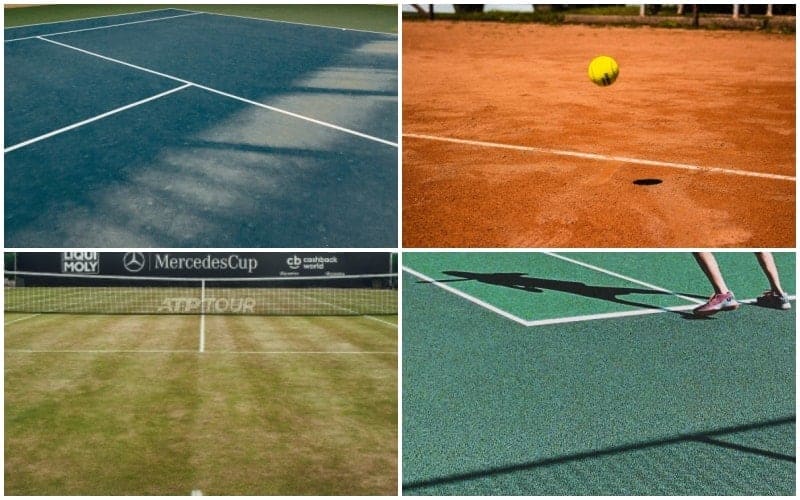
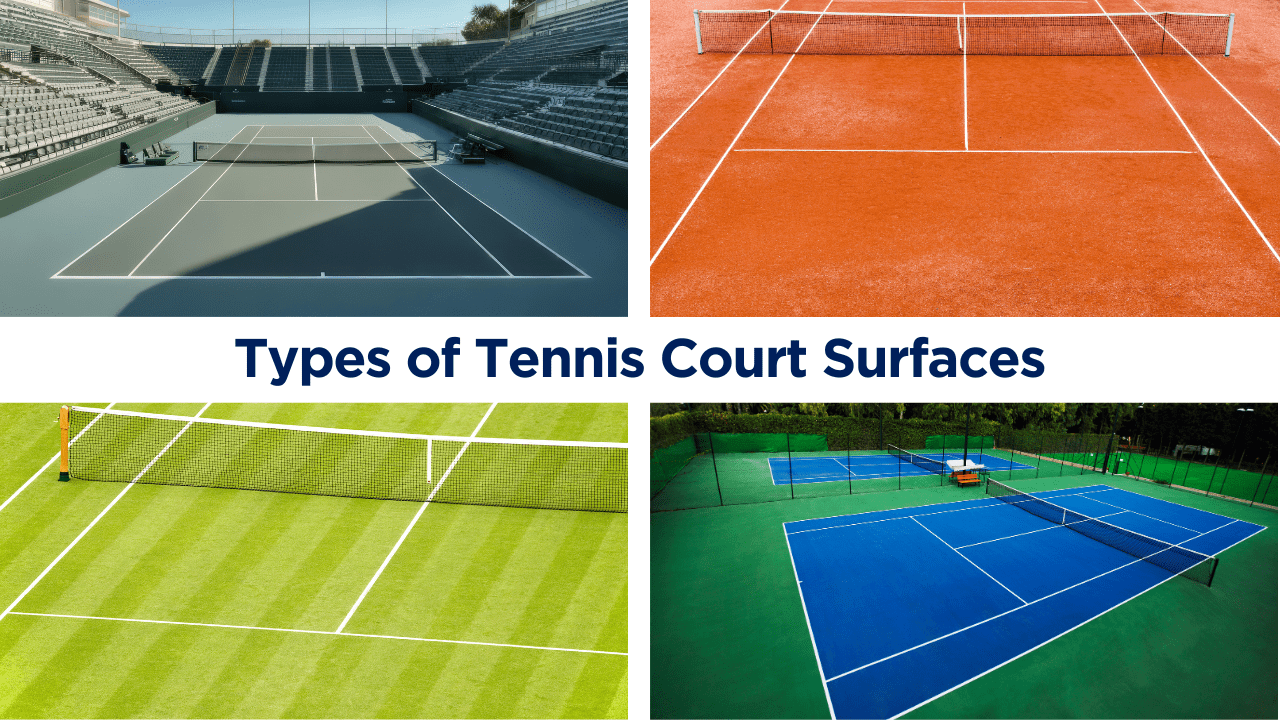
Most tennis courts around the world fall into four main categories: hard courts, clay courts, grass courts, and carpet courts. Each surface has its own feel, speed, and strategy. Let’s explore each type in detail.
Hard Courts
Hard courts are the most common surface for tennis in many countries, especially the United States and Australia. These courts are made from rigid materials like asphalt or concrete, covered with an acrylic layer. This top layer can be colored blue, green, or red, and it’s usually smooth and flat.
Key features:
- Speed: Medium to fast, depending on the court’s finish.
- Bounce: Predictable and high; the ball comes up quickly.
- Maintenance: Easier than grass or clay, but cracks can form over time.
Examples Of Hard Courts
- The US Open uses hard courts at Flushing Meadows.
- The Australian Open is played on similar acrylic hard courts.
How Hard Courts Affect Play
Hard courts tend to favor aggressive baseline players who hit the ball hard and flat. The ball’s high and even bounce makes it easier to predict shots, but the speed can punish slow footwork. Players like Novak Djokovic and Serena Williams have thrived on hard surfaces.
Key Data: Hard Court Speed Comparison
Here’s a look at how different hard courts compare in terms of speed:
| Tournament | Surface Brand | Speed (Relative) |
|---|---|---|
| US Open | Laykold | Medium-Fast |
| Australian Open | Plexicushion | Medium |
| Miami Open | Laykold | Medium |
Clay Courts
Clay courts are famous in Europe and Latin America. They are made from crushed brick, shale, or stone, and have a reddish or greenish color.
Key features:
- Speed: Slowest of all main surfaces.
- Bounce: High and slow, with lots of spin.
- Maintenance: Needs regular watering and rolling.
Examples Of Clay Courts
- The French Open at Roland-Garros is the most famous clay court event.
- Many clubs in Spain and Argentina use clay.
How Clay Courts Affect Play
Clay rewards players with patience and stamina. Rallies are longer, and it’s harder to hit unreturnable shots (“winners”). The surface lets players slide to reach balls, but it also makes sudden stops risky. Rafael Nadal is known as the “King of Clay” for his dominance on this surface.
Common Mistakes On Clay
Many beginners try to play on clay just like on hard courts. This doesn’t work well because the ball slows down and bounces higher, so you need to adjust your timing and footwork. Sliding properly is also a skill that takes practice.
Comparing Red Clay And Green Clay
There are two main types of clay courts: red clay (common in Europe) and green clay (known as Har-Tru, mostly in the US).
| Type | Material | Speed | Main Location |
|---|---|---|---|
| Red Clay | Crushed brick | Slow | Europe, South America |
| Green Clay (Har-Tru) | Crushed basalt | Medium-Slow | United States |
Grass Courts
Grass courts are the oldest type of tennis surface. They are made from natural grass grown over hard-packed soil. Grass courts are now rare, mainly found in the UK and a few other places.
Key features:
- Speed: Fastest of all standard courts.
- Bounce: Low and unpredictable, especially if the grass is worn.
- Maintenance: Very high; needs daily mowing, watering, and care.
Examples Of Grass Courts
- The Wimbledon Championships are played on grass.
- The Queen’s Club in London hosts a famous grass-court event.
How Grass Courts Affect Play
Grass favors serve-and-volley players and those with quick reactions. The ball stays low, and slices work well. Points are shorter and it’s harder to chase balls after they bounce. Historically, players like Roger Federer and Pete Sampras have been great on grass.
Unique Challenges On Grass
Many beginners slip on wet grass or misjudge the bounce. Grass can also wear out during a match, making some spots faster or slower than others. Shoes with special soles are often needed for grip.
Grass Court Vs. Other Surfaces: Speed And Bounce
| Surface | Typical Speed | Bounce Height |
|---|---|---|
| Grass | Fast | Low |
| Hard | Medium-Fast | High |
| Clay | Slow | Very High |
Carpet Courts
Carpet courts are a bit of a secret to many beginners. The term “carpet” in tennis means any removable surface, like a synthetic mat, placed over concrete or wood. These are mostly found indoors.
Key features:
- Speed: Fast, sometimes even faster than grass.
- Bounce: Low and skiddy.
- Maintenance: Easy to replace, but not good for joints.
Examples Of Carpet Courts
- Many indoor tournaments used carpet courts until the early 2000s.
- Some clubs still use carpet for quick indoor play.
How Carpet Courts Affect Play
Carpet courts favor big servers and fast attackers. The ball skids and stays low, making it hard for defensive players to react. This surface is rare in professional tennis now, mostly due to injury risk.
Why Carpet Is Fading Out
Carpet courts have almost disappeared from the ATP and WTA tours. The main reason is safety—players suffered more injuries on these surfaces. However, they remain popular in some indoor clubs because they’re easy to install and maintain.
Other Variations And Hybrid Courts
While the four main surfaces are the most common, there are some less-known or hybrid types you might find, especially at local clubs or in certain regions.
Artificial Grass Courts
Artificial grass is made from synthetic fibers and often filled with sand. It gives some of the feel of natural grass but is much easier to maintain.
- Speed: Medium-fast.
- Bounce: Low, but more predictable than real grass.
- Use: Many community clubs in Australia, New Zealand, and the UK.
Hybrid Clay-hard Courts
Some clubs use a mixture of clay and hard materials to create a court that is easier to care for than real clay but still has a slower bounce than pure hard courts. These courts can be found in areas with extreme weather where traditional clay is impractical.
Indoor Courts
Indoor courts can use any surface—hard, carpet, or even a special synthetic blend. The main difference is the lack of weather interference. Indoor courts often play a bit faster due to no wind or sun.
Acrylic Overlays
Some clubs use a thick acrylic layer over wood or old concrete. These courts are very smooth and can be customized for speed with different coatings.
How Surface Type Impacts Tennis Strategy
Knowing the type of court you’re playing on can change everything from your serve to your shoes. Here are a few key ways:
- Footwork: Clay demands sliding, while hard and carpet need quick stops. Grass courts require low, fast steps to handle unpredictable bounces.
- Spin and Shots: Heavy topspin works well on clay, but slice and flat shots are deadlier on grass and carpet.
- Equipment Choices: Many players use shoes with a herringbone sole for clay, but opt for flatter soles on hard courts. Racquet string tension can also change—looser for more power on slow courts, tighter for control on fast ones.
- Game Style: Defensive baseliners thrive on clay, while aggressive players do better on grass and carpet.
A detail beginners often overlook: even two hard courts can play very differently depending on their cushioning and surface paint. Temperature and humidity also affect how fast the ball moves.
Maintenance And Durability Of Tennis Court Surfaces
The type of court isn’t just about play—it also affects cost, repair, and how often the court can be used.
Hard Court Maintenance
Hard courts are popular because they are durable and can handle lots of play. However, they can crack in cold climates and may need resurfacing every 5-8 years. Cleaning is simple, usually just sweeping and washing.
Clay Court Maintenance
Clay courts need daily care: watering, rolling, and brushing. They can’t be played on during heavy rain, and lines often need repainting. However, they are easier on the body, causing less joint pain for regular players.
Grass Court Maintenance
Grass courts are beautiful but expensive. They need constant mowing, rolling, and watering. Most clubs can’t afford to keep them year-round, which is why they’re now rare outside major tournaments.
Carpet Court Maintenance
Carpet courts are the easiest to install and replace. They’re great for quick setups but must be kept very clean to prevent slipping.
The Role Of Court Surfaces In Professional Tennis
All four Grand Slam tournaments use different surfaces. This variety is part of what makes tennis unique. Here’s where each surface is found:
- Australian Open: Hard court (Plexicushion)
- French Open: Clay (red brick)
- Wimbledon: Grass
- US Open: Hard court (Laykold)
Many players have a favorite surface based on their style. For example, Rafael Nadal is famous for his success on clay, while Roger Federer and Serena Williams have won on all surfaces.
It’s not just about skill—some surfaces can lead to more injuries than others. For example, hard courts are tough on knees and ankles, while clay and grass are softer.
Pros And Cons Of Each Tennis Court Type
Let’s break down the main benefits and drawbacks for players, clubs, and fans.
Hard Courts
Pros:
- Durable and low maintenance
- Good for all playing styles
- Even bounce helps beginners
Cons:
- Can cause joint pain over time
- Surface cracks in extreme weather
Clay Courts
Pros:
- Softer on the body
- Great for learning strategy and patience
- Fewer quick injuries
Cons:
- Needs lots of maintenance
- Not playable in rain
Grass Courts
Pros:
- Fast, exciting play
- Soft on feet and legs
- Prestige for clubs
Cons:
- Very expensive upkeep
- Unpredictable bounce
- Limited access
Carpet Courts
Pros:
- Easy to install and remove
- Very fast play
Cons:
- High injury risk
- Rare in professional events
Artificial And Hybrid Surfaces
Pros:
- Lower maintenance than natural grass or clay
- Can be customized for local climate
Cons:
- Don’t feel exactly like the real thing
- Sometimes too fast or slow for serious play
How To Choose The Right Tennis Court
If you’re picking a court for a match or considering building one, here are a few things to think about:
- Your Playing Style: Aggressive players may prefer faster surfaces, while defensive players might like slow courts.
- Injury History: If you have joint pain, clay or grass is softer on your body.
- Climate: Grass struggles in dry places; clay can be muddy in rain. Hard courts are best for year-round use.
- Budget: Maintenance costs vary a lot. Clay and grass need the most work, while hard and artificial courts are cheaper long-term.
- Skill Level: Beginners may find hard courts easier, but clay teaches patience and movement.
Lesser-known Insights About Tennis Court Surfaces
- Altitude and Surface: At higher altitudes, the ball moves faster and bounces higher, especially on hard courts. Some South American tournaments on clay play much faster than European ones because of this.
- Color and Visibility: The color of the court impacts how well you see the ball. Blue hard courts, like at the US Open, were chosen to make the ball easier to spot on TV. This is one reason blue is now more common than green.
- Surface Conversion: Some stadiums can convert between surfaces. For example, the Madrid Open switched from red to blue clay in 2012 to improve visibility, but switched back after player complaints.

Frequently Asked Questions
What Is The Fastest Tennis Court Surface?
The fastest surface is usually grass, especially when it’s dry and freshly cut. The ball skids and stays low, making points shorter. Some carpet courts can be even faster, but these are now rare in professional tennis.
Why Do Players Prefer Certain Surfaces?
Players choose surfaces that match their playing style and physical strengths. For example, strong servers like grass, while baseline rally players prefer clay. Some players also avoid hard courts due to the risk of injury.
How Often Are Tennis Courts Resurfaced?
It depends on the surface. Hard courts are usually resurfaced every 5-8 years. Clay courts need daily care and are rebuilt every year or two. Grass courts are reseeded every season, and carpet courts are replaced as needed.
Are All Professional Courts The Same Size?
Yes, the dimensions of professional tennis courts are standardized: 23.77 meters (78 feet) long and 8.23 meters (27 feet) wide for singles matches. The surface may change, but the size stays the same.
Where Can I Learn More About Tennis Court Surfaces?
A great resource for more detailed information is the Wikipedia Tennis Court page, which offers an in-depth look at surfaces, construction, and history.
Playing tennis on different courts is a unique experience every time. Whether you’re watching professionals or hitting balls at your local park, knowing the types of tennis courts helps you appreciate the sport’s depth and strategy. Next time you step onto a new surface, pay attention—you might discover a new favorite way to play.

