Surfing is more than just riding waves—it’s a world of styles, boards, and unique approaches. From the classic image of a surfer gliding across a sunlit ocean to daring athletes performing aerial tricks, surfing offers something for everyone. But what exactly are the different types of surfing?
Understanding the range can help you find your style, improve your skills, or simply appreciate the sport more deeply. This guide explores the main types of surfing, their key differences, and what makes each one special.
Today's Exclusive Deals
Limited-time Exclusive Deals. Check current discount on Amazon.
Check Price on Amazon As an Amazon Associate I earn from qualifying purchases.Classic Surfing Styles
Surfing began as a simple act—riding a wave using a wooden board. Over the years, it evolved into several main styles that form the foundation for everything else.
Shortboarding
Shortboarding is what most people think of when they picture modern surfing. Surfers use boards usually between 5’6″ and 6’4″ long. These boards are light, with a pointed nose and three fins (thruster setup). Shortboarding focuses on speed, sharp turns, and tricks like cutbacks or aerials. It’s the style seen in most professional competitions.
Shortboards are fast but less stable, so beginners may find them difficult. Still, they’re perfect for those who love action, quick maneuvers, and challenging themselves on powerful waves.
Longboarding
Longboarding uses boards over 9 feet long, wide, and rounded at the nose. This style is smoother, focusing on flow and style rather than tricks. Longboarders often walk up and down the board, performing moves like hang ten (all ten toes on the nose).
Longboarding is great for smaller waves and all skill levels. The boards are stable, making it easier to balance. This classic style is all about grace, tradition, and connecting with the wave.
Funboarding
Funboards (sometimes called mini-mals or eggs) are boards between 7 and 8 feet long. They combine the stability of longboards with some maneuverability of shortboards. Funboarding is popular with beginners and those who want to transition between styles.
These boards work well in many conditions and allow surfers to experiment, making them ideal for learning and improving.
Specialized Surfing Types
As surfing grew, new types emerged, each offering a unique experience and challenge.
Stand-up Paddle Surfing (sup)
Stand-up paddle surfing involves standing on a large, stable board and using a long paddle to move. SUP can be done on flat water or in waves. In wave SUP, surfers catch and ride waves while paddling.
SUP is accessible for all ages and skill levels. It’s a great workout for the whole body and allows people to surf even when waves are small. Some use SUP for touring lakes and rivers, not just the ocean.
Bodyboarding
In bodyboarding, surfers ride a small, flexible board called a boogie board. Instead of standing, they lie on their stomachs, using fins for speed and control.
Bodyboarding is easy to start and safe for kids. But advanced bodyboarders can perform impressive tricks in big waves, such as barrel rolls and aerials. The boards are affordable, making bodyboarding one of the most accessible surf types.
Kneeboarding
Kneeboarding is a blend of bodyboarding and stand-up surfing. Surfers kneel on a short board, using fins to steer and accelerate. This position keeps the center of gravity low, making it easier to handle steep or fast waves.
Kneeboarding is less common today but still has a dedicated following. It’s a good option for people with balance challenges or those who want to surf in a different way.
Skimboarding
Skimboarding starts on the beach, not in the water. Surfers run toward the water, drop a thin board, and jump on, gliding across the sand or shallow water. Skilled skimboarders catch incoming waves and ride them back to shore.
Skimboarding is fun for all ages and doesn’t require large waves. However, advanced tricks require practice and good timing.
Tow-in Surfing
Tow-in surfing allows surfers to catch massive waves that are impossible to paddle into. Using jet skis or boats, surfers are pulled into giant waves, then released to ride.
This style is for experts only and has made riding 60-foot waves possible. Tow-in surfing requires special boards and safety gear, as well as a strong team for support.
Alternative Surfing Methods
Some types of surfing break the traditional mold, using different crafts or environments.
Windsurfing
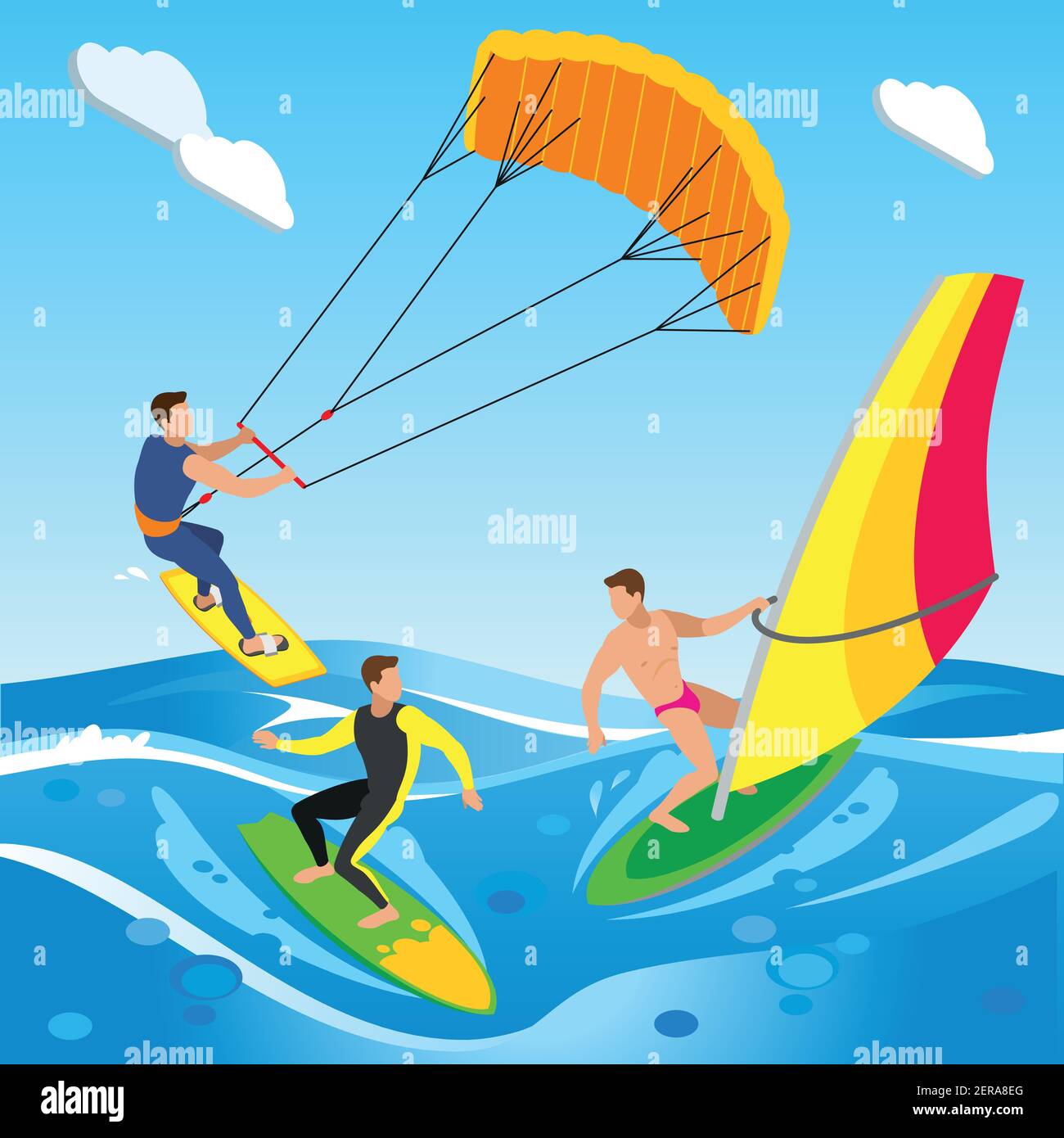
Windsurfing uses a board with a sail attached. The surfer stands and uses the wind for movement, steering with both the sail and the board.
Windsurfing combines elements of sailing and surfing. It can be done on lakes, rivers, and the ocean. The learning curve is steep, but it offers a thrilling blend of speed and skill.
Kite Surfing
Kite surfing (or kiteboarding) uses a small board and a large kite. The kite pulls the surfer across water using wind power. With practice, surfers can jump, spin, and even ride waves.
Kite surfing is fast, exciting, and very popular in windy locations. It requires lessons for safety, as managing both the kite and the board can be challenging.
Foil Surfing
Foil surfing is a recent innovation. The board has a hydrofoil underneath—a wing-shaped fin that lifts the board above the water at speed. This reduces drag and allows surfers to ride even tiny waves.
Foil surfing feels like flying and is unlike any other type. It’s not easy to learn, but experienced surfers love the smooth, silent ride.
River Surfing
River surfing means riding standing waves in rivers. Instead of moving with the wave, the water flows toward the surfer, who stays in one spot.
River surfing is popular in places far from the ocean, like Munich’s Eisbach River. Boards are similar to ocean surfboards but sometimes shorter or reinforced.
Adaptive Surfing
Adaptive surfing uses special boards and techniques for people with physical or mental challenges. Boards may have extra handles, seats, or be guided by helpers.
Events and organizations worldwide support adaptive surfing, making the sport more inclusive. It’s a powerful way to experience the ocean, regardless of ability.
Comparing Surfboard Types
Choosing the right board is key for each surfing style. Here’s a quick comparison:
| Surfboard Type | Length | Best For | Skill Level |
|---|---|---|---|
| Shortboard | 5’6”–6’4” | Tricks, fast turns | Intermediate–Expert |
| Longboard | 9’+ | Small waves, style | Beginner–Expert |
| Funboard | 7’–8’ | Learning, all conditions | Beginner–Intermediate |
| Bodyboard | 3’–4’ | Lying down, big waves | All levels |
Ocean Vs. Alternative Surfing Conditions
Not all surfing happens in the ocean. Different conditions create new challenges and fun.
| Surfing Type | Main Location | Wave Source | Unique Challenge |
|---|---|---|---|
| Ocean Surfing | Beach, reef, point breaks | Wind, tides, storms | Changing conditions |
| River Surfing | Rivers, standing waves | Flowing water | Stationary waves |
| Wave Pool Surfing | Artificial pools | Mechanical waves | Consistent waves |
| Windsurfing/Kite Surfing | Lakes, oceans, rivers | Wind | Managing wind & board |
The Rise Of Artificial Wave Surfing
A newer type of surfing is growing: artificial wave surfing. Wave pools use machines to create perfect, repeatable waves. These pools let people surf away from the ocean and are great for learning. Some famous pools, like Kelly Slater’s Surf Ranch in California, are changing the sport.
Wave pools make surfing available year-round and allow for competitions in controlled environments. They’re a big step for those who live far from the sea or want predictable conditions.
Key Factors That Define Surfing Types
With so many options, what really separates one type of surfing from another? Here are the main factors:
- Type of board or craft: Each style uses a unique board, from shortboards and longboards to paddle boards, bodyboards, or foils.
- Wave or water conditions: Ocean, river, artificial, or flat water all change the experience.
- Riding position: Standing, kneeling, lying down, or seated.
- Power source: Some types use only waves, while others add wind, paddling, or even mechanical pull.
- Skill and fitness: Some styles are beginner-friendly; others demand experience and training.
Understanding these differences helps you choose the right style and prepare for the challenges ahead.
Common Mistakes When Trying New Surfing Styles
Switching between surfing types is exciting, but can lead to mistakes. Here’s what to avoid:
- Choosing the wrong board: A shortboard is not ideal for beginners; a longboard won’t perform in huge waves.
- Ignoring safety: Kite surfing and tow-in surfing require special lessons and gear. Never try them without proper training.
- Underestimating conditions: River and artificial wave surfing are different from the ocean. Don’t assume skills transfer instantly.
- Skipping basic skills: Many get excited about new styles but forget basics like paddling, popping up, or reading waves.
- Not respecting local rules: Different spots have unique etiquette and safety rules. Always check before you surf.
Why Try Different Types Of Surfing?
Exploring new surfing types broadens your skills and keeps the sport fresh. You’ll build balance, strength, and ocean knowledge. Each style offers a new way to connect with water, whether you’re seeking adrenaline or relaxation.
Many advanced surfers recommend learning several styles. It helps you adapt to changing conditions and keeps you motivated. Plus, you’ll meet a wider community of surfers who share your passion.
Frequently Asked Questions
What Is The Easiest Type Of Surfing For Beginners?
Longboarding and bodyboarding are the easiest for beginners. Longboards are stable and easy to paddle, making it simple to catch waves. Bodyboards let you ride waves without standing, which is great for learning basics and building confidence.
Can You Surf On Rivers And Lakes?
Yes, river surfing is popular in some places with standing waves, like the Eisbach in Munich. Windsurfing and stand-up paddle surfing can be done on lakes, using wind or paddles for movement. Surfing in these places is different from the ocean but just as fun.
What Is Foil Surfing, And Why Is It Popular?
Foil surfing uses a hydrofoil under the board to lift the rider above the water. It feels smooth and fast, even on small waves. Many surfers love the sensation of “flying” and the ability to surf in almost any conditions. However, foil surfing requires experience and practice.
Is Tow-in Surfing Dangerous?
Tow-in surfing is very advanced and can be dangerous. Surfers use jet skis to catch giant waves that are impossible to paddle into. This requires special training, rescue skills, and safety gear. Only experienced surfers should try tow-in surfing.
Where Can I Learn More About The History And Types Of Surfing?
A good place to start is the Surfing Wikipedia page, which covers the sport’s history, evolution, and many styles.
Surfing’s world is wide and full of possibilities. From the first time you catch a wave to the thrill of trying new styles, there’s always something new to learn. Choose your board, respect the ocean, and enjoy the ride—no matter which type of surfing you try.