Choosing the right workout machine can make a huge difference in your fitness journey. If you’re torn between a spin bike and an elliptical trainer, you’re not alone.
Both offer great cardio benefits, but which one fits your goals, body, and lifestyle best? You’ll discover the key differences, pros, and cons of each. By the end, you’ll have a clear idea of which machine will keep you motivated and help you reach your fitness goals faster.
Today's Exclusive Deals
Limited-time Exclusive Deals. Check current discount on Amazon.
Check Price on Amazon As an Amazon Associate I earn from qualifying purchases.Ready to find your perfect match? Let’s dive in.
Cardio Benefits Compared
Choosing between a spin bike and an elliptical trainer depends on many factors. One key aspect is their cardio benefits. Both machines help improve heart health and burn calories. Understanding their differences helps you pick the best option for your fitness goals.
Calorie Burn Rates
Spin bikes typically burn more calories in less time. They allow for high-intensity workouts with quick pedal speeds. Elliptical trainers offer a lower-impact option but may burn fewer calories per session. The exact calories burned depend on workout intensity and duration.
Impact On Heart Health
Both machines improve heart health by raising heart rate steadily. Spin bikes often push the heart harder due to intense cycling sessions. Ellipticals provide a gentler cardio workout, suitable for people with joint issues. Regular use of either machine supports cardiovascular endurance.
Endurance Building
Spin bikes build endurance with focused leg strength and stamina training. They help increase power and speed for cycling enthusiasts. Ellipticals improve overall endurance by engaging both upper and lower body muscles. This balance supports longer, sustained cardio sessions.

Muscle Engagement
Muscle engagement varies between a spin bike and an elliptical trainer. Each machine targets muscles differently. Understanding these differences helps choose the right workout tool. Both provide good exercise but focus on separate muscle groups.
Lower Body Focus
The spin bike mainly works the legs. It targets the quads, hamstrings, and calves strongly. Pedaling against resistance builds strength in these muscles. The elliptical trainer also works the legs. It activates the glutes and inner thighs more. Its motion mimics walking or running without impact.
Upper Body Involvement
Spin bikes offer little upper body work. Your hands rest on the handlebars for balance only. The elliptical trainer uses moving handles. This movement engages the arms, shoulders, and chest. It gives a more full-body workout than the spin bike.
Core Activation
Core muscles stabilize the body during exercise. On a spin bike, the core works to keep balance and posture. The elliptical trainer requires more core control. Its standing position and arm movement activate the abs and lower back. This helps improve overall stability.
Joint Impact And Injury Risk
Choosing between a spin bike and an elliptical trainer involves many factors. Joint impact and injury risk play a key role. Both machines offer cardio workouts but affect your joints differently. Understanding these differences helps protect your knees and hips. It also guides those recovering from injuries. Let’s explore how each machine impacts your joints and injury risk.
Stress On Knees And Hips
Spin bikes put pressure on knees due to repeated pedaling. The motion is mostly circular and fixed. It can strain knee joints if done with poor form. Hips also bear some load but less than knees.
Elliptical trainers offer low-impact motion. Your feet stay on pedals and move in an oval shape. This reduces stress on knees and hips. The machine supports smooth, gliding movement, which eases joint pressure.
Suitability For Rehabilitation
Spin bikes suit people with strong knee health. They help rebuild leg strength but may strain healing joints. Avoid high resistance during early rehab stages.
Ellipticals are better for joint recovery. The low-impact design helps maintain movement without pain. They promote gentle exercise that aids healing. Physical therapists often recommend ellipticals for rehab.
Common Injuries
Spin bike users risk knee pain and tendon strain. Overuse or wrong seat height causes discomfort. Hip soreness can occur from poor posture.
Elliptical users may face muscle fatigue or lower back pain. This happens if they lean too much on handles. Joint injuries are less common on ellipticals.
Workout Variety And Customization
Workout variety and customization play a key role in keeping exercise routines fresh and motivating. Both spin bikes and elliptical trainers offer different features to tailor workouts. These options help users adjust intensity and style according to their fitness goals. Understanding these differences can help choose the right machine.
Resistance Levels
Spin bikes usually offer a wide range of resistance settings. Riders can adjust resistance manually or digitally. This allows for easy changes during workouts. Elliptical trainers also provide resistance control. They often have fewer levels but still allow gradual intensity changes. Both machines help build strength and endurance through resistance adjustments.
Pre-set Programs
Elliptical trainers often come with many pre-set workout programs. These include options like fat burn, cardio, and interval training. Programs guide users through different speeds and resistance levels automatically. Spin bikes may also offer pre-set workouts, but fewer models include them. Pre-set programs add structure and help users stay on track.
Interval Training Options
Interval training is popular for boosting fitness quickly. Spin bikes excel here with easy resistance and speed changes. Many models have built-in interval timers or allow custom settings. Elliptical trainers support interval training too, but switching intensity can be less immediate. Both machines offer effective interval workouts for fat loss and stamina.
Space And Setup Requirements
Choosing between a spin bike and an elliptical trainer involves more than exercise style. Space and setup needs are important. These machines differ in size, assembly, and how easy they move. Knowing these details helps you pick the right one for your home.
Footprint Comparison
Spin bikes have a smaller footprint. They fit well in tight spaces like apartments. Elliptical trainers usually need more room. They are longer and wider. Plan your workout area before buying. Measure the space to avoid crowding.
Assembly And Maintenance
Spin bikes are easier to assemble. Most come with clear instructions and fewer parts. Ellipticals take longer to set up. They have more components and moving parts. Both need regular maintenance. Check bolts and clean parts often for safety.
Portability
Spin bikes are lighter and easier to move. Many have wheels for quick relocation. Elliptical trainers are heavier and harder to move. They usually stay in one spot. Consider your space and if you want to move the machine often.
User Experience And Comfort
User experience and comfort play a big role in choosing exercise equipment. Both spin bikes and elliptical trainers offer unique feelings during workouts. Comfort affects how long and how well you exercise. Understanding key comfort features can help you pick the right machine.
Seating And Posture
Spin bikes have a seat similar to a regular bike. The seat is adjustable to fit your height. Proper seat height helps keep your knees safe. You sit upright or lean forward slightly. This position targets your legs and core muscles.
Elliptical trainers do not have seats. You stand while using them. This standing posture works both upper and lower body. You can adjust stride length on some models. Standing helps improve balance and posture.
Handlebar Design
Spin bikes have handlebars you can hold in different ways. Some allow a racing position for intense rides. The grips feel firm and steady during fast pedaling.
Elliptical trainers have moving handlebars. These move back and forth with your steps. They help engage your arms and shoulders. Fixed handlebars offer extra balance if needed.
Noise Levels
Spin bikes often use magnetic or belt resistance. This makes them very quiet during workouts. You can exercise without disturbing others.
Elliptical trainers also run quietly. Their smooth motion creates little noise. Noise level depends on the machine’s build quality. Both machines suit home use without loud sounds.
Cost And Value
Choosing between a spin bike and an elliptical trainer means thinking about cost and value. Both machines offer good workouts, but their prices and benefits differ. Knowing these differences helps you get the best deal for your budget.
Initial Investment
Spin bikes usually cost less than elliptical trainers. Basic models start around a few hundred dollars. Ellipticals often have a higher starting price because of their size and features. Your budget plays a big role in your choice here.
Long-term Durability
Spin bikes have fewer moving parts. This often means less wear and tear over time. Elliptical trainers have more joints and parts that may need repair. Choosing a sturdy model can save money in the long run.
Resale Potential
Spin bikes tend to hold their value well. They are popular and easier to move. Ellipticals can be harder to sell because of their size. Checking the brand and condition affects resale price too.
Best Choices For Different Goals
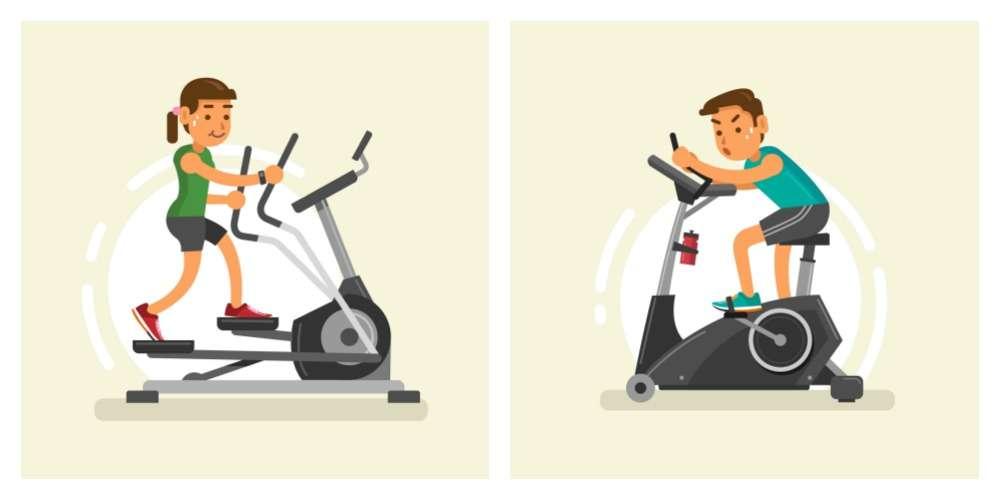
Choosing between a spin bike and an elliptical trainer depends on your personal fitness goals. Each machine suits different needs and offers unique benefits. Understanding these can help you pick the right option for your exercise routine.
Weight Loss Focus
Both machines help burn calories effectively. The spin bike targets the lower body with intense cycling. It raises heart rate quickly for fast calorie burn. The elliptical offers a full-body workout by involving arms and legs. This increases overall calorie use. For steady, long-duration workouts, the elliptical is great. For shorter, high-intensity sessions, the spin bike works best.
Strength Building
The spin bike builds strong leg muscles. It focuses on quads, hamstrings, and calves. Resistance levels can increase muscle effort. The elliptical also tones legs and glutes. It adds upper body work through moving handles. This helps strengthen arms and shoulders. For targeted leg strength, choose the spin bike. For balanced muscle work, the elliptical is ideal.
Rehabilitation And Therapy
The elliptical trainer offers low-impact movement. It reduces stress on joints during exercise. This is good for injury recovery and arthritis. The smooth, gliding motion aids gentle rehab workouts. The spin bike also has low impact but puts more pressure on knees. It suits those who can pedal without pain. For careful joint therapy, the elliptical is safer. For controlled leg strengthening, the spin bike fits well.
Frequently Asked Questions
What Are The Main Differences Between Spin Bikes And Ellipticals?
Spin bikes focus on intense cycling workouts, targeting lower body muscles. Ellipticals provide low-impact, full-body exercise with both arm and leg movement. Spin bikes simulate outdoor biking, while ellipticals offer smooth, joint-friendly motion. Your choice depends on fitness goals and joint health.
Which Is Better For Weight Loss, Spin Bike Or Elliptical?
Both machines effectively burn calories and aid weight loss. Spin bikes often burn more calories due to higher intensity workouts. Ellipticals offer sustained cardio with less joint strain. Consistency and workout duration matter most for weight loss success.
Are Ellipticals Or Spin Bikes Easier On Joints?
Ellipticals are generally easier on joints due to their low-impact, smooth motion. Spin bikes put more pressure on knees and hips but allow seated workouts. If you have joint issues, ellipticals are usually the safer option.
Can Spin Bikes And Ellipticals Improve Cardiovascular Health?
Yes, both improve cardiovascular health by raising heart rate. Spin bikes offer high-intensity training for quick heart benefits. Ellipticals provide steady-state cardio, great for endurance. Regular use of either enhances heart and lung function.
Conclusion
Both spin bikes and elliptical trainers offer great workouts. Spin bikes focus more on intense cycling and leg strength. Ellipticals provide a low-impact, full-body exercise. Choose the machine that fits your fitness goals and comfort. Think about space, budget, and your joint health.
Regular exercise on either helps improve heart health and stamina. The best choice is the one you enjoy using often. Stay active, stay healthy, and keep moving forward.