
Paddle boarding has grown from a niche water sport into a global activity enjoyed by millions. For many, the beauty of stand-up paddle boards (SUPs) lies in their portability—especially the inflatable types. But behind the scenes, a crucial component quietly makes this convenience possible: the valve. The valve type not only affects how you inflate or deflate your paddle board, but also influences performance, reliability, and long-term maintenance. If you’re buying, maintaining, or simply curious about paddle boards, understanding the different valve types is essential. Let’s dive deep into what types of valves paddle boards use, how they differ, and why it matters.
Why Valves Matter On Paddle Boards
A paddle board’s valve is more than a simple air hole. It’s the gateway that keeps your board rigid on the water or packs it down small for travel. Valves affect how easily you can pump the board, prevent leaks, and help with fast deflation. A faulty or poorly matched valve can lead to air loss, water entry, or even a ruined trip. That’s why knowing your valve type isn’t just technical trivia—it’s practical knowledge every paddle boarder should have.
The Main Types Of Valves Used On Paddle Boards
Most inflatable paddle boards use one of three main valve types. Each comes with specific features, pros, and cons. Here’s a detailed look at the most common:
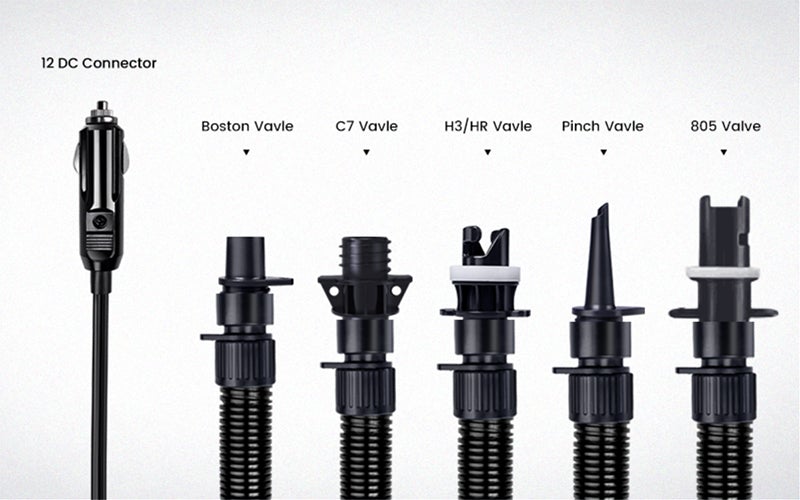
1. Halkey-roberts Valve (hr Valve)
The Halkey-Roberts valve is by far the most popular on modern paddle boards. Sometimes called the “HR” or “H-Valve,” it’s a staple in both SUPs and inflatable kayaks.
Key Features
- Two-stage system: Inner spring-loaded pin for inflation/deflation control.
- High-pressure rating: Designed to handle the 12-18 PSI many SUPs require.
- Universal adapters: Many pumps come with HR-compatible nozzles.
How It Works
Push the center pin down and twist—this toggles between “inflate” and “deflate” modes. In “inflate,” air only enters and cannot escape. In “deflate,” air rushes out quickly.
Advantages
- Reliable air seal
- Easy to use
- Widely available replacement parts
- Compatible with most electric and manual SUP pumps
Drawbacks
- Dirt or sand can jam the pin
- Needs a proper adapter; not all generic pumps fit
Practical Insight
Many beginners don’t realize the pin must be “up” to hold air after inflating. Accidentally leaving it “down” can cause all air to escape when you remove the hose—a common rookie mistake.
2. Boston Valve
The Boston valve is another well-known design, often used in inflatable boats, air mattresses, and older paddle boards.
Key Features
- Two-piece construction: Separate cap and base for easier maintenance.
- One-way valve: Allows air in, blocks it from coming out.
How It Works
Screw off the top cap, insert the pump nozzle, and inflate. To deflate, unscrew the entire valve from the board for fast airflow out.
Advantages
- Simple design
- Quick inflation and deflation
- Less likely to clog with sand
Drawbacks
- Not all SUP pumps fit Boston valves
- Lower maximum pressure (usually up to 10 PSI)
- Not ideal for boards needing high PSI
Practical Insight
Boston valves are rare on high-performance SUPs due to their lower pressure tolerance. However, they’re still found on some entry-level or multi-purpose inflatables.
3. Military Valve (leafield C7/d7)
The Leafield C7 and newer D7 valves are known as “military valves” due to their origins in rugged inflatables used by the military and rescue teams.
Key Features
- Very high durability
- Excellent air retention
- Handles high pressure (up to 20 PSI and beyond)
How It Works
Similar to the Halkey-Roberts, these use a spring-loaded mechanism. The main difference is their enhanced materials and seals for tough environments.
Advantages
- Extremely robust
- Long lifespan
- Less prone to leaks under stress
Drawbacks
- Pump adapters can be harder to find
- More expensive to replace
Practical Insight
Some premium SUP brands use Leafield valves for their top models, but you’ll need to double-check your pump compatibility before heading out.
Comparing Paddle Board Valve Types
For easy reference, here’s how the main valve types compare in key areas:
| Valve Type | Max Pressure | Ease of Use | Pump Compatibility | Durability |
|---|---|---|---|---|
| Halkey-Roberts | 15-20 PSI | Easy | Very High | High |
| Boston | 10 PSI | Very Easy | Medium | Medium |
| Leafield C7/D7 | 20+ PSI | Medium | Medium | Very High |
Specialty And Less Common Valve Types
While the three main types dominate the market, you may occasionally find other valve designs on niche or older paddle boards.
1. Push-pull Valve
This simple valve is common on pool toys and some cheap inflatables. It’s not recommended for SUPs, as it can’t handle high pressures and is more prone to leaks.
2. Twist-lock Valve
Used on some compact boards and inflatables. It’s easy to use but rarely found on quality paddle boards due to pressure limitations.
3. Proprietary Valves
Some brands create custom valve designs. While these might offer unique features, they can make finding replacement parts or compatible pumps harder.
Why Valve Type Should Matter To You
Choosing or understanding your paddle board’s valve isn’t just about inflation. Here are important reasons why the valve type makes a difference:
- Pump Compatibility: Not all pumps fit all valves. The wrong adapter means you can’t inflate your board.
- Inflation Speed: Some valves deflate much faster, making pack-up quicker.
- Pressure Range: Boards that need to be very rigid require valves that can handle higher PSI.
- Maintenance: Some valves are easier to clean and replace, saving you time and money.
- Travel Convenience: Universal valves mean you can borrow or rent pumps while traveling.
Valve Maintenance And Troubleshooting
Keeping your valve in good condition extends your board’s life and reduces hassles on the water.
Regular Checks
- Inspect for sand or debris before each use.
- Check O-rings for cracks or wear; these provide the airtight seal.
- Tighten valve base if you notice slow leaks.
Cleaning Tips
- Rinse the valve with fresh water after every trip, especially in saltwater.
- Use a soft brush to remove any grit inside the cap or mechanism.
Common Issues
| Problem | Cause | Solution |
|---|---|---|
| Slow Leak | Loose valve or worn O-ring | Tighten valve, replace O-ring |
| Air Escapes During Inflation | Pin in wrong position | Set pin to “inflate” mode |
| Stuck Pin | Sand/debris | Clean valve thoroughly |
Replacement Advice
If your valve is damaged, buy a replacement that matches your board’s original type. If unsure, check your board’s manual or contact the manufacturer.
How To Identify Your Paddle Board Valve
If you don’t know your valve type, here’s how to figure it out:
- Check the board manual or manufacturer’s website.
- Look at the valve’s shape and markings—Halkey-Roberts valves often have “HR” branding.
- Compare with online images of the main valve types.
- Take your pump to a shop—staff can usually identify your valve and recommend adapters.
Adapters And Pump Compatibility
Many SUP pumps come with multiple adapters, but not all. If you travel or paddle with friends, owning a universal adapter kit can save your day.
- Halkey-Roberts adapters are common and available online.
- Leafield adapters may require ordering from specialty stores.
- Boston adapters are often included with general inflatable pumps.
If you use an electric pump, always confirm it fits your valve type before heading to the water.

Real-world Examples
- A traveler with a Boston valve board in a country where only Halkey-Roberts pumps are available might struggle to inflate their board.
- High-performance SUP racers prefer Leafield valves for their extreme pressure tolerance.
- Budget paddle boards sometimes use twist-lock or push-pull valves, which can be a hassle to replace.
Data: Valve Prevalence By Sup Type
Here’s an overview of which valve types are most common on different SUP categories:
| SUP Category | Most Common Valve | Reason |
|---|---|---|
| All-Around/Recreational | Halkey-Roberts | Balance of cost, pressure, and ease |
| Touring/Race | Leafield C7/D7 | High pressure, robust seal |
| Entry-Level/Budget | Boston or Twist-Lock | Lower cost, lower pressure needs |

Non-obvious Insights Most Beginners Miss
- Valve position matters: Most SUP valves are located at the tail for easy rolling and compact storage. If your board’s valve is at the nose, deflation and rolling can be trickier.
- O-ring care is critical: Many slow leaks are due to a worn O-ring, a small rubber circle inside the valve. Replacing this costs cents, but ignoring it can ruin a day on the water.
- Temperature changes affect pressure: If you pump your board in the cool morning, air expands in the afternoon heat. Check your valve for slow leaks after temperature shifts.
Frequently Asked Questions
What Do I Do If My Paddle Board Valve Is Leaking?
Check the valve for sand, grit, or a damaged O-ring. Tighten the valve using the tool that came with your board (or a suitable wrench). If it still leaks, replace the O-ring or the entire valve with the correct type for your board.
Can I Use A Generic Air Pump For My Paddle Board?
Not always. Many generic pumps don’t fit SUP valves, especially Halkey-Roberts or Leafield types. Use a paddle board-specific pump or buy the right adapter for your valve.
How Much Pressure Should My Paddle Board Valve Handle?
Most SUPs need between 12 and 18 PSI. Halkey-Roberts and Leafield valves handle these pressures well. Boston valves often max out at around 10 PSI, which may not be enough for performance boards.
Is It Possible To Replace The Valve Myself?
Yes, with basic tools and care. Deflate the board completely, unscrew the old valve, clean the area, then install the replacement. Make sure the new valve matches your board’s type and pressure requirements.
Where Can I Find More Information About Paddle Board Valves?
For more technical details and diagrams, visit the Wikipedia Valve entry. Always refer to your board’s manufacturer for specific guidance.
Understanding paddle board valves is a small detail that makes a big difference. With this knowledge, you’ll avoid common pitfalls, extend your board’s life, and enjoy more time paddling with less hassle. Happy paddling!
