Choosing the right surfboard size is one of the most important decisions for anyone who wants to enjoy surfing. Whether you are a complete beginner or someone ready to upgrade, getting the right board can make surfing much easier and more fun.
But with so many shapes, sizes, and styles, it’s easy to feel lost. This guide will help you confidently choose the best surfboard size for your skills, body type, and surf goals.
Why Surfboard Size Matters
Many new surfers make the mistake of picking a board just because it looks cool or feels easy to carry. But the size of your surfboard affects everything—how you paddle, catch waves, and keep your balance. Too small, and you’ll struggle to stand up. Too big, and you might have trouble controlling the board. A properly sized board helps you learn faster and enjoy the waves more.
Key Factors That Decide Surfboard Size
To find the right surfboard size, focus on these important factors:
1. Your Experience Level
Beginners need big, stable boards. Advanced surfers can handle smaller, more agile boards. Your skill level shapes what board size will help you progress.
2. Your Weight And Height
Heavier and taller surfers need more volume (the amount of space inside the board) for floatation. Lighter, shorter surfers can use smaller boards.
3. Surf Conditions
Small, weak waves require more volume to catch the wave. Powerful, steep waves allow for smaller, thinner boards. Where you surf often matters a lot.
4. Fitness And Paddling Strength
If you have strong paddling skills, you can manage a smaller board. If you get tired easily, a bigger board will give you more support.
5. Board Type And Shape
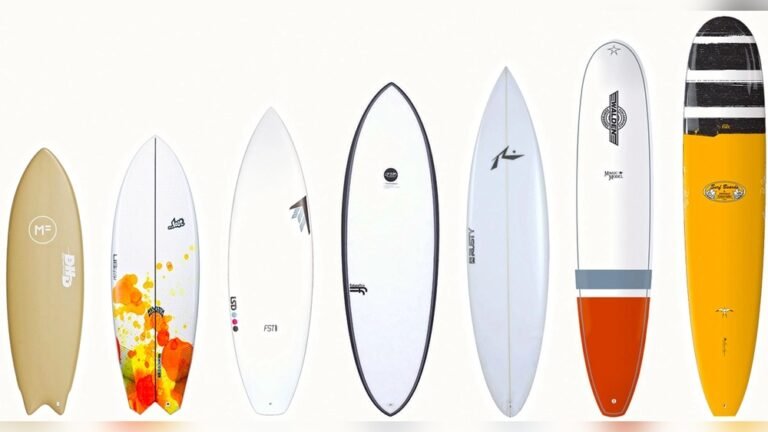
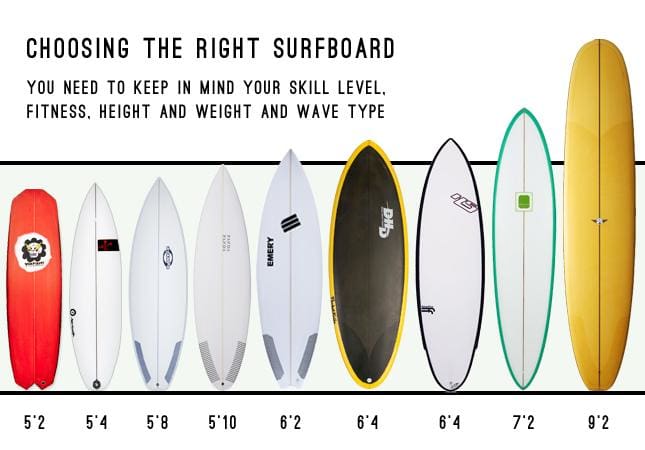
Longboards, funboards, fish, and shortboards come in different sizes for different styles. The shape (length, width, thickness) changes how the board rides.
Understanding Surfboard Volume
Many people focus only on length, but volume is the most important measurement. Volume is measured in liters and combines length, width, and thickness. More volume means more float, making it easier to paddle and catch waves.
For example:
- A board that is 7’0” long, 22” wide, and 3” thick might have 50 liters of volume.
- A board that is 6’2” long, 19” wide, and 2.5” thick could have only 32 liters of volume.
A beginner should always aim for a higher volume board, while advanced surfers can use less volume for more performance.
Choosing Your Surfboard Size By Experience Level
Let’s break down the best board sizes for different levels of surfers.
Beginners
As a beginner, you need stability and float. Most beginners start on a soft-top longboard. These are forgiving and make it easy to catch waves and stand up.
| Weight (kg) | Recommended Length | Recommended Volume (Liters) |
|---|---|---|
| 45-65 | 7’6” to 8’0” | 55-70 |
| 65-85 | 8’0” to 9’0” | 70-85 |
| 85-100+ | 9’0”+ | 85-100+ |
Two Insights Beginners Miss
- Don’t be afraid to go bigger. Many new surfers pick a board that is too small because it feels easier to carry. Bigger boards help you progress much faster.
- Soft-top boards are not just for kids. Even adult beginners benefit from the extra comfort and safety.
Intermediate Surfers
Once you can paddle out easily and stand up almost every time, you might want a smaller board for more maneuverability. Funboards and mini-mals are popular choices.
| Weight (kg) | Recommended Length | Recommended Volume (Liters) |
|---|---|---|
| 45-65 | 6’8” to 7’6” | 45-55 |
| 65-85 | 7’0” to 8’0” | 55-65 |
| 85-100+ | 8’0”+ | 65-80 |
Non-obvious Tips For Intermediates
- Volume is still your friend. Don’t drop down in size too quickly, or you’ll lose progress.
- Try before you buy. Renting or borrowing boards in different sizes helps you find your sweet spot.
Advanced Surfers
Advanced surfers can handle shortboards, fish, and other performance shapes. These boards are shorter and have less volume, making them more agile but harder to paddle.
For advanced surfers, the right size often depends on the type of wave and personal style. But here are some rough guidelines:
| Weight (kg) | Shortboard Length | Volume (Liters) |
|---|---|---|
| 45-65 | 5’6” to 6’2” | 25-35 |
| 65-85 | 6’0” to 6’6” | 35-45 |
| 85-100+ | 6’4” to 7’0” | 45-55 |
Advanced Insights
- Many pros use boards with less volume for better control, but they have much stronger paddling skills. Most advanced surfers still benefit from a little extra volume for longer sessions.
- Board shape matters as much as size. A wider or thicker board gives more float, even if it’s not very long.
Types Of Surfboards And Their Typical Sizes
Let’s look at the main types of surfboards and the usual size ranges.
Longboard
Length: 8’0” – 10’0”
Width: 22” – 24”
Volume: 60 – 100+ liters
Longboards are stable and easy to paddle. They are perfect for beginners and for riding smaller, softer waves.
Funboard / Mini-mal
Length: 6’8” – 8’0”
Width: 20” – 23”
Volume: 45 – 70 liters
Funboards mix the stability of a longboard with some of the agility of a shortboard. They are great for intermediates.
Fish
Length: 5’4” – 6’6”
Width: 19” – 22”
Volume: 30 – 45 liters
Fish boards are short and wide. They work well in smaller waves and for surfers who want speed and easy turns.
Shortboard
Length: 5’6” – 6’6”
Width: 17” – 20”
Volume: 23 – 40 liters
Shortboards are for performance surfing—quick turns, steep waves, and advanced moves. Not recommended for beginners.
Soft-top
Length: 7’0” – 9’0”
Width: 21” – 24”
Volume: 60 – 90 liters
Soft-tops are forgiving and safe. They are the best choice for total beginners or for fun on small days.
How To Calculate Your Ideal Surfboard Volume
A common method is to use your weight and skill level:
- Beginners: Weight in kg x 1.7 to 2.0 = Suggested volume in liters
- Intermediates: Weight in kg x 1.3 to 1.6
- Advanced: Weight in kg x 1.0 to 1.3
For example, if you weigh 70 kg:
- Beginner: 70 x 1.7 = 119 liters (this is for a very easy start, such as a giant soft-top)
- Intermediate: 70 x 1.4 = 98 liters
- Advanced: 70 x 1.1 = 77 liters
Most adults will find boards in the 60–90 liter range comfortable as a beginner.
Mistakes To Avoid When Choosing A Surfboard Size
- Going too small, too soon: Don’t rush to a shortboard. You’ll catch fewer waves and have less fun.
- Ignoring volume: Length alone doesn’t tell you how a board floats.
- Not asking for advice: Local surf shops and experienced surfers are valuable resources.
- Choosing looks over function: A cool-looking board is useless if you can’t ride it.
- Not considering your local waves: A board perfect for Hawaii might not work in small beach breaks.
How Board Size Affects Your Surfing
Paddling
Bigger boards paddle faster and make it easier to catch waves. Small boards need strong arms and good timing.
Stability
Longer, wider boards are more stable and forgiving. Shortboards are sensitive and require better balance.
Maneuverability
Shortboards turn quickly and are best for tricks. Longboards are smooth and glide over the water but turn slowly.
Wave Catching
High volume boards catch waves earlier and more easily. Low volume boards need steeper, faster waves.
Non-obvious Insights For Better Board Choice
- Don’t buy for “future” skills. Get a board that suits your current ability, not what you hope to ride in a year.
- Try before you buy. Renting or demo days at surf shops can save you from making expensive mistakes.
- Check your paddling fitness. If you surf less often, a slightly bigger board will keep you happy.
Where To Find More Information
If you want to dive deeper into surfboard sizing, the Wikipedia page on surfboards offers a detailed look at the history, types, and science behind surfboard design.
Frequently Asked Questions
What If I Am Between Sizes?
If you are unsure, always go for the larger board. It’s easier to learn and have fun. As you improve, you can size down.
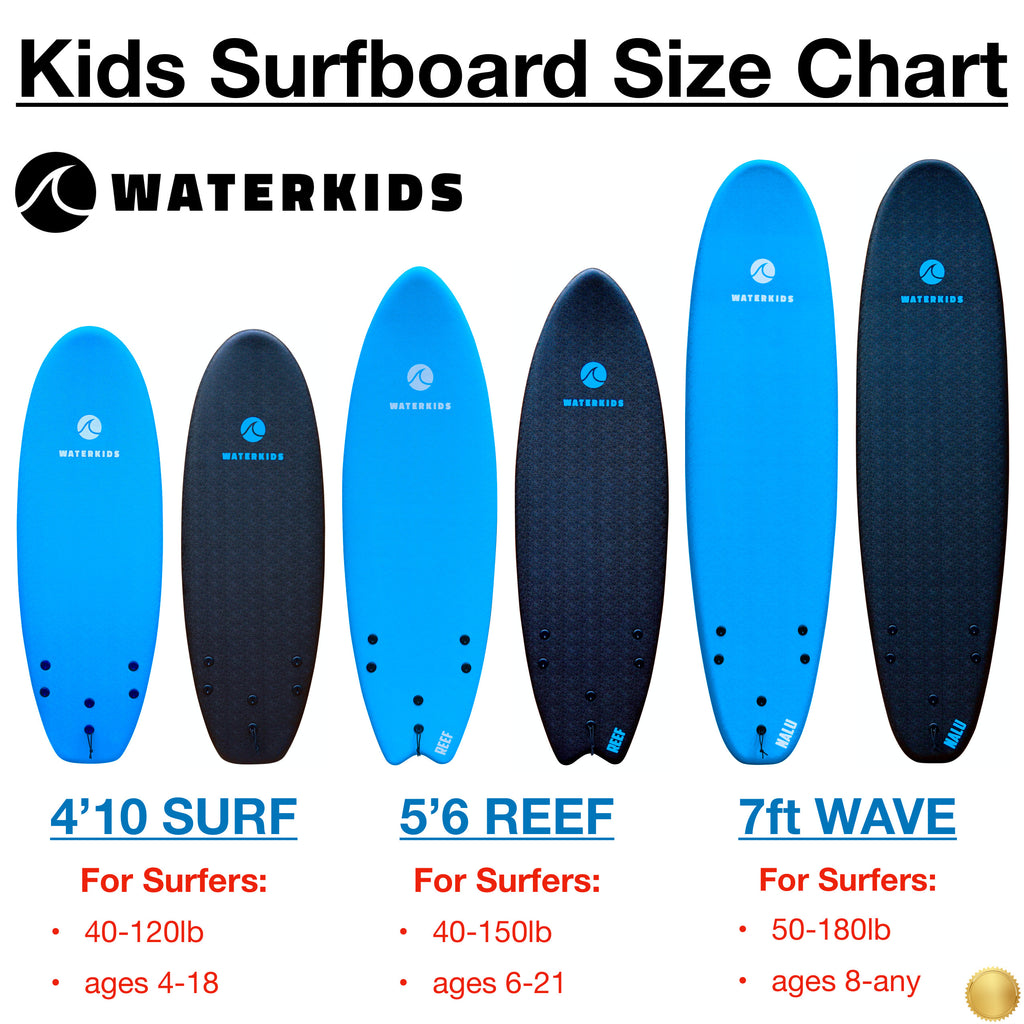
Can Kids Use Adult Surfboards?
Kids should use boards made for their size and weight. A big adult board is often too heavy and wide for a child.
How Does My Fitness Level Affect Board Choice?
If you are fit and paddle strong, you can handle a smaller board. If you tire easily or want to surf longer sessions, choose a board with more volume.
Do Surfboard Materials Affect Size Choice?
Yes. Some materials (like epoxy) float more than others (like fiberglass), so you might be able to go a bit smaller with a high-float material.
Should I Get A Different Board For Travel?
Yes, especially if you’ll surf very different waves. For example, a board for small local waves might not work in powerful ocean surf. Always research the typical waves at your travel spot before choosing a board to bring.
Choosing the right surfboard size is a smart step for every surfer, no matter your level. Take your time, ask for advice, and remember—surfing is about fun. The right board size will help you enjoy every wave and keep improving with each session.
