
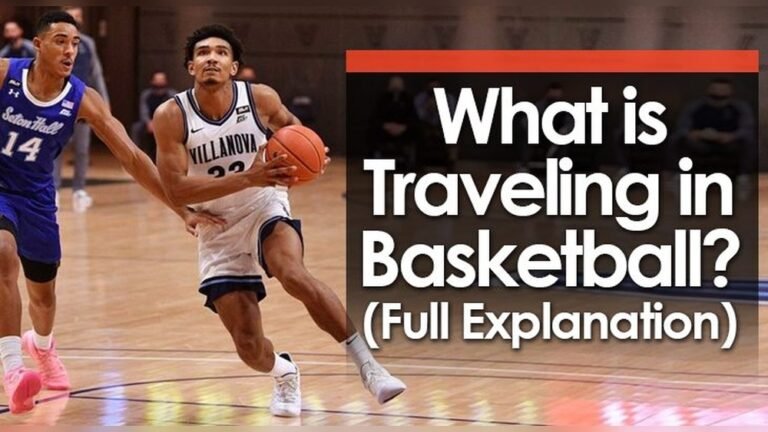
Traveling is one of the most common violations in basketball, but many players and fans—especially beginners—are sometimes confused about what actually counts as traveling. You might have seen a player pick up the ball, take a few extra steps, and then everyone starts shouting “travel!” But why is it called traveling?
Why does it matter? And how can you avoid making this mistake on the court? Understanding traveling in basketball is not just about following rules; it’s about learning the foundation of the game’s movement and fairness. Let’s break down everything you need to know about this important rule.
What Does Traveling Mean In Basketball?
Traveling is a rule violation that happens when a player holding the ball moves one or both feet illegally. In simple words, if you move your feet in a way the rules don’t allow while holding the ball, it’s called traveling. This rule keeps the game fair and stops players from gaining an unfair advantage by moving freely without dribbling.
When you see a referee make a spinning motion with both hands, they are signaling a traveling violation. As a result, the ball is given to the other team. Traveling is often called a turnover because it causes your team to lose possession.
The Basics: The Pivot Foot
To fully understand traveling, you first need to know about the pivot foot. The pivot foot is the foot a player must keep in place while holding the ball and not dribbling. You can spin, turn, or move your other foot, but the pivot foot must stay on the floor until you pass, shoot, or dribble the ball.
Here’s how it works:
- When you catch the ball with both feet on the ground, you can choose either foot to be the pivot foot.
- If you catch the ball while moving, the first foot that touches the floor becomes your pivot foot.
- Once you start dribbling, you can lift your pivot foot, but you can’t put it down again before passing or shooting.
Many traveling violations happen because players lift their pivot foot and then put it back down without dribbling or passing.
Different Ways Traveling Happens
Traveling is not just about taking too many steps. There are several ways this violation can occur:
- Taking More Than Two Steps Without Dribbling: After you stop dribbling, you are allowed to take two steps to stop, pass, or shoot. If you take a third step, it’s traveling.
- Lifting the Pivot Foot: If you lift your pivot foot before releasing the ball to dribble, pass, or shoot, it’s traveling.
- Sliding or Dragging the Pivot Foot: Even if you don’t lift your foot, sliding or dragging it is not allowed.
- Falling to the Floor With the Ball: If you are standing and fall to the floor while holding the ball, it’s traveling.
- Rolling or Getting Up With the Ball: If you are on the ground with the ball and try to stand up or roll over, that’s traveling too.
Detailed Examples Of Traveling Violations
Many beginners miss the small details that can lead to traveling. Here are some real-life examples:
- A player catches the ball, takes one step, then takes another half-step before shooting—this is usually called for traveling.
- A player stops dribbling, then hops on both feet before passing. The second foot movement counts as an extra step.
- After picking up the dribble, a player lifts the pivot foot to fake a defender, then puts it back down—this is traveling.
The Two-step Rule Explained
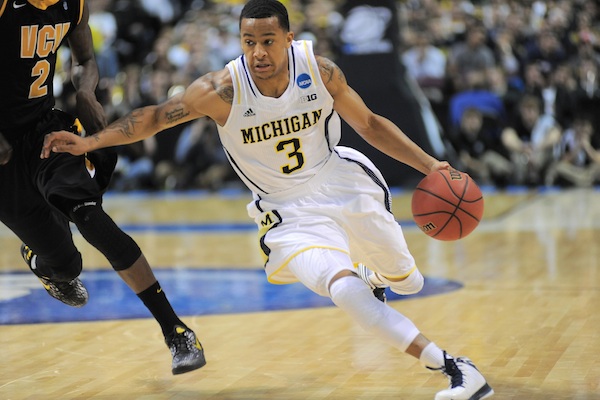
Modern basketball rules allow a player to take two steps after picking up the dribble. But this is where many people get confused. It’s not two steps plus a jump or a hop. The two steps must be part of a smooth motion to shoot or pass.
Here’s a breakdown:
| Action | Is it Traveling? |
|---|---|
| Catch ball, take 1 step, then 2nd step, then shoot | No |
| Catch ball, 1 step, 2nd step, then 3rd step | Yes |
| Catch ball, 1 step, hop, then shoot | Depends (usually yes if hop is after steps) |
Tip: Players often get called for traveling when they rush to the basket and do not control their steps after picking up the dribble.
Traveling In Different Leagues
The definition of traveling can change slightly depending on the league:
- NBA: The NBA is a little more flexible with the “gather step,” which is a moment when a player gains control of the ball.
- FIBA (International): FIBA rules are stricter. The two steps must be clear and controlled.
- NCAA (College): Similar to FIBA, but with some unique situations, especially with pivoting.
Here’s a quick comparison:
| League | Rule Focus | Gather Step Allowed? |
|---|---|---|
| NBA | Gather + 2 steps | Yes |
| FIBA | 2 steps after gather | Yes, but more strict |
| NCAA | 2 steps, pivoting rules apply | Yes, similar to FIBA |
Non-obvious insight: Many casual fans don’t realize that the NBA’s “gather step” means NBA players sometimes appear to take three steps, but under league rules, it’s legal.
Why Is Traveling Illegal?
Traveling is not just a technical rule—it’s about fairness and skill. By making sure players can’t move freely while holding the ball, the game encourages good dribbling, footwork, and teamwork. If traveling was allowed, players could simply run with the ball, making the game less challenging and less fun to watch.
Fact: Before 1920, basketball rules about movement were much looser, leading to chaotic play. The traveling rule made the game more organized and skill-based.
Common Situations Where Traveling Is Called
- Fast Breaks: Players sometimes take extra steps when moving quickly toward the basket.
- Pump Fakes: After faking a shot, players may forget their pivot foot and move illegally.
- Rebounding: After grabbing a rebound, moving both feet before dribbling is a common mistake.
- Post Moves: Big players in the paint often shift both feet to get closer to the basket, leading to traveling calls.
- Changing Direction: A quick change in direction without dribbling can easily become a traveling violation.
How Referees Judge Traveling
Referees must watch the feet and the ball very closely. They look for when the player picks up the ball (stops dribbling) and what happens with the feet after that. Referees are trained to spot:
- When the pivot foot is established
- Whether the two-step rule is followed
- If the player lifts or slides the pivot foot
Pro tip: The game moves fast, and even professional referees sometimes miss close traveling calls. At lower levels, players might get away with small violations, but it’s always better to play by the rules.
The Impact Of Traveling On The Game
Traveling can change the flow of a game. Each traveling call gives the ball to the other team, which can lead to easy points. It can also break a team’s momentum. Some players get frustrated or lose confidence after a traveling call, especially in close games.
Stat: In the NBA, traveling violations are not as common as you might think—there are usually 1-2 calls per game, but at lower levels (youth or amateur), it’s much higher.
How To Avoid Traveling
Avoiding traveling takes practice and awareness. Here are some tips:
- Focus on Footwork: Practice stopping, pivoting, and starting your dribble correctly.
- Don’t Rush: Slow down when catching the ball or making a move.
- Know Your Pivot Foot: Always be aware of which foot is your pivot.
- Watch Professional Players: See how experienced players control their movement.
- Work With a Coach: Coaches can spot bad habits and help you fix them.
Non-obvious insight: Many beginners think traveling only happens when running fast. In reality, most traveling violations occur in small, slow movements—like pivoting or faking.
Famous Examples Of Traveling
Some of the most memorable moments in basketball include controversial traveling calls (or missed calls):
- In the 2016 NBA Finals, there was debate about whether LeBron James traveled during a fast break dunk.
- James Harden is famous for his “step-back” move, which often sparks debate about whether it’s a legal move or a travel.
- At the youth level, many viral videos show players taking 4-5 steps before a layup, clearly breaking the rules.
Watching these moments can help you see what counts as traveling and what doesn’t.
Myths And Misunderstandings About Traveling
A few common myths confuse new players:
- Myth: “You can take three steps on a layup.” (You cannot. Only two steps after picking up your dribble are allowed.)
- Myth: “Sliding your foot a little isn’t traveling.” (Any movement of the pivot foot can be called.)
- Myth: “Referees never call traveling in the NBA.” (They do, but the “gather step” rule makes it look different.)
Learning the real rules will help you play smarter and avoid mistakes.
Useful Drills To Improve Footwork
To avoid traveling, try these drills:
- Pivot Drill: Stand with one foot as your pivot, and practice turning in different directions without lifting it.
- Jump Stop Drill: Run, stop with both feet landing at the same time, and then pivot.
- Slow Motion Layups: Practice picking up your dribble and taking exactly two steps before shooting.
Do these drills regularly to build muscle memory.

Traveling And Other Violations: What’s The Difference?
It’s easy to mix up traveling with similar violations like double dribble or carrying. Here’s a quick comparison:
| Violation | What Happens | How to Avoid |
|---|---|---|
| Traveling | Moving feet illegally with the ball | Watch pivot foot, count steps |
| Double Dribble | Dribbling, stopping, then dribbling again | Don’t start a new dribble after stopping |
| Carrying | Hand goes under the ball when dribbling | Keep hand on top of the ball |
Each violation has its own rule and penalty, so it’s important to learn the differences.
Key Takeaways For Players And Coaches
- Master your footwork: Good footwork prevents traveling and makes your game more effective.
- Learn the rules for your league: NBA, FIBA, and college rules can be slightly different.
- Practice under pressure: Many players travel when they feel rushed or nervous.
- Teach young players early: Building good habits from the start will help players at all levels.
For more official explanations, check the Wikipedia page on traveling in basketball.
Frequently Asked Questions
What Is The Penalty For Traveling In Basketball?
When a player travels, the referee stops the game and gives the ball to the other team. The other team gets to throw the ball in from the sideline. No points are scored, but your team loses possession.
Can You Take Three Steps In Basketball?
No, you cannot take three steps after picking up your dribble. You are allowed two steps. If you take a third step before passing or shooting, it’s a traveling violation.
Does The Nba Allow More Steps Than Other Leagues?
The NBA allows a “gather step” plus two steps, which sometimes looks like three steps to viewers. In most leagues, only two steps are clearly allowed after picking up the dribble.
Is Sliding Your Foot A Travel?
Yes, if your pivot foot slides or drags while you are holding the ball, it counts as traveling. The pivot foot must stay in the same spot on the floor.
How Can I Practice To Avoid Traveling?
Work on your footwork with pivot and jump-stop drills. Practice moving at game speed and always be aware of which foot is your pivot. Watching and copying professional players can also help you understand the correct movements.
Basketball is a fast and exciting sport, and understanding the traveling rule will help you play with confidence and skill. The more you practice, the more natural your movements will become—and the fewer turnovers you’ll commit. Keep learning, stay focused on your footwork, and enjoy the game!
