Skydiving is one of the most thrilling experiences a person can have. The feeling of freefall, the rush of wind, and the beauty of the world below are unforgettable. But before you jump, there’s a practical question many people ask: What is the weight limit for skydiving? This is not just a technical detail—weight limits are important for safety, equipment, and the best possible experience. If you’re curious about skydiving but are unsure about the weight requirements, this guide will clear up everything you need to know.
Why Weight Limits Matter In Skydiving
Most first-time skydivers are surprised to learn that weight limits are about much more than just the strength of the parachute. The rules are set by both the skydiving company and the equipment manufacturer to keep everyone safe.
Parachute systems are carefully designed and tested for specific weight ranges. Exceeding these limits can make the parachute less effective. This affects how fast you fall, how you land, and even how the parachute opens. Harnesses must also fit properly—if someone is too heavy or too light, the harness can be unsafe.
Another key reason is the tandem instructor’s safety. In tandem skydiving, the student is attached to an instructor. If the combined weight is too high, it can make landing difficult and risky for both people.
Typical Skydiving Weight Limits
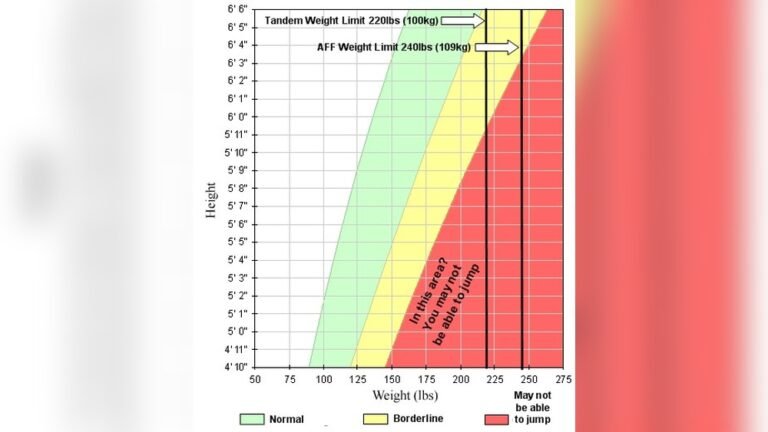
Most skydiving centers set their own rules, but there are common standards. For tandem skydiving, the most common weight limit is between 220 and 240 pounds (100-109 kg). Some centers may allow up to 250-260 pounds (113-118 kg) with extra checks, while others are more strict.
For solo jumps (such as Accelerated Freefall or AFF), the limits can be slightly lower, often around 220 pounds (100 kg). These numbers are based on the equipment’s certified limits and the dropzone’s safety policy.
Here’s a comparison of typical weight limits at popular US skydiving centers:
| Skydiving Center | Tandem Weight Limit | Solo Weight Limit |
|---|---|---|
| Skydive Chicago | 240 lbs (109 kg) | 220 lbs (100 kg) |
| Perris Valley (CA) | 240 lbs (109 kg) | 220 lbs (100 kg) |
| Sky’s the Limit (PA) | 250 lbs (113 kg) | 220 lbs (100 kg) |
| Skydive Spaceland Houston | 265 lbs (120 kg) | 220 lbs (100 kg) |
Why There Is No Universal Limit
There is no universal weight limit for skydiving because every skydiving center uses different equipment, and instructors have different levels of experience. The Federal Aviation Administration (FAA) in the United States does not set a fixed weight limit but requires that equipment is used within its certified range.
If you travel abroad, you may see slightly different numbers. For example, in the UK and Australia, limits are often around 220 lbs (100 kg) for both tandem and solo jumps.
How Weight Is Measured For Skydiving
When you arrive at a dropzone, you will usually be weighed with your clothes and shoes on. This is your “exit weight,” which is what matters for parachute systems.
Some centers require you to step on a scale in front of staff. Others may ask for your weight during booking and confirm it on the day of your jump. Honesty is important—being over the limit can lead to a canceled skydive, and safety is always the main concern.
What If You’re Close To The Limit?
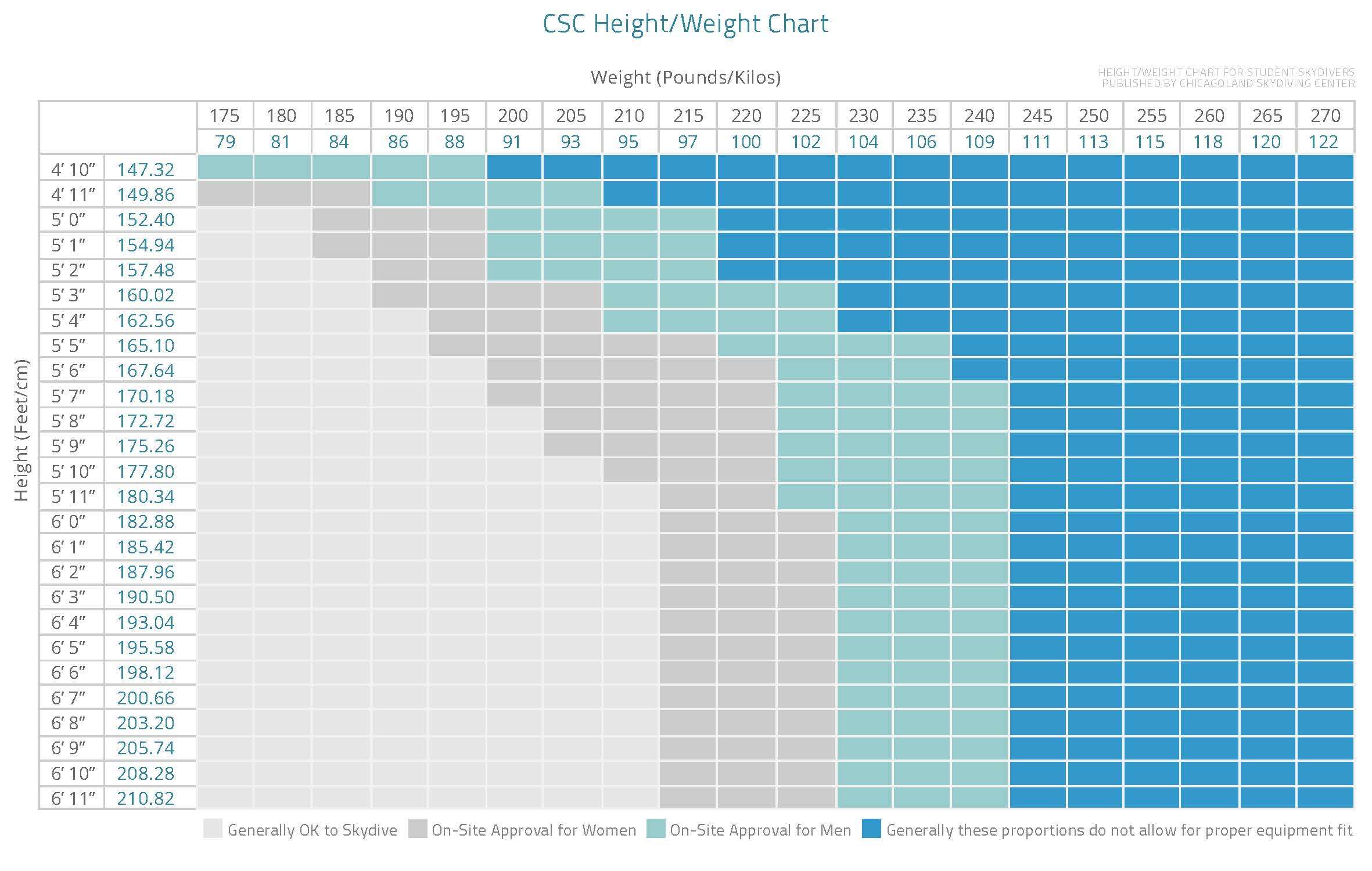
If your weight is near the limit, the staff may ask extra questions about your health, height, and body shape. This is because body mass distribution affects how the harness fits and how you land. For example, someone who is shorter and heavier may have more trouble with harness fit than a taller person at the same weight.
Some centers also charge an extra fee for jumpers over a certain weight (such as over 220 lbs or 100 kg). This is because heavier jumpers require more effort for instructors and faster parachute wear.
Safety Factors And Equipment Ratings
Skydiving gear is certified by the manufacturer for a maximum weight. This includes the weight of the jumper, the instructor (for tandem), and all equipment (like the harness and reserve chute). Exceeding this limit is not just a rule break—it can lead to dangerous situations.
The main parachute and reserve parachute both have weight ratings. For example, a common tandem parachute system might be rated for a maximum load of 500 lbs (227 kg) (this is the total for both people and equipment).
Here’s a look at how parachute ratings compare to weight limits:
| Parachute System | Max Load (lbs) | Typical Tandem Limit (lbs) |
|---|---|---|
| Sigma Tandem | 500 | 220-240 |
| Strong Enterprises | 500 | 220-240 |
| Pioneer Reserve | 254 | 220 |
You’ll notice the equipment rating is higher than the jumper limit. This is for extra safety. The limit for jumpers is always set lower to account for changes in weather, landing style, and other factors.
Are There Height Limits For Skydiving?
While weight is the main concern, height can also affect your ability to skydive safely. Most centers require you to be at least 4’10” (147 cm) for harness fit. Very tall people (over 6’5” or 196 cm) may also need special harness adjustments.
If you’re very short or tall, it’s a good idea to call the center before booking. Harness fit is just as important as weight for a safe, enjoyable jump.
Weight And Age: Special Considerations
Skydiving is open to a wide range of ages, but the combination of weight and age can sometimes raise concerns. Older jumpers, especially those over 60, may be asked about their health. Heavier older adults may face extra questions or need a doctor’s note.
A common insight beginners miss: weight limits are about safety, not discrimination. Instructors want everyone to have fun, but they also want every landing to be gentle and safe, especially for older jumpers whose bones and joints can be more fragile.
Is There A Minimum Weight For Skydiving?
Most dropzones do not set a strict minimum weight. However, you usually need to be at least 90-100 pounds (41-45 kg) for the harness to fit properly and for the parachute to deploy correctly. Extremely lightweight jumpers (like children or small adults) are less common, but special arrangements can sometimes be made.
How To Prepare If You Are Near The Weight Limit
If you’re close to the limit and want to skydive soon, here are some tips:
- Call ahead and ask about the center’s policy. Some have more flexible rules or can recommend the best time of year (colder weather means heavier clothes).
- Wear light clothing on the day of your jump to avoid adding extra pounds.
- Be honest about your weight. Safety is more important than embarrassment.
- Stay hydrated and avoid big meals just before weighing in.
- Ask about extra fees so you aren’t surprised.
Many people worry about “failing” the weigh-in. In reality, staff have seen all body types, and their goal is to keep you safe, not to judge.
Common Myths About Skydiving Weight Limits
Many first-timers believe parachutes are strong enough for anyone. While parachutes are indeed tough, harnesses, lines, and the way the parachute opens are all tested for set limits. Ignoring these rules risks injury.
Another myth is that overweight people can never skydive. In truth, many centers welcome heavier jumpers up to the safe limit. Some even have specialized gear for larger jumpers. The key is to check ahead and be open with staff.
What Happens If You’re Over The Limit?
If you arrive at the dropzone and are over the limit, you may be turned away or asked to reschedule. In rare cases, some centers allow jumps for people over the posted limit, but only with special equipment and experienced instructors.
This usually involves extra fees and more risk.
It’s better to know in advance than to be disappointed on your big day. Checking the center’s website or calling ahead is always wise.
Does Weight Affect The Skydiving Experience?
Yes, your weight can change parts of your skydive experience:
- Heavier jumpers fall slightly faster during freefall, but it’s not a huge difference.
- Landings may feel more intense if you’re heavier, but good instructors know how to make landings smooth.
- Harness fit is crucial for comfort and safety. If the harness is too tight or loose, it can be painful or dangerous.
A non-obvious insight: heavier jumpers often need bigger parachutes to land safely. These parachutes descend more slowly, making the landing softer.
International Weight Limits: How Other Countries Compare
If you plan to skydive abroad, expect small differences. For example:
- Australia: Most centers set a tandem weight limit of 220 lbs (100 kg), with some allowing up to 240 lbs (109 kg).
- UK: 220 lbs (100 kg) is common, but some clubs allow up to 240 lbs (109 kg) after extra checks.
- Europe: Limits vary, but 220-240 lbs (100-109 kg) is typical.
Here’s a quick comparison of limits in different countries:
| Country | Typical Tandem Limit (lbs) | Notes |
|---|---|---|
| USA | 220-260 | Some centers offer higher with fees |
| UK | 220-240 | Doctor’s note required above 220 |
| Australia | 220-240 | Fees above 220 |
| France | 220 | Strict limits |
| New Zealand | 220-240 | Case-by-case over 220 |
How To Find The Right Skydiving Center For Your Weight
If you’re worried about weight limits, look for centers that:
- List their weight policy clearly online
- Have experience with larger jumpers
- Are open to answering questions by phone or email
- Offer special harnesses or parachutes if needed
Reading reviews or calling ahead can save you time and disappointment. You can also check the United States Parachute Association (USPA) or similar organizations in other countries for certified dropzones.
Health, Bmi, And Skydiving
Some centers also consider Body Mass Index (BMI), especially if you’re close to the weight limit but are shorter or have special health needs. High BMI can make harness fit harder and affect landing safety.
If you have medical conditions (like heart, joint, or back problems), talk to your doctor before booking a jump. Most centers ask you to sign a medical waiver, and being honest helps everyone stay safe.
Final Thoughts: Weight Limits Are About Safety
Skydiving is for many types of people, but not every person or body shape. The weight limit for skydiving is set for safety, equipment function, and the best possible experience. If you’re unsure whether you can jump, reach out to your local dropzone—they want to help you fly, but only if it’s safe.
Remember: the rules are there to protect you, your instructor, and everyone else in the sky. With a little planning, you can have the adventure of a lifetime.
If you want more technical information on parachute systems and their limits, you can read this detailed Wikipedia article on parachutes.
Frequently Asked Questions
What Happens If I Am Just Over The Weight Limit?
If you are just over, most centers will not allow you to jump. Some may offer to reschedule or allow a jump with extra fees and checks, but safety comes first.
Why Do Some Centers Charge Extra For Heavier Jumpers?
Extra fees cover the added workload for instructors, faster gear wear, and sometimes special equipment. It’s not a penalty, but a way to keep operations safe and fair.
Does Weight Affect How Fast You Fall When Skydiving?
Heavier jumpers fall a bit faster, but the difference is small. Parachute size and air resistance balance things out for a safe landing.
Can I Skydive If I Am Very Short Or Tall?
Usually yes, but harness fit is important. If you are under 4’10” (147 cm) or over 6’5” (196 cm), call ahead to check if the center can accommodate you.
Are There Any Exceptions To The Posted Weight Limit?
Rarely, some centers may have specialized gear for larger jumpers, but this is not common. Always check with the center before booking if you are near or over the limit.
