
Ice hockey is a fast, intense sport known for its unique rules and markings on the ice. If you’ve ever watched a game, you’ve probably noticed a thick red line running across the middle of the rink. This is called the red line, and it plays a much bigger role than just dividing the ice. For players, coaches, and fans, understanding the red line is key to following the action and strategy of the game. But what exactly is the red line, and why does it matter so much in ice hockey?
Understanding The Red Line
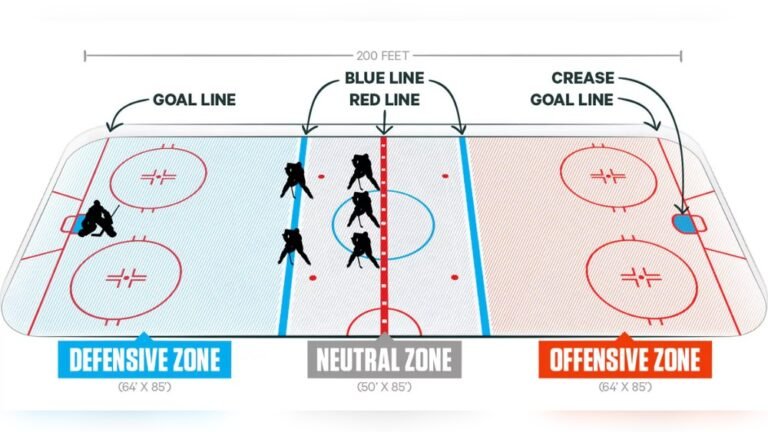
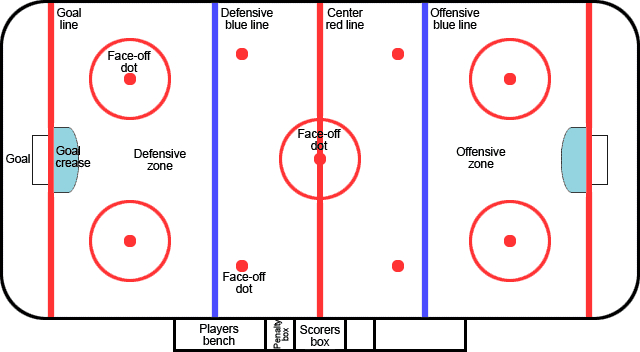
The red line is a bold line that stretches horizontally across the center of the ice rink. Its official name is the center red line. Most ice rinks also have thinner red lines at each end, called goal lines, but when people say “the red line,” they almost always mean the one in the middle.
This line does more than just split the rink into two halves. It’s a critical part of many rules, especially those about passing, icing, and face-offs. Without the red line, the game would look and feel very different.
Purpose And Function Of The Red Line
The main job of the red line is to help manage puck movement and player positioning. Here’s how it works:
- Icing Rule: If a player shoots the puck from behind the center red line and it crosses the opponent’s goal line without being touched, the play is stopped for “icing.” This encourages teams to move the puck with skill, not just shoot it far down the ice to relieve pressure.
- Offside Passes: In the past, the red line also helped enforce the “two-line pass” rule. This rule stopped players from making very long passes across two lines (the blue and red lines). However, the NHL removed this rule in 2005, but it’s still used in some leagues.
- Face-Offs: At the center of the red line is the main face-off spot, used to start the game and after goals.

How The Red Line Affects Gameplay
The presence of the red line changes how teams attack and defend. For example, the icing rule means defenders can’t simply clear the puck from anywhere. They must reach the red line before sending it deep, or risk a whistle and a face-off in their own zone.
Skilled players use the red line to judge when to dump the puck safely or when to make a pass. If they cross the red line first, they can send the puck deep without an icing call. This is especially important when making line changes or protecting a lead.
Positioning Of The Red Line And Other Rink Markings
To understand the red line’s importance, it helps to know where it sits among other rink markings. Here’s a comparison:
| Line Name | Color | Purpose | Distance from End Boards |
|---|---|---|---|
| Center Red Line | Red | Divides rink, icing | Center (N/A) |
| Blue Lines | Blue | Offside rule | 25 feet from each side of red line |
| Goal Lines | Red | Goal scoring/icing | 11 feet from end boards |
As you can see, the red line is central to the rink’s layout. It works together with the blue lines and goal lines to create zones and control the flow of the game.
Icing: The Rule Most Affected By The Red Line
The icing rule is one of hockey’s most important rules for keeping play fair and exciting. Here’s how the red line is used:
- If a player shoots the puck from behind their own side of the red line and it crosses the other team’s goal line untouched, play is stopped for icing.
- The face-off goes back to the team’s own end, which is a disadvantage.
This rule discourages teams from “dumping” the puck all the way down the ice when under pressure. It forces more strategic play.
However, if the player crosses the red line first, then shoots the puck in, icing is not called. This small detail creates fast decision-making and tactical plays.
Changes To The Red Line’s Role Over Time
For decades, the red line was also part of the “two-line pass” rule. This meant that a pass crossing both the defending blue line and the red line was not allowed. The aim was to slow the game a bit and reduce cherry-picking (having a player wait near the other team’s net).
But in 2005, the NHL changed the rule to allow two-line passes. This made the game faster and more open, with more exciting passing and scoring chances.
Some lower-level leagues and youth hockey still use the old rule, but most professional and international leagues have dropped it.
Red Line Infractions And Penalties
The red line is also involved in several infractions:
- Icing: As explained, shooting the puck from behind the red line for icing results in a stoppage.
- Illegal Line Changes: Teams cannot change players if they ice the puck from behind the red line.
- Face-off Violations: The central red line is the only place for opening face-offs and after goals. Jumping the gun or cheating during a face-off here leads to penalties.
Key Differences: Red Line Vs. Blue Lines
New fans often confuse the red line with the blue lines. Here’s a quick comparison:
| Feature | Red Line | Blue Line |
|---|---|---|
| Location | Center of rink | 25 feet from red line |
| Main Use | Icing, face-offs | Offside, zones |
| Color | Red | Blue |
The red line is about puck movement and face-offs, while the blue lines define the attacking and defending zones.
Real-world Examples
Consider this situation: A defender grabs the puck near his own goal and wants to clear it. If he’s under heavy attack, he must skate to the red line before dumping the puck deep, or risk an icing call. If he doesn’t make it, his team must defend a face-off close to their net—often a dangerous situation.
Or, imagine a coach needing a line change. Players will often skate to the red line and shoot the puck in, then head to the bench. This tactic is possible only because of the red line’s role in the icing rule.
Non-obvious Insights About The Red Line
Many beginners miss two important facts:
- The red line is not just about the rules. It shapes team strategies, especially in close games when protecting a lead or making quick changes.
- Some international rinks are wider, but the position and use of the red line are almost always the same, ensuring a consistent game experience across leagues.
The Red Line’s Impact On Game Strategy
Coaches train players to always be aware of the red line. For example, when under pressure, a simple pass to a teammate over the red line can avoid an icing and allow for a safe line change. Advanced teams use the red line to create set plays, like the “dump and chase,” where the puck is sent deep after crossing the red line, letting forwards race after it.
Teams that don’t respect the red line often get into trouble, giving up face-offs and scoring chances to their opponents.
Frequently Asked Questions
What Is The Main Purpose Of The Red Line In Ice Hockey?
The main purpose is to divide the rink and enforce rules like icing and face-off locations, which keeps the game fair and organized.
Does The Red Line Affect The Offside Rule?
No, the offside rule uses the blue lines, not the red line. The red line used to be part of the two-line pass rule, but that’s mostly gone now.
What Happens If You Ice The Puck From Behind The Red Line?
If you shoot the puck from your half of the red line and it goes past the other team’s goal line untouched, icing is called, and play stops for a face-off in your end.
Are There Different Red Line Rules In Other Leagues?
Yes, some youth and international leagues still use the two-line pass rule, but most professional leagues do not.
Where Can I Learn More About Ice Hockey Rules?
You can find detailed explanations of all hockey rules on the Wikipedia page for Ice Hockey.
The red line may look simple, but it shapes the flow, strategy, and excitement of every ice hockey game. Next time you watch, notice how often players and coaches make decisions based on this bold stripe across the ice. It’s much more than just paint—it’s the heart of the action.
