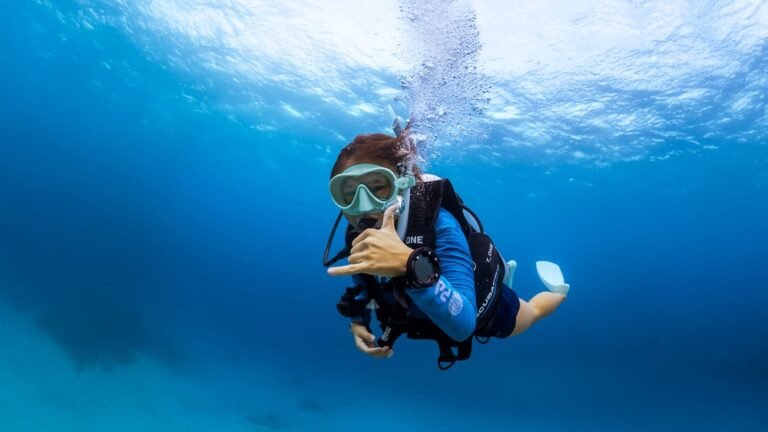
When you think about scuba diving, it’s easy to imagine deep blue oceans and exploring shipwrecks far below the surface. But for people just starting out, scuba diving is about safety, building skills, and understanding your own limits. One of the most important limits for new divers is maximum depth. This rule is not just about numbers; it’s about protecting your body and making sure you enjoy every dive. Understanding how deep you can safely go as a beginner is essential before you even put on your fins.
In this article, you’ll learn exactly what the maximum depth for beginner scuba divers is, why this depth matters, how it’s set by different organizations, and what can happen if you go deeper than you should. You’ll also get guidance on how to progress safely, what happens during training, and answers to the questions most beginners have.
Whether you’re planning your first open water course or just curious, this guide will help you feel confident and prepared for your underwater adventures.
What Is The Maximum Depth For Beginner Scuba Divers?
For most beginner scuba divers, the maximum depth is 18 meters (about 60 feet). This is the depth limit set by major diving organizations like PADI (Professional Association of Diving Instructors), SSI (Scuba Schools International), and NAUI (National Association of Underwater Instructors) for their entry-level certifications, often called “Open Water Diver.”
There’s a good reason for this number. At 18 meters, you are deep enough to see a variety of marine life and enjoy interesting environments, but you are still within a range that keeps risk low. At greater depths, risks like nitrogen narcosis, air consumption, and decompression sickness increase quickly—especially for divers who are still learning.
Here’s a quick look at the typical depth limits for beginners by certifying agency:
| Agency | Certification Name | Maximum Depth |
|---|---|---|
| PADI | Open Water Diver | 18 meters (60 feet) |
| SSI | Open Water Diver | 18 meters (60 feet) |
| NAUI | Scuba Diver | 18 meters (60 feet) |
| BSAC | Ocean Diver | 20 meters (66 feet) |
Most countries, dive shops, and instructors follow these guidelines for entry-level divers.
Why Is There A Depth Limit For Beginners?
There are several reasons why a depth limit exists for new scuba divers. First and most importantly, the deeper you go, the more the risks increase. These risks can be difficult to manage if you don’t have enough experience. Here are the main reasons:
- Pressure increases with depth. For every 10 meters of water, the pressure increases by one atmosphere. This affects your body and your air supply.
- Air consumption rises. The deeper you are, the faster you breathe through your tank. At 18 meters, you use air about three times faster than on the surface.
- Nitrogen narcosis. At deeper depths, the extra nitrogen in your body can make you feel dizzy or confused. This can make it harder to make good decisions underwater.
- Decompression sickness. Going too deep, or staying too long, can cause dangerous bubbles to form in your body when you come up. Beginners are more likely to make mistakes that increase this risk.
- Emergency situations. If something goes wrong, it’s easier to solve the problem closer to the surface. Deep water gives you less time to react.
Most accidents in diving happen because people go beyond their training. The 18-meter limit helps keep you in a safe “zone” where you can learn and enjoy diving without being exposed to high risk.

How Depth Is Taught During Open Water Training
Beginner divers don’t start off by going straight to 18 meters. Training is designed to help you build skills step by step. Here’s how a typical course works:
- Confined water sessions: Your first dives happen in a pool or very shallow water (usually less than 2 meters deep). You learn basic skills like clearing your mask and controlling your breathing.
- Open water dives: These take place in the sea, a lake, or a quarry. You start at shallow depths—often around 5-6 meters. Each dive goes a little deeper, but your instructor will never take you deeper than you’re ready for.
- Final dives: On your last training dives, you will go as deep as 18 meters, but only if you are comfortable and show good control.
This gradual approach is important. It helps you get used to the feeling of being underwater and gives you time to practice the skills you need to be safe.
Age And Depth Limits For Junior Divers
If you are under 15 years old, the maximum depth is even less. Organizations like PADI and SSI offer a Junior Open Water Diver certification for kids as young as 10.
- Ages 10-11: Maximum depth is 12 meters (40 feet).
- Ages 12-14: Maximum depth is 18 meters (60 feet), but always with an adult.
This rule exists because children’s bodies are still developing, and they often need more supervision. Diving with a responsible adult is always required for young divers.
What Happens If You Go Deeper Than Allowed?
One common question is, “What if I want to go deeper?” or “What happens if I accidentally go past the limit?” Here are the facts:
- Accidentally going deeper: If you drop a little below 18 meters for a short time, it’s not usually dangerous if you stay calm and ascend slowly. However, you should tell your instructor about it and review what happened.
- Going much deeper: This is much riskier. You may face problems like nitrogen narcosis, faster air use, and less time to handle emergencies.
- Insurance and liability: If you dive deeper than your training allows, your insurance might not cover you if something goes wrong. Dive shops may refuse to rent you equipment or take you on guided dives.
The best way to go deeper is to complete more training and earn an Advanced Open Water certification.
Progressing Beyond The Beginner Depth Limit
If you love diving and want to go deeper, you can take further courses. The next step for most divers is the Advanced Open Water Diver course. This lets you dive to 30 meters (about 100 feet) with proper training.
Here’s how the progression typically works:
| Certification Level | Maximum Depth | Requirements |
|---|---|---|
| Open Water Diver | 18 meters (60 feet) | Beginner |
| Advanced Open Water Diver | 30 meters (100 feet) | Extra training dives |
| Deep Diver Specialty | 40 meters (130 feet) | Specialized course |
Each new level includes more training, new skills, and plenty of practice. You’ll learn how to manage new risks, use different equipment, and handle emergencies at greater depths.
The Science Of Depth And Your Body
Understanding how depth affects your body will help you respect the limits set for beginners. Here’s what happens as you go deeper:
- Pressure on your lungs and ears increases. You need to “equalize” often to avoid pain or injury.
- Nitrogen absorption rises. More nitrogen dissolves in your body tissues, which can lead to narcosis or decompression sickness if you ascend too quickly.
- Colors disappear. Red, orange, and yellow colors fade with depth because water absorbs light. At 18 meters, everything looks more blue or green.
- Temperature drops. The deeper you go, the colder it gets. You may need extra protection like a thicker wetsuit.
For beginners, staying at or above 18 meters means you’re less likely to face serious problems, and you’ll have plenty of time to react if something unexpected happens.
Common Beginner Mistakes And How To Avoid Them
Even with strict rules, beginners sometimes make mistakes. Here are some common ones, and tips to avoid them:
- Not checking depth often enough. It’s easy to lose track of your depth if you’re excited. Always glance at your depth gauge or dive computer.
- Poor buoyancy control. If you can’t control your position in the water, you might accidentally go deeper than you should. Practice with your instructor until you feel confident.
- Ignoring air supply. Remember, air runs out faster at depth. Check your pressure gauge often.
- Descending too fast. Slow, controlled descents help you equalize your ears and avoid going deeper than planned.
- Diving without a buddy. Always dive with someone more experienced, especially as a beginner.
Diving is safest when you stay within your training and listen to your instructor.

Real-world Examples: What Do Beginners See At 18 Meters?
Many new divers wonder if 18 meters is “deep enough” to see interesting things. The answer is yes. Most coral reefs, colorful fish, and popular dive sites are within 18 meters. For example:
- The Great Barrier Reef in Australia has many shallow dive sites perfect for beginners.
- Caribbean reefs are often less than 15 meters deep, full of turtles, rays, and bright corals.
- Wreck dives for beginners are usually placed at 10–18 meters so everyone can enjoy them safely.
Some of the world’s most beautiful underwater experiences are available to those with just an Open Water certification.
How Dive Shops And Guides Enforce Depth Limits
You might wonder how dive shops or guides make sure you don’t go too deep. Here’s what you can expect:
- Pre-dive briefings: Guides will explain the planned maximum depth and check your certification.
- Depth checks: Guides watch their group and check their own depth regularly during the dive.
- Rental policies: Shops often require proof of certification before renting you tanks or gear for deeper dives.
- Dive computers: Many shops require you to use a dive computer, which will alert you if you go too deep.
Following these rules keeps you safe and protects the environment by preventing damage from inexperienced divers.
Unique Insights: What Beginners Often Miss
Many new divers focus so much on depth that they forget two important things:
- Skill matters more than certification. Just because you are certified for 18 meters doesn’t mean you should go that deep right away. Take your time, build your comfort, and only go deeper when you feel ready.
- Shallower dives can be more fun. Some of the best marine life, like clownfish, seahorses, and colorful corals, live in shallow water. You can have an amazing dive at 8 or 10 meters with better light and longer air supply.
It’s not just about how deep you go—it’s about what you see, how relaxed you feel, and how safely you dive.
Safety Tips For Beginner Divers
To make the most of your beginner dives, keep these tips in mind:
- Plan your dive, dive your plan. Know your limits before you get in the water.
- Stay with your buddy. Communication and teamwork are key.
- Use your dive computer or depth gauge. Don’t guess your depth.
- Ascend slowly. Never rush to the surface.
- Listen to your body. If you feel tired, cold, or uncomfortable, end the dive.
With these habits, you’ll stay safe and enjoy every moment underwater.
Frequently Asked Questions
What Is The Maximum Depth For A Padi Open Water Diver?
The PADI Open Water Diver certification allows you to dive to a maximum depth of 18 meters (60 feet). This limit is designed for safety and is enough to see most marine life and environments suitable for beginners.
Can I Go Deeper Than 18 Meters With My Open Water Certification?
No, you should not go deeper than 18 meters with only an Open Water certification. To dive deeper, you need to complete the Advanced Open Water Diver course, which allows you to reach 30 meters (100 feet) after extra training.
What Happens If I Accidentally Go Deeper Than My Limit?
If you accidentally exceed 18 meters, stay calm and slowly return to your planned depth. Tell your instructor or buddy after the dive. Consistently diving deeper than your certification allows is dangerous and may not be covered by your insurance.
How Old Do You Have To Be To Start Scuba Diving?
Most organizations let you start diving at age 10 with a Junior Open Water course. The maximum depth for ages 10–11 is 12 meters (40 feet), and for ages 12–14 is 18 meters (60 feet), but always with adult supervision.
Where Can I Learn More About Scuba Diving Safety And Training?
To find detailed, official guidelines and resources on scuba diving, visit the PADI official website. You’ll find up-to-date information about courses, safety, and local dive shops.
Every diver starts with the basics, and respecting the maximum depth for beginner scuba divers is a smart, safe way to build your skills. The ocean will always be there—take your time, enjoy every dive, and you’ll soon be ready for deeper adventures.
