Snorkeling and scuba diving both let you explore the underwater world, but they are not the same. Many people use these terms together, but each offers a very different experience. If you want to enjoy the ocean, coral reefs, or just see what’s under the water, it’s important to know how snorkeling and scuba diving are different. This will help you choose the right activity for your next adventure.
Below, you’ll find a clear and complete comparison of snorkeling and scuba diving. You’ll learn about the equipment, skills, safety, costs, and what you really see and feel in each sport. You’ll also discover details and tips that most beginners miss, helping you make smart choices and avoid common mistakes.
What Is Snorkeling?
Snorkeling is a simple water activity where you float on the surface and look down into the water. You use a mask to see underwater and a snorkel (a breathing tube) to breathe without lifting your head. Some people also wear fins for easier swimming.
Snorkeling is popular because it’s easy to learn and doesn’t require special training. You can do it in many places, such as tropical seas, lakes, or even pools. People often snorkel to watch colorful fish, coral reefs, or just to relax in the water.
Most snorkelers stay close to the surface and don’t go deep. You can hold your breath and dive down a little, but you always come back up quickly. This makes snorkeling safe for most people who can swim.
What Is Scuba Diving?
Scuba diving is an underwater activity where you use a tank of air and special equipment to stay underwater for a long time. The word “scuba” stands for Self-Contained Underwater Breathing Apparatus. This means you carry your own air supply, not just a tube from the surface.
With scuba, you can go much deeper than snorkeling—sometimes 18 meters (60 feet) or even more for trained divers. You wear a regulator to breathe from the tank, a buoyancy control device (BCD) to float or sink, a wetsuit for warmth, and other gear for safety.
Scuba diving requires training and certification. You must learn how to use the equipment, handle underwater problems, and understand safety rules. Most people take a course with a certified instructor before their first real dive.
Key Differences Between Snorkeling And Scuba Diving
It’s easy to mix up snorkeling and scuba diving, but they have many important differences. Here’s a side-by-side look to help you understand:
| Aspect | Snorkeling | Scuba Diving |
|---|---|---|
| Breathing Method | Through snorkel at surface | Through regulator from air tank |
| Depth | Surface to 2 meters (briefly) | Up to 18 meters (beginners) |
| Training Needed | None or very basic | Formal certification required |
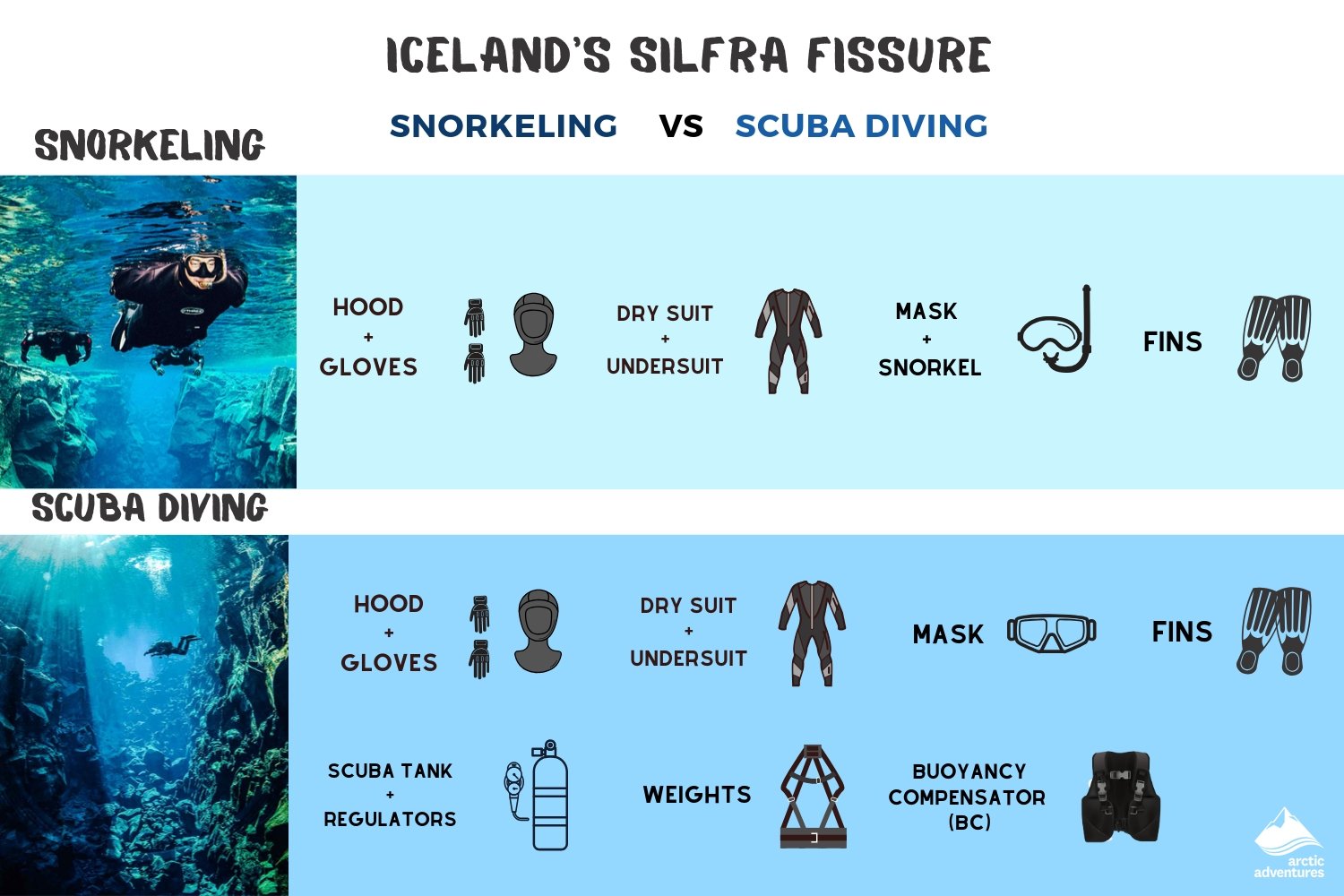
| Equipment | Mask, snorkel, fins (optional) | Mask, fins, wetsuit, tank, regulator, BCD, weights |
| Safety Concerns | Minimal, mainly swimming skills | High, need training and buddy system |
| Cost | Low | High (training + gear + trips) |
| Underwater Time | Unlimited at surface | 40–60 minutes per dive (average) |
| Marine Life Seen | Shallow creatures, coral | Wide variety, deep-sea species |
Equipment: What You Wear And Carry
Snorkeling Gear
- Mask: Lets you see clearly underwater by creating an air pocket in front of your eyes.
- Snorkel: A simple tube that allows you to breathe while your face is in the water.
- Fins: Help you swim more easily, but are not always needed.
- Optional items: Rash guard or wetsuit for warmth, floatation vest for safety.
Snorkeling gear is light, cheap, and easy to find in most beach shops. You can pack it in a backpack or suitcase.
Scuba Diving Equipment
Scuba diving needs more gear, which is heavier and more expensive.
- Mask and fins: Similar to snorkeling but often higher quality.
- Wetsuit or drysuit: Keeps you warm, especially in cold water.
- Tank: Filled with compressed air or other breathing gas.
- Regulator: Delivers air from the tank to your mouth.
- Buoyancy Control Device (BCD): Lets you float, sink, or stay at one depth.
- Weights: Help you go underwater and stay there.
- Dive computer or depth gauge: Tracks your depth and time for safety.
Some divers also use gloves, boots, underwater cameras, or special lights.
Equipment Comparison
Here’s a quick look at how the basic equipment for both activities stacks up:
| Item | Snorkeling | Scuba Diving |
|---|---|---|
| Mask | ✔ | ✔ |
| Snorkel | ✔ | ✖ |
| Fins | Optional | Required |
| Tank | ✖ | ✔ |
| Regulator | ✖ | ✔ |
| BCD | ✖ | ✔ |

Training And Certification
Snorkeling
You don’t need a certificate to snorkel. Most people can start after a simple lesson, which takes less than 30 minutes. You just need to know how to swim and float. Some tour guides will explain how to clear your mask or snorkel if water gets in.
For children or people who are not strong swimmers, a life jacket or float can make snorkeling safe and fun.
Scuba Diving
Scuba diving requires proper training. You must learn about:
- Equipment use
- Breathing techniques
- Underwater communication (using hand signals)
- What to do in an emergency
- How to avoid hazards like decompression sickness
Most people take a PADI Open Water Diver course or something similar. This involves classroom study, practice in a pool, and several real dives in open water. Training usually takes 3–5 days. After passing, you get a card that lets you dive around the world.
Non-obvious insight: You cannot just “try” real scuba diving without an instructor, even if you’re a strong swimmer. Even short dives without training can be dangerous due to pressure changes.
Safety Considerations
Snorkeling Safety
Snorkeling is mostly safe, but you should watch for:
- Strong currents
- Sunburn on your back
- Jellyfish or sharp coral
- Getting tired or cold
Always snorkel with a buddy, stay close to shore, and wear sunscreen. If you’re unsure, use a floatation vest.
Scuba Diving Safety
Scuba diving has more risks, which is why training is necessary. Main dangers include:
- Running out of air
- Decompression sickness (“the bends”)
- Getting lost or separated from your group
- Equipment problems
Divers use a buddy system, plan their dives, and check their gear carefully. Following safety rules is a must.
Non-obvious insight: Air tanks can run out faster if you breathe quickly or go deep, so calm, slow breathing saves air and keeps you safe.

Cost Differences
Snorkeling is one of the cheapest water activities. You can buy a basic set for $20–$50, or rent gear for a few dollars a day. Many beaches let you snorkel for free.
Scuba diving costs much more. A beginner course can be $300–$500. Renting full gear for one dive trip is $30–$100. Buying your own set can be $1000 or more. Dive trips, especially on boats, add to the cost.
But scuba divers often say the experience is worth it, since you see more and go deeper.
What You Can See And Experience
Snorkeling
- Coral reefs: Bright fish, sea turtles, and starfish in shallow water.
- Seagrass beds: Rays, crabs, and small creatures.
- Wrecks in shallow water: Sometimes old boats or planes near the surface.
You float on top and watch the underwater world below. The colors are bright in shallow water, and sunlight reaches everything. It’s relaxing, and you can spend hours drifting and looking down.
Scuba Diving
- Deep reefs: Larger corals, sharks, and big sea animals.
- Wrecks and caves: Explore inside sunken ships or rock formations.
- Vertical walls and drop-offs: See dramatic changes in the seafloor.
- Night dives: Watch sea creatures that only come out in the dark.
When scuba diving, you are part of the underwater world. Fish may swim close to you. You can see creatures hiding in caves or under rocks. The feeling is more intense and quiet, as sound travels differently below the surface.
Physical Demands And Accessibility
Snorkeling
Almost anyone who can swim can snorkel. It’s not tiring if you float and move slowly. Even kids or older adults can enjoy it.
Snorkeling is also accessible for people with some disabilities, with special gear or guided tours.
Scuba Diving
Scuba diving is more physical. You must carry heavy gear, swim with fins, and sometimes fight currents. Good health is important. Some medical conditions (like heart problems or asthma) may prevent you from diving.
People with disabilities can dive with special training, but it takes extra planning.
Environmental Impact
Snorkeling, if done carefully, has little effect on the ocean. The biggest danger is people touching or standing on coral, which can kill it.
Scuba diving can cause more damage if divers kick the reef, stir up sand, or leave trash. Both snorkelers and divers should follow “look but don’t touch” rules and use reef-safe sunscreen.
Some countries limit the number of divers to protect fragile sites. As a visitor, always follow local guidelines to protect marine life.
Travel And Accessibility
Snorkeling is available at almost any beach with clear, calm water. You can snorkel from shore, in a lake, or even in a swimming pool for practice.
Scuba diving requires special locations—dive shops, boats, or guided tours. You need a dive buddy or group, and often, advance booking.
Some places have both snorkeling and diving, like the Great Barrier Reef or Hawaii.
Common Beginner Mistakes
Snorkeling
- Not fitting the mask properly, causing leaks
- Forgetting sunscreen on the back and legs
- Breathing too quickly through the snorkel and swallowing water
Scuba Diving
- Forgetting to check air supply often
- Not equalizing ear pressure, which can cause pain
- Rushing training and missing important safety steps
Practical tip: Take your time with new equipment. Practice in shallow water before going further out, for both sports.
Which Is Right For You?
If you want a fun, easy way to see sea life with little preparation, snorkeling is the best choice. It’s perfect for families, beginners, and people who just want to relax.
If you want adventure, deeper exploration, and are willing to invest time in training, scuba diving will open a whole new world. It’s more complex, but also more rewarding for those who want to see what lies below the surface.
Quick Comparison Table
Here’s a summary for easy decision-making:
| Feature | Snorkeling | Scuba Diving |
|---|---|---|
| Skill Level Needed | Beginner | Intermediate to Advanced |
| Training Time | 0–30 minutes | 3–5 days |
| Cost | Low | High |
| Best For | Families, casual explorers | Adventure seekers |
| Depth Accessed | Surface to shallow | Deep water |
Frequently Asked Questions
What Is The Main Difference Between Snorkeling And Scuba Diving?
The main difference is that snorkeling keeps you at the surface, using a tube to breathe, while scuba diving lets you go deep underwater with an air tank and special gear.
Do I Need To Know How To Swim For Snorkeling Or Scuba Diving?
Yes, basic swimming skills are important for both. For snorkeling, it’s mainly about floating and gentle movement. For scuba diving, you need to swim comfortably with gear and handle yourself in the water.
Is Snorkeling Safer Than Scuba Diving?
Generally, yes. Snorkeling has fewer risks and does not require special training. Scuba diving is safe if you follow rules and get training, but it has more dangers, like running out of air or getting decompression sickness.
Can Children Try Snorkeling Or Scuba Diving?
Children can snorkel easily with adult supervision and a proper life vest. Some dive schools allow children as young as 10 to try scuba diving, but only with special junior courses and safety checks.
Where Can I Learn More About Scuba Diving?
You can find trusted information and certified training agencies at Wikipedia’s scuba diving page.
Snorkeling and scuba diving both give you a window into the ocean, but the experience is very different. By understanding the differences, you can choose the best way to explore the underwater world safely and enjoyably.
