Rugby is a sport loved across the world, but many newcomers get confused by two main versions: Rugby Union and Rugby League. At first glance, they can look very similar—both use an oval ball, involve physical contact, and are played on a grass field. However, the differences go deeper than just the numbers on the scoreboard. If you have ever wondered how Rugby Union and Rugby League really compare, this guide will clear up the confusion and help you understand what makes each version unique.
The Origins And Development
Rugby’s split happened in England in 1895. The argument was about player payments—the northern clubs wanted to pay players for missing work, but the southern clubs wanted to keep the game amateur. This led to two separate codes: Rugby Union stayed amateur for much longer, while Rugby League became professional quickly.
Over time, both codes created their own rules, cultures, and styles. Today, Rugby Union is more popular globally, especially in countries like New Zealand, South Africa, England, and France. Rugby League, while less widespread, has strong followings in Australia, England, and Papua New Guinea.
Team Size And Field Layout
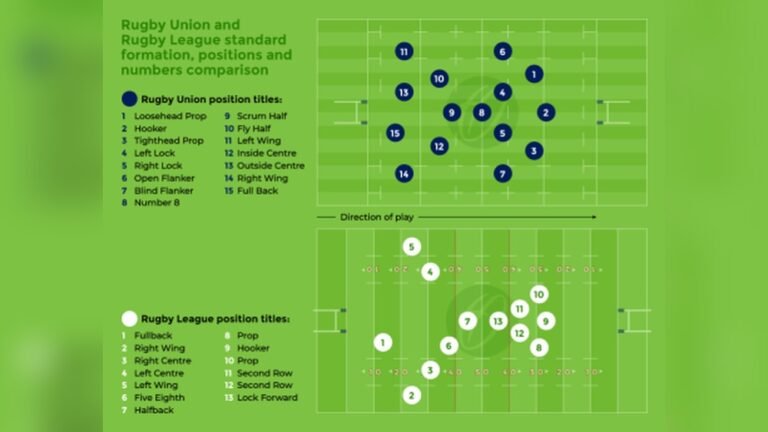
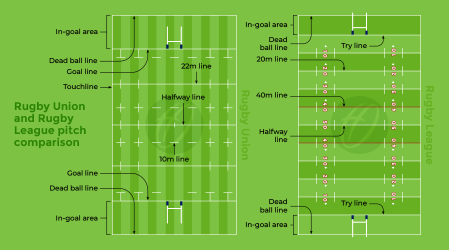
One of the most obvious differences is the number of players on each team.
| Code | Players per Side | Substitutes | Field Length | Field Width |
|---|---|---|---|---|
| Rugby Union | 15 | 8 | 100 meters | 70 meters |
| Rugby League | 13 | 4 | 100 meters | 68 meters |
With fewer players, Rugby League games have more space on the field, often making the action faster and more open. Rugby Union’s extra players lead to more contests for possession and set-piece battles.
Rules Of Play
Both codes share the basic aim: score more points than the other team by grounding the ball behind the opponent’s try line. But the way the games are played is quite different.
- Tackles and Possession
- In Rugby Union, there is no set limit to the number of tackles. Play continues until a penalty, turnover, or stoppage occurs.
- In Rugby League, teams have six tackles to score or advance the ball. After six tackles, the ball is handed to the other team.
- Set Pieces
- Rugby Union is famous for scrums and lineouts. Scrums involve eight players from each team pushing against each other to win the ball. Lineouts restart play when the ball goes out of bounds.
- Rugby League has simpler scrums, with fewer players and less contest. There are no lineouts in League.
- Rucks and Mauls
- Rucks and mauls are key to Rugby Union, where players compete for the ball after a tackle.
- Rugby League does not have rucks or mauls. After a tackle, play stops for a quick “play-the-ball” restart.
Scoring System
The value of different ways to score points also varies.
| Action | Rugby Union Points | Rugby League Points |
|---|---|---|
| Try | 5 | 4 |
| Conversion Kick | 2 | 2 |
| Penalty Goal | 3 | 2 |
| Drop Goal | 3 | 1 |
Rugby Union rewards tactical kicking and penalties more heavily, while Rugby League puts more focus on tries.
Game Length And Structure
Both codes last for 80 minutes (two halves of 40 minutes), but how the time is used can feel different.
- Rugby League games have fewer stoppages and are generally faster with more ball-in-play time.
- Rugby Union includes more pauses for set pieces, which can slow the game but add tactical depth.
Player Roles And Specialization
Because of the different rules, the roles of players are not the same.
- In Rugby Union, forwards focus on physical contests in rucks, mauls, and scrums, while backs create running and passing opportunities.
- Rugby League players are often more versatile, with forwards expected to run and pass as much as the backs. There is less separation between positions.
One insight that surprises beginners: Rugby League’s fullbacks and wingers run far greater distances than most Union players, often covering over 7 km in a match.

Tactics And Strategy
The tactics in Rugby Union and Rugby League reflect their rule differences.
- Rugby Union teams use set pieces to control territory and possession. The contest at breakdowns (rucks and mauls) is crucial.
- Rugby League focuses on structured attacking sets, using the six tackles to move up the field and create space out wide.
A common mistake is to assume Rugby League is less tactical. In reality, League coaches plan every tackle set, and players follow precise patterns to open up the defense.
Culture And Global Reach
Rugby Union is played in over 100 countries, with major international tournaments like the Rugby World Cup. Rugby League is smaller but has passionate fans, especially in northern England and eastern Australia. The State of Origin series in Australia draws huge crowds and TV audiences every year.
Another important point: Rugby Union’s club and international scenes are both strong, while Rugby League’s international matches are less frequent, with more focus on club competitions.

Key Similarities
Despite all the differences, both codes share:
- The distinctive oval ball
- Emphasis on teamwork and respect
- Tough physical contact, but strict rules on safety
- A strong sense of tradition and community
Which Code Is Right For You?
Choosing between Union and League depends on what you enjoy:
- If you like tactical battles and set-piece contests, Rugby Union may suit you.
- If you prefer faster action and open running, Rugby League could be your game.
Trying both, even just watching, will help you appreciate the unique qualities of each code. For more details about Rugby’s history and rules, check out this Wikipedia page on Rugby football.
Frequently Asked Questions
What Is The Biggest Rule Difference Between Rugby Union And Rugby League?
The main rule difference is the tackle count. In League, teams have six tackles before giving the ball to the opposition. In Union, there is no tackle limit—play continues until there’s a turnover, penalty, or stoppage.
Why Do Rugby League Teams Have Fewer Players?
Rugby League reduced its teams to 13 players to open up the field and make the game faster. This change creates more running and fewer set-piece contests compared to Rugby Union’s 15-player sides.
Are The Balls The Same In Rugby Union And Rugby League?
Both codes use a similar oval-shaped ball, but Rugby League balls are usually slightly smaller and more pointed. This helps with handling and kicking at the faster pace of League.
Which Version Is More Popular Worldwide?
Rugby Union has a much larger global following and is played in more countries. However, Rugby League is extremely popular in certain regions, especially Australia, northern England, and Papua New Guinea.
Can Players Switch Between Rugby Union And Rugby League?
Yes, many players have successfully switched codes. However, each code requires different skills and tactics, so it can take time to adapt. Some famous athletes, like Sonny Bill Williams and Jason Robinson, have played at the highest level in both.
Both Rugby Union and Rugby League are exciting, challenging, and rewarding sports. Understanding the differences will help you enjoy the games even more, whether you’re playing, watching, or just curious about rugby’s unique world.
