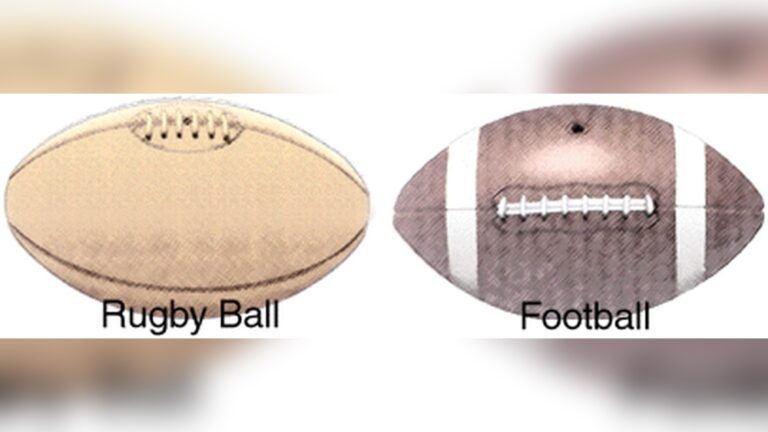
When you watch a rugby match and then switch to an American football game, the differences are easy to spot—the players, the field, and especially the ball. But what exactly sets a rugby ball apart from an American football? These differences are not just about looks. The shape, size, construction, and even the way the balls are used reveal much about the two sports themselves. Let’s dive into the details and clear up the confusion once and for all.
Shape And Size Differences
At first glance, both balls look oval. But a closer look shows clear differences.
| Feature | Rugby Ball | American Football |
|---|---|---|
| Shape | Prolate spheroid (rounded ends) | Prolate spheroid (pointed ends) |
| Length | 28-30 cm (11-11.8 in) | 28 cm (11 in) |
| Width (at widest) | 58-62 cm (22.8-24.4 in) circumference | ~56 cm (22 in) circumference |
| Weight | 410-460 g (14.5-16 oz) | 397-425 g (14-15 oz) |
The rugby ball is a bit larger and has more rounded ends. This makes it better for both passing and kicking. The American football is slimmer and more pointed at the ends, which helps with long, spiral throws.
Construction And Materials
The way these balls are made affects how they feel and perform.
- Rugby balls are usually made from synthetic materials or leather. They have a textured grip, which is important because rugby is often played in wet or muddy weather.
- American footballs are traditionally made from cowhide leather, especially in professional leagues. They have pebbled textures and prominent laces.
Here’s a side-by-side look:
| Aspect | Rugby Ball | American Football |
|---|---|---|
| Material | Synthetic or leather | Leather (pro) or composite |
| Grip Texture | Textured for grip | Pebbled, with raised laces |
| Laces | Small seam, almost flat | Prominent laces for grip |
The laces on an American football are used for gripping and throwing spirals. Rugby balls have only a small seam, since forward passing is not allowed and grip for throwing is less important.
Function And Use In The Game
How the ball is used is a key difference.
- In rugby, the ball must be passed backward or sideways. Kicking is common, and players need to control the ball with their feet and hands.
- In American football, forward passes are allowed. The ball is often thrown long distances, which is helped by its pointed shape and laces.
The design of each ball matches the sport’s needs. Rugby’s rounder ball is easier to catch and kick. American football’s slimmer, pointed ball travels farther and faster when thrown.
Handling And Playability
Players notice the difference right away when holding the two balls.
- Rugby ball: Easier to grip with two hands. The size and grip help during fast passes and quick handling. The slightly heavier weight helps with stability during kicks.
- American football: Fits easily in one hand for passing. The laces make it easy to throw a tight spiral. The lighter weight helps with long, fast throws.
A beginner might not realize how much these small differences affect gameplay. For example, if you try to throw a rugby ball like an American football, it won’t spiral or go as far. The opposite is true for kicking—a rugby ball is much easier to kick for distance and accuracy.

Air Pressure And Durability
Both balls must be inflated, but the air pressure and durability can differ.
- Rugby balls are inflated to 65.7–68.8 kPa (9.5–10 psi).
- American footballs are inflated to 90–105 kPa (13–15 psi).
Higher pressure in American footballs makes them firmer for throwing. Rugby balls, with lower pressure, are softer for easier catching and kicking.
In terms of durability, American footballs are built tough for hard impacts and repeated use. Rugby balls are also durable but are designed to withstand wet conditions and rough handling during rucks and scrums.
Historical Origins
The history behind each ball also explains some differences.
- Rugby began in England in the early 19th century. Early balls were hand-stitched from pig bladders and leather, which led to the rounder shape.
- American football developed from rugby and soccer in the late 1800s. Over time, the ball became more pointed to allow for forward passing, which became a key part of the game.
A fun fact: The first American footballs were almost as round as rugby balls. The shape changed as the sport evolved.
Visibility And Markings
How easy the ball is to see matters, especially on TV.
- Rugby balls are usually white or light-colored with colored patterns. This helps players and viewers spot the ball quickly.
- American footballs are brown with white stripes and laces (in college and youth leagues). NFL balls are plain brown with only laces.
This difference helps each sport’s audience follow the action, especially during fast plays or kicks.
Cost And Availability
If you want to buy a ball, what can you expect?
- Rugby balls cost anywhere from $15 for a basic ball to $60 or more for a top-grade match ball.
- American footballs start at about $20 for youth models and go up to $100 or more for official NFL balls.
Many sporting goods stores carry both, but the exact models and sizes can vary by country.

Practical Insights
Most beginners focus only on shape. But two things often get missed:
- Skill transfer: Skills with one ball do not always transfer to the other. A good spiral throw in American football does not mean you can pass well in rugby.
- Field conditions: Rugby balls are designed to work well even when wet or muddy. American footballs, especially leather ones, can become slippery if wet.
If you’re thinking of trying a new sport, practice with the right ball first. The wrong ball can make learning much harder.
Frequently Asked Questions
What Are The Main Differences In Size Between A Rugby Ball And An American Football?
A rugby ball is generally larger and has rounded ends. An American football is slimmer, slightly shorter, and has pointed ends. The rugby ball is also a bit heavier.
Why Does An American Football Have Laces, But A Rugby Ball Does Not?
Laces on an American football help quarterbacks grip and throw spirals. Rugby balls only have a seam because forward passing and spiral throws are not part of rugby’s play style.
Can You Use A Rugby Ball In American Football, Or Vice Versa?
It’s not recommended. The shape and weight of each ball suit their own sport’s rules. Using the wrong ball makes handling, passing, and kicking much harder.
What Materials Are Used To Make Rugby Balls And American Footballs?
Rugby balls are made of synthetic materials or leather, with a textured grip. American footballs are usually leather for pro games, with pebbled textures and laces for grip.
Where Can I Find Official Specifications For These Balls?
You can read official details from organizations like World Rugby and the NFL. For more details, check the Wikipedia comparison page for both sports.
A rugby ball and an American football might look alike at first, but their differences are essential to how each sport is played. The shape, size, construction, and even small features like laces all serve a purpose. If you ever get a chance, try holding both in your hands—you’ll feel the difference right away.
Whether you’re a fan, a player, or just curious, understanding these differences can help you enjoy both sports even more.