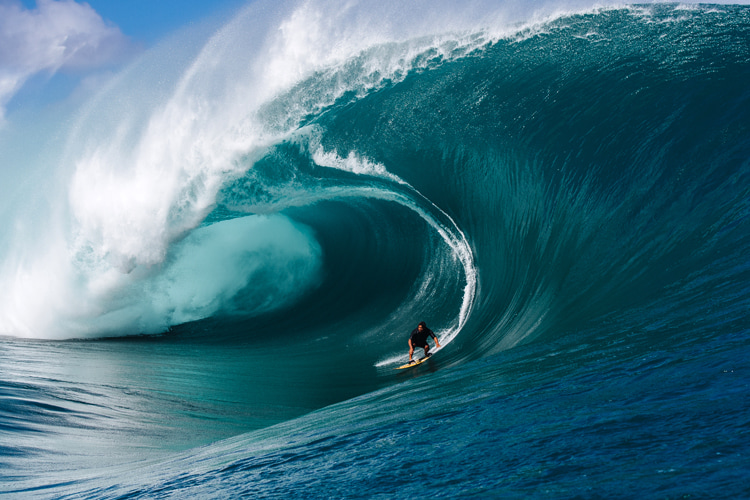
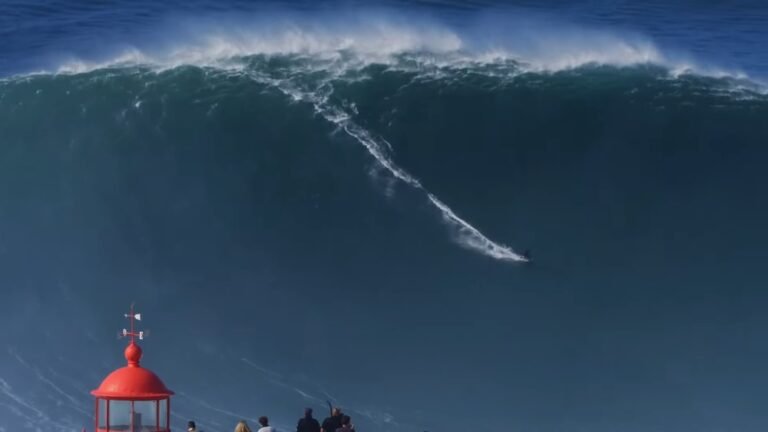
Surfing is full of stories about courage and adventure, but no tale is as exciting as the search for the biggest wave ever surfed. People have been riding waves for centuries, but in the last few decades, surfers have pushed the limits. Today, some have surfed waves as tall as buildings. These are not just ocean swells—they are giants that demand skill, bravery, and careful teamwork. But what exactly is the biggest wave ever surfed? Who did it? How are these massive waves measured? And why do only a few places on Earth produce such monsters? This article explores all these questions and gives you a full understanding of the world of big wave surfing.
Understanding Big Wave Surfing
Big wave surfing is more than just catching a large wave. Most surfers consider a wave “big” if it is at least 20 feet (about 6 meters) tall. However, the biggest waves ever surfed are much larger—sometimes over 80 feet high.
These waves are rare. They need special weather, deep water, and the right wind to form.
Big wave surfing is dangerous. Surfers can wipe out and be held underwater by the force of the wave. The risk of injury or even death is real. That is why these surfers train hard and use special equipment, like inflatable vests and jet skis for rescue.
One thing beginners often miss is how these waves are not just taller—they are more powerful. A 60-foot wave does not just look bigger than a 20-foot wave; it hits with much more force. Surviving a wipeout on such a wave requires both skill and luck.
How Are Waves Measured?
Measuring a wave is not as simple as it sounds. There are two main ways:
- Face Height: This is the vertical distance from the bottom of the wave (trough) to the top (crest) on the side the surfer rides.
- Hawaiian Scale: Some surfers, especially in Hawaii, use a system that counts only the back of the wave, which is about half the face height.
Today, most official records use the face height. Technology has made measurement more accurate. Experts use photos, videos, and even laser tools to judge a wave’s size. They often compare the surfer’s height to the wave to make careful calculations.
Some waves are hard to measure exactly. A few famous rides have sparked debate among surfers and judges about their true size.
The Biggest Wave Ever Surfed
The current record for the biggest wave ever surfed belongs to António Laureano and Sebastián Steudtner. Let’s look at both, as the official world record and the unofficial claim are both important.
Sebastián Steudtner’s Record-breaking Ride
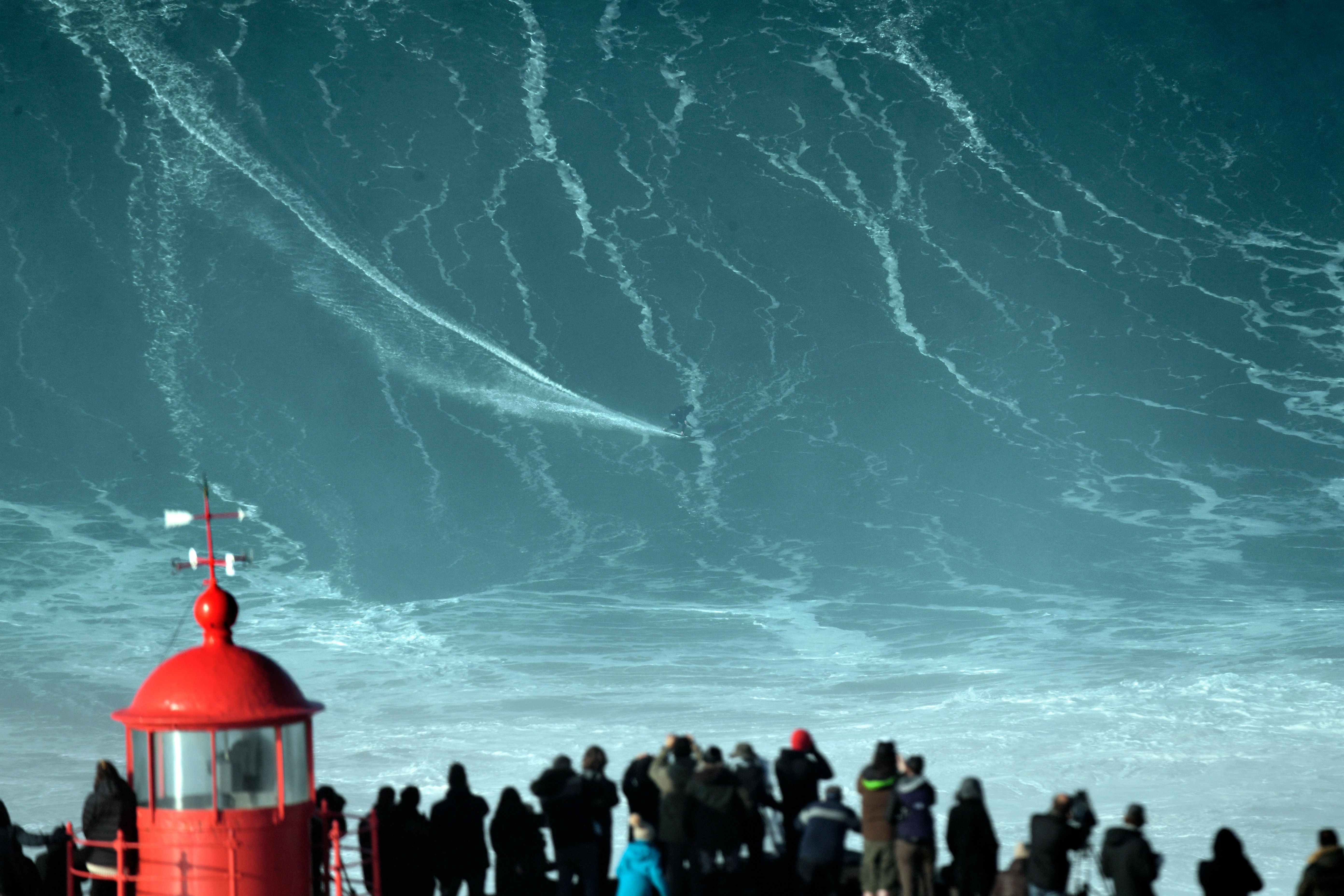
On October 29, 2020, Sebastián Steudtner from Germany surfed a huge wave at Nazaré, Portugal. After careful review, the World Surf League (WSL) and Guinness World Records confirmed the wave’s height at 86 feet (26.21 meters). This is the largest wave ever officially surfed.
Steudtner’s ride was filmed from different angles, and experts measured the wave using advanced technology. The record was announced in 2022, making him the world record holder.
António Laureano’s Unofficial Claim
In November 2021, Portuguese surfer António Laureano claimed to have surfed a wave at Nazaré that measured 101.4 feet (30.9 meters). If confirmed, this would break Steudtner’s record. However, as of now, this ride is not officially recognized by the WSL because the measurement is still under review.
This shows how difficult it is to measure and confirm such records, especially when waves are so massive.
Key Details Of The Record Waves
| Surfer | Wave Height (feet/meters) | Location | Date | Status |
|---|---|---|---|---|
| Sebastián Steudtner | 86 ft / 26.21 m | Nazaré, Portugal | October 29, 2020 | Official World Record |
| António Laureano | 101.4 ft / 30.9 m | Nazaré, Portugal | November 2021 | Unofficial (under review) |
Where Do The Biggest Waves Occur?
Not every beach has giant waves. Only a few places in the world can create these monsters. The main spots are:
- Nazaré, Portugal: Known for producing the world’s biggest rideable waves, thanks to the Nazaré Canyon under the sea.
- Jaws (Peahi), Hawaii: Famous for huge, fast, and powerful waves.
- Mavericks, California: Cold water, big winter swells, and dangerous rocks.
- Teahupo’o, Tahiti: Not the tallest, but extremely thick and powerful.
Why Nazaré Produces Such Big Waves
Nazaré is special because of its underwater canyon. This canyon is about 5,000 meters deep and acts like a funnel. It channels energy from the Atlantic Ocean directly toward the coast, making the waves much higher than at other beaches.
This is one reason why so many record-breaking rides happen at Nazaré. The combination of the canyon, strong winter storms, and local wind all come together to create the perfect setup for giant waves.

The Surfers Who Ride Giant Waves
Big wave surfing is not for everyone. It takes years of training, perfect timing, and mental strength. The surfers who chase these waves are a special group. Let’s look at some who have set records or made history.
Pioneers And Record Holders
- Garrett McNamara: In 2011, he surfed a 78-foot wave at Nazaré, making headlines worldwide. He helped put Nazaré on the map for big wave surfing.
- Rodrigo Koxa: In 2017, he rode an 80-foot wave at Nazaré, which was the world record until Steudtner broke it.
- Maya Gabeira: She holds the women’s world record for the biggest wave surfed—73.5 feet at Nazaré in 2020. Her achievement is important for women in big wave surfing.
| Surfer | Wave Height (feet) | Location | Year | Significance |
|---|---|---|---|---|
| Garrett McNamara | 78 | Nazaré, Portugal | 2011 | First major record at Nazaré |
| Rodrigo Koxa | 80 | Nazaré, Portugal | 2017 | Official world record (2018-2022) |
| Maya Gabeira | 73.5 | Nazaré, Portugal | 2020 | Women’s world record |
What Makes A Big Wave Surfer Special?
These surfers have more than just physical skill. They need:
- Courage: The risk is extremely high.
- Experience: Many years in the water.
- Teamwork: Surfers work with jet ski drivers for safety and to help them catch the biggest waves (called tow-in surfing).
- Knowledge of the ocean: They study weather, tides, and waves carefully.
One thing people often miss: Surfing a record wave is not just about being in the right place at the right time. It is about months of preparation and waiting for the perfect moment.
How Big Wave Surfing Has Changed
Over the years, the sport has changed in many ways:
- Equipment: Boards are now lighter and stronger. Surfers wear safety vests that can inflate if they get held underwater.
- Tow-in surfing: Jet skis pull surfers onto waves that are too big to catch by paddling.
- Rescue teams: Surfers have teams watching and ready to help if something goes wrong.
This progress has helped surfers push the limits, but it has also made the sport safer.
Dangers And Challenges
Surfing giant waves is not just about excitement. The risks are real, and even the best surfers can get into trouble. Here are some dangers:
- Drowning: Wipeouts can push surfers deep underwater. They must hold their breath for a long time.
- Hitting rocks or the sea floor: Places like Mavericks and Teahupo’o are especially dangerous.
- Injuries: Broken bones, concussions, and cuts are common.
- Equipment failure: If a surfboard breaks or a vest does not work, the situation can get deadly.
One non-obvious insight: Many big wave surfers train for breath-holding and survival, not just for riding. They practice being underwater and dealing with panic, which can save their lives.
Why Are People Fascinated By The Biggest Wave?
There is something magical about seeing a person ride a wave the size of a building. It is not just about the height—it is about the power of nature and human courage. For many, these records are proof that people can face their fears and do what seems impossible.
The media loves these stories. Each new record gets global attention, and videos often go viral. But the surfers themselves often talk about the feeling of being “in the moment”—completely focused and alive.
The Future Of Big Wave Surfing
Will someone surf a 100-foot wave soon? Many experts think it is possible. Technology is improving, and more surfers are training for giant waves. New locations may also be discovered.
But, as waves get bigger, the risks rise too. Safety must always be the top priority. The sport will keep growing, but the ocean is always in control.
For those who want to learn more about the science and history of big wave surfing, the Wikipedia entry on Big Wave Surfing is a good place to start.
Frequently Asked Questions
How Tall Was The Biggest Wave Ever Surfed?
The biggest wave ever officially surfed was 86 feet (26.21 meters) high. It was surfed by Sebastián Steudtner at Nazaré, Portugal in 2020. There is an unofficial claim of a 101.4-foot (30.9 meters) wave by António Laureano, but it has not been confirmed.
Where Do The Biggest Surfable Waves Form?
The largest surfable waves are found at Nazaré in Portugal, Jaws in Hawaii, Mavericks in California, and Teahupo’o in Tahiti. Nazaré is the most famous for world records because of its deep underwater canyon.
How Do Experts Measure The Size Of A Wave?
Experts use photos, videos, and sometimes laser technology. They compare the surfer’s height to the wave and use the face height method (from trough to crest on the surf side). This gives a more accurate measurement.
Who Are Some Famous Big Wave Surfers?
Some of the most famous are Sebastián Steudtner, Garrett McNamara, Rodrigo Koxa, and Maya Gabeira. They have set world records or made history in big wave surfing.
Is Big Wave Surfing Dangerous?
Yes, it is very dangerous. Surfers face drowning, injury, and even death. Many train for breath-holding and survival. Safety gear and rescue teams are essential.
Big wave surfing is not just about riding the largest wave. It is about facing nature’s strongest forces with skill and courage. As surfers continue to chase bigger waves, the world will keep watching, amazed by what humans and the ocean can do together.