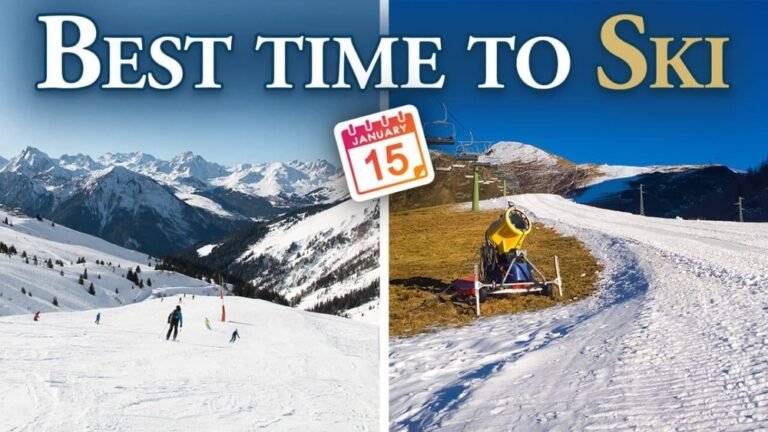
Skiing is one of those magical experiences that blends adventure, nature, and a touch of luxury. But if you’re planning a ski trip, there’s one big question: When is the best time of year for skiing? Pick the wrong time, and you might face icy slopes, slushy snow, or even closed lifts. Choose wisely, and you’ll enjoy fresh powder, sunny days, and fewer crowds. This guide will help you understand how to choose the perfect time for your next ski adventure—whether you’re a first-timer, a seasoned pro, or somewhere in between.
What Makes For Great Skiing?
Before talking about months and dates, it’s important to know what actually makes a good ski season. The best time depends on a few key factors:
- Snow quality: Powder, packed snow, or slush all feel different under your skis.
- Weather conditions: Cold can preserve snow, but too much cold is uncomfortable. Sun can be pleasant, but too much melts the snow.
- Crowds: More people often means longer lift lines and busier slopes.
- Prices: Holiday seasons usually bring higher prices for hotels and lift tickets.
Understanding these factors helps you match your trip with what matters most to you.
Ski Season Breakdown: Early, Peak, And Late
The ski season in most regions is divided into three main parts: early season, peak season, and late season. Each has its own benefits and drawbacks.
Early Season (november To Mid-december)
This period kicks off the ski season. Resorts start opening as soon as enough snow falls—sometimes as early as November.
Pros:
- Lowest prices for hotels and lift tickets.
- Fewer crowds, so you get the slopes almost to yourself.
- Great for early-bird deals and quiet getaways.
Cons:
- Not all trails or lifts are open—some areas may still be grassy or rocky.
- Snow quality can be unreliable; resorts might use artificial snow.
- Shorter daylight hours.
Who should go: If you love peaceful slopes, can handle less terrain, or want to save money, early season could be your best bet.
Peak Season (mid-december To Early March)
Most skiers aim for the peak season. This is when snow coverage is at its best and almost every trail is open.
Pros:
- Reliable, deep snow on most runs.
- All lifts and activities open.
- Ski villages are lively with events and après-ski.
Cons:
- Holiday weeks (Christmas, New Year’s, Presidents’ Day) are expensive and crowded.
- You may need to book far in advance to get your preferred accommodation.
Who should go: Families, intermediate or advanced skiers, and anyone looking for the “classic” ski experience. If you want guaranteed snow and don’t mind crowds, this is your time.
Late Season (march To April)
As spring approaches, ski conditions start to change. Days get longer, and the sun feels warmer.
Pros:
- Warmer temperatures mean more comfortable skiing.
- Spring snow (“corn snow”) can be soft and fun, especially in the mornings.
- Less crowded, with deals on lodging and lift tickets.
Cons:
- Lower elevations may start to lose snow.
- Afternoon slush can make skiing trickier.
- Some resorts close by mid-April.
Who should go: Those who like a relaxed vibe, sunshine, and spring festivals. Late season is also great for families with young kids.
Comparing Ski Conditions By Month
To help you plan, here’s a closer look at what to expect each month in North America and Europe.
| Month | Snow Reliability | Crowds | Price Level |
|---|---|---|---|
| November | Low to Medium | Very Low | Low |
| December | Medium (high after mid-month) | Low to High | Medium to High |
| January | High | Medium | Medium |
| February | High | High (especially during holidays) | High |
| March | Medium to High | Medium | Medium |
| April | Low to Medium | Low | Low |
Non-obvious insight: Many beginners think only December and January are good for skiing, but March can offer excellent conditions—especially at higher altitude resorts.
Regional Variations: Not All Mountains Are The Same
The best time to ski depends a lot on where you go. Snow falls differently in the Rocky Mountains, the Alps, or Japan.
North America
In the western United States and Canada, ski resorts like Whistler, Aspen, and Vail often open in late November. Their peak season runs from mid-December through March. Some, like Mammoth Mountain or Lake Louise, can have good snow into May.
Special note: In California and Colorado, altitude makes a big difference. Resorts above 8,000 feet (2,400 meters) hold snow longer, so late season can still be excellent.
Europe
The Alps (France, Switzerland, Austria, Italy) are famous for their long seasons. Most resorts start in December and close by mid-April. However, glacier resorts like Zermatt or Tignes can offer skiing even in summer.
Non-obvious insight: In southern Europe, snow can be less reliable after February. For late-season trips, choose higher altitude resorts.
Japan
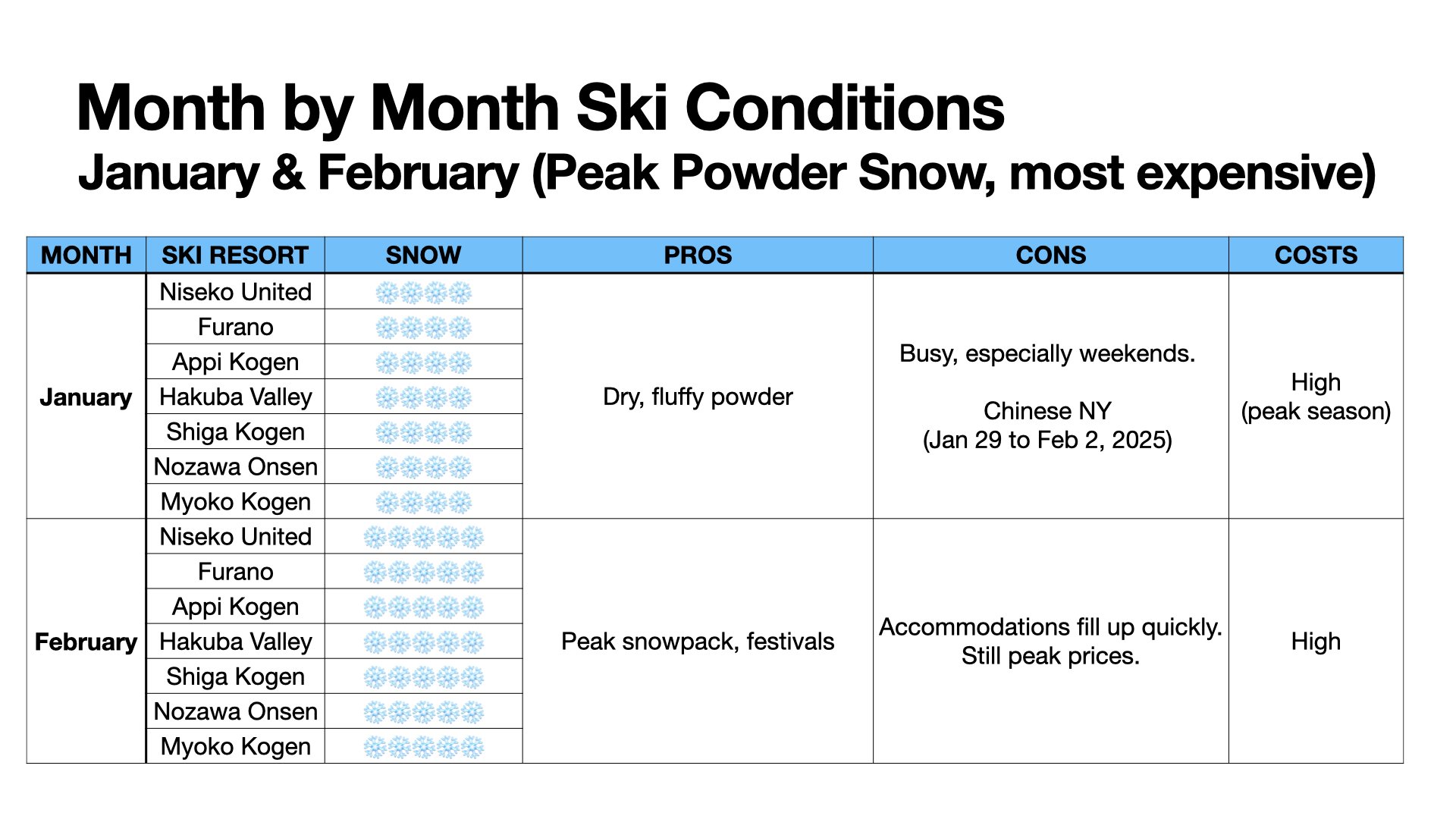
Japan’s Niseko and Hakuba are known for deep powder. Their season usually starts in December and goes until April. January and February are best for powder hounds.
Best Time For Different Types Of Skiers
Everyone has their own idea of the “perfect” ski trip. Here’s how to match your timing with your skill and style.
Beginners
If you’re just starting out, you want friendly conditions:
- Go in March or early April. The snow is softer, and the weather is warmer.
- Avoid big holiday weekends—crowds and high prices can make things stressful.
Families
Families often need to travel during school breaks. Consider:
- Early March: Still great snow but fewer crowds than Christmas or Presidents’ Day.
- Look for resorts with lots of beginner terrain and good ski schools.
Powder Lovers
If you dream of fresh, deep snow:
- Aim for January or February in places known for powder (Utah, Colorado, Japan).
- Watch snow reports and book last minute if possible.
Party Seekers
Some people want skiing plus a great social scene:
- Go during peak season holidays (New Year’s, Carnival in Europe, Presidents’ Day).
- Resorts like St. Anton (Austria) or Aspen (USA) are known for après-ski.
Budget Travelers
Looking To Save Money?
- Book in early December or late March/April.
- Avoid weekends and holidays for the best deals.
How School Holidays And Events Affect Skiing
Ski resorts get busy during certain times, especially when schools are out. Here’s when you can expect crowds:
| Region | Busy Holiday Weeks | Best Value Weeks |
|---|---|---|
| USA & Canada | Christmas (Dec 24-Jan 1), Presidents’ Day (mid-Feb) | Early December, Late March |
| Europe | Christmas/New Year’s, February half-term (varies by country) | January (after New Year’s), Late March |
| Japan | New Year’s (Dec 29-Jan 3), Chinese New Year, February weekends | Mid-January, Late March |
Tip: If you can, ski during “shoulder weeks” (just before or after a major holiday) for fewer crowds but still good snow.
Weather Patterns And Their Impact
Many people underestimate how much weather can change ski conditions. Here’s what to watch for:
- Powder storms: Some regions get regular dumps of fresh snow. For example, Utah’s “Greatest Snow on Earth” usually comes in January.
- Warm spells: Sudden warm weather can melt snow even in mid-winter, especially at low elevations.
- Spring freeze-thaw: In March and April, snow may freeze overnight and soften during the day. Plan to ski in the morning for the best conditions.
Practical advice: Check the elevation of your chosen resort. Higher resorts hold snow longer and recover faster from bad weather.
Non-obvious Factors That Influence Timing
There are a few details many people miss when choosing their ski dates:
- Altitude matters more than latitude. A high resort in Colorado will keep snow longer than a low one in Canada, even if it’s further south.
- Face direction counts. North-facing slopes hold snow better because they get less sun.
- Events and festivals. Some weeks bring special events—like music festivals or ski races—that can make your trip more fun (or more crowded).
How To Check Snow Reports And Forecasts
Modern technology makes it easier than ever to pick the right week. Use these resources:
- Resort websites post daily snow totals and open trails.
- Apps like OpenSnow or OnTheSnow give detailed forecasts.
- Weather sites, such as the Weather Channel, provide long-range predictions.
Tip: Don’t just look at how much snow has fallen—check the “base depth” and how much terrain is actually open.
Maximizing Your Ski Experience
No matter when you go, a few tricks can help you get the most from your trip:
- Book early for peak weeks to get the best lodging.
- Go midweek to avoid crowds, even during busy periods.
- Buy lift tickets in advance—many resorts charge less online.
- Consider insurance in case weather closes the mountain.
If you’re flexible, keep an eye on snow reports and chase the best conditions—even if it means a last-minute trip.
Frequently Asked Questions
When Do Most Ski Resorts Open And Close?
Most ski resorts in North America and Europe open in late November or early December and close in early to mid-April. Some high-altitude or glacier resorts may open earlier and close later.
Is January Or February Better For Skiing?
Both months offer excellent snow. February often has deeper snow and fewer holiday crowds than January, but both are considered prime months in most regions.
Are There Good Places To Ski In The Summer?
Yes, but options are limited. Some glacier resorts in the Alps (like Zermatt or Tignes) and a few places in the southern hemisphere (like New Zealand or Chile) offer summer skiing.
What’s The Quietest Time To Ski?
The first two weeks of December and the last two weeks of March are usually the quietest. Fewer people travel at these times, so you’ll face less crowded slopes and lower prices.
How Does Altitude Affect The Ski Season?
Higher altitude resorts keep snow longer and have more reliable conditions, especially in late season. If you want to ski in March or April, pick a resort above 7,000 feet (2,100 meters).
Skiing offers something special in every part of the season. The key is to match your ideal conditions—powder, sun, savings, or quiet—with the best time for your favorite region. With a little planning, you can enjoy perfect runs, beautiful views, and unforgettable memories on the slopes.
