If you love paddle boarding, you know that inflating your board is not the most exciting part of the adventure. A good portable paddle board pump can change that. It saves time, keeps your energy for the water, and makes transport easy.
But with so many options, it’s tough to know which pump is truly the best for your needs. Many beginners focus only on price or power, missing details like battery life, PSI accuracy, or nozzle compatibility. This guide breaks down what really matters, compares top models, and gives you insights to choose the best portable paddle board pump for your next outing.
Why A Portable Paddle Board Pump Matters
Dragging a heavy manual pump to the water is exhausting. Using a weak pump wastes time and can even damage your board if you overinflate or underinflate. Portable paddle board pumps solve these problems. They are designed to be lightweight, efficient, and easy to use anywhere. Whether you paddle at a remote lake or a crowded beach, a portable pump gives you more freedom and less hassle.
But not all portable pumps are the same. Some can inflate a board in minutes, while others take much longer. A few can even deflate your board for fast packing. The best pump for you depends on your paddle board type, how often you use it, and your budget.
Key Features To Consider
When picking a portable paddle board pump, look beyond basic specs. Here are the most important features to compare:
Power Source
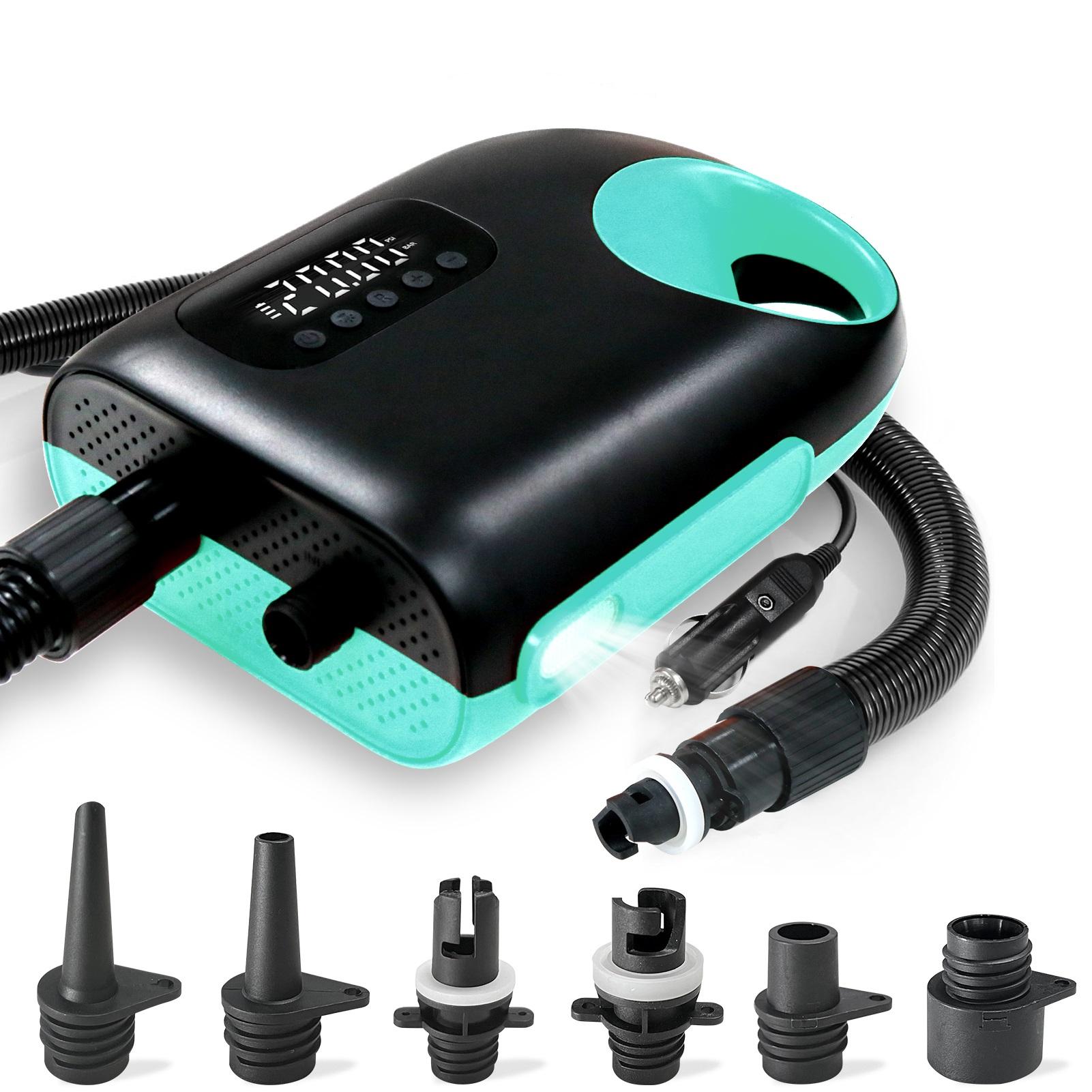
- Electric pumps: Often plug into your car or use a built-in battery. Fast and easy, but heavier and need charging.
- Manual pumps: Lightweight and reliable, but take more effort.
- Hybrid pumps: Offer both electric and manual options.
Max Psi
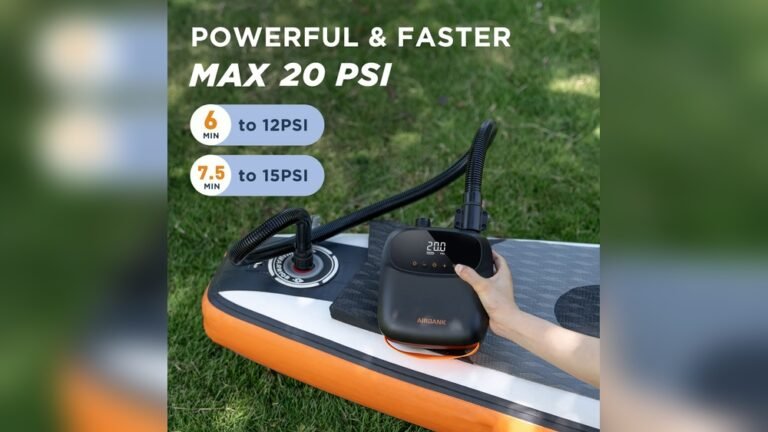
Most inflatable paddle boards need 12-15 PSI. Some race boards require up to 20 PSI. Make sure your pump can handle the pressure for your board.
Inflation Speed
Measured in liters per minute (L/min). A higher number means faster inflation. But, very fast pumps can be louder and draw more power.
Nozzle Compatibility
Check that the pump comes with the correct adapter for your board. Some brands use special valves.
Size And Weight
A portable pump should fit in your backpack or board bag. Check the pump’s size and weight, especially if you hike to your launch spot.
Battery Life And Charging
For electric pumps with batteries, look at how many boards you can inflate on a single charge. Some pumps let you use a car plug as backup.
Extra Functions
Some pumps also deflate, have digital screens, or auto-stop when they reach your set PSI. These features add convenience.

Top 5 Portable Paddle Board Pumps Compared
To help you choose, here are five top-rated portable paddle board pumps, compared side by side. Each has unique strengths. This comparison table gives a quick overview:
| Pump | Type | Max PSI | Inflation Speed | Battery | Weight | Notable Features |
|---|---|---|---|---|---|---|
| OutdoorMaster Shark II | Electric | 20 | 350 L/min | Car plug | 3.6 lbs | Auto shut-off, digital display |
| SERENE LIFE SLPUMP30 | Electric (Rechargeable) | 16 | 350 L/min | Yes | 4.5 lbs | LCD screen, multiple adapters |
| iROCKER 12V Electric Pump | Electric | 20 | 340 L/min | Car plug | 3.5 lbs | Deflates, auto shut-off |
| NIXY Ventus Electric Pump | Electric (Rechargeable) | 20 | 350 L/min | Yes | 4.2 lbs | Dual power, digital display |
| THURSO SURF SUP Pump | Manual (Double Action) | 29 | 120 L/min | No | 2.1 lbs | Compact, lightweight |
In-depth Reviews Of The Best Portable Pumps
Let’s look at each pump in more detail. These reviews highlight what makes each one stand out, along with practical pros and cons.
Outdoormaster Shark Ii
The OutdoorMaster Shark II is a favorite among paddle boarders. It connects directly to your car’s 12V outlet and can inflate two boards in a row without overheating. The digital display shows PSI in real time, and the auto shut-off keeps your board safe. This pump is a bit heavier, but its speed (about 10 minutes for a 15 PSI board) and reliability make it ideal for most users. Note: It does not have a built-in battery, so you need your car nearby.
Non-obvious insight: The Shark II uses active cooling, so it lasts longer during group outings—many pumps overheat after one board.
Serene Life Slpump30
This rechargeable electric pump is a great option if you paddle far from your car. One charge inflates about two boards to 15 PSI. The LCD screen makes it easy to set your target PSI, and it comes with several nozzle types. It’s slightly slower than some car-powered pumps, but the cordless design is a big plus for remote spots. You can also power it with a car plug if the battery runs low.
Tip: Always check battery level before heading out. Cold weather can reduce battery life by up to 20%.
Irocker 12v Electric Pump
The iROCKER 12V is compact, powerful, and designed to fit most paddle board valves. It plugs into your car’s cigarette lighter and can inflate a standard board in under 10 minutes. The deflate function is a time-saver when packing up. Its cord and hose storage are well-designed, making it easy to carry.
Common mistake: Some users forget to use the deflate feature, which makes board rolling much easier and faster.
Nixy Ventus Electric Pump
The NIXY Ventus stands out for its dual power: it works with both a rechargeable battery and a car plug. The digital display is clear, and the auto shut-off prevents overinflation. It’s a bit pricier, but you gain flexibility for both roadside and remote launches. It can inflate two boards on a single battery charge.
Extra insight: The battery is removable, so you can buy a spare for longer trips—a rare feature.
Thurso Surf Sup Pump
If you want a manual pump, this double-action model is the best choice. It’s lightweight, fits in any bag, and can inflate a board to 15 PSI in under 8 minutes with steady pumping. The double-action means it pushes air on both up and down strokes, speeding up inflation.
Practical tip: Start in double-action mode (fast fill), then switch to single-action (high pressure) above 8 PSI for easier pumping.
Electric Vs. Manual: Which Is Best For You?
It depends on your routine, location, and fitness. Manual pumps are simple and always ready. They work anywhere and never need charging. But, they take more effort, especially for high-pressure boards. Electric pumps save time and energy, but you need a power source or charged battery.
Here’s a comparison to help you decide:
| Feature | Electric Pump | Manual Pump |
|---|---|---|
| Effort Required | Very low | High |
| Speed | Fast | Medium |
| Portability | Heavier | Lighter |
| Power Needed | Battery/car | None |
| Maintenance | More (batteries, cables) | Less |
How To Avoid Common Buyer Mistakes
Many first-time buyers make mistakes that lead to frustration. Here’s how to avoid them:
- Ignoring Max PSI: Some pumps only reach 12 PSI. If your board needs more, it won’t be firm enough.
- Wrong Valve Adapter: Not all pumps fit every board. Double-check compatibility.
- Overlooking Battery Life: For electric pumps, check how many boards it can inflate on one charge.
- Not Considering Weight: A heavy pump can be a burden if you walk far to the water.
- Skipping Auto Shut-Off: Pumps without this feature can overinflate and damage your board.

Practical Tips For Using A Portable Pump
- Inflate on a flat surface to avoid tipping and hose kinks.
- Set the PSI carefully using the digital screen or gauge.
- Let the pump rest between boards if inflating several in a row, unless it has active cooling.
- Store hoses and adapters in the pump’s case to avoid losing small parts.
- For electric pumps, keep the battery charged and store it out of direct sun.
Real-world Example: Choosing For A Family Trip
Imagine you and your family have three paddle boards and plan to paddle at a lake without car access. A rechargeable pump like the NIXY Ventus or SERENE LIFE SLPUMP30 is ideal. You can inflate all boards on one charge, and the dual power option means you have a backup. But if you’re solo and close to your car, the OutdoorMaster Shark II offers speed and reliability.
How Much Should You Spend?
Prices for portable paddle board pumps range from $40 (manual) to $180 (high-end electric with battery). For most users, spending $90–$140 gets a reliable, fast, and durable pump. Cheaper models might overheat or have inaccurate gauges. If you paddle often or with friends, a quality pump is a smart investment.
Maintenance And Longevity
To keep your pump working well:
- Clean sand and salt off after every trip.
- Check seals and hoses for leaks regularly.
- Store indoors to avoid battery damage in cold or heat.
- Recharge batteries fully before storing for long periods.
With care, a good pump lasts several seasons.
Where To Buy
Buy from trusted outdoor retailers or direct from the manufacturer. This gives you better warranties and customer support. Check reviews on independent sites like Paddling.com for real-world feedback before purchasing.
Frequently Asked Questions
What Is The Ideal Psi For Inflatable Paddle Boards?
Most inflatable paddle boards perform best at 12–15 PSI. Some racing boards may need up to 20 PSI. Check your board’s manual for the recommended PSI.
Can I Use A Bike Pump Or Air Compressor For My Paddle Board?
You can use a bike pump only if it fits your valve and reaches the right PSI. However, most bike pumps are slow and may not reach enough pressure. Air compressors can be too powerful and might damage your board if not used carefully.
How Do I Know If A Pump Fits My Paddle Board?
Check your board’s valve type (usually Halkey-Roberts or Bravo). Make sure the pump includes an adapter for that valve. Some pumps offer universal adapters.
How Long Does It Take To Inflate A Paddle Board With A Portable Pump?
An electric pump takes 8–12 minutes for most boards. A manual pump takes about 7–15 minutes, depending on your strength and the pump’s design.
Is It Safe To Leave My Paddle Board Inflated?
Yes, for short periods. But don’t leave it in direct sunlight or extreme heat, as pressure can increase and damage the board. Release some air if storing for more than a day.
Finding the best portable paddle board pump is about matching the right features to your needs. Whether you want speed, power, or total portability, there’s a pump that will make your time on the water easier and more fun. With the right choice, you’ll spend less time inflating and more time paddling.
