
Surfing is more than riding waves. It’s a shared experience, a culture, and a community. When you step into the ocean with your board, you join a group of people who have their own rules and traditions. These rules are called surfing etiquette. They guide how surfers behave, keep everyone safe, and help everyone enjoy the waves. If you’re new to surfing or just want to understand the sport better, learning surfing etiquette is essential.
Many beginners think surfing is only about skill and courage. But the reality is, bad etiquette can lead to accidents, arguments, or even getting banned from a local spot. Some rules are obvious, but others are subtle and easy to miss.
Knowing all the details helps you fit in, avoid trouble, and make friends in the surf.
Let’s dive deep into what surfing etiquette really means, why it matters, and how to follow it on every wave.
Why Surfing Etiquette Matters
Surfing etiquette helps create respectful, safe conditions in the water. In crowded surf spots, waves are limited. Surfers must share them fairly. Following etiquette prevents fights, reduces accidents, and protects the ocean environment.
Here are a few reasons surfing etiquette is important:
- Safety: Surfboards can cause injuries if surfers collide. Clear rules reduce risks.
- Fairness: Everyone gets a chance. No one dominates the waves.
- Friendliness: Respect builds good relationships. You’ll find locals are more welcoming.
- Preservation: Good etiquette helps protect surf spots and the ocean itself.
Ignoring etiquette can get you a bad reputation quickly. Surfers remember those who break the rules.
Core Principles Of Surfing Etiquette
Surfing etiquette covers a wide range of behaviors. Here are the main principles every surfer should know:
The Right Of Way
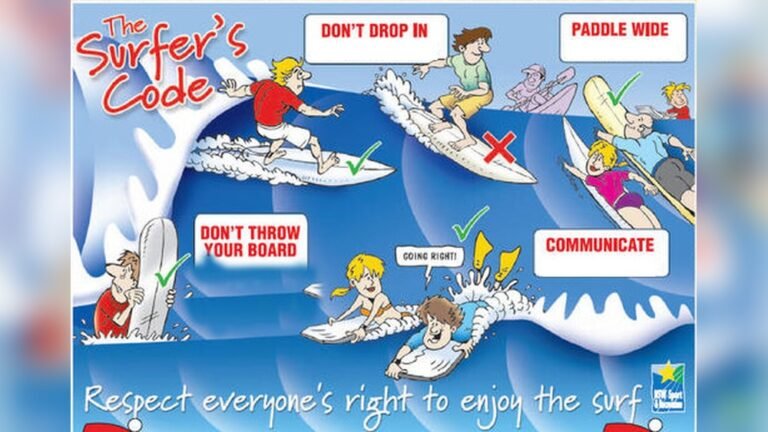
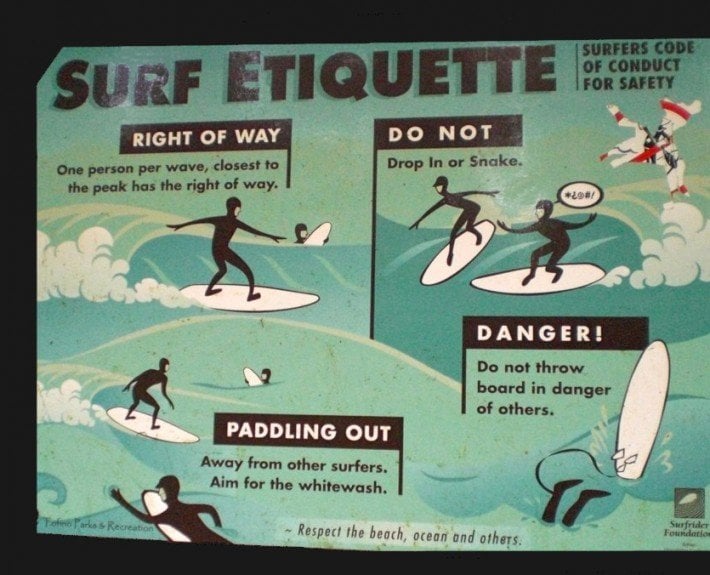
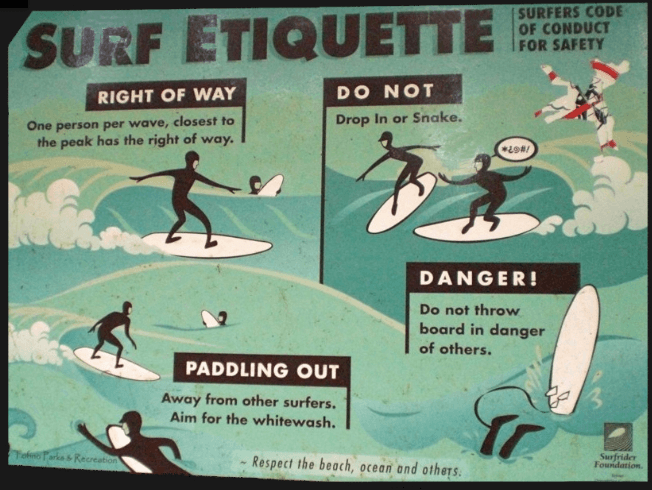
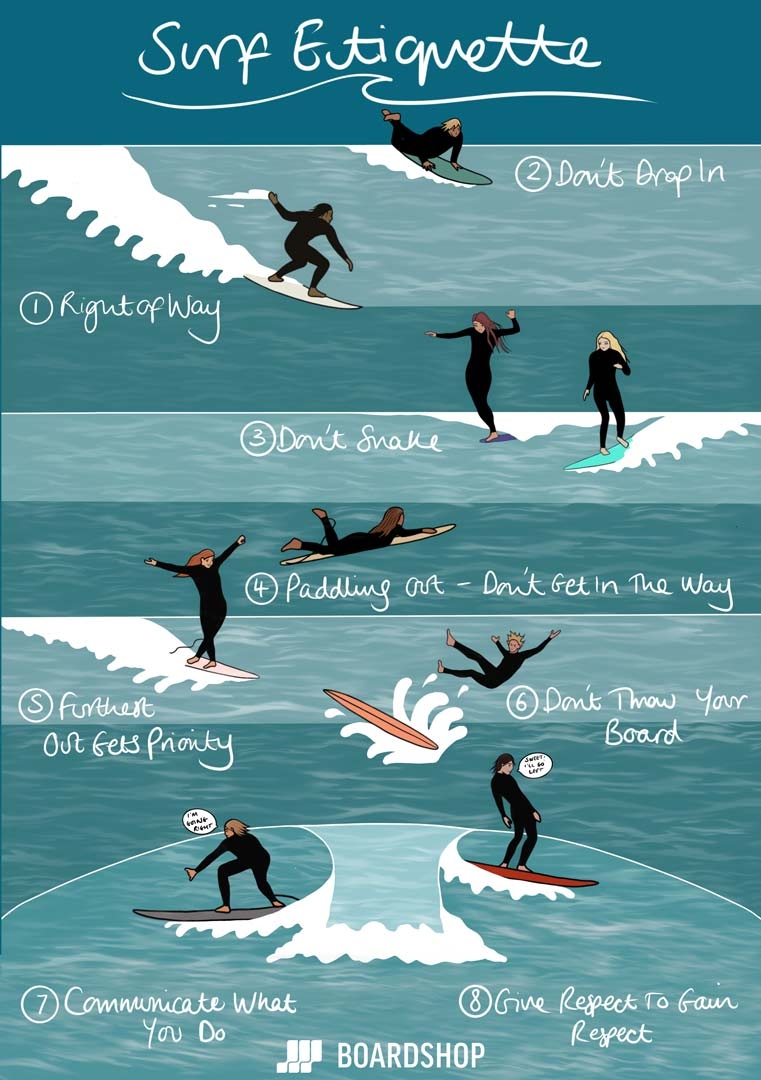
Every wave belongs to one surfer. This is called the priority or right of way. The surfer closest to the breaking part of the wave (the “peak”) has priority. Others should not take off on the same wave.
If two surfers are paddling for a wave, the one who is closest to the peak gets the wave. The other must stop paddling and wait for the next one.
Don’t Drop In
“Dropping in” means taking off on a wave that someone else already has priority for. This is one of the worst mistakes in surfing.
If you drop in, you ruin the ride for the surfer who has priority. It can also cause crashes. Always check before taking off—look left and right, and make sure no one else is already on the wave.
Don’t Snake
“Snaking” means paddling around another surfer to steal their spot or priority. It’s sneaky, selfish, and frowned upon.
Instead, wait your turn. Respect the order and let others enjoy their ride.
Communicate
Sometimes, it’s not clear who has priority. Surfers should use clear signals—like raising a hand or calling out—to show their intentions. A simple “go ahead” or “I got it” can prevent confusion.
Respect Local Surfers
Many surf spots have regular local surfers. They know the waves best and often help keep the area safe. Be polite, don’t challenge locals, and learn from them.
Some places have unwritten rules. Watch and ask if you’re unsure.
Key Surfing Etiquette Rules
Let’s look at the most important rules in detail. These are the basics every surfer should follow.
- Don’t Drop In on Someone Else’s Wave
- Always check if someone is already riding a wave.
- If you’re unsure, don’t go.
- Dropping in is rude and dangerous.
- Respect the Lineup
- The “lineup” is where surfers wait for waves.
- Don’t paddle straight to the front. Wait your turn.
- The lineup works like a queue.
- Paddle Around, Not Through
- When returning to the lineup, paddle around the breaking waves.
- Never paddle through where someone is riding.
- This prevents collisions and respects others’ rides.
- Don’t Snake
- Don’t paddle around someone to steal their spot.
- Wait patiently. Snaking makes you unpopular.
- Communicate Clearly
- Use hand signals or shout your intentions.
- If you can’t catch the wave, let others know.
- Share Waves
- In crowded spots, you might need to share small waves.
- Longboarders, give shortboarders a chance.
- Don’t hog every wave.
- Respect Local Rules
- Locals often have extra rules. Watch and ask.
- Follow posted signs and instructions.
- Don’t Litter
- Keep the beach clean. Pick up trash.
- Respect nature and wildlife.
- Help Others in Trouble
- If someone falls or is in danger, help them.
- Surfers look out for each other.
- Don’t Use Dangerous Equipment
- Make sure your board is safe.
- Avoid sharp fins, broken leashes, or damaged boards.
- Stay Calm and Polite
- If someone breaks a rule, talk calmly.
- Avoid shouting or aggressive behavior.
- Respect Beginner Zones
- Some areas are reserved for learners.
- Advanced surfers should avoid these zones.
- Don’t Surf Above Your Skill Level
- Choose waves and spots that match your ability.
- Avoid advanced spots if you’re a beginner.
- Leave Space
- Don’t crowd other surfers.
- Give everyone room to ride.
- Avoid Taking Too Many Waves
- Don’t be greedy. Let others have a turn.
- Locals notice who takes too many waves.
- Mind Your Leash
- Make sure your leash is secure.
- Loose leashes can cause accidents.
- Don’t Yell for Fun
- Shouting for no reason distracts others.
- Only shout to communicate or warn.
- Respect Beach Users
- Watch for swimmers and other beachgoers.
- Keep your board away from crowded areas.
- Learn Before You Go
- Study local rules and conditions.
- Ask about dangers and etiquette.
- Apologize If You Make a Mistake
- Everyone makes errors. Say sorry quickly.
- A simple apology prevents problems.
Practical Examples And Common Mistakes
Understanding etiquette is easier with real-life examples. Here are some situations surfers face:
Example 1: Crowded Lineup
You arrive at a popular surf spot. Many surfers are waiting for waves. You see a good wave coming and start paddling. At the same time, another surfer closer to the peak paddles too. You notice they are in the better position.
The right move is to stop paddling and let them go.
Common mistake: Ignoring the other surfer and dropping in. This causes anger and possible accidents.
Example 2: Beginner Zone
You are an advanced surfer, but the spot has a section for beginners. You want to catch easier waves. Etiquette says you should leave this area for learners.
Common mistake: Taking over the beginner zone and intimidating new surfers.
Example 3: Paddling Back
After catching a wave, you paddle back to the lineup. There’s a surfer riding a wave towards you. You should paddle around, not through their path.
Common mistake: Paddling through the wave, forcing the rider to dodge you.
Surfing Etiquette Vs. General Beach Etiquette
Surfing etiquette is different from general beach rules. Surfers must follow both.
| Surfing Etiquette | Beach Etiquette |
|---|---|
| Don’t drop in | Don’t litter |
| Respect lineup | Respect lifeguards |
| Paddle around riders | Keep noise down |
| Communicate clearly | Stay out of protected areas |
Both sets of rules keep the beach safe and enjoyable.
Surfing Etiquette For Different Skill Levels
Etiquette changes depending on your experience. Beginners, intermediate, and advanced surfers have different expectations.
| Skill Level | Etiquette Tips |
|---|---|
| Beginner | Stay in beginner zones, avoid crowded spots, learn basic signals |
| Intermediate | Respect lineup, communicate, avoid snaking, help beginners |
| Advanced | Give space, teach newcomers, follow local rules, avoid beginner areas |
Knowing your place in the lineup helps everyone surf better.
Non-obvious Insights Most Beginners Miss
- Silent Observation Is Powerful
- Before entering a new surf spot, watch how locals behave. Many rules are not written down but are clear if you observe carefully.
- Wave Sharing Isn’t Always Equal
- Some spots allow multiple surfers on a single wave, especially long, mellow waves. Local culture decides. Don’t assume every spot has the same etiquette.
- Apologies Go a Long Way
- If you make a mistake, a quick apology can turn a bad moment into a positive one. Surfers respect honesty and humility.
- Equipment Matters
- The type of board you ride changes etiquette. Longboarders can catch waves earlier. They should avoid hogging all waves and let shortboarders have turns.
How To Learn Surfing Etiquette
Surfing etiquette is not just learned in books. Here are ways to master it:
- Watch Locals: Learn by observing.
- Ask Questions: Don’t be afraid to ask regular surfers.
- Take Lessons: Instructors teach etiquette along with skills.
- Join Surf Clubs: Community groups share tips and local rules.
- Read Online Resources: Check forums, articles, and guides. For example, Wikipedia has useful information.
Surfing Etiquette In International Spots
Traveling surfers must adapt to different cultures. Some countries have stricter rules, while others are more relaxed. In places like Australia and Hawaii, locals value respect and tradition. In Europe, surfers are often friendly but expect you to follow basic etiquette.
Before surfing abroad, research local customs. Some areas have rules about board types, paddling paths, and lineup order.
The Role Of Surfing Etiquette In Environmental Protection
Surfers are often the first to notice changes in the ocean. Good etiquette means respecting nature, picking up trash, and reporting pollution. Many surf spots are in protected areas. Breaking rules can harm wildlife and damage the ecosystem.
Surfers also play a part in conservation groups. Following etiquette helps preserve the sport for future generations.
Frequently Asked Questions
What Happens If I Break Surfing Etiquette?
If you break surfing etiquette, you may get yelled at, asked to leave, or even banned from a surf spot. Worse, you could cause accidents or injuries. Surfers remember who breaks the rules.
Is Surfing Etiquette The Same Everywhere?
No, surfing etiquette changes by location. Some spots are strict, others are relaxed. Always observe and ask about local customs.
How Do I Know Who Has Priority On A Wave?
The surfer closest to the peak of the wave has priority. If you’re unsure, let the other surfer go. Avoid dropping in.
Can Beginners Surf In Advanced Spots?
Beginners should avoid advanced spots. These areas are faster, more crowded, and have stricter etiquette. Start in beginner zones and build your skills.
What Should I Do If Someone Drops In On Me?
Stay calm. Try to avoid collision. After the ride, talk politely or gesture to explain. Most surfers respect a calm approach.
Surfing etiquette is the foundation of a safe, fun, and respectful surfing experience. It helps everyone share the waves, enjoy the ocean, and build a positive community. Whether you’re a beginner or an expert, following these rules will make your surfing journey smoother and more enjoyable.
The ocean is for everyone—so treat it, and your fellow surfers, with care.
