
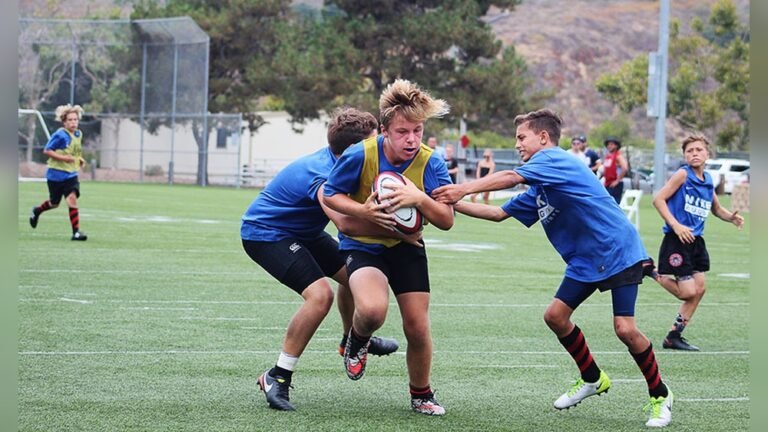
Rugby is a fast, physical sport played all over the world, known for its unique mix of power, speed, and skill. If you have ever seen athletes sprinting across a grassy field, passing an oval-shaped ball, and tackling each other with intensity, you have probably witnessed rugby in action.
But what exactly is rugby, and how is it played? This article will break down the basics, explain the rules, and help you understand why millions of people are passionate about this sport.
What Is Rugby?
Rugby is a team sport where two teams compete to score more points by carrying or kicking a ball over the opposing team’s goal line. It began in England in the early 19th century and has since spread worldwide. There are two main types of rugby: Rugby Union and Rugby League. Both share many similarities, but also have distinct rules and playing styles.
A standard rugby game is played on a rectangular grass field, with goalposts at each end. The ball is oval-shaped, making the bounce unpredictable and adding excitement to the game. Rugby is popular in countries like England, New Zealand, South Africa, Australia, and France.
Basic Rules Of Rugby
Understanding the rules is key to enjoying and playing rugby safely. Here are the main rules that define rugby:
- Two teams of 15 players (in Rugby Union) or 13 players (in Rugby League) compete.
- The game consists of two halves, each usually 40 minutes long.
- The aim is to score more points than the other team before time runs out.
- The ball can be passed backward or sideways but never forward by hand. Kicks can move the ball forward.
- Physical contact is allowed, but only certain types of tackles are permitted.
How Rugby Is Played
Starting The Game
A rugby match begins with a kickoff from the center of the field. The receiving team tries to catch the ball and move forward. Players can run with the ball, pass to teammates, or kick it downfield.
Moving The Ball
Teams try to move the ball toward their opponent’s try line. The ball can be advanced by running, passing, or kicking. Only passes that go sideways or backward are allowed. Forward passes result in a stoppage called a scrum.
Scoring Points
There are several ways to score in rugby. The main methods are:
- Try: Touching the ball down in the opponent’s in-goal area (5 points in Rugby Union, 4 in Rugby League).
- Conversion: After a try, a team gets a chance to kick the ball through the posts for extra points (2 points).
- Penalty Kick: Awarded for certain fouls, a successful kick scores 3 points.
- Drop Goal: A player drops the ball and kicks it as it bounces, earning 3 points if successful.
Tackling And Defense
Tackling is a big part of rugby. Only the player with the ball can be tackled. After a tackle, the ball must be released so play can continue. Dangerous tackles, such as high tackles or lifting, are not allowed and can result in penalties.
Set Pieces
Rugby uses set pieces to restart play. The most common are:
- Scrum: Players bind together and push against the other team to contest for the ball.
- Lineout: When the ball goes out of bounds, players form lines and try to catch the ball thrown back in.
Here’s a quick look at how points are scored in both Rugby Union and Rugby League:
| Scoring Method | Rugby Union Points | Rugby League Points |
|---|---|---|
| Try | 5 | 4 |
| Conversion | 2 | 2 |
| Penalty Kick | 3 | 2 |
| Drop Goal | 3 | 1 |
Rugby Positions And Player Roles
Each player has a specific role, and teamwork is essential. The 15 players in Rugby Union are divided into two groups: forwards and backs.
Forwards (numbers 1-8)
- Usually bigger and stronger.
- Responsible for winning the ball in scrums and lineouts.
- Work hard in close-contact situations.
Backs (numbers 9-15)
- Typically faster and more agile.
- Handle most passing and attacking moves.
- Aim to use space and speed to break through defenses.
Here’s a simple comparison of forward and back responsibilities:
| Group | Main Duties | Physical Traits |
|---|---|---|
| Forwards | Scrums, lineouts, rucks, tackles | Strong, powerful |
| Backs | Passing, running, kicking, scoring | Fast, agile |

Main Differences: Rugby Union Vs Rugby League
Rugby Union and Rugby League share a common origin but have several differences. Understanding these can help you choose which version you want to watch or play.
- Team Size: Union has 15 players, League has 13.
- Scoring: Union tries are worth 5 points, League tries are 4.
- Tackles: In League, teams are limited to 6 tackles before giving up possession. In Union, play continues after each tackle.
- Set Pieces: Union uses more scrums and lineouts; League has fewer.
Here’s a quick view of the main differences:
| Feature | Rugby Union | Rugby League |
|---|---|---|
| Players per Team | 15 | 13 |
| Try Value | 5 points | 4 points |
| Number of Tackles | Unlimited | 6 before turnover |
| Lineouts | Yes | No |
Non-obvious Insights For Beginners
Many new players focus only on running and tackling, but positioning and teamwork are just as important. Staying in the right place on the field helps your team control the game. Communication is also vital—players must talk constantly to organize defense and attack.
Another detail often missed is the importance of fitness. Rugby demands both strength and endurance. Players need to train for running, tackling, and quick recovery between plays.

Rugby In Everyday Life
Rugby isn’t just about competition. It teaches values like respect, discipline, and teamwork. Many schools use rugby to help students build confidence and social skills. The sport also brings communities together, with clubs and fans sharing a strong sense of belonging.
For more information on rugby history and culture, check out the Rugby Football Wikipedia page.
Frequently Asked Questions
What Is The Main Aim In Rugby?
The main aim is to score more points than the other team by carrying, passing, or kicking the ball into the opponent’s goal area or through their posts.
Can You Pass The Ball Forward In Rugby?
No, the ball can only be passed backward or sideways by hand. Forward passes are not allowed and result in a scrum.
How Long Does A Rugby Match Last?
A standard match lasts 80 minutes, split into two 40-minute halves. There is a short break, called halftime, between halves.
Is Rugby Dangerous?
Rugby is a contact sport, so injuries can happen. But with proper technique, training, and protective gear, the risk is managed. Safety is a top priority at all levels.
What Equipment Do You Need To Play Rugby?
You need a rugby ball, comfortable clothing, cleats (boots), and a mouthguard. Some players also wear headgear and shoulder pads for extra protection.
Rugby is more than just a game—it’s a test of skill, courage, and teamwork. Whether you want to play, watch, or just understand the basics, knowing these rules and concepts will help you enjoy the sport even more.

