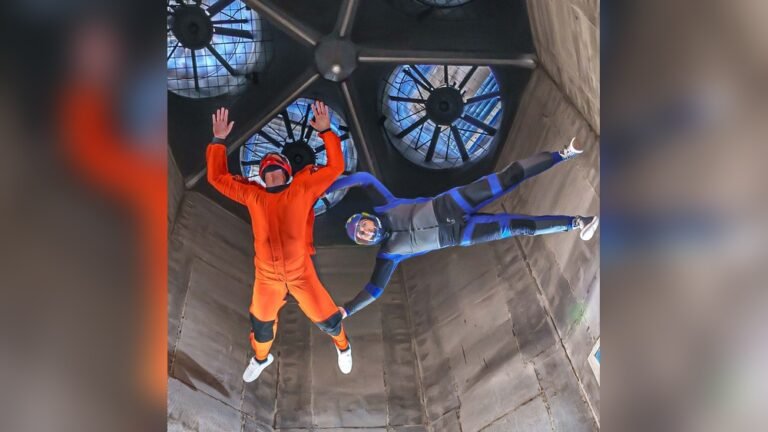
Imagine floating in the air, spinning, and flipping, just like a skydiver—but you are not jumping from a plane. You are indoors, safe, and in full control. This is what indoor skydiving is all about. In the last decade, indoor skydiving has become popular all over the world. People of all ages now experience the thrill of flight, without needing to leap from thousands of feet in the sky. Let’s explore what indoor skydiving is, how it works, and why so many people are excited to try it.
Understanding Indoor Skydiving
Indoor skydiving is a sport and recreation activity that lets you simulate freefall in a vertical wind tunnel. Instead of jumping from an airplane, you step into a closed chamber where strong air currents lift you off the ground. The feeling is almost the same as real skydiving freefall, but you are only a few feet above a safe, padded floor.
The technology behind indoor skydiving is impressive. Most indoor skydiving centers use vertical wind tunnels powered by large fans. These fans push air upwards at speeds between 120 to 180 miles per hour (193 to 290 kilometers per hour), which is enough to support the human body. By adjusting your arms and legs, you control your movement—forward, backward, up, or down—just like a skydiver in the sky.
How Indoor Skydiving Works
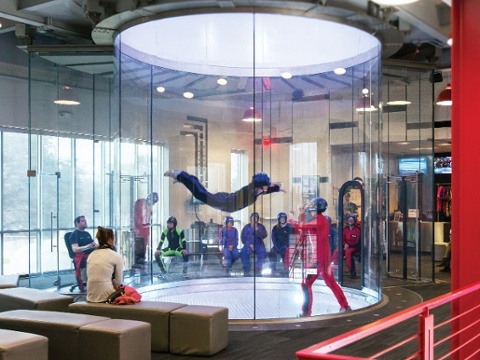
When you arrive at an indoor skydiving facility, you will notice a tall, clear chamber. This is the wind tunnel. Below the chamber are powerful engines and fans. These machines pull air down the sides of the tunnel and push it up through the center.
The air moves so fast that when you step inside, it lifts you up.
Here’s how a typical indoor skydiving experience unfolds:
- Check-in and Safety Briefing: You start by registering and watching a short safety video. Instructors explain body positions, hand signals, and how to stay safe.
- Gear Up: You put on a jumpsuit, helmet, goggles, and earplugs. These keep you safe and comfortable.
- Practice: Before flying, you may practice the basic body position, called the “arch,” on a bench or mat.
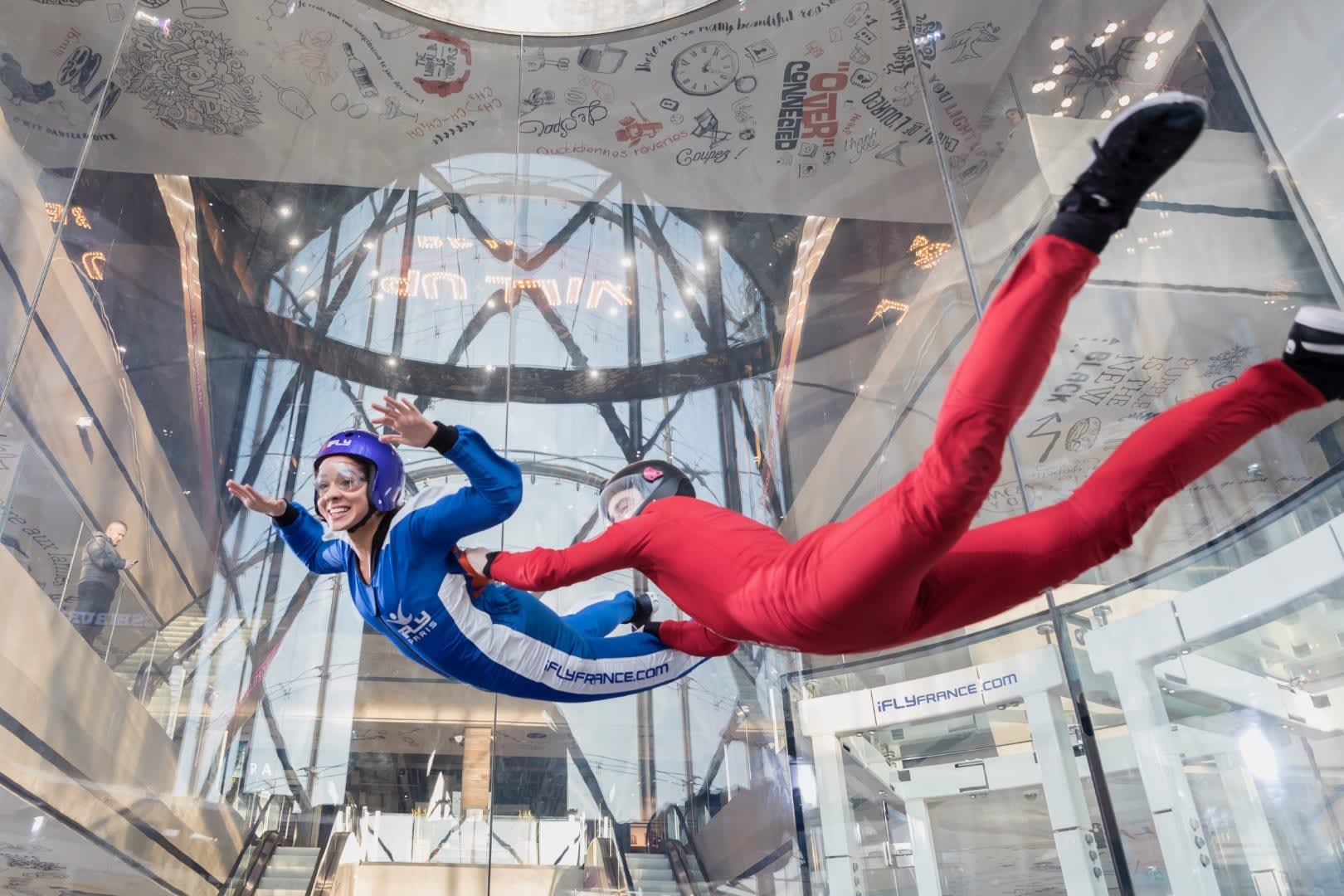
- The Flight: With your instructor, you enter the wind tunnel. The air lifts you, and you feel the rush of freefall. The instructor helps you find balance and control.
- Cool Down: After your session, you can watch videos of your flight and ask questions.
Most first-time flights last about 60 seconds each—about the same as a real skydive freefall.
Types Of Indoor Skydiving Facilities
Not all wind tunnels are the same. Here is a simple comparison of different types of indoor skydiving facilities:
| Type | Main Feature | Common Use |
|---|---|---|
| Recirculating Tunnel | Air is recycled in a loop | Professional training, public use |
| Open Flow Tunnel | Air flows in from outside | Outdoor events, temporary setups |
| Mobile Tunnel | Portable, smaller size | Demonstrations, fairs |
Recirculating tunnels are most common and are used by big brands like iFLY. These tunnels offer consistent airflow and good sound insulation. Open flow tunnels are often outdoors, making them less popular for regular training. Mobile tunnels can be moved, but they are smaller and not as powerful as permanent tunnels.
Who Can Try Indoor Skydiving?
One of the best things about indoor skydiving is its accessibility. Unlike traditional skydiving, which often has strict age and health rules, indoor skydiving is open to more people.
- Age: Many facilities accept flyers as young as 3 or 4 years old. There is usually no upper age limit, as long as you are healthy.
- Weight: There are weight limits, often around 250 pounds (113 kg), for safety reasons.
- Health: If you have heart, neck, or back problems, check with your doctor before flying.
People with disabilities can often participate, too. Some centers offer special sessions for wheelchair users and people with limited mobility. Always call ahead to discuss your needs.
What Does Indoor Skydiving Feel Like?
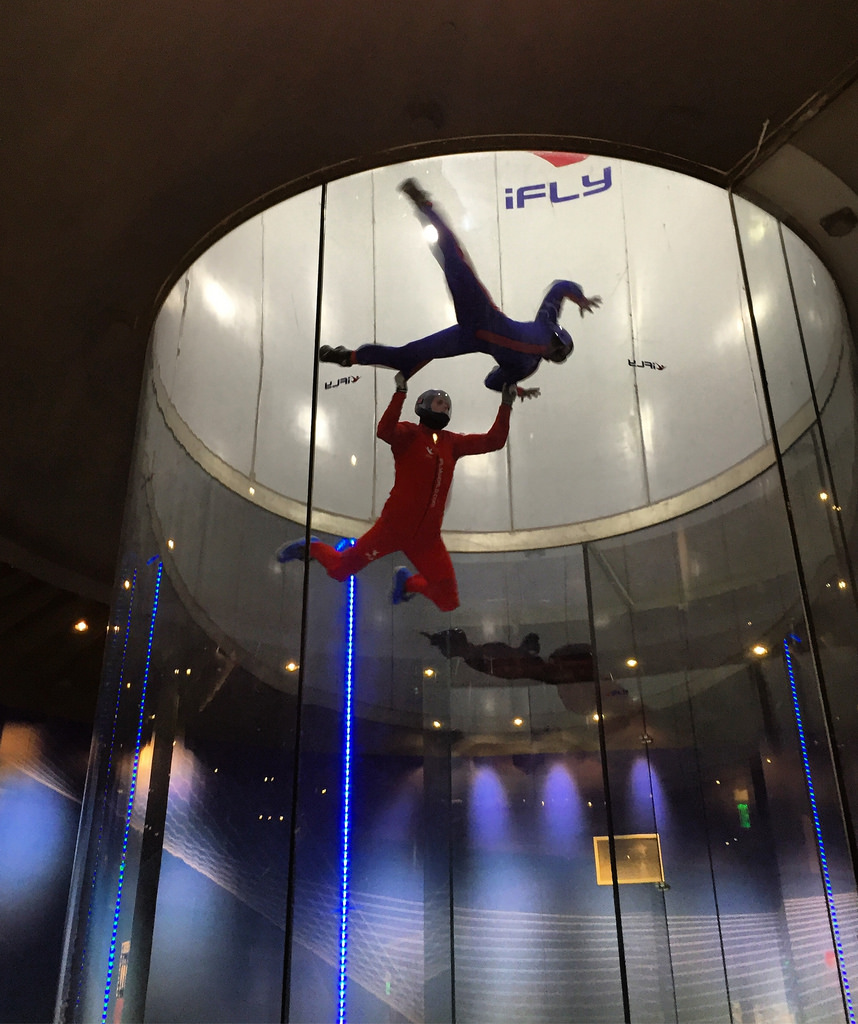
The first time you fly, you might feel a mix of excitement and nerves. As you lean into the tunnel, you are lifted by the wind—suddenly weightless, like floating on a cushion of air. Your cheeks flap, your hair stands up, and the noise of the wind surrounds you.
Unlike a rollercoaster, there is no sudden drop. The feeling is smooth and controlled. You can move in all directions by adjusting your arms, legs, and body. Many people say it feels like swimming in the air.
Here are some common sensations:
- Floating and flying with no ground beneath you.
- Adrenaline rush but with a sense of safety.
- Strong wind on your body.
- Quick learning curve—most people can control their flight after a few minutes.
Safety Aspects Of Indoor Skydiving
Safety is a top priority in indoor skydiving. Compared to traditional skydiving, the risk is much lower. You are always close to the ground, and trained instructors are with you at all times.
Key Safety Features
- Padded floors and walls to prevent injuries.
- Protective gear like helmets, goggles, and suits.
- Trained instructors in the tunnel with you.
- Strict rules on behavior and body position.
Serious injuries are very rare. Minor bumps or bruises can happen, usually when flyers lose balance or exit the tunnel too fast. Listening to your instructor and keeping the correct body position greatly reduces any risk.
The Benefits Of Indoor Skydiving
Indoor skydiving is more than just fun. It offers real physical and mental benefits:
- Physical exercise: Flying requires core strength, flexibility, and balance. Even a short session can make you sweat.
- Mental focus: You must concentrate on your body position and instructor signals.
- Confidence boost: Overcoming fear and trying something new can make you feel proud.
- Teamwork: Group sessions and formation flying build communication and trust.
- Skill development: With practice, you can learn spins, flips, and advanced tricks.
Skydivers use wind tunnels to train for competitions. Beginners use them to overcome a fear of heights or simply to have fun.
Cost Of Indoor Skydiving
Prices for indoor skydiving depend on location, session length, and the number of flights. Here is a typical price range comparison:
| Session Type | Number of Flights | Price Range (USD) |
|---|---|---|
| First-time Experience | 2-4 flights | $50-$90 |
| Family Package | 8-12 flights | $150-$250 |
| Pro Flyer Block | 10+ minutes | $100-$200 |
Prices often include gear rental, training, and instructor support. Discounts are available for groups, kids, or repeat flyers. While the cost is higher than some activities, it is much cheaper and safer than jumping from a plane.
What To Wear And Bring
Most facilities provide everything you need, but here are some tips:
- Wear comfortable clothes—a T-shirt and shorts or pants. Avoid dresses and skirts.
- Lace-up shoes like sneakers are best. Avoid sandals or heels.
- Remove jewelry and tie back long hair.
- Bring friends or family—watching is fun, and you can share videos later.
Common Mistakes And How To Avoid Them
Beginners often make a few mistakes in the wind tunnel. Here’s how to prevent them:
- Tensing up: Relax your body. Tension makes you unstable and harder to control.
- Lifting your head too high: Keep your chin up, but look forward, not straight up.
- Moving arms or legs suddenly: Small, smooth movements work best.
- Ignoring instructor signals: Listen and watch your instructor—they will help you improve quickly.
- Wearing loose items: Loose clothes or jewelry can fly off in the wind.
A good instructor will point these out and help you adjust.
Indoor Skydiving Vs. Real Skydiving
Many people ask how indoor skydiving compares to jumping from a plane. Here is a simple comparison:
| Feature | Indoor Skydiving | Traditional Skydiving |
|---|---|---|
| Location | Indoor wind tunnel | Airplane, outdoors |
| Safety | Very high | Lower (more risk) |
| Age Limit | As young as 3-4 years | Usually 18+ |
| Weather Dependence | None | High (weather must be good) |
| Flight Time | 60+ seconds per turn | About 60 seconds freefall |
| Cost | $50-$90 per session | $200-$300 per jump |
Indoor skydiving is the best way to try the feeling of flight before committing to a real skydive. It is also perfect for kids, families, and anyone nervous about heights.
How To Prepare For Your First Indoor Skydiving Flight
For the best experience, arrive at your indoor skydiving session about 30 minutes early. This gives you time to relax, watch other flyers, and learn what to expect. Eat a light meal a few hours before—flying on a full or empty stomach can make you feel dizzy.
Listen closely during the safety briefing. Practice the basic “arch” position with your instructor. Remember, the wind tunnel is noisy, so hand signals are used for communication.
If you feel nervous, tell your instructor. They are trained to help first-timers and will stay by your side the entire time.
Indoor Skydiving As A Sport
What starts as a fun activity often becomes a serious sport. Wind tunnel flying has its own competitions, rules, and training programs. Professional flyers practice for years to master complex moves and formations.
Some common competition events:
- Freestyle: Individual flyers perform flips, spins, and tricks.
- Formation flying: Teams create shapes in the air.
- Dynamic flying: Fast, flowing movement around the tunnel.
Many skydiving teams use wind tunnels to practice all year, regardless of weather.
The Growth Of Indoor Skydiving Worldwide
Indoor skydiving began in the late 20th century, but the last 15 years have seen a boom. Today, there are more than 200 wind tunnels in over 50 countries. In the United States, iFLY is the largest chain, with more than 35 locations.
Europe, Asia, and Australia also have fast-growing indoor skydiving communities.
Major cities like Orlando, Dubai, and Singapore have famous wind tunnels. Some are even used for research, military training, and movies.
For more information on the history and technology of wind tunnels, visit Wikipedia.
Frequently Asked Questions
What Should I Expect On My First Indoor Skydiving Visit?
You will check in, get a safety briefing, put on gear, and enter the wind tunnel with an instructor. Each flight is about 60 seconds long. Expect a strong wind, loud noise, and the feeling of flying.
Is Indoor Skydiving Safe For Children?
Yes, most centers welcome children as young as 3 or 4 years old. Instructors stay with them at all times, and all gear is child-sized for safety.
How Do I Control My Movement While Flying?
By adjusting your arms, legs, and core muscles, you can move up, down, forward, or backward. Instructors will show you simple hand signals and tips to help you learn quickly.
Do I Need To Be Athletic Or Strong To Try Indoor Skydiving?
No special skills are needed for beginners. People of all fitness levels can enjoy it. However, you will use your core muscles, so a basic level of fitness helps.
Can Indoor Skydiving Help Me Prepare For Real Skydiving?
Yes, many skydivers use wind tunnels to practice freefall skills. Indoor skydiving helps you learn body control and builds confidence before jumping from a plane.
Indoor skydiving offers a unique blend of excitement, safety, and accessibility. Whether you want a new adventure, a fun family day, or to train for a sport, flying in a wind tunnel brings the dream of flight within everyone’s reach.
