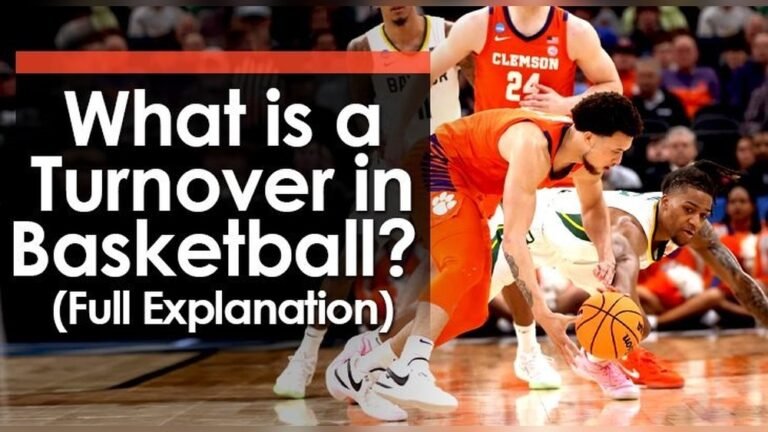
Basketball is a fast-paced game, loved for its speed, skill, and unpredictability. One moment, your team is on offense, moving toward the basket. The next, the ball is in your opponent’s hands. This change often happens because of a turnover. If you’ve watched a game or played yourself, you’ve heard the term. But what exactly is a turnover in basketball? Why do they matter so much? And how can players and teams reduce them to gain an edge? This article will break down the meaning, types, causes, and impact of turnovers in basketball, with plenty of examples, data, and practical tips. By the end, you’ll see why turnovers can make or break a game.
What Is A Turnover In Basketball?
A turnover in basketball is when a team loses possession of the ball to the opposing team before a shot attempt. In simple words, it’s giving the ball away, usually by mistake. The offense had the ball, but now the defense does, without the offense taking a shot. This switch can happen for many reasons—bad passes, traveling, offensive fouls, or even stepping out of bounds.
Turnovers are tracked as a key statistic in every level of basketball, from youth leagues to the NBA. Coaches, players, and fans all pay attention to them because turnovers often decide the outcome of close games. A high number of turnovers usually means lost scoring chances and more opportunities for your opponents.
Main Types Of Turnovers
Not all turnovers look the same. Here are the most common types:
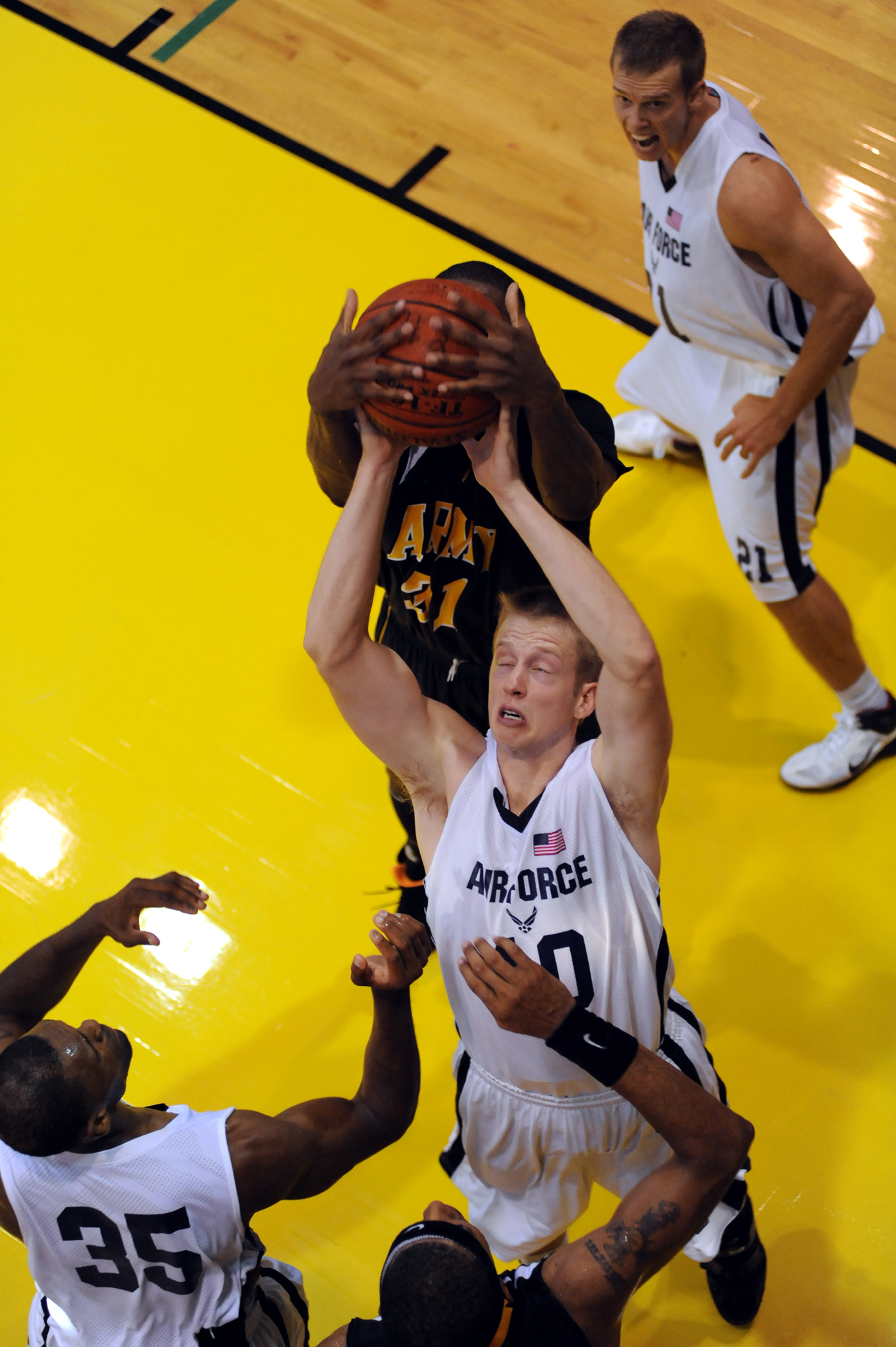
- Steals: When a defender takes the ball directly from an offensive player.
- Bad Passes: The ball is thrown to a teammate but intercepted or goes out of bounds.
- Traveling Violations: A player moves illegally with the ball (usually by taking too many steps without dribbling).
- Double Dribble: The player stops dribbling and then starts again, or dribbles with both hands at once.
- Offensive Fouls: Like charging, where the player with the ball runs into a stationary defender.
- Three-Second Violation: An offensive player stays in the paint (key) for more than three seconds.
- Five-Second Violation: The player fails to inbound the ball within five seconds.
- Shot Clock Violation: The offense doesn’t shoot before the shot clock expires.
- Stepping Out of Bounds: The player touches the sideline or baseline while holding the ball.
- Palming or Carrying: The player’s hand goes under the ball while dribbling.
These are the standard turnovers you’ll see, though some leagues have unique rules.
How Turnovers Affect A Game
Turnovers are more than lost possessions. They can change the entire flow of a basketball game. Here’s how:
- Lost Scoring Opportunities: Every turnover is a missed chance to score.
- Fast Breaks for Opponents: Many turnovers lead to easy baskets for the other team, especially if they steal the ball.
- Momentum Shifts: A big steal or a series of turnovers can energize the opponents and their fans.
- Frustration and Loss of Confidence: Players may get nervous or play too carefully after making mistakes.
Teams that win the turnover battle—meaning they force more turnovers than they commit—often win the game. In the 2022 NBA season, teams that committed fewer turnovers than their opponents won about 62% of the time.
Example: 2016 Nba Finals, Game 7
One of the most famous moments came in the 2016 NBA Finals. With less than two minutes left, Stephen Curry of the Golden State Warriors tried to make a behind-the-back pass to Klay Thompson. The ball slipped out of bounds.
The Cleveland Cavaliers got the ball, scored, and went on to win the championship. One turnover changed basketball history.
Common Causes Of Turnovers
Understanding why turnovers happen is the first step to reducing them. Here are the most frequent causes:
Pressure Defense
Strong, aggressive defense puts players under stress. Double teams, traps, and quick hands force mistakes and poor decisions.
Lack Of Communication
Players may not talk enough on the court. This leads to bad passes, missed signals, or confusion about who should get the ball.
Poor Ball Handling
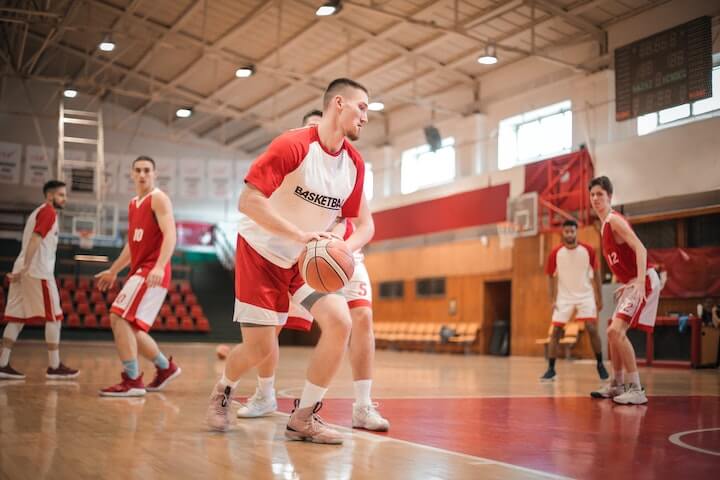
If a player’s dribbling or passing skills are weak, defenders can easily steal the ball or force mistakes.
Fatigue
Tired players lose focus. As the game goes on, turnovers often increase because of mental and physical fatigue.
Overconfidence
Sometimes, players try risky passes or flashy moves, leading to unnecessary turnovers.
Inexperience
Young or new players are more likely to make mistakes under pressure or when facing complex defenses.
Turnover Statistics And Records
Turnovers are measured for both teams and individual players. These stats help coaches and analysts understand how well a team controls the game.
Nba Turnover Leaders (2023 Season)
Here’s a look at players with the most turnovers per game in the NBA 2023 season:
| Player | Team | Turnovers Per Game |
|---|---|---|
| Trae Young | Atlanta Hawks | 4.1 |
| Luka Dončić | Dallas Mavericks | 3.6 |
| James Harden | Philadelphia 76ers | 3.4 |
| Ja Morant | Memphis Grizzlies | 3.2 |
| LeBron James | Los Angeles Lakers | 3.1 |
Turnover Averages By Level
Turnover rates can differ by league and age group. Here’s a simple comparison:
| Level | Average Team Turnovers Per Game |
|---|---|
| NBA | 13–16 |
| NCAA (College) | 12–15 |
| High School | 15–20 |
| Youth/Amateur | 20+ |
As you can see, turnovers are more common at lower levels due to less experience and skill.
Comparing Turnovers To Other Stats
Turnovers have a direct impact on the game, but how do they compare to other common basketball statistics?
| Stat | Positive for Team | Negative for Team |
|---|---|---|
| Points | Scoring more | Scoring less |
| Rebounds | Securing possession | Giving opponents extra chances |
| Assists | Good teamwork | Poor ball movement |
| Turnovers | Fewer is better | More is worse |
Unlike points or rebounds, turnovers are always negative for the team that commits them.
How To Reduce Turnovers
Minimizing turnovers takes practice, discipline, and smart decision-making. Here are proven methods that players and coaches use:
1. Improve Ball Handling
Drills that build strong dribbling and passing skills help players stay in control, even under pressure. For example, “two-ball dribbling” or “zig-zag dribbling” teach players to handle defenders.
2. Practice Against Pressure
Simulate game situations where defenders are aggressive. The more players experience tough defense in practice, the better they’ll handle it in real games.
3. Focus On Communication
Players should talk on the court, call out screens, and signal for passes. Good communication prevents confusion and risky passes.
4. Make Smart Decisions
Players must learn when to push the pace and when to slow down. Teaching players to recognize high-risk situations can help reduce mistakes.
5. Condition For Stamina
Being physically fit helps players keep their focus late in games, reducing fatigue-related errors.
6. Learn From Film
Watching game footage helps players see their mistakes and understand how turnovers happened. Many coaches use video review to teach better habits.
7. Limit Flashy Plays
Sometimes, simple is better. Fancy passes and risky dribbles might look good, but they often lead to turnovers.
Non-obvious insight: Many players focus only on their own turnovers, but team turnovers often come from poor spacing or bad timing—things that require everyone on the court to be aware and coordinated.
Turnovers In Different Basketball Styles
Turnovers don’t happen equally in every style of play. Teams that play fast, run-and-gun basketball often accept more turnovers because they get more possessions and scoring chances. For example, the “seven seconds or less” Phoenix Suns in the mid-2000s often led the NBA in both scoring and turnovers.
On the other hand, defensive teams or those that play at a slower pace (like some college teams) focus on limiting turnovers and controlling the ball. Their games have fewer possessions, so each turnover is more costly.
Non-obvious insight: Coaches sometimes accept a higher turnover rate if it means playing at a faster tempo and scoring more points. The key is finding the balance that fits your team.
The Role Of Turnovers In Winning And Losing
Turnovers are a key factor in almost every basketball game. Here’s why:
- Close games are often decided by just a few possessions. One extra turnover can be the difference between winning and losing.
- Teams with fewer turnovers get more chances to score, and they give fewer fast breaks to the other team.
- In the NBA, teams that commit fewer turnovers than their opponents have a much higher chance of winning. In college basketball, turnover margin is a strong predictor of tournament success.
Famous Turnovers In Basketball History
Some turnovers are unforgettable, shaping the outcome of championships and careers.
- Chris Webber’s timeout (1993 NCAA Final): With seconds left, Webber called a timeout his team didn’t have—resulting in a technical foul and a turnover that cost Michigan the championship.
- LeBron James block, 2016 Finals: Kyrie Irving’s three-pointer was set up by a key turnover from Golden State, leading to one of the NBA’s most dramatic endings.
These moments show that turnovers don’t just happen in random games—they happen at the highest level, under the brightest lights.
Frequently Asked Questions
What Counts As A Turnover In Basketball?
A turnover is when the offensive team loses possession to the defense before taking a shot. This includes steals, bad passes, traveling, offensive fouls, and violations like stepping out of bounds.
Who Holds The Record For Most Turnovers In An Nba Game?
James Harden holds the NBA record for most turnovers in a single game, with 13 turnovers on December 31, 2016, as a member of the Houston Rockets.
Are Turnovers Always Bad?
Turnovers are usually negative, but sometimes they result from aggressive, fast-paced play. Coaches may accept a few more turnovers if it means more scoring chances. However, too many turnovers almost always hurt a team’s chance of winning.
How Are Turnovers Different From Steals?
A steal is when a defender directly takes the ball away, causing a turnover for the offense. All steals are turnovers, but not all turnovers are steals—other turnovers can happen from violations or bad passes.
Where Can I See Official Basketball Turnover Statistics?
You can find up-to-date turnover statistics for professional leagues like the NBA on the NBA’s official stats page.
Basketball is a game of skill, speed, and quick decisions. Turnovers are a part of the sport, but understanding them—and learning how to control them—can give any player or team a real advantage. Whether you’re watching or playing, knowing the impact of turnovers helps you see the game in a whole new way.
