Scuba diving opens up a world that most people only see in documentaries. Floating weightless, you can swim with colorful fish, explore coral reefs, and see shipwrecks up close. But before you can dive deep, you need a scuba diving certification.
This is not just a piece of paper—it is your ticket to safe and enjoyable underwater adventures. Many people wonder, “What is a scuba diving certification? Why do I need it? What does it involve? ” If you are curious about the process, the reasons behind it, and what to expect, this guide will make everything clear.
What Is A Scuba Diving Certification?
A scuba diving certification is an official document that proves you have completed training to dive safely with scuba gear. It shows you understand important rules, know how to use equipment, and can handle problems underwater. This certificate is sometimes called a “C-card” (short for certification card). Most dive shops, resorts, and instructors will not let you rent gear or join dives without showing your C-card.
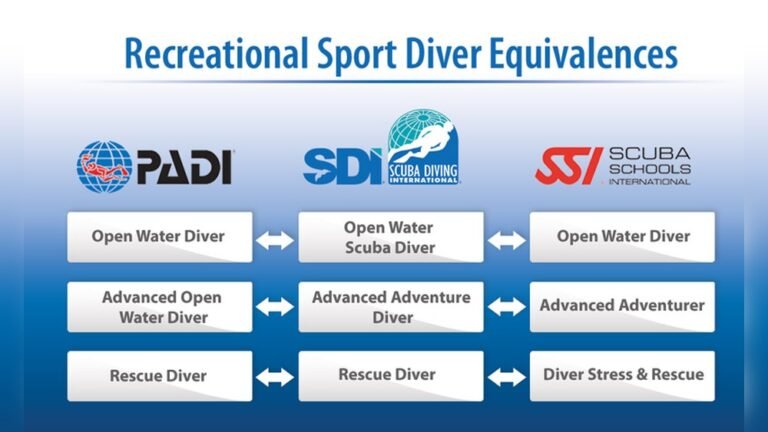
Diving involves risks, especially if you do not know how to manage air, handle pressure changes, or deal with emergencies. The certification process teaches you these skills. Popular certification agencies include PADI (Professional Association of Diving Instructors), SSI (Scuba Schools International), and NAUI (National Association of Underwater Instructors). Each agency has its own courses and standards, but the basics are similar worldwide.
Why Is Scuba Diving Certification Important?
Getting certified is not just about following rules. It is about protecting your life and enjoying diving without fear or problems. Here’s why certification is essential:
- Safety – Diving without training can lead to accidents, injuries, or even death. Certification teaches you how to avoid and handle risks like running out of air, getting lost, or rising too quickly.
- Access – Most dive shops and tour companies require a C-card before they let you rent tanks, buy air, or join group dives.
- Skill Building – The course helps you become comfortable underwater. You learn how to control your breathing, balance, clear your mask, and more.
- Confidence – Knowing what to do in any situation makes diving fun and relaxing, not stressful.
- Environmental Awareness – Certified divers learn how to protect fragile underwater life and avoid damaging reefs or animals.
Many beginners do not realize that even a short dive without training can be dangerous. For example, ascending too quickly can cause “the bends” (decompression sickness), a painful and serious condition. Certification helps you avoid these mistakes.
How Does The Certification Process Work?
Becoming a certified diver involves more than just jumping in the water. The process includes classroom study, practice in a pool, and real dives in open water. Here’s what you can expect:
Step 1: Knowledge Development
You start with classroom lessons or e-learning modules. These cover:
- How your body reacts to pressure underwater
- How to plan dives and check your air supply
- Underwater signals for communication
- Dealing with emergencies
You read a manual, watch videos, and take quizzes. Most agencies require a final written test.
Step 2: Confined Water Training
You move to a swimming pool or shallow, calm water. Here you practice basic skills:
- Putting on and removing your gear
- Breathing from a regulator
- Clearing water from your mask and mouthpiece
- Sharing air with a buddy in emergencies
- Controlling your movement and floating
Instructors check that you can do these safely before you move on.
Step 3: Open Water Dives
Now, you go to a lake, ocean, or quarry for real dives, usually 4 or 5 sessions. You must:
- Set up your equipment correctly
- Repeat pool skills in open water (at 5-18 meters/15-60 feet)
- Show you can handle challenges like mask flooding or equipment problems
After passing all parts, you get your certification card.
Here’s a quick comparison of what each major agency requires for beginner certification:
| Agency | Minimum Age | Classroom Sessions | Pool Sessions | Open Water Dives |
|---|---|---|---|---|
| PADI | 10 | 5 | 5 | 4 |
| SSI | 10 | 5 | 6 | 4 |
| NAUI | 10 | Varies | Varies | 4-5 |
Types Of Scuba Diving Certifications
Not all certifications are the same. There are different levels, each with its own skills and privileges.
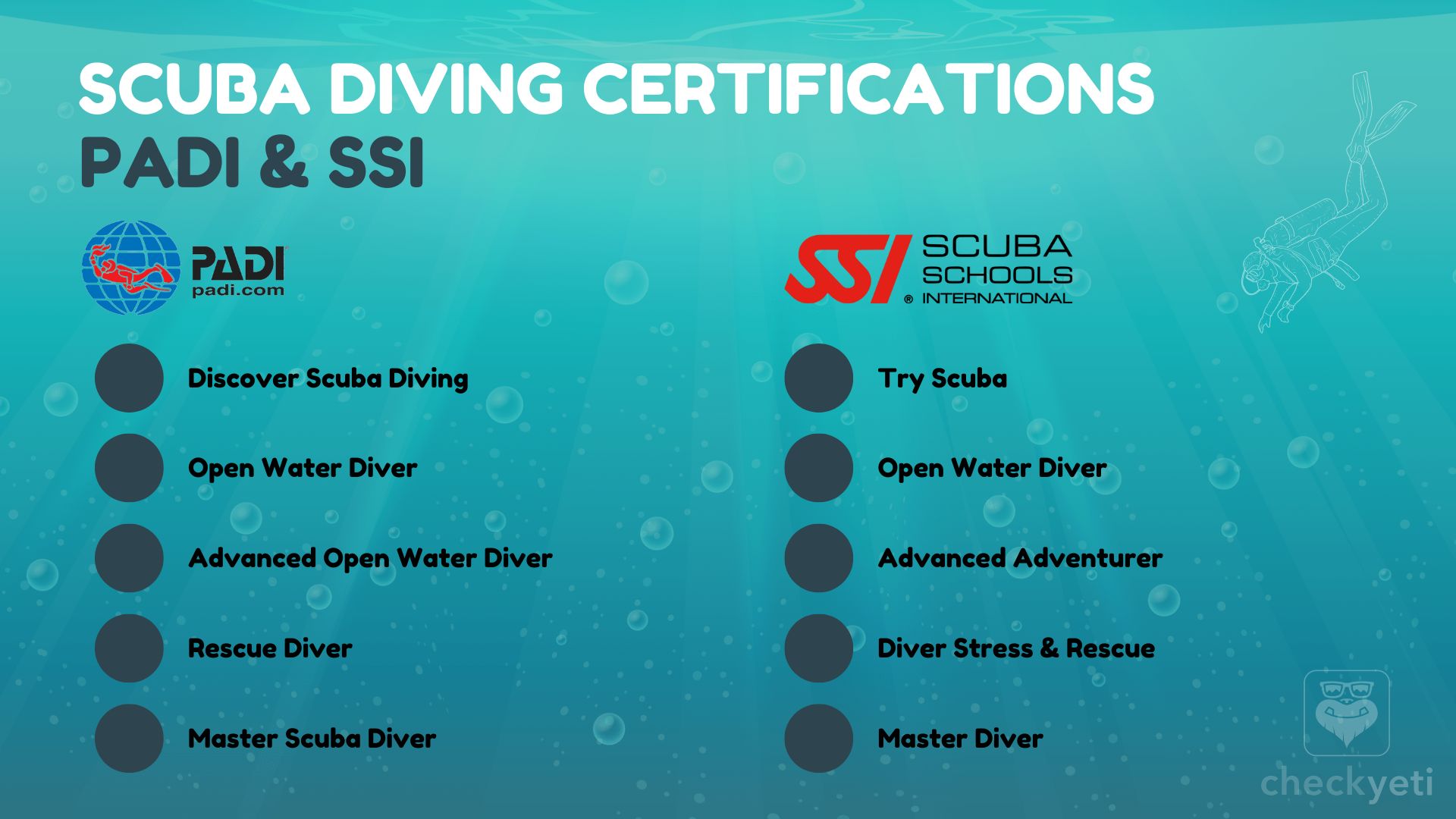
1. Open Water Diver
This is the entry-level certification. It allows you to dive up to 18 meters (60 feet) with a buddy. Most people start here.
2. Advanced Open Water Diver
After the basic course, you can take Advanced Open Water. This lets you dive deeper (up to 30 meters/100 feet) and teaches new skills like night diving, navigation, or wreck diving.
3. Rescue Diver
This course teaches you how to help others in trouble. You learn to spot problems early, perform rescues, and manage emergencies.
4. Specialty Courses
There are many specialty courses for different interests:
- Deep diving
- Underwater photography
- Wreck diving
- Cave diving
- Nitrox (enriched air) diving
5. Professional Levels
If you want to teach, you can become a Divemaster or Instructor after more training and experience.
Here’s a summary of certification levels and their main features:
| Level | Maximum Depth | Main Skills | Who It’s For |
|---|---|---|---|
| Open Water Diver | 18m/60ft | Basic skills, safety | Beginners |
| Advanced Open Water | 30m/100ft | Navigation, deep diving | Certified divers |
| Rescue Diver | 30m/100ft | Rescue, emergency help | Confident divers |
| Specialties | Varies | Special skills | Enthusiasts |
| Divemaster/Instructor | Varies | Leadership, teaching | Professionals |
What Do You Learn During Certification?
The course covers both theory and practical skills. Some key topics:
- Physics of diving: How pressure affects your body and air.
- Equipment use: How to assemble, check, and maintain your gear.
- Buoyancy control: How to float, sink, or hover easily.
- Emergency skills: What to do if you or your buddy has a problem.
- Environmental care: How to avoid harming coral, fish, or other wildlife.
You also learn about dive planning—how to calculate how long you can stay underwater and how much air you need. Many new divers are surprised by how much math and planning is involved, especially when diving deeper or in groups.
Requirements For Getting Certified
The requirements are clear, but sometimes overlooked by beginners. You must:
- Be at least 10 years old for most agencies
- Be able to swim (usually 200 meters without stopping)
- Float or tread water for 10 minutes
- Be in good health (you fill out a medical form; some conditions need a doctor’s approval)
- Complete all training dives and pass the written test
Some people underestimate the physical side. You do not need to be an athlete, but you should be comfortable in water and able to carry equipment.
How Long Does It Take?
A typical Open Water Diver course takes 3-5 days if done full-time at a resort. In cities, it may take several weekends. Online learning can speed up the classroom part. If you do not pass a skill, you can practice and try again—there is no rush.
How Much Does Scuba Diving Certification Cost?
Prices vary by country and location. Expect to pay $350–$600 USD for the full Open Water course, including gear rental, instruction, and certification fee. Some dive shops include accommodation or boat trips. Make sure you know what’s included.
Here’s a sample price comparison for different regions:
| Location | Typical Cost (USD) | Includes Equipment? | Notes |
|---|---|---|---|
| Thailand | 350–450 | Yes | Popular for budget diving |
| USA | 500–650 | Sometimes | Check if equipment is extra |
| Caribbean | 400–600 | Yes | Often includes boat dives |
Common Mistakes To Avoid
Many beginners make the same mistakes when getting certified. Here are two non-obvious tips:
- Don’t rush your training. Some people try to finish quickly but miss important skills. Take your time, ask questions, and repeat any skill you find difficult.
- Choose the right instructor. Look for someone patient and experienced. A good teacher makes you feel safe and confident, not rushed or stressed.
Also, do not ignore health questions. If you have asthma, heart issues, or recent surgeries, be honest on your medical form. Diving with hidden health risks can be dangerous.
What Happens After You Get Certified?
With your C-card, you can dive almost anywhere in the world. Most shops will ask to see your card and sometimes a logbook showing your recent dives. You can rent gear, join group dives, and explore new locations.
Remember, your skills can get rusty if you do not dive for a year or more. Many places offer a short “refresher” course to practice before you go deep again.
If you want to dive deeper, explore wrecks, or try night diving, you can take advanced or specialty courses. The learning never really stops.
Where Can You Learn More?
Many dive agencies have detailed guides and videos online. The PADI website is a trusted source for course details, safety tips, and dive locations. For official information, check Wikipedia’s page on scuba diving certification agencies.
Frequently Asked Questions
What If I Can’t Swim Very Well?
You do not need to be an expert swimmer, but you must be comfortable in water. Most courses require you to swim 200 meters (any style, no time limit) and float for 10 minutes. If you are nervous, take swimming lessons first.
Is Scuba Diving Safe For Children?
Yes, kids as young as 10 can get certified (Junior Open Water). The gear and training are adapted for their size and age. However, children should be mature enough to listen carefully and follow instructions.
Will My Scuba Certification Expire?
Most certifications last for life. However, if you do not dive for a long time (usually 12 months or more), it is wise to take a short review course to refresh your skills.
Can I Dive Alone After Getting Certified?
It is never safe to dive alone, even if you are certified. Diving is a “buddy sport. ” You always need a partner for safety, communication, and emergencies.
What If I Wear Glasses Or Have Vision Problems?
You can wear a prescription mask while diving. Some divers also use contact lenses. Talk to your instructor—they can help you find the best solution.
Scuba diving certification is more than just a requirement. It is your entry ticket to a beautiful, silent world under the waves. With the right training, you can dive safely, protect the ocean, and enjoy adventures that few people ever experience.

