What Is A Scrum In Rugby?
Rugby is full of unique terms and traditions, but few are as iconic as the scrum. Even people who have never watched a match have seen players lock heads and push in a tight formation. But what actually happens in a scrum? Why is it so important, and how does it work? Understanding the scrum reveals a lot about rugby’s team spirit, strategy, and physicality. This guide breaks down every part of a rugby scrum, using simple language and practical examples.
The Meaning Of A Scrum
A scrum is a way to restart play in rugby. It happens after certain minor rule breaks, like a forward pass or knock-on. Instead of simply handing the ball to the other team, both sides get a fair chance to win it back.
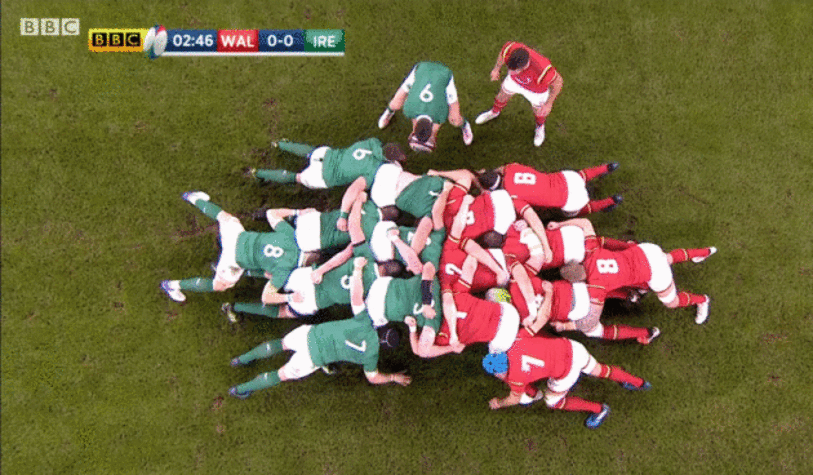
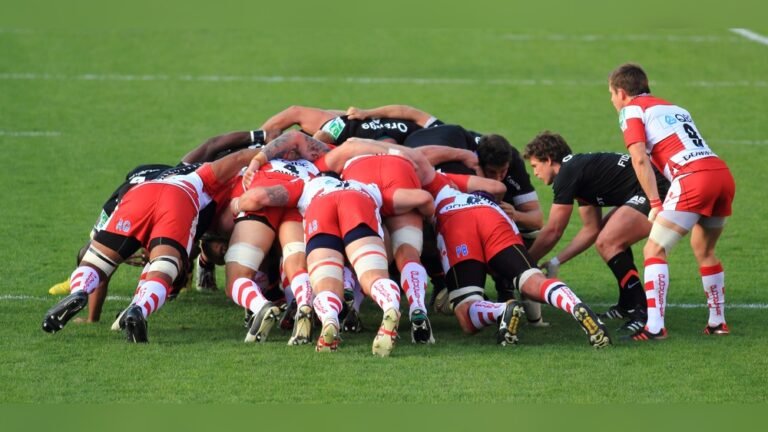
Eight players from each team, called forwards, bind together in three rows. The two packs then crouch, touch, and engage, pushing against each other. The ball is put into the middle, and both teams try to hook it back with their feet. The team that wins gets to play the ball and attack.
Scrums test power, technique, and teamwork. They are not just about strength—timing and skill matter, too.
When Does A Scrum Happen?
Scrums are used to restart play after:
- Knock-on: When a player drops the ball forward.
- Forward pass: Passing the ball to a teammate in front.
- Unplayable ball: When the ball is stuck and cannot be picked up.
- Accidental offside: When a player is accidentally offside and affects play.
Penalties, foul play, or the ball going out of bounds usually lead to line-outs or penalty kicks, not scrums.
Scrum Formation And Players
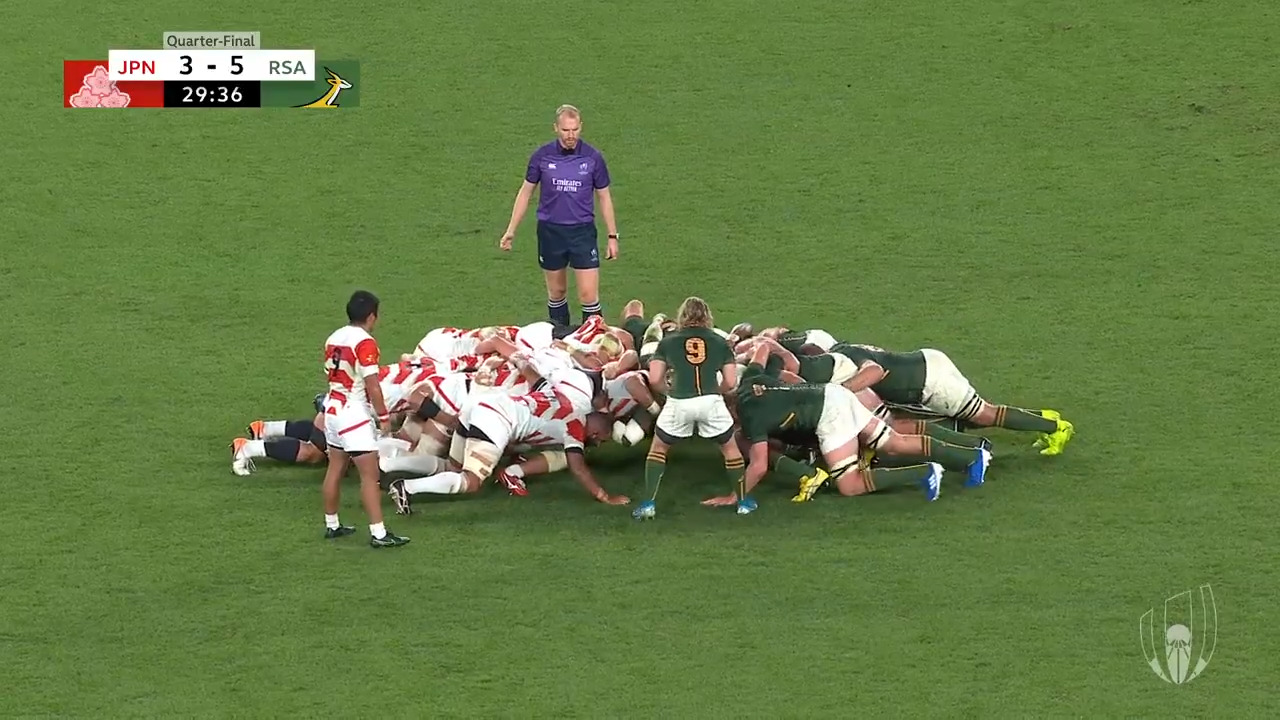
A rugby scrum involves 16 players—eight from each team. The forwards are split into three rows:
| Row | Players | Numbers | Roles |
|---|---|---|---|
| Front row | 3 | 1 (Loosehead Prop), 2 (Hooker), 3 (Tighthead Prop) | Stability, hooking ball |
| Second row | 2 | 4, 5 (Locks) | Power, push |
| Back row | 3 | 6 (Blindside Flanker), 7 (Openside Flanker), 8 (Number Eight) | Mobility, support |
The front row is crucial for safety and control. The hooker tries to win the ball, while the props keep the scrum steady.
How A Scrum Works Step By Step
- Crouch, Bind, Set: The referee gives these commands. Players crouch low, bind onto their teammates, and set their formation.
- Engage: The two packs come together, shoulder to shoulder.
- Feed: The scrum-half puts the ball into the tunnel between the front rows.
- Hook: Hookers use their feet to try to win the ball.
- Drive: Both teams push to gain ground, but must stay straight and not collapse.
- Ball Out: Once won, the ball is passed to the back, usually to the scrum-half, who then passes or runs.
A well-executed scrum is quick, clean, and safe. If a team breaks rules (e. g. , stands up, collapses, or wheels the scrum illegally), the referee can give a penalty or free kick.
Key Rules And Safety
Scrums can be dangerous if not controlled. Rugby laws require:
- Straight feed: The ball must go down the middle.
- Binding: Players must hold the correct part of their teammate’s jersey.
- No early push: Teams cannot shove before the ball is in.
- Stay on feet: Players must not collapse the scrum.
- Front row subs: Only trained players can play in the front row.
The referee is in charge, making sure everyone stays safe.
Purpose And Strategy
Scrums are not only about restarting play—they offer tactical opportunities. A strong scrum can:
- Win possession, giving a team a platform to attack.
- Force penalties if the other team breaks the rules.
- Tire out the opposition’s forwards.
- Set up set-piece moves, like passing to a fast backline player.
Some teams use scrums as an attacking weapon. Others aim just to secure the ball safely. The balance depends on the team’s style and the match situation.

Scrum Vs. Other Restarts
How does a scrum compare to other ways to restart rugby? Here’s a quick look:
| Restart Type | When Used | Players Involved | Main Goal |
|---|---|---|---|
| Scrum | Minor infringements | 8 forwards per team | Fair contest for ball |
| Line-out | Ball out of bounds | Forwards, jumpers | Restart from sideline |
| Penalty | Serious infringements | Whole team | Sanction against opponents |
| Free kick | Lesser infringements | Whole team | Quick restart |
Scrums are the only restart that require both teams to contest so closely.
Common Mistakes And Insights
Many beginners think the team putting the ball in always wins the scrum. While they do have an advantage, turnovers happen, especially at higher levels.
Another overlooked detail: scrums can be reset. If the referee sees a problem (e.g., early engagement or collapse), the scrum may be stopped and started again. Too many resets can slow the game, so teams work hard to avoid them.
Experienced players also use subtle tricks—like shifting their body weight or changing the angle—to gain an edge. But referees watch closely for illegal tactics.
Famous Scrum Moments
Some of rugby’s greatest moments have come from scrums. For example, in the 2019 Rugby World Cup final, South Africa’s scrum dominated England, winning crucial penalties and setting up tries. It showed how a powerful scrum can decide the biggest matches.
Scrum Statistics
On average, a professional rugby match has about 15 scrums. Teams win their own feed about 90% of the time. But at elite level, the difference between a steady and a shaky scrum can be the difference between winning and losing.
Here’s a quick look at scrum outcomes from a major rugby tournament:
| Team | Scrums Won (%) | Scrums Lost |
|---|---|---|
| New Zealand | 93% | 4 |
| South Africa | 96% | 2 |
| England | 89% | 6 |
These numbers show that top teams usually keep their own scrum safe but can also challenge opponents.
Why Scrums Matter
The scrum is more than just a way to restart play. It tests strength, technique, and teamwork. It can swing the momentum of a match and highlight a team’s character. Forwards pride themselves on their scrum work, and coaches build special plans around it.
If you want to understand rugby, learning about the scrum is a great place to start. It combines the sport’s power, skill, and tactics in a single dramatic moment.
For more on rugby rules and history, see this Wikipedia article.
Frequently Asked Questions
What Is The Main Purpose Of A Scrum In Rugby?
The main purpose is to restart play after minor rule breaks, giving both teams a fair contest for the ball.
How Many Players Are In A Scrum?
There are eight players from each team, making a total of 16 players involved in every scrum.
Can A Team Score Directly From A Scrum?
Yes, teams can use the scrum as a platform to launch attacks and sometimes score tries right after winning the ball.
Why Do Referees Reset Scrums?
Referees reset scrums when there is a safety concern, early engagement, or if the scrum collapses, ensuring fair and safe play.
Do All Rugby Matches Use Scrums?
Most forms of rugby, including Rugby Union and Rugby League, use scrums, but the rules and importance can vary between formats.