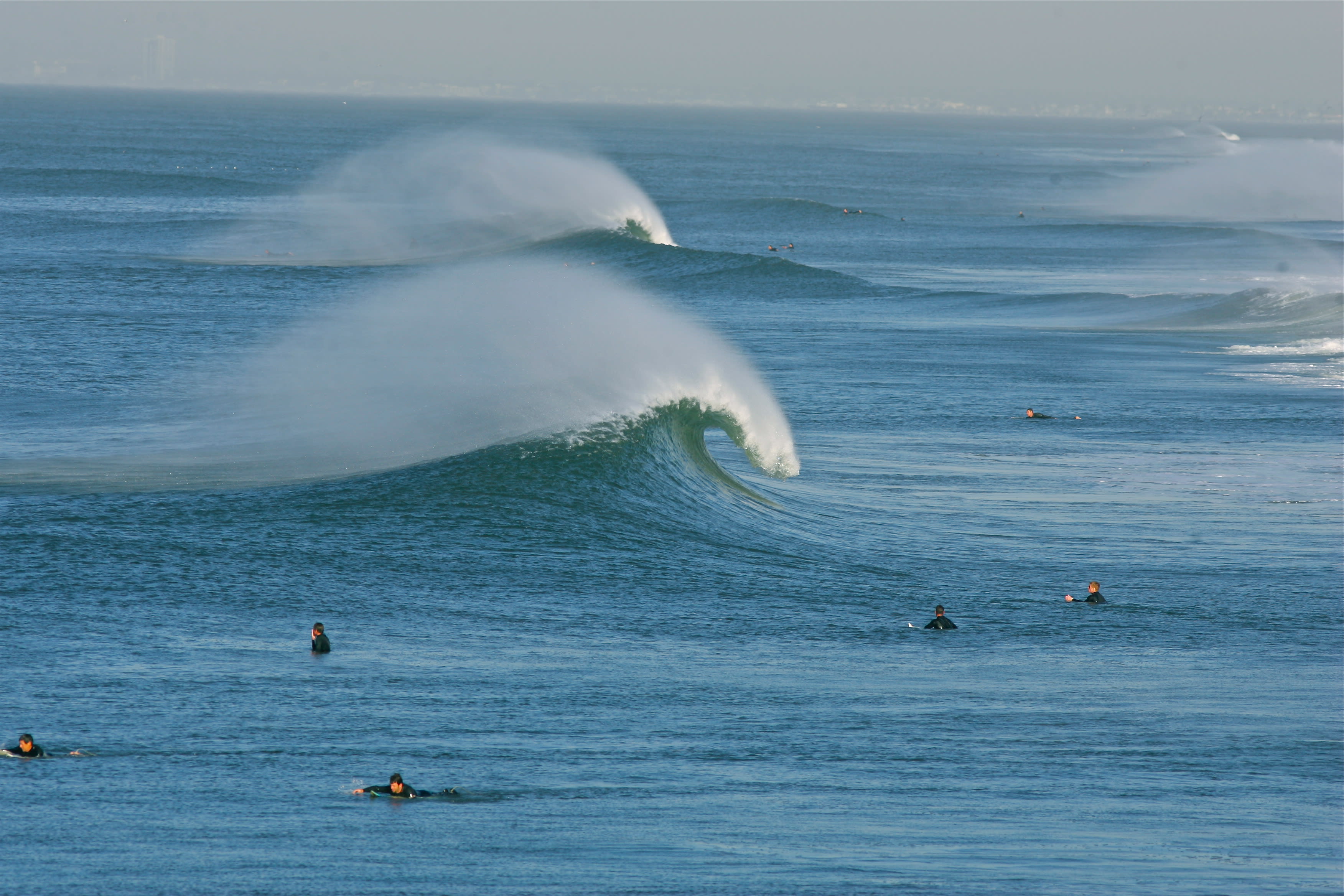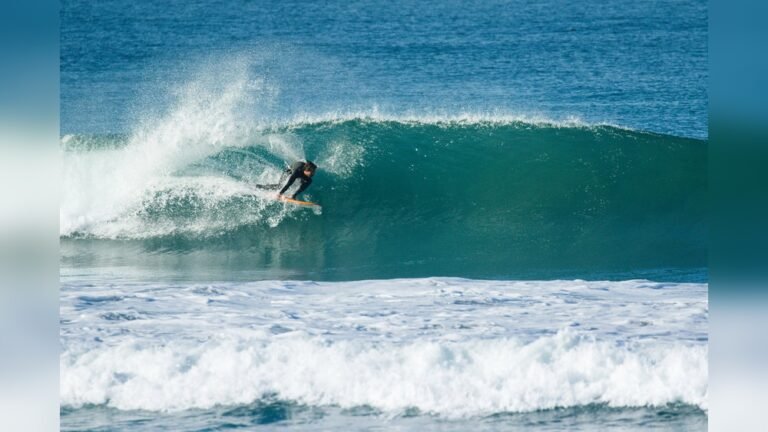
What makes a beach break so appealing to surfers worldwide? The answer lies in its energy, unpredictability, and accessibility. For both beginners and experienced riders, the beach break is a playground where every wave can be different. If you are new to surfing or curious about different surf spots, understanding what a beach break is—and how it compares to other types of breaks—is essential.
This article explores the heart of the beach break, explains how it forms, discusses its pros and cons, and reveals why many surfers love (and sometimes fear) these ever-changing waves.
Defining A Beach Break In Surfing
In surfing, a beach break is a place where waves break over a sandy bottom, usually close to the shore. This is different from reef breaks (where waves break over coral or rock) and point breaks (where waves wrap around a headland or jetty). The sand beneath the water at a beach break constantly shifts due to currents, tides, and storms. As a result, the waves and their shapes can change from day to day, or even hour to hour.
Unlike a man-made wave pool, a beach break is shaped by nature’s hand. The bottom contours, called sandbars, are built up by the movement of sand. These sandbars help waves to stand up and break, creating surfable conditions. The best beach breaks offer a mix of left and right waves, meaning you can surf in either direction.
How Beach Breaks Form
The formation of a beach break starts with ocean swells—energy traveling across the water’s surface. When these swells reach shallow water near the coast, they interact with the sandy seabed. If the sand is shaped into bars or banks, the swell will rise and break, forming a rideable wave.
Key Factors That Shape Beach Breaks
- Tides: The height of the tide changes how waves break. Low tide may expose sandbars and make waves steeper, while high tide can soften the waves.
- Sand Movement: Wind, storms, and currents move sand along the shore, creating or destroying sandbars. After a big storm, a beach break can look completely different.
- Wave Size and Direction: Swells coming from different directions and with different strengths will break differently over the sandbars.
Beach breaks are living systems. What is a perfect wave one week may be flat or messy the next.
Characteristics Of Beach Break Waves
Not all beach breaks are equal. Some have gentle, rolling waves that are perfect for beginners. Others have fast, hollow waves that challenge even the best surfers.
Common Features
- Multiple Peaks: Since sandbars are scattered, you often find many surfable waves along the beach, not just in one spot.
- Shifting Lineup: The best spot to catch a wave can change quickly, even during a single session.
- Closeouts: Sometimes, a wave will break all at once along its length. This is called a closeout, and it means the wave is not rideable for long.
Beach Break Example
One of the world’s most famous beach breaks is Hossegor in France. In the autumn, powerful Atlantic swells hit perfectly formed sandbars, creating waves that draw top surfers from around the globe. However, after a winter storm, those sandbars may shift, and the waves might lose their shape.
Beach Breaks Vs. Other Surf Breaks
How do beach breaks compare to reef and point breaks? Here’s a quick look:
| Type | Bottom | Wave Shape | Consistency | Danger Level |
|---|---|---|---|---|
| Beach Break | Sand | Varies (shifty) | Can change daily | Lower (soft landing) |
| Reef Break | Rock/Coral | Predictable, perfect | Very consistent | High (hard bottom) |
| Point Break | Rock/Sand | Long, peeling | Consistent | Medium |
A beach break is often safer for beginners because falling on sand is less risky than landing on sharp reef or rocks. However, the shifting sand can make it hard to predict where the best waves will be.

Why Surfers Love Beach Breaks
Many surfers call beach breaks their “home.” There are several reasons for this:
- Accessible: Most coastlines have beach breaks, so it’s easy to find one near you.
- Crowd Control: With multiple peaks, surfers can spread out, reducing crowds.
- Variety: The shifting sand creates new challenges and keeps surfing exciting.
- Safety: The sandy bottom is less likely to cause injuries.
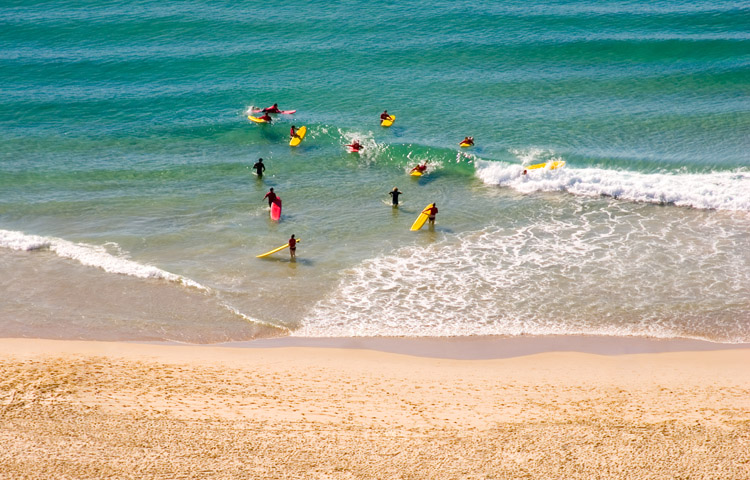
For learners, beach breaks offer a forgiving environment. Even if you wipe out, the soft sand is less intimidating than hard rock. For experienced surfers, the challenge of reading and adapting to ever-changing waves makes every session unique.
Common Challenges Of Beach Breaks
Beach breaks are not always easy. Their shifting nature creates some unique problems:
1. Closeouts
A closeout happens when a wave breaks all at once, making it impossible to ride along the face. This is frustrating for surfers, especially when the waves look promising from the shore.
2. Strong Currents
Beach breaks can have powerful rip currents. These occur when water moves quickly back out to sea, often next to a sandbar. Rip currents can pull surfers (and swimmers) out quickly, so understanding the ocean is important.
3. Inconsistent Waves
Because sandbars are always changing, the best spot to surf might not be the same from one day to the next. Sometimes, there are no good waves at all.
4. Shallow Zones
At low tide, sandbars may become very shallow. This can lead to short rides and even painful falls if you hit the bottom.
Famous Beach Breaks Around The World
Some beach breaks have become legendary. Here are a few well-known examples:
- Hossegor, France: Known for heavy, barreling waves in the autumn.
- Playa Zicatela, Mexico: Nicknamed the “Mexican Pipeline” for its powerful, hollow waves.
- Bondi Beach, Australia: A classic beach break with waves for all levels.
- Manhattan Beach, California: Popular with both beginners and advanced surfers.
- Supertubos, Portugal: Famous for fast barrels and host of world-class contests.
Each of these spots can look completely different depending on the sandbars and swell direction.
Beach Break Surfing: Technique And Tips
To get the most out of beach break surfing, there are some important techniques and tips to remember:
1. Stay Mobile
Because the best sandbars move, don’t stay in one spot. Watch where the good waves are breaking, and be ready to paddle to a new peak.
2. Read The Ocean
Before entering the water, observe the waves, currents, and sandbars from the shore. Look for:
- Where waves are consistently breaking
- Where surfers are getting the longest rides
- Any visible rip currents (often darker, choppy water)
3. Paddle Out Smart
Rip currents can be dangerous, but they can also help you paddle out more easily. Experienced surfers sometimes use rip currents to get past the breaking waves—just make sure you know how to escape a rip if you get caught.
4. Be Ready For Closeouts
Not every wave will offer a long ride. Practice your takeoff and quick turns so you can make the most of short, fast waves.
5. Choose The Right Board
A wider, thicker board can help catch waves earlier and handle messy conditions better. Shortboards are great for hollow, powerful waves, while longboards work better on smaller, rolling waves.
6. Respect Local Rules
Beach breaks often have lots of surfers and swimmers. Always follow local etiquette and give right of way to others.
How To Identify A Good Beach Break
Not every sandy beach is a great surf spot. Here are some signs of a good beach break:
- Visible sandbars at low tide
- Multiple peaks along the beach
- Consistent swell exposure (facing open ocean)
- Local reputation for good waves
Surfers often share information about sandbar changes online or through surf reports. For real-time updates, many use sites like Magicseaweed.
Real-world Data: Wave Consistency
To compare famous beach breaks, let’s look at average wave height and surf days per year.
| Beach Break | Average Wave Height (ft) | Surfable Days/Year |
|---|---|---|
| Hossegor | 4-8 | 220 |
| Playa Zicatela | 6-12 | 200 |
| Manhattan Beach | 2-5 | 260 |
| Supertubos | 4-10 | 210 |
Safety Tips For Beach Breaks
While beach breaks are generally safer than reefs, you still need to be careful.
- Learn about rip currents and how to escape them (swim parallel to the shore).
- Never surf alone—always go with a friend, especially in new places.
- Check local warnings for dangerous conditions.
- Protect your feet—sometimes debris or sharp shells can be hidden in the sand.
Non-obvious Insights About Beach Breaks
- Sandbars Can Be Seasonal: In many places, the best sandbars form after big winter storms or during certain months. Local knowledge or talking to lifeguards can give you a big advantage.
- Weather Affects Sand Movement: Not just big storms, but daily wind patterns can shift sand and change where the best waves are found—even within a single day.
- Wave Quality Is Not Just About Size: A small, perfectly shaped sandbar can make tiny waves feel powerful and fun, while a big, flat sandbar can turn large swells into closeouts.
Comparing Beach Breaks For Beginners And Advanced Surfers
| Surfer Level | Best Conditions | What to Avoid | Recommended Board |
|---|---|---|---|
| Beginner | Small, gentle waves, soft sandbars | Strong rip currents, closeouts | Longboard or foam board |
| Intermediate | Medium-sized waves, clear peaks | Heavy crowds, steep drop-offs | Funboard or shortboard |
| Advanced | Hollow, fast waves, sharp takeoffs | Unstable sandbars, unpredictable conditions | Shortboard |
Frequently Asked Questions
What Is The Main Difference Between A Beach Break And A Reef Break?
A beach break has a sandy bottom, while a reef break has a hard bottom made of rock or coral. Beach breaks are generally safer and change more often, but reef breaks have more predictable, perfect waves.
Are Beach Breaks Good For Beginner Surfers?
Yes, beach breaks are often the best place for beginners. The soft sand is less dangerous, and there are usually plenty of waves to practice on. However, beginners should still watch out for rip currents and closeouts.
Why Do Beach Break Waves Change So Much?
Beach break waves change because the sandbars under the water move with the tides, currents, and storms. This means the shape and size of the waves can be different every time you visit.
How Do I Find The Best Spot To Surf At A Beach Break?
Look for visible sandbars, ask local surfers, or watch where people are catching the best waves. It’s also helpful to check local surf reports before you go.
What Equipment Should I Use At A Beach Break?
Choose your surfboard based on the wave size and your skill level. For small, soft waves, a longboard or foam board is best. For bigger, faster waves, a shortboard can help you take off quickly and make sharper turns.
Surfing a beach break is an adventure that combines skill, patience, and adaptability. Whether you are catching your first wave or chasing barrels, the ever-changing sand and sea will always keep you guessing—and coming back for more.