
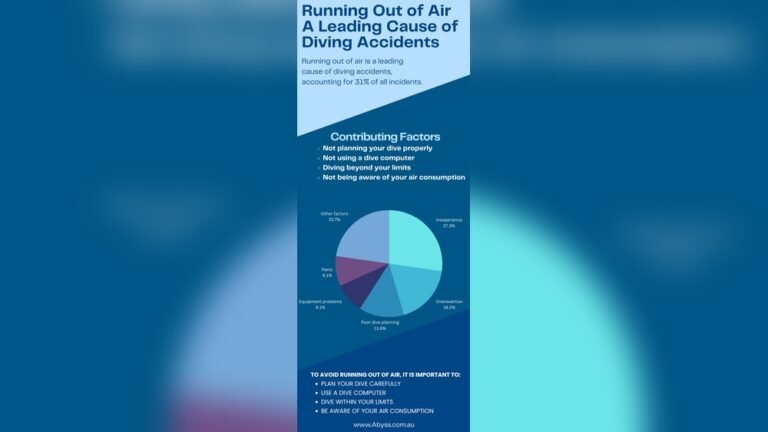
Imagine you are 18 meters underwater, surrounded by fish and coral. You look down at your pressure gauge and realize—your air supply is almost gone. Your heart pounds. What happens if you actually run out of air while scuba diving?
This question worries many new divers and even some experienced ones. The answer can be life-changing, so it’s important to understand the risks, how your body reacts, and what steps you should take.
This article will explain everything you need to know about running out of air while scuba diving. You’ll learn what physically happens, why it’s dangerous, what you should do, and how to prevent this scary situation. Whether you are a beginner, a diver with hundreds of dives, or just curious, you’ll find real-world advice and expert insights here.
The Science: What Happens To Your Body Without Air
When you breathe compressed air from a scuba tank, your body gets the oxygen it needs to keep your organs working. But if your tank runs out, the air supply stops instantly. Underwater, this is a serious emergency.
The body needs oxygen to function. If you hold your breath, your body uses up the oxygen in your lungs. When the oxygen runs low, carbon dioxide (CO2) builds up. This makes you feel an urgent need to breathe. If you still can’t get air, your body quickly weakens, and you may black out within 1-2 minutes.
At depth, this process happens faster than on land. Here’s why:
- Pressure increases: For every 10 meters you go down, the pressure doubles. At 20 meters, you use air three times faster than at the surface.
- Air runs out faster: If you have 50 bars left at 18 meters, it won’t last as long as 50 bars at the surface.
Without air, your body can suffer serious effects:
- Loss of coordination within 30 seconds
- Unconsciousness in 1-2 minutes
- Brain damage or death in just a few minutes if not rescued
Signs You Are Running Out Of Air
Many divers ask, “Will I know when my air is almost gone?” The answer is usually yes, but not always. Here’s what you might notice:
- Breathing becomes harder: You might feel it’s difficult to draw air, or your regulator gets tight.
- No air on inhale: When you try to breathe, nothing comes out.
- Pressure gauge reads zero: Your submersible pressure gauge will show empty.
- Regulator “sucks” back: The mouthpiece may feel like it’s pulling back, not giving air.
Some divers also experience slight panic, confusion, or a strong urge to shoot to the surface. It’s critical to stay calm and act quickly.
Why Running Out Of Air Is So Dangerous
Running out of air underwater is more dangerous than holding your breath on land. The main risks are:
- Drowning: Without air, water can enter the mouth and lungs.
- Panic: Fear can cause you to swim up too fast, risking injury.
- Decompression sickness: Shooting to the surface without stopping causes nitrogen bubbles to form in your blood.
- Lung over-expansion: Holding your breath while rising can burst your lungs due to expanding air.
The table below shows how fast injuries can happen if you run out of air:
| Time Without Air | What Happens |
|---|---|
| 0–30 seconds | Strong urge to breathe, possible panic |
| 30–60 seconds | Weakness, confusion, loss of coordination |
| 60–120 seconds | Unconsciousness, risk of drowning |
| 2+ minutes | Brain damage or death |
Common Reasons Divers Run Out Of Air
Most air emergencies are preventable. Here are the main causes:
- Poor air monitoring: Not checking the gauge often enough.
- Underestimating air needs: Using more air than planned, especially during stress or deep dives.
- Equipment failure: Broken regulators, O-ring leaks, or faulty gauges.
- Buddy separation: Losing your dive partner who could help in an emergency.
- Diving deeper than planned: Air is used up much faster at depth.
- Ignoring training: Not practicing emergency skills or forgetting the basics.
For example, new divers sometimes focus on the view and forget to check their gauge. Some divers breathe faster when nervous, using up their air quickly.

Immediate Steps To Take If You Run Out Of Air
If you realize you’re out of air, time is critical. Here’s what experts and training agencies recommend:
- Stay calm: Panic wastes air and can lead to mistakes.
- Signal your buddy: Use the “out of air” hand signal—a flat hand cutting across your throat.
- Get an alternate air source: Your buddy can share air with their alternate (octopus) regulator.
- Start a controlled ascent: Rise slowly with your buddy, breathing from the shared source.
If your buddy is not close, look for another diver or a guide. If no one is nearby, you have two options:
- Controlled emergency swimming ascent (CESA): Swim to the surface while exhaling slowly and continuously. Never hold your breath.
- Buoyant ascent: If you are deeper or rising is difficult, drop your weights to become more buoyant and float up. Again, exhale all the way.
The CESA is practiced in every entry-level scuba course. It’s a life-saving skill. Remember, never shoot to the surface or hold your breath, as this can cause lung injury.
Real-world Example: How A Diver Survived
In 2018, a diver named Emily was exploring a reef at 16 meters. She got distracted by a turtle and forgot to check her air. Suddenly, she felt her regulator tighten—no more air. Emily signaled to her buddy, who quickly gave her his alternate regulator.
Together, they ascended slowly and safely.
Emily later said, “I was scared, but my training kicked in. I remembered not to panic and to get help fast. ”
Her story shows the importance of:
- Staying calm
- Knowing your hand signals
- Practicing air-sharing

How To Prevent Running Out Of Air
Prevention is always better than emergency action. Here are the top steps to avoid running out of air:
- Check your air often: Look at your gauge every few minutes.
- Plan your dive: Know how deep and how long you’ll be underwater. Use the “rule of thirds”—one third of air for going out, one third for coming back, one third for safety.
- Monitor your breathing: Stay relaxed to use less air.
- Dive with a buddy: Keep your partner close and in sight.
- Practice emergency skills: Review air-sharing, CESA, and buoyant ascent.
- Service your gear regularly: Make sure your regulator and gauge work well.
Some divers use a dive computer to get air time estimates and alarms. Others set reminders to check their gauge. The table below compares common methods of monitoring air:
| Method | How It Works | Pros | Cons |
|---|---|---|---|
| Manual gauge check | Look at pressure gauge often | Simple, always available | Easy to forget during distraction |
| Dive computer alarms | Device warns you when air is low | Automatic, less to remember | Requires batteries, can fail |
| Buddy check system | Divers remind each other to check air | Shared responsibility | Must trust your buddy’s attention |
What Not To Do If You Run Out Of Air
Some mistakes can turn an air emergency into a tragedy. Never:
- Hold your breath while ascending: Expanding air can rupture your lungs.
- Panic and shoot to the surface: Rapid ascent causes decompression sickness or lung injury.
- Hide the problem: Always signal your buddy or guide.
- Ignore equipment issues: Fix leaks or malfunctions before diving.
A common beginner mistake is trying to “save air” by taking shallow breaths or holding air in the lungs. This does not help and makes the situation more dangerous.

The Role Of Training And Practice
Every certified diver learns how to handle an “out of air” emergency. But skills fade if not practiced. Diving agencies recommend:
- Practicing air-sharing with a buddy at the start of every trip
- Doing a CESA in safe, controlled environments
- Reviewing hand signals and emergency plans before the dive
Professional instructors often run “out of air” drills during courses. This builds the muscle memory you need to act fast under stress.
How Long Can You Survive Without Air Underwater?
Survival time depends on depth, fitness, and how calm you stay. Most divers have less than one minute after their tank runs out. Unconsciousness follows quickly, and drowning can happen in seconds if water enters the airway.
On the surface, a person can sometimes hold their breath for over a minute. Underwater, with the urge to breathe and rising CO2, that time is much shorter. It’s not just about holding your breath—it’s about resisting panic and making the right move fast.
Equipment That Can Help In An Air Emergency
Some divers carry extra gear for emergencies:
- Spare air cylinders: Small backup tanks for a few emergency breaths
- Pony bottles: Larger backup tanks, used on technical dives
- Surface marker buoys: To signal for help
- Whistles/horns: To get attention at the surface
However, the best “equipment” is a sharp mind and good habits. Equipment helps, but only if you remember to use it.
Here’s a comparison of common emergency backup systems:
| Backup System | Air Supply | Weight/Bulk | Who Uses It? |
|---|---|---|---|
| Spare air cylinder | ~30 breaths | Light, small | Recreational divers |
| Pony bottle | Several minutes | Heavier, more gear | Technical/pro divers |
| Octopus regulator | Shares main tank | No extra tank | All buddy divers |
Psychological Effects: The Fear Factor
Running out of air is not just a physical emergency—it’s a mental test. Panic is the real killer. Even trained divers can freeze or make mistakes when scared. That’s why dive instructors focus on keeping calm, clear thinking, and teamwork.
Some divers develop “air anxiety” after a close call. It’s important to talk about these fears, practice with an instructor, and build confidence again.
The Role Of Dive Buddies
Diving is always safer with a buddy. Your partner is your backup in case of any emergency, especially air problems. A good buddy:
- Stays close (within arm’s reach)
- Watches your air supply
- Is trained to share air quickly
- Knows your signals
Before every dive, agree on what to do if you run out of air, including where to find their alternate regulator and how to ascend together.
Final Thoughts
Running out of air while scuba diving is a real risk, but it’s one you can manage and avoid. By understanding what happens, practicing your emergency skills, checking your gear, and staying calm, you can turn a scary moment into a safe return to the surface.
Remember, even experienced divers can make mistakes, but preparation and teamwork save lives.
For more on safe diving practices, visit the Wikipedia Scuba Diving page.
Frequently Asked Questions
What Is The “out Of Air” Hand Signal In Scuba Diving?
The out of air signal is made by moving a flat hand back and forth across your throat. It means you need help now. Always use this with your buddy if you are low or out of air.
Is It Possible To Run Out Of Air Without Noticing?
Most of the time, you will notice harder breathing or a tight regulator. However, if you are distracted or your gauge is broken, you might not notice until it’s almost too late. This is why frequent checks and good habits are vital.
What Is A Cesa And When Should I Use It?
A Controlled Emergency Swimming Ascent (CESA) is when you swim to the surface while exhaling continuously after running out of air. Use this only if you cannot get air from a buddy or backup and are not too deep.
How Deep Can You Perform An Emergency Ascent Safely?
It’s safest to perform a CESA from 9 meters (30 feet) or less. Deeper than that, the risk increases. However, in a real emergency, ascending slowly while exhaling is better than staying underwater without air.
Can A Spare Air Cylinder Save Your Life?
Yes, a spare air cylinder can provide a few extra breaths in an emergency. It’s not a substitute for good planning, but it can give you time to reach the surface or your buddy safely.
