Skiing is more than just sliding down a snowy hill; it’s a sport that blends adventure, skill, and the beauty of winter landscapes. But before you can enjoy your first run, you need to be properly equipped. Having the right gear is not only about comfort, but also about safety and performance. Whether you are a beginner or have some experience, knowing what equipment you need for skiing is essential to make the most of your time on the slopes and avoid common mistakes that can ruin your trip.
Many beginners focus only on skis and boots, but skiing involves much more. From clothing layers to safety gear, each piece of equipment serves an important purpose. Even small details, like the fit of your gloves or the type of goggles you choose, can make a big difference in your skiing experience.
This guide will take you through every item you need, explain why it matters, and offer tips that even seasoned skiers sometimes forget. Let’s get ready for your next ski adventure with confidence.
Essential Ski Equipment
Before heading to the slopes, you need the core items that every skier must have. These are not optional—without them, you simply can’t ski safely or effectively.
Skis
Skis are the main equipment for skiing. Today, most skiers use “all-mountain” skis, which work well on various types of terrain. The right ski length depends on your height, weight, skill level, and skiing style.
- Beginners should choose skis that are shorter and softer. These are easier to control.
- Advanced skiers might pick longer, stiffer skis for more speed and stability.
Many rental shops will help you select the right size. Remember, using the wrong ski size can make learning much harder and increase your risk of falling.
Ski Bindings
Bindings connect your boots to your skis. They are specially designed to release your boot in a fall, reducing the risk of leg injuries.
- It’s important that bindings are correctly adjusted for your weight and skill level.
- Never try to adjust your own bindings unless you are trained; incorrect settings can be dangerous.
Ski Boots
Ski boots provide support and control. They need to fit snugly but not painfully tight. Poorly fitting boots are the most common reason for discomfort and poor skiing.
- Try on several pairs before choosing. Your toes should touch the end lightly when standing straight.
- Different brands and models have different shapes (called “lasts”), so what fits your friend may not fit you.
Ski Poles
Poles help you balance, push, and turn. For downhill skiing, the right pole length lets your elbow bend at a 90-degree angle when holding the pole upside down (with your hand under the basket).
- Some beginners skip poles to focus on balance, but most adults and older children find them helpful.
Clothing For Skiing
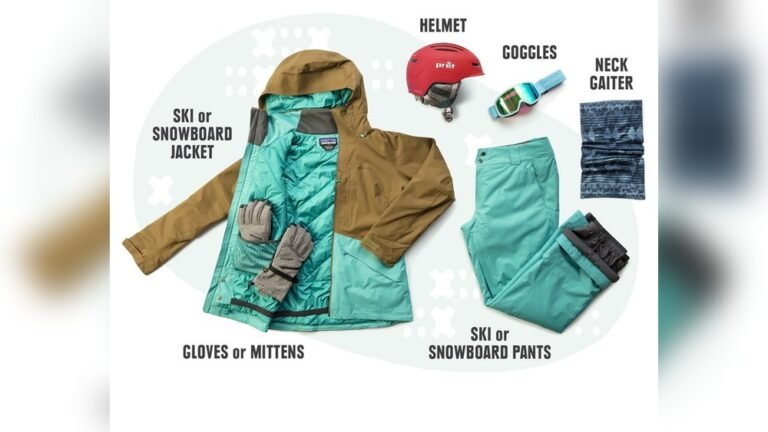
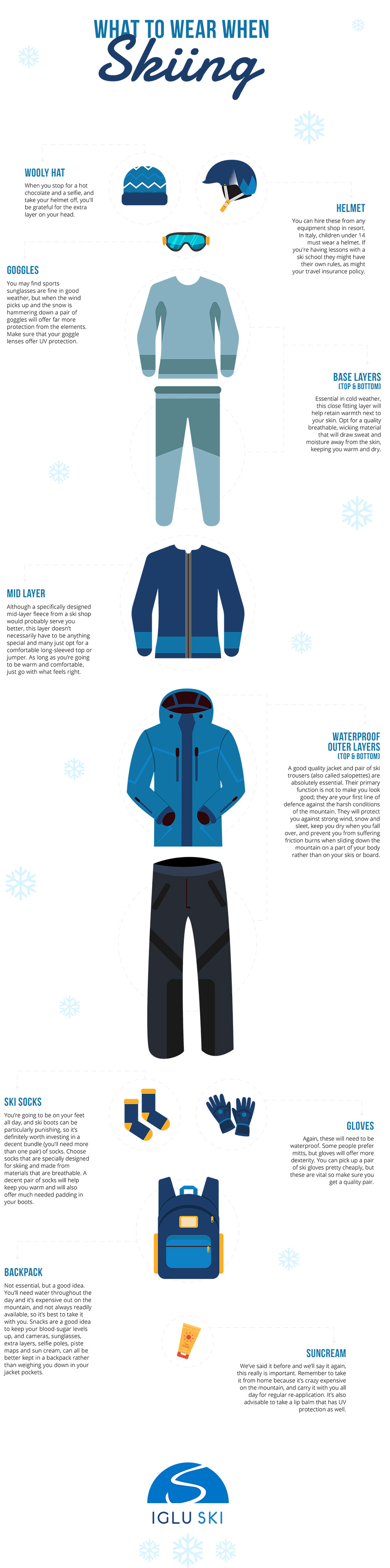
Dressing properly can be the difference between a fun day and a miserable one on the slopes. Ski clothing is designed to keep you warm, dry, and able to move freely.
Base Layer
The base layer is the clothing closest to your skin. Its job is to wick sweat away to keep you dry.
- Materials: Merino wool or synthetic fabrics are best. Avoid cotton as it stays wet and cold.
- Both tops and bottoms are needed, especially in cold weather.
Mid Layer
The mid layer provides insulation to trap body heat.
- Popular options: Fleece jackets, down vests, or synthetic insulated shirts.
- On warmer days, you might skip this layer.
Outer Layer
The outer layer protects you from wind, snow, and rain. It includes your ski jacket and ski pants.
- Look for waterproof and breathable fabrics (like Gore-Tex).
- Jackets should have features like powder skirts, vents, and adjustable hoods.
- Pants should have reinforced cuffs and adjustable waists.
Ski Socks
Ski socks are specially made to provide warmth without bulk.
- Use only one pair at a time; wearing two pairs can cause blisters.
- Wool or synthetic blends are best; avoid cotton.
Ski Gloves Or Mittens
Hands get cold quickly, so waterproof gloves or mittens are a must.
- Mittens are warmer than gloves but offer less dexterity.
- Look for gloves with extra insulation and wrist straps.
Neck Gaiter Or Balaclava
A neck gaiter or balaclava protects your neck, face, and sometimes your head from cold wind.
- These are especially important on very cold or windy days.
Ski Hat Or Helmet Liner
If you wear a helmet (which you should), a thin helmet liner or beanie under the helmet can add warmth without affecting the fit.

Safety Equipment
Safety is just as important as comfort. Many injuries can be prevented with the right gear.
Ski Helmet
A ski helmet is now standard on most slopes for good reason. Head injuries are serious and can happen even at slow speeds.
- Make sure your helmet fits snugly and is certified for skiing.
- Never use a bicycle helmet; ski helmets are made for cold and impact on snow.
Ski Goggles
Goggles protect your eyes from wind, snow, and harmful UV rays. Good visibility is critical for safety.
- Choose goggles with anti-fog coating and UV protection.
- Different lens colors work better in different light: Yellow or rose for low light, dark lenses for bright sun.
Avalanche Safety Gear (for Off-piste Skiing)
If you ski outside marked trails (off-piste), you need extra safety gear:
- Avalanche beacon: Sends a signal if you’re buried.
- Probe: Helps locate someone under snow.
- Shovel: To dig out after an avalanche.
Even experienced skiers sometimes forget to check batteries in their beacon—always do this before heading out.
Accessories That Make A Difference
Some items are not strictly required, but they can vastly improve your experience and safety.
Ski Backpack
A small ski backpack lets you carry water, snacks, extra layers, and safety gear. Choose one with chest and waist straps to keep it stable.
Sunscreen And Lip Balm
Snow reflects up to 80% of UV rays. Always use sunscreen and lip balm with SPF to protect your skin.
Hand And Foot Warmers
Disposable warmers can be placed in gloves or boots for added comfort, especially on very cold days.
Ski Pass Holder
Many ski areas use electronic passes that need to be scanned. A pass holder on your jacket arm or chest makes this quick and easy.
Action Camera
If you want to film your skiing, a helmet-mounted camera like a GoPro is popular. Just make sure it’s securely attached so you don’t lose it on the slope.
Comparing Key Ski Equipment Choices
Choosing the right gear can feel overwhelming. Here’s a simple comparison of some key options:
| Item | Best For Beginners | Advanced Option |
|---|---|---|
| Skis | Shorter, softer, all-mountain | Longer, stiffer, specialized (e.g. powder skis) |
| Boots | Comfort fit, more flexible | Performance fit, stiffer flex |
| Helmet | Standard, basic venting | Lightweight, adjustable vents, audio system |
| Jacket | Insulated, simple design | Shell with layering, advanced materials |
Renting Vs. Buying Ski Equipment
For those new to skiing, a common question is whether to rent or buy gear. Both options have advantages.
| Factor | Renting | Buying |
|---|---|---|
| Cost | Lower upfront, but adds up over time | Higher upfront, cheaper in long run if you ski often |
| Fit | Can try different sizes easily | Custom fit, more comfort |
| Convenience | No need to carry gear when traveling | Always ready, no rental lines |
| Quality | May be basic or worn | Choose quality and features you want |
If you ski less than 10 days per year, renting is usually more cost-effective. But if you plan to ski often, investing in your own equipment pays off.
Hidden Details That Matter
Some aspects of ski equipment are easy to overlook but can have a big impact.
- Ski boot liners: Many boots have removable liners that can be heat-molded to your feet. This can solve comfort problems that new skiers often face.
- Goggle fit with helmet: Not all goggles fit well with all helmets. Try them together to avoid gaps that let in wind or snow.
- Glove cuffs: Long cuffs fit over your jacket for extra warmth, while short cuffs go under the sleeve for more dexterity.
- Back protectors: Some skiers wear a soft or hard back protector under their jacket, especially in terrain parks or off-piste.
Common Mistakes To Avoid
It’s easy to make mistakes when buying or renting ski equipment, especially as a beginner.
- Wearing cotton clothing: Cotton traps moisture and makes you cold.
- Ignoring the fit of boots: Comfort is critical; never buy boots that hurt in the shop.
- Not adjusting pole length: Wrong pole size can cause balance problems.
- Skipping helmet or goggles: Protecting your head and eyes is essential, even for easy slopes.
- Forgetting about weather changes: Pack extra layers and check forecasts before skiing.
How To Care For Your Ski Equipment
Proper care extends the life of your gear and keeps it performing well.
- Dry your boots and gloves after each use to prevent odor and mold.
- Store skis in a cool, dry place and have them tuned (edges sharpened, bases waxed) regularly.
- Wash ski clothing with special detergents to maintain waterproofing.
- Check bindings annually or after a hard fall.
Frequently Asked Questions
What Size Skis Should I Use As A Beginner?
Most beginners should choose skis that come up between their chin and nose when standing. Shorter skis are easier to control and turn. Rental shops can help you select the right size for your weight and height.
Can I Use Regular Winter Clothes For Skiing?
Regular winter clothes are not suitable for skiing. Ski clothing is made to be waterproof, breathable, and allow movement. Cotton, like in jeans or sweatshirts, will get wet and cold quickly.

Is A Helmet Really Necessary For Skiing?
Yes, wearing a helmet is highly recommended. Head injuries can happen even at low speeds. Modern ski helmets are light, warm, and comfortable.
How Do I Know If My Ski Boots Fit Correctly?
Boots should fit snugly without causing pain. Your toes should just touch the end when standing straight, but pull back slightly when you bend your knees. Try different brands and get help from a boot fitter if possible.
Do I Need Avalanche Safety Gear?
You only need avalanche safety gear if you plan to ski off marked trails (off-piste). If you stay on regular ski runs, this equipment is not required. Always check local rules and conditions before leaving the main slopes.
Skiing is an exciting sport, and being well-prepared makes all the difference. With the right equipment, you can focus on learning new skills and enjoying the mountain, rather than worrying about discomfort or safety. Take your time to choose gear that fits well and matches your needs. For more detailed advice on choosing ski gear, you can visit the Wikipedia page on ski equipment. With the right preparation, every run can be a great one. See you on the slopes!
