
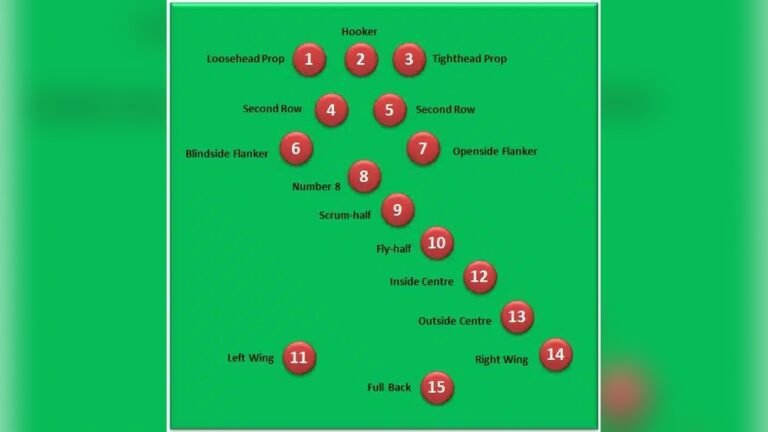
Rugby is a fast, physical sport played all over the world. Every player on a rugby team has a unique job, known as a “position. ” Understanding these positions is key for anyone new to the game or looking to improve their knowledge.
Let’s break down each position in rugby, what they do, and what makes them important on the field.
How Rugby Teams Are Structured
A standard rugby team has 15 players. Each player wears a number from 1 to 15, and every number matches a specific position. Teams are split into two main groups:
- Forwards (numbers 1–8): Usually bigger and stronger, these players focus on winning and keeping the ball.
- Backs (numbers 9–15): Often faster and more agile, they use the ball to attack and score tries.
Let’s look deeper at each position, starting with the forwards.
Forwards: The Power Of The Team
Forwards do the hard work in close contact. They compete for the ball in scrums and lineouts, tackle hard, and drive the team forward.
| Position | Number | Main Role |
|---|---|---|
| Loosehead Prop | 1 | Scrum strength, support in rucks and mauls |
| Hooker | 2 | Throws in at lineouts, hooks ball in scrums |
| Tighthead Prop | 3 | Scrum anchor, strong in contact |
| Lock/Second Row | 4 & 5 | Lineout jumpers, scrum push, ball carriers |
| Blindside Flanker | 6 | Defensive tackles, breakdown work |
| Openside Flanker | 7 | Wins turnovers, supports attack |
| Number Eight | 8 | Links forwards and backs, carries ball |
Loosehead Prop (1)
This player lines up on the left side of the scrum. The loosehead prop needs strength to push in the scrum and help win the ball. They often carry the ball into contact and support teammates in rucks.
Hooker (2)
The hooker stands in the middle of the front row. Their main job is to “hook” the ball back with their feet during scrums. Hookers also throw the ball in at lineouts, making accuracy a must.
Tighthead Prop (3)
The tighthead prop is on the right side of the scrum. This position requires strong technique and power to hold the scrum steady. They also help win rucks and tackles.
Locks/second Row (4 & 5)
Locks are usually the tallest players. Their main role is to jump for the ball in lineouts. They add power to the scrum and often carry the ball forward in open play.
Blindside Flanker (6)
The blindside flanker covers the short side of the field. They make strong tackles and support both defense and attack. This position is often filled by players who are tough and good at reading the game.
Openside Flanker (7)
The openside flanker is often the first to arrive at rucks. They try to win the ball back from the other team. Quick thinking and speed are key skills here.
Number Eight (8)
The number eight controls the ball at the base of the scrum. They link the forwards and backs, often carrying the ball into space and starting attacks.
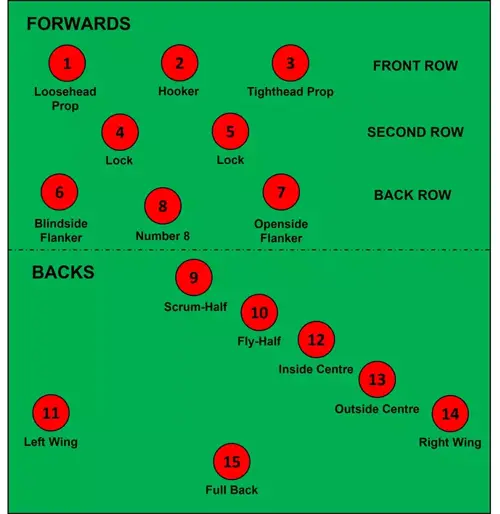
Backs: The Speed And Creativity
Backs are responsible for creating and finishing scoring chances. They usually have more speed and passing skills compared to forwards.
| Position | Number | Main Role |
|---|---|---|
| Scrum-half | 9 | Links forwards and backs, passes from breakdowns |
| Fly-half | 10 | Playmaker, tactical kicker |
| Inside Centre | 12 | Crash ball runner, supports defense |
| Outside Centre | 13 | Breaks defensive lines, strong tackler |
| Wings | 11 & 14 | Fast finishers, score tries |
| Fullback | 15 | Last line of defense, counter-attacks |
Scrum-half (9)
The scrum-half acts as the link between forwards and backs. They pass the ball from rucks and scrums, make quick decisions, and often guide the tempo of the game.
Fly-half (10)
The fly-half is the main decision-maker. They choose when to pass, kick, or run. A fly-half needs vision, good passing, and tactical kicking skills. Many top teams rely heavily on their fly-half for attack plans.
Centres (12 & 13)
- Inside Centre (12): Usually strong and reliable, the inside centre takes the ball upfield and supports the fly-half. They often break tackles and help defend.
- Outside Centre (13): This player is faster and looks for gaps in the defense. They support the wings and help cover in defense.
Wings (11 & 14)
Wings play on the far edges of the field. They are usually the fastest players and finish scoring moves. Good wings need to be quick, aware, and able to beat defenders one-on-one.
Fullback (15)
The fullback is the last line of defense. They catch high kicks, cover breaks from the opposition, and start counter-attacks. Fullbacks need safe hands, a strong kick, and a good sense of positioning.
Comparing Forwards And Backs
To help understand the main differences, here’s a quick comparison:
| Aspect | Forwards | Backs |
|---|---|---|
| Physical Traits | Strong, heavier, powerful | Fast, agile, lighter |
| Main Role | Win and keep possession | Score and create tries |
| Key Skills | Scrummaging, tackling, rucking | Passing, kicking, running |

Two Insights Beginners Often Miss
- Some players’ jobs overlap. For example, both flankers and the number eight help win turnovers and support attacks, but each does it in slightly different ways depending on their side of the field or role in set pieces.
- Modern rugby is flexible. Players are trained to cover multiple positions. You might see a lock play as a flanker, or a fullback step into the fly-half spot if needed. This flexibility is vital in today’s fast-paced matches.
Why Every Position Matters
Every rugby position has a special part to play. Forwards win the ball and set the platform, while backs use that platform to create and finish scoring chances. If even one position is weak, the whole team can struggle. For example, a weak scrum-half can slow down attacks, and a slow wing can miss scoring chances.

Frequently Asked Questions
What Is The Difference Between A Prop And A Hooker?
Props (1 and 3) provide power and stability in the scrum. The hooker (2) sits between them and is responsible for hooking the ball in scrums and throwing in at lineouts.
Why Are The Numbers Important In Rugby?
Each number, from 1 to 15, represents a specific position with clear roles. This helps players, coaches, and fans understand who should do what during a match.
Can A Player Switch Positions During A Game?
Yes, players can switch positions, but it’s more common for players to move between similar roles. For example, a flanker might play number eight. Major changes, like a prop moving to fullback, are rare.
What Skills Are Most Important For Backs?
Backs need speed, agility, passing, and kicking. Good decision-making and communication are also key, since they often create scoring chances.
Where Can I Learn More About Rugby Positions?
A great resource is the official World Rugby site. Visit World Rugby for more information.
Rugby’s positions might seem complex at first, but understanding each role helps you appreciate the sport’s strategy and teamwork. Whether you’re a player, coach, or fan, knowing the positions is the first step to enjoying rugby even more.
