
Riding a wave is never quite the same twice. Ask any surfer, and you’ll hear stories about the unique feeling of catching the perfect wave—sometimes smooth and long, sometimes steep and powerful. But what shapes these waves and makes one surf spot so different from another? The answer lies in the type of surf break. Understanding surf breaks is not just for pros; it’s essential for anyone wanting to improve, stay safe, and enjoy the ocean more. In this guide, you’ll learn about all the main types of surf breaks, how they form, and why they matter for your surfing experience.
What Is A Surf Break?
A surf break is a place where ocean waves break, creating a rideable surface for surfers. The way a wave breaks depends on several factors, such as the ocean floor, tides, wind, and even local geography. Not all surf breaks are created equal—some are gentle and beginner-friendly, while others are fast and dangerous. Knowing these differences can help you choose the right spot and even plan surf trips around the world.
Main Types Of Surf Breaks
Let’s dive into the main types of surf breaks that you’ll find across the globe.
1. Beach Breaks
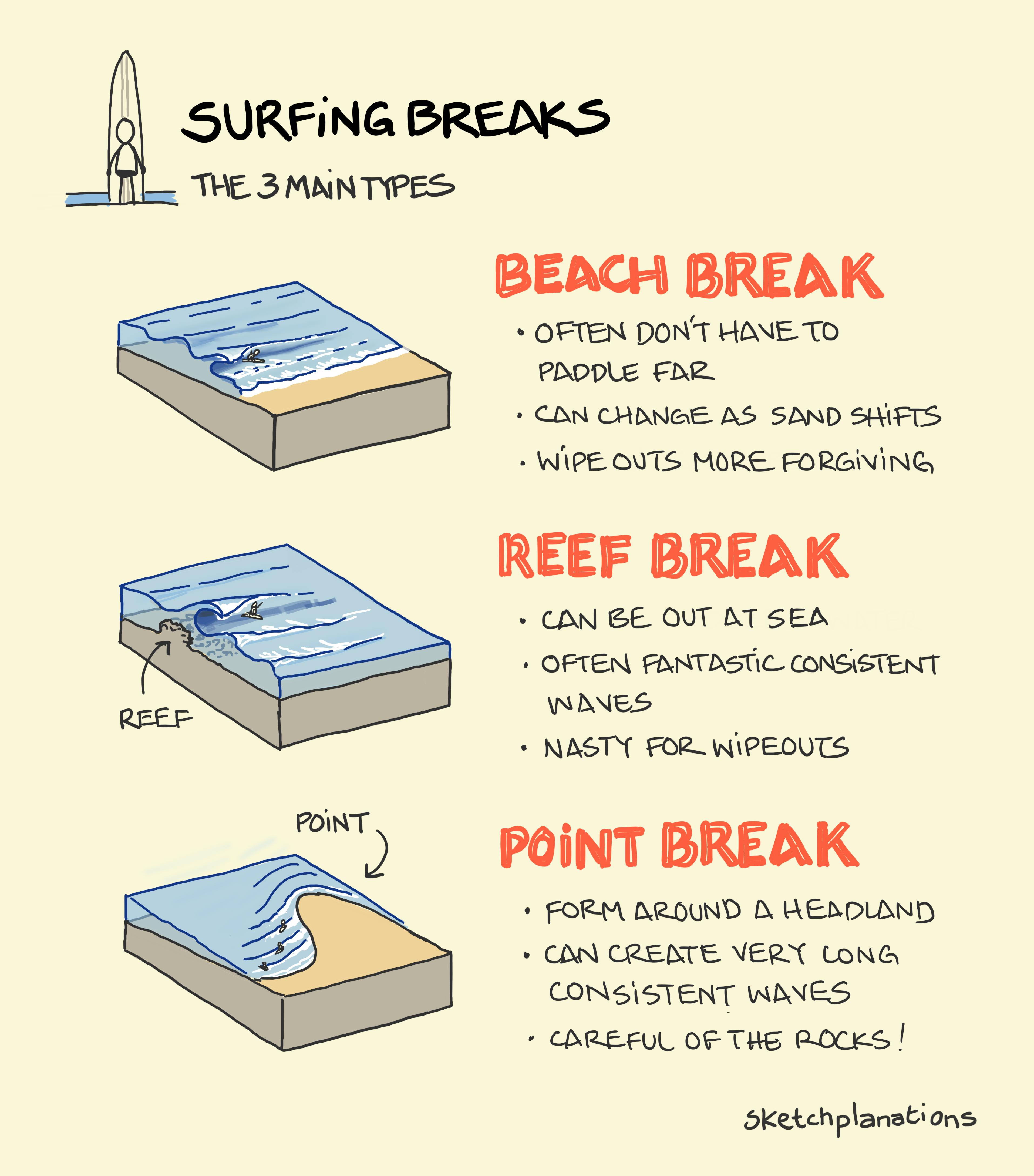
Beach breaks are the most common type of surf break. Here, waves break over a sandy seabed, which shifts often due to currents and storms. This constant change means beach breaks can look very different from one day to the next.
- Examples: Hossegor in France, Huntington Beach in California
- Best for: Beginners and intermediate surfers
The sand bottom makes beach breaks safer for falls. However, because the sandbanks move, wave quality can be unpredictable. Sometimes, you’ll get long, peeling waves; other times, short and choppy rides.
Non-obvious Insight
A common mistake is thinking all beach breaks are easy. Some, like Puerto Escondido in Mexico, are known for their powerful and dangerous waves, despite the sandy bottom.
2. Point Breaks
Point breaks occur where waves wrap around a point of land, often along rocky outcrops or headlands. Here, waves break in one direction—left or right—along the coastline.
- Examples: Rincon in California, Jeffreys Bay in South Africa
- Best for: Intermediate to advanced surfers
Point breaks are famous for producing long, consistent rides—sometimes over 300 meters. This is the spot for surfers who want to practice maneuvers and enjoy extended time on the wave.
Non-obvious Insight
At crowded point breaks, local etiquette is very important. New surfers often don’t realize that dropping in on someone’s wave here can lead to tension or even being asked to leave.
3. Reef Breaks
Reef breaks form when waves break over coral or rock reefs. The ocean floor here is fixed and does not change much, making these breaks very consistent.
- Examples: Pipeline in Hawaii, Teahupo’o in Tahiti
- Best for: Advanced to expert surfers
Reef breaks can produce perfect, powerful waves but are also risky. Falling can mean hitting sharp coral or rocks. Many famous surfing competitions are held at reef breaks because of the high-quality waves.
Key Data
Some of the world’s heaviest and most dangerous waves, like Teahupo’o, break over shallow reefs—sometimes just one meter of water above the coral.
4. River Mouth Breaks
River mouth breaks happen where a river flows into the ocean, depositing sand or silt. This creates sandbars that shape the waves.
- Examples: Mundaka in Spain, Trestles in California
- Best for: Intermediate to advanced surfers
These breaks can produce very hollow, fast waves due to the sandbars’ steep angle. However, conditions can change with river flow and storms, making them less predictable.
5. Artificial Or Man-made Breaks
With advances in technology, artificial surf breaks are becoming more common. These are either wave pools or ocean structures designed to create surfable waves.
- Examples: Kelly Slater’s Surf Ranch, Wavegarden in Europe
- Best for: All levels, depending on the design
Artificial breaks allow for perfect, repeatable waves, which is excellent for training and competitions. However, they can lack the “wild” feeling of the ocean and can be expensive to use.
Non-obvious Insight
Wave pools are not all the same—some use air pressure, others a moving “foil” under the water, and some are just giant pools with mechanical paddles. Each design shapes the wave differently.
How Ocean Floor Shapes The Wave
The main difference between surf breaks comes from the shape and type of the seafloor under the wave. Here’s a quick comparison:
| Type of Break | Seafloor Material | Wave Consistency | Risk Level |
|---|---|---|---|
| Beach Break | Sand | Variable | Low to Moderate |
| Point Break | Rock/Sand | High | Moderate |
| Reef Break | Coral/Rock | Very High | High |
| River Mouth | Sand/Silt | Moderate | Moderate |
| Artificial | Engineered | Very High | Low |
Lefts, Rights, And A-frames
The way a wave breaks at each spot also matters. Surfers talk about lefts, rights, and A-frames:
- Lefts: The wave breaks to the left from the surfer’s view facing the shore.
- Rights: The wave breaks to the right.
- A-Frames: The wave breaks both ways from the peak, allowing surfers to go left and right.
A-frames are often found at good beach breaks and are popular in contests since two surfers can ride the same wave in different directions.
How Tides And Swell Affect Surf Breaks
Tide and swell direction can change a surf break completely. For example:
- High tide might make a reef break safer but can “drown” a beach break, making waves weak.
- Low tide can expose rocks and make waves faster and hollower, but also more dangerous.
- Swell direction can determine if the waves hit the break at the right angle to peel properly.
Understanding local tide charts and weather can help you pick the best time to surf. Many local surf reports or apps include this data.
Choosing The Right Break For Your Skill Level
Not every surf break is suitable for every surfer. Here’s a quick guide:
| Surf Break Type | Best Skill Level | Key Challenge |
|---|---|---|
| Beach Break | Beginner – Intermediate | Changing sandbars |
| Point Break | Intermediate – Advanced | Crowds, rocks |
| Reef Break | Advanced – Expert | Sharp reef, heavy waves |
| River Mouth | Intermediate – Advanced | Unpredictable sandbars |
| Artificial | All | Entry cost |
Famous Surf Breaks Around The World
Every surfer dreams of visiting at least one of these legendary spots:
- Pipeline (Hawaii, Reef Break): Known for its powerful, hollow tubes and shallow reef.
- Jeffreys Bay (South Africa, Point Break): Offers super long rides, sometimes up to 800 meters.
- Superbank (Australia, Beach Break): Famous for “never-ending” rides on good days.
- Mundaka (Spain, River Mouth): Europe’s best left-hand barrel.
- Kelly Slater’s Surf Ranch (USA, Artificial): World’s most advanced wave pool.
Each spot offers a different kind of wave and experience, which is why pro surfers travel the globe chasing the perfect break.
Common Mistakes When Choosing A Surf Break
Many beginners make the same errors when picking where to surf:
- Ignoring local conditions: Tides, wind, and swell can make a big difference, even at the same spot.
- Overestimating skill: Surfing a reef break too early can be dangerous.
- Not respecting locals: Some breaks have strong local communities. Always be polite and follow lineup rules.
- Chasing famous spots: Sometimes, the best wave for you is not the one you see in videos, but a quiet local break.
How To Identify A Surf Break In Real Life
When you visit a new beach, look for these clues:
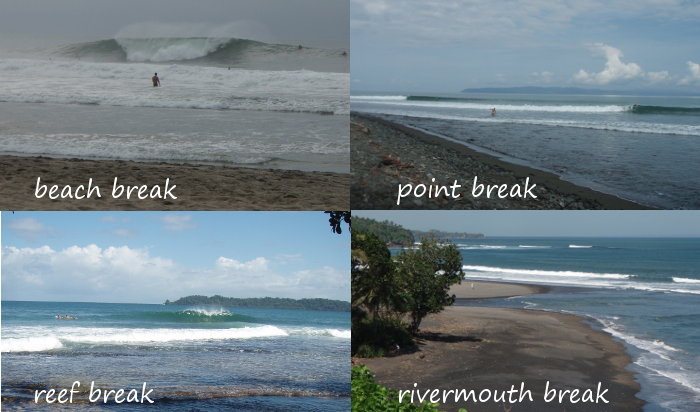
- Beach breaks: Wide sandy areas, waves breaking in many spots, often with families nearby.
- Point breaks: Rocky headlands or cliffs, waves peeling in one direction, often crowded with skilled surfers.
- Reef breaks: Clear water over visible reef patches, steep and fast waves, usually fewer beginners.
- River mouth breaks: Waves breaking near a river or estuary, sandbars visible at low tide.
- Artificial breaks: Obvious mechanical equipment or pool-like structures.
It’s smart to watch for 10-15 minutes before paddling out. Notice how and where waves break, and check where other surfers enter and exit.
Environmental Impact Of Surf Breaks
Surf breaks are not just playgrounds—they are also sensitive ecosystems. Reef breaks can be damaged by pollution or careless surfers stepping on coral. River mouth breaks can disappear if rivers are dammed or polluted. Even artificial breaks have an environmental cost, such as energy use and water demand. Surfers can help protect these spots by respecting local rules, picking up trash, and supporting conservation efforts.
For more about protecting surf environments, see the Surfrider Foundation.

Frequently Asked Questions
What’s The Safest Type Of Surf Break For Beginners?
Beach breaks with gentle waves and sandy bottoms are usually the safest for learning. Avoid days with large swells or strong currents.
Why Are Reef Breaks So Dangerous?
Reef breaks are risky because the waves break over sharp coral or rocks, often in shallow water. A wipeout can lead to cuts or serious injuries.
Can You Surf At Any Tide?
Not always. Some breaks only work well at certain tides. For example, a reef may be dangerous at low tide, while a beach break might be best at mid-tide. Always check local tide charts.
How Do Artificial Waves Compare To Ocean Breaks?
Artificial surf breaks offer reliable, perfect waves and can be safer. However, they don’t have the variety or “wild” feeling of the ocean.
What Is A “left” Or “right” In Surfing?
A left means the wave breaks to the surfer’s left as they face the shore; a right goes to the right. Some spots offer both, called A-frames.
Surf breaks are the heart of surfing. By understanding the different types, you not only improve your skills but also keep yourself safer and make every session more enjoyable. So next time you watch the waves, you’ll know what’s really shaping your ride.
