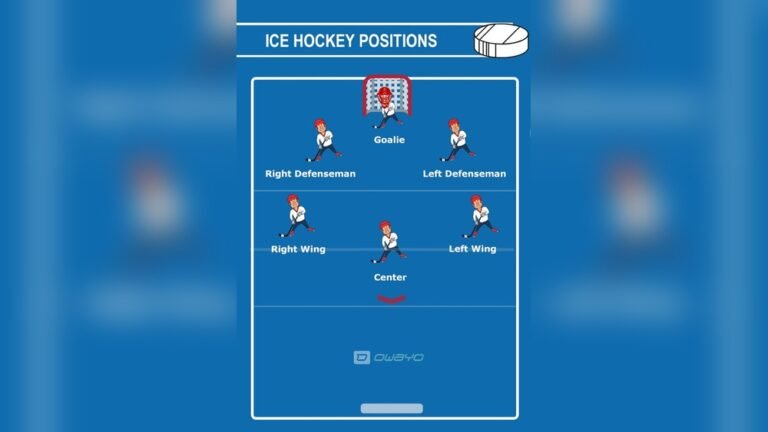
Ice hockey is a fast, complex sport that relies on teamwork and strategy. Understanding the different positions in ice hockey is key for anyone who wants to appreciate the game or play it well. Each position has a unique role and set of responsibilities.
By learning these, you can follow the action more closely and see how every player contributes to their team’s success.
The Main Positions In Ice Hockey
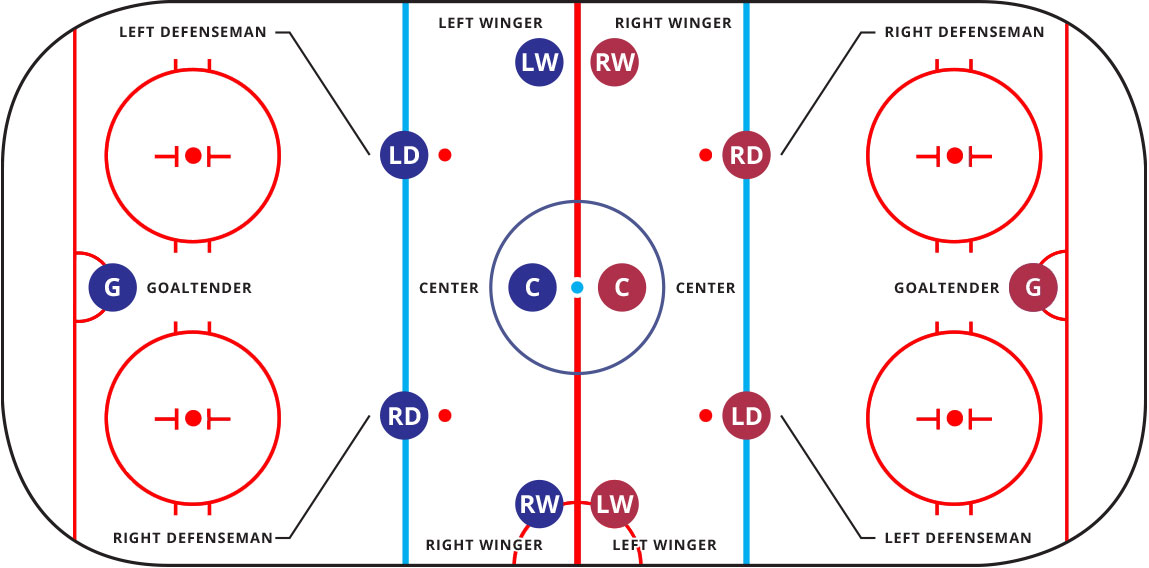
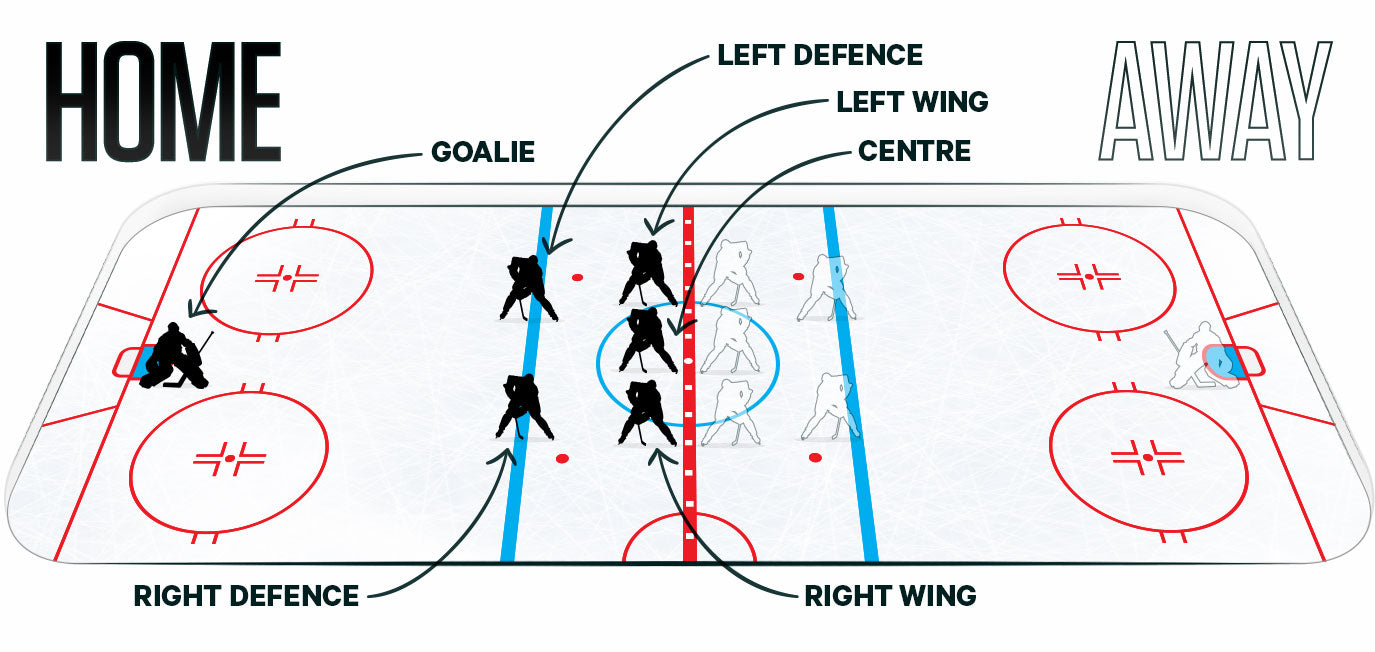
A standard ice hockey team has six players on the ice: three forwards, two defensemen, and one goaltender. Every position requires different skills, tactics, and mental approaches. Let’s explore each one in detail.
Forwards
Forwards are the main offensive players. They try to score goals and create chances for their team. Forwards are divided into three roles:
1. Center
The center is often seen as the leader on the ice. They take face-offs and play in the middle of the rink. Centers must be excellent skaters, good at passing, and strong defensively. They help both in attacking and defending. Famous NHL centers include Sidney Crosby and Connor McDavid.
2. Left Wing
The left wing plays to the left side of the center. Their main job is to support attacks and score goals from the left side. Left wings need to be quick, good shooters, and strong enough to battle for pucks along the boards.
3. Right Wing
The right wing mirrors the left wing but plays on the right side. Their tasks are similar: make plays, score, and defend when needed. Right wings often have powerful shots and quick reflexes. Some of the best scorers in history, like Brett Hull, played right wing.
Comparison Of Forward Roles
| Position | Main Responsibility | Key Skills |
|---|---|---|
| Center | Face-offs, playmaking, defense | Skating, passing, anticipation |
| Left Wing | Scoring, board battles, support | Shooting, speed, strength |
| Right Wing | Scoring, quick attacks, support | Shooting, agility, positioning |
Defensemen
There are two defensemen on the ice. Their main job is to stop the opposing team from scoring. They also help start attacks by passing the puck to the forwards.
1. Left Defenseman
The left defenseman stays on the left side. They block shots, make hits, and clear the puck from their zone. They often face the other team’s best forwards.
2. Right Defenseman
The right defenseman covers the right side. Their role is similar to the left defenseman, but they may have to make more passes along the boards. Both must be tough, smart, and quick thinkers.
Defensive Pairing Styles
| Pair Type | Strength | Weakness |
|---|---|---|
| Stay-at-home & Offensive | Balanced attack and defense | May lack speed on counterattack |
| Two-way & Two-way | Good support at both ends | Neither excels at one role |
| Physical & Puck-mover | Strong defense, fast transitions | Risk of defensive gaps |
Goaltender
The goaltender is the last line of defense. Their main job is to stop the puck from entering the net. Goaltenders need quick reflexes, focus, and courage. They face high-speed shots and must read the play. Great goalies, like Carey Price and Henrik Lundqvist, can keep their team in a game even when outplayed.
Goaltender Stats Example
| Goalie | Save Percentage | Goals Against Average |
|---|---|---|
| Andrei Vasilevskiy | .920 | 2.50 |
| Igor Shesterkin | .930 | 2.07 |
| Marc-Andre Fleury | .913 | 2.61 |
Special Teams: Power Play And Penalty Kill Roles
Ice hockey also has special teams, which are used during penalties. These include the power play (when your team has more players) and the penalty kill (when your team is short-handed).
- On a power play, teams use a formation with four forwards and one defenseman, or three forwards and two defensemen. The main focus is to create scoring chances.
- During a penalty kill, teams usually play two forwards and two defensemen. Their goal is to block shots and clear the puck.
Some players, like Patrice Bergeron, are known for their special teams skill. They read plays quickly and make smart decisions under pressure.
Other Important Roles
While the main positions are clear, there are roles within those positions that add depth to the game:
- Enforcer: Protects teammates and responds to rough play.
- Playmaker: Sets up scoring chances with vision and passing.
- Power Forward: Combines size, strength, and skill to dominate.
- Defensive Defenseman: Focuses on stopping opponents rather than scoring.
- Offensive Defenseman: Joins attacks and scores from the blue line.
These roles are not official positions but show how players adapt their game to help the team.
Non-obvious Insights
Many beginners think positions are fixed, but in reality, players must be flexible. Centers often cover for wingers, and defensemen can join attacks when needed. Another point is that goaltenders communicate constantly with their teammates, calling out plays and warning of threats. This unseen leadership can change the course of a game.
Also, special teams and changing lines (groups of three forwards and two defensemen who play together) are vital for energy and strategy. A team’s third or fourth line may play less, but their defensive work can be the difference in close games.
Frequently Asked Questions
What Is The Most Important Position In Ice Hockey?
Every position is important, but many experts say the goaltender has the biggest impact. A great goalie can win games almost single-handedly. However, without strong defense and offense, even the best goalie will struggle.
How Do Players Choose Their Position?
Usually, players try different roles when they are young. Coaches help them find the best fit based on their skills, size, and skating ability. Some players switch positions even in their professional career.
Can Defensemen Score Goals?
Yes, defensemen can and do score goals, especially offensive defensemen. They often shoot from the blue line during power plays or join the rush for surprise attacks.
What Is A “two-way” Player?
A two-way player is good at both offense and defense. Centers are often two-way players because they help all over the ice. Being strong in both areas is highly valued in modern hockey.
Where Can I Learn More About Ice Hockey Positions?
A good place to start is the official NHL website or resources like Wikipedia, which offers deeper explanations and diagrams.
Ice hockey positions may seem complex at first, but with a little study, you’ll start to see the patterns and strategies that make the game exciting. Whether you’re a new fan or an aspiring player, understanding these roles helps you appreciate every moment on the ice.
