
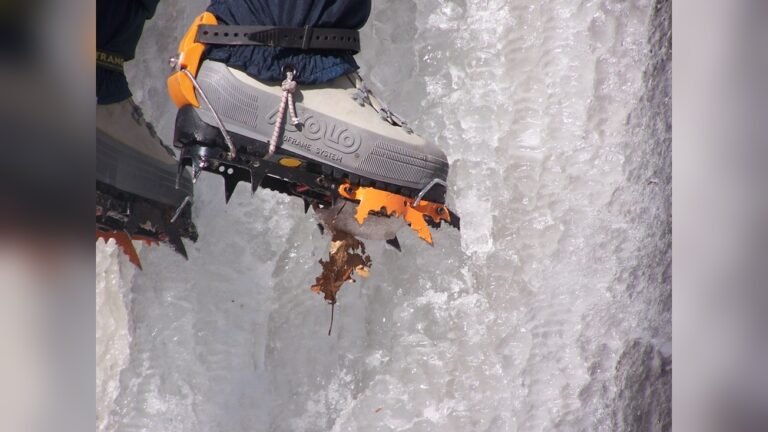
Ice climbing is one of the most thrilling and challenging mountain sports. When you see climbers moving up steep icefalls or frozen waterfalls, you might wonder how they manage to grip such slippery surfaces. The answer lies in specialized gear, and one of the most important tools is the crampon. If you are new to ice climbing or just curious about the equipment, understanding what crampons are and how they work can make a big difference in your knowledge and safety.
What Are Crampons?
Crampons are metal spikes that attach to the bottom of climbing boots. Their main job is to give climbers better grip and stability on ice, snow, and mixed surfaces. Without crampons, moving on ice would be like trying to run on a skating rink with normal shoes—slippery and dangerous.
The word “crampon” comes from the French word for “hook. ” They have been used for over a century, but today’s versions are far more advanced, using modern metals and clever designs.
Main Parts Of A Crampon
To understand crampons, it helps to know the basic parts:
- Front points: Sharp spikes at the toe for kicking into ice.
- Secondary points: Spikes under the ball and arch for stability.
- Heel points: Spikes at the back for grip when descending.
- Frame: The main structure, usually steel or aluminum.
- Binding system: How crampons attach to your boots (straps, clips, or levers).
- Anti-balling plates: Rubber or plastic sheets to stop snow from building up.
Each part has a specific role in helping you move safely on ice.

Why Are Crampons Needed In Ice Climbing?
Ice is naturally slippery and unstable. Even with the best boots, your feet cannot dig into ice or hard-packed snow. Here’s why crampons are vital:
- Traction: The sharp points bite into ice, preventing slips.
- Stability: Multiple spikes distribute your weight, so you are less likely to fall.
- Efficiency: With crampons, you waste less energy trying to balance, letting you focus on climbing.
- Safety: They reduce the chance of dangerous slides or uncontrolled falls.
Without crampons, ice climbing would be nearly impossible for most people.
Types Of Crampons
Not all crampons are the same. They come in different styles, each made for certain activities. The three main types are:
1. Strap-on Crampons
These use nylon webbing straps to attach to almost any boot. They are flexible and good for beginners or hiking on mixed terrain. However, they can be less stable on technical ice.
2. Step-in Crampons
Step-in crampons have a wire toe bail and a heel lever that clip onto special boots with welts or grooves. They are fast to put on and very secure, ideal for technical ice climbing. But they only work with boots designed for them.
3. Hybrid Or Semi-automatic Crampons
These combine a toe strap with a heel lever. They fit boots with a heel welt but not a toe welt. Hybrids offer a mix of flexibility and security, making them popular for many climbers.
Here’s a comparison of the main types:
| Type | Attachment Method | Boot Compatibility | Best For |
|---|---|---|---|
| Strap-On | Straps | Almost all boots | Hiking, beginners |
| Step-In | Toe bail + heel lever | Boots with toe and heel welts | Technical ice climbing |
| Hybrid | Toe strap + heel lever | Boots with heel welt | Mixed climbing |

Number And Shape Of Points
Most crampons have 10 to 12 points. The design and number of points affect how the crampons perform:
- 10-point crampons are lighter and better for walking or light climbing.
- 12-point crampons are stronger and offer more grip for steep or technical routes.
- Some technical models have more than 12 points for expert use.
The shape of the front points is also important:
- Horizontal points: Good for snow and soft ice.
- Vertical points: Better for hard, steep ice.
- Mono-point: A single front point for precision on very technical climbs.
Choosing the right point design depends on what kind of ice climbing you plan to do.
Crampon Materials
The material affects the weight, strength, and price of the crampon:
- Steel: Most durable and strong, good for technical ice and mixed climbing.
- Stainless steel: Adds corrosion resistance, stays shiny and lasts longer.
- Aluminum: Lighter, best for snow or glacier walking, but wears out faster on hard ice.
A quick comparison:
| Material | Weight | Durability | Best Use |
|---|---|---|---|
| Steel | Heavy | Very high | Technical climbing |
| Stainless Steel | Medium | High | General ice climbing |
| Aluminum | Light | Low | Snow/glacier travel |
Steel is the most common choice for serious ice climbers because of its strength.

How Crampons Attach To Boots
A good fit is essential for safety. If crampons are loose, they can fall off or shift, causing a fall. Each attachment type has pros and cons:
- Strap-on: Fits any boot but may feel less secure.
- Step-in: Very secure but needs special boots.
- Hybrid: Offers a balance; more secure than strap-on but more flexible than step-in.
Always test your crampons at home before going out. Some boots and crampons just don’t match well.
Anti-balling Plates: The Overlooked Safety Feature
One thing beginners often miss is anti-balling plates. When walking on wet snow, snow can stick under your crampons, creating a dangerous “ball” that removes all grip. Anti-balling plates stop this from happening by using slippery plastic or rubber.
Always check if your crampons have these plates, especially if you climb in mixed or wet conditions.
Fitting And Adjusting Crampons
Proper fitting is crucial. Here’s how to get it right:
- Size them to your boots: Most crampons have an adjustable bar in the middle.
- Check all straps or levers: Make sure they are tight but not cutting off circulation.
- Test movement: Walk around and kick into some ice or hard snow to test.
A common mistake is to ignore fit, thinking “close enough” is safe. Always double-check before every climb.
Using Crampons: Techniques For Ice Climbing
Simply wearing crampons is not enough. Proper technique makes a huge difference:
- Front-pointing: Kick the front points into the ice for steep climbs.
- Flat-footing: Keep your feet flat so all points grip on less steep ground.
- French technique: Used on low-angle ice, involves pointing feet sideways.
- Resting: Use your secondary points to stand comfortably and save energy.
Practicing these moves before your climb can prevent accidents and boost confidence.
Maintenance And Care
Crampons are tough, but they need care:
- Clean after use: Remove mud, snow, and salt.
- Dry thoroughly: Prevent rust, especially on steel models.
- Sharpen points: Use a file, not a grinder.
- Check for cracks: Metal fatigue can cause sudden failures.
- Store safely: Keep them in a pouch to avoid damaging other gear.
A pair of well-cared-for crampons can last many years, making them a wise investment.
Key Differences Between Hiking And Ice Climbing Crampons
It’s easy to confuse crampons for hiking with those for ice climbing. Here’s a quick look at the main differences:
| Feature | Hiking Crampons | Ice Climbing Crampons |
|---|---|---|
| Number of Points | 8-10 | 10-14 |
| Front Point Design | No or weak front points | Strong, aggressive front points |
| Materials | Often aluminum | Mainly steel |
| Binding System | Strap-on | Step-in/hybrid |
Using hiking crampons for ice climbing is risky and should be avoided.
Tips For Choosing The Right Crampons
- Match your boot: Not all crampons fit all boots. Check compatibility.
- Pick the right type: Beginners often start with strap-ons, but technical climbers need step-ins.
- Consider your climbing style: Steep waterfalls? Go for strong front points. Mixed routes? Look for modular designs.
- Weight matters: Lighter is not always better. Durability is key on hard ice.
- Budget: Quality matters more than saving a few dollars.
It’s easy to focus on price or looks, but performance and safety should guide your choice.
Common Mistakes Beginners Make
- Using the wrong crampon for the job: Hiking models on ice, or vice versa.
- Poor fit: Loose crampons can lead to accidents.
- Ignoring anti-balling plates: This can cause slips on wet snow.
- Not sharpening points: Dull points reduce grip.
- Skipping practice: Using crampons for the first time on a real climb is risky.
Even experienced climbers sometimes make these errors, so always double-check your gear.
Real-world Example
In 2023, a group of climbers on the famous Ouray Ice Park in Colorado reported a 30% reduction in accidents after switching to modern step-in crampons with anti-balling plates. This shows how the right gear can directly impact safety and performance.
Where To Learn More
If you want to dive deeper, the Wikipedia page on crampons offers a detailed history and technical background.
Frequently Asked Questions
What Is The Main Purpose Of Crampons In Ice Climbing?
Crampons provide traction and stability on ice. They let climbers grip and move safely on icy or snowy surfaces where normal boots would slide.
Can I Use Hiking Crampons For Ice Climbing?
No, hiking crampons lack the strong front points and durability needed for ice climbing. Always use crampons designed for technical climbing.
How Do I Know If My Boots Are Compatible With Step-in Crampons?
Your boots need toe and heel welts (grooves or ledges) for step-in crampons to fit. Check your boots or ask at a climbing shop for help.
How Often Should I Sharpen My Crampon Points?
Check before every trip. If points feel dull or slide off hard ice, it’s time to sharpen with a metal file.
Are Crampons Safe For Beginners?
Yes, but practice is key. Beginners should practice walking and climbing with crampons in a safe place before trying real ice climbs.
Ice climbing is an exciting sport, but the right gear makes all the difference. Crampons are a small but powerful tool that open up a new world of winter adventure. By understanding their types, features, and how to use them, you can climb with confidence and safety.
Whether you’re a beginner or looking to upgrade your equipment, knowing about crampons is the first step to success on the ice.
