Is Snowboarding Harder Than Skiing?
Standing at the base of a snowy mountain, you might wonder whether to strap on a snowboard or click into skis. It’s a common debate: is snowboarding harder than skiing? Both sports offer excitement, challenge, and the chance to glide down beautiful slopes, but they are not the same. Choosing one depends on your goals, body type, balance, and patience for falling and learning.
Many people say snowboarding is more difficult to learn at first, while skiing becomes more challenging to master later. But is this true for everyone? This article takes an in-depth look at how snowboarding and skiing compare—covering learning curves, physical demands, equipment, safety, and what new riders often overlook.
By the end, you’ll have a clear idea of which sport might be harder for you, and why.
The Basics: How Snowboarding And Skiing Differ
At first glance, both sports involve sliding down snow on a board or skis, but the techniques and equipment are very different.
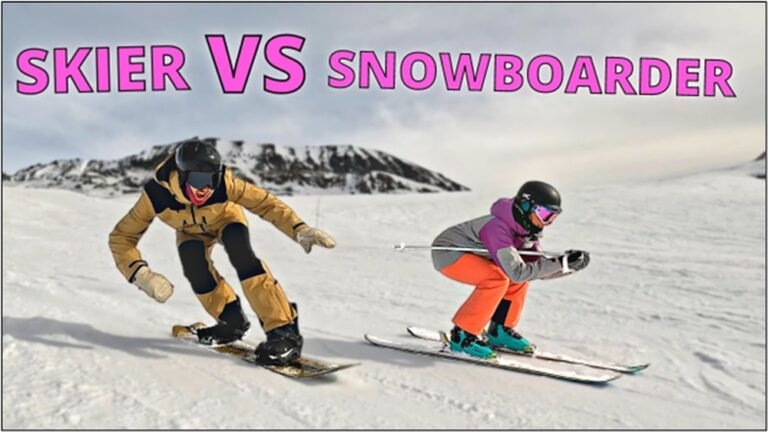
Skiers have one ski on each foot and use two poles for balance. Their bodies face forward, and their legs move independently. This makes it possible to keep one ski straight while turning the other, giving many beginners a feeling of control.
Snowboarders stand sideways on a single board, both feet strapped in, and use no poles. Turning means shifting your weight from heel to toe or vice versa. The sideways stance and lack of poles can make balance and movement feel strange for first-timers.
This basic difference shapes the learning process, safety risks, and even the type of fun you have on the slopes.
The Learning Curve: Which Is Easier To Learn?
Most instructors and resorts agree: skiing is easier to start but harder to master, while snowboarding is harder to begin but gets easier with time.
Skiing For Beginners
- Standing and moving: New skiers can often stand up, slide, and even stop on gentle slopes within their first hour. The split stance (one ski per foot) feels similar to walking. Poles give extra support.
- Turning and controlling speed: Basic turns are learned quickly, but advanced techniques (like parallel turns and carving) take longer to perfect.
- Chairlift use: Most beginners can ride the ski lift without much trouble.
Snowboarding For Beginners
- Standing and balance: First-timers often fall a lot just trying to stand up or slide. Both feet are locked on the board, so it feels less natural than walking.
- Turning and stopping: Learning to control the edges (heel and toe) is tricky. Many new snowboarders catch an edge and fall hard.
- Chairlift use: Getting off a lift on a snowboard is one of the hardest early challenges.
According to the National Ski Areas Association, beginners may spend the first two or three days on a snowboard mostly falling and getting up, while new skiers are able to link simple turns and stop sooner.
Non-obvious insight: People with skateboarding, surfing, or wakeboarding experience usually find snowboarding less intimidating, but this background rarely helps with skiing.

Physical Demands: Which Sport Is More Challenging?
Both sports use different muscles and require different types of fitness.
Muscles Used
- Skiing: Works the legs (quads, hamstrings), hips, core, and even arms (because of the poles). The split stance means you’re always adjusting your weight between both legs.
- Snowboarding: Uses the core and back muscles more for balance, plus the legs (especially calves and thighs) for turning and absorbing bumps.
Endurance And Fatigue
- Skiers tend to get tired in their thighs and knees, especially when making lots of turns or skiing on steeper slopes.
- Snowboarders often get sore in the calves and lower back, particularly when learning to edge and stand up repeatedly after falling.
Getting Up After A Fall
Snowboarders usually find it harder to get up after falling, especially on flat sections, because both feet are strapped in. Skiers can stand up more easily, but falls can result in twisted knees if not careful.
Non-obvious insight: People with good core strength adapt to snowboarding faster, while those with strong leg endurance often progress quickly in skiing.
Equipment: Which Is Easier To Handle?
Choosing equipment is a key part of the experience—and often overlooked when deciding which sport is harder.
Weight And Size
- Ski gear is bulkier. Skiers must manage two skis, two poles, and heavy boots, which can be awkward to carry and walk in.
- Snowboard gear is more compact—one board and boots—but walking in snowboard boots is usually easier.
Putting On And Taking Off
- Ski boots are stiff and can be hard to walk in, especially on stairs or ice.
- Snowboard boots are softer and more comfortable, but strapping in and out of bindings takes time, especially for beginners.
Getting On/off The Lift
- Skiers can slide straight into the lift line.
- Snowboarders often need to unstrap one foot, skate to the lift, and then re-strap at the top. Many beginners struggle with this.
Equipment Costs
Prices for both sports are similar, but renting or buying snowboard equipment can sometimes be cheaper because there are fewer items.
Progression: Which Sport Gets Easier Over Time?
The story changes after the first few days.
Skiing Progression
- Early progress is fast. Most people can control speed and make simple turns within a day.
- Intermediate and advanced skiing takes much longer to master, especially on steep slopes or in deep snow. Parallel turns, carving, and moguls require precise technique.
Snowboarding Progression
- Early progress is slow and painful, but after about three days, many snowboarders can link turns smoothly.
- Intermediate level is reached quickly after the basics. Freestyle tricks and powder riding take practice, but basic slope riding becomes comfortable sooner.
Data: A study by the National Ski Areas Association found that after one week, 70% of beginner snowboarders can ride easy slopes confidently, compared to 50% of beginner skiers at the same level.
Injuries And Safety: Which Is Riskier?
Safety is a top concern for anyone learning a new sport.
Common Injuries
- Skiing: Knee injuries are the most common, especially ACL tears. This is because the legs can twist independently. Thumb injuries (from falling with poles) are also frequent.
- Snowboarding: Wrist, shoulder, and tailbone injuries are most common. Beginners often fall backward or forward, using their hands to break falls.
Falling
- Skiers may fall less often when learning, but falls can be more dangerous because of the twisting motion.
- Snowboarders fall often, but most falls are forward or backward, not sideways.
Protective Gear
Wrist guards, padded shorts, and helmets are strongly recommended for snowboarders. Skiers should always wear a helmet and consider knee braces if they have a history of knee problems.
Stat: According to a report from the American Academy of Orthopaedic Surgeons, snowboarding has a higher overall injury rate, but skiing injuries tend to be more serious.
Learning Environment: Lessons, Terrain, And Weather
Lessons
- Ski lessons are widely available, and group classes often progress quickly.
- Snowboard lessons tend to be smaller, and instructors often give more one-on-one help due to the steep learning curve.
Terrain
- Skiers can handle flat areas and cat tracks (narrow, flat trails) more easily. Snowboarders struggle on flat terrain because they have to unstrap and walk or “skate” with one foot out.
- Snowboarders excel in powder and freestyle parks due to the board’s surface area.
Weather
- Icy conditions: Skiers can handle icy slopes better because they have two edges and poles for support.
- Deep powder: Snowboarders usually have an easier time floating on deep snow, which can be more challenging for beginner skiers.
Social Factors And Culture
Some people choose a sport based on what their friends do or the culture around it.
- Skiing has a longer history and is popular with families, older adults, and those who like groomed slopes.
- Snowboarding is often seen as youthful and energetic, with a focus on freestyle tricks, music, and park riding.
Neither culture is “better,” but if your friends all snowboard, you may learn faster by joining them—and vice versa.

Table: Quick Comparison Of Key Differences
Below is a comparison to help you see the main differences at a glance.
| Aspect | Skiing | Snowboarding |
|---|---|---|
| Learning Curve | Easy start, harder to master | Hard start, easier later |
| Common Injuries | Knees, thumbs | Wrists, tailbone |
| Equipment | Bulky, more items | Compact, fewer items |
| Best Terrain | Groomed, icy slopes | Powder, freestyle parks |
| Chairlift Use | Easier | Harder for beginners |
Table: Progression Timeline For Beginners
How long does it take to reach “comfortable” on easy slopes?
| Days on Snow | Skiers (%) Confident | Snowboarders (%) Confident |
|---|---|---|
| Day 1 | 20 | 10 |
| Day 3 | 45 | 35 |
| Day 7 | 50 | 70 |
Table: Common Mistakes And How To Avoid Them
Many beginners make similar errors. Here’s what to watch for.
| Mistake | Skiing | Snowboarding |
|---|---|---|
| Poor stance | Leaning back too much | Standing upright, not bending knees |
| Ignoring lessons | Skipping basics, bad habits form | Not learning to fall safely |
| Wrong equipment size | Skis too long/hard to control | Board too wide or long for body size |
| No protective gear | No helmet | No wrist guards or padded shorts |
So, Is Snowboarding Really Harder Than Skiing?
There’s no universal answer. For most adults and kids:
- Skiing is usually easier at the very beginning. You’ll likely stand, slide, and turn on your first day, and falls feel less severe.
- Snowboarding is more frustrating and physically demanding at first. The first few days involve lots of falling and slow progress. But if you stick with it, you may reach an intermediate level faster.
Your background matters. If you’ve skateboarded or surfed, snowboarding will feel more familiar. If you have strong legs and good balance, both sports are within reach.
What beginners miss: The hardest part of snowboarding is not the riding—it’s the constant standing up and getting off lifts. For skiing, the challenge comes later, when you want to progress past the beginner stage.
No matter which sport you choose, lessons, the right equipment, and patience are the keys to success. Trying both for a day at a rental shop is the best way to decide.
If you want more in-depth statistics and advice, the Wikipedia comparison page is a helpful resource.
Frequently Asked Questions
Is Snowboarding More Dangerous Than Skiing For Beginners?
Both sports carry risks, but the types of injuries are different. Snowboarders often injure wrists and tailbones due to falling forward or backward, while skiers are more likely to hurt their knees. Wearing protective gear and taking lessons reduces the risk in both sports.
Can You Learn To Ski And Snowboard At The Same Time?
It’s possible, but not recommended for true beginners. Each sport uses different muscles, balance, and techniques. Focusing on one will help you progress faster and avoid confusion.
How Long Does It Take To Become Comfortable On A Snowboard Compared To Skis?
Most people need 2-3 days of lessons to feel comfortable on skis, and 3-5 days on a snowboard. However, after the initial learning curve, snowboarders often progress to intermediate riding more quickly.
Are There Age Limits For Learning Skiing Or Snowboarding?
No, both can be learned at almost any age. Children as young as 3 can start skiing, and many people learn snowboarding in their teens or later. Older adults can enjoy both sports with the right instruction and equipment.
Does Weather Affect Which Sport Is Harder?
Yes. Skiers do better on icy slopes, while snowboarders have an easier time in deep powder. Flat areas are challenging for snowboarders, especially in warm, sticky snow. Always choose the sport that matches the conditions if you want an easier day.
Whether you choose skis or a board, the mountain offers fun and challenge for everyone. Try both if you can—and enjoy the ride!
