
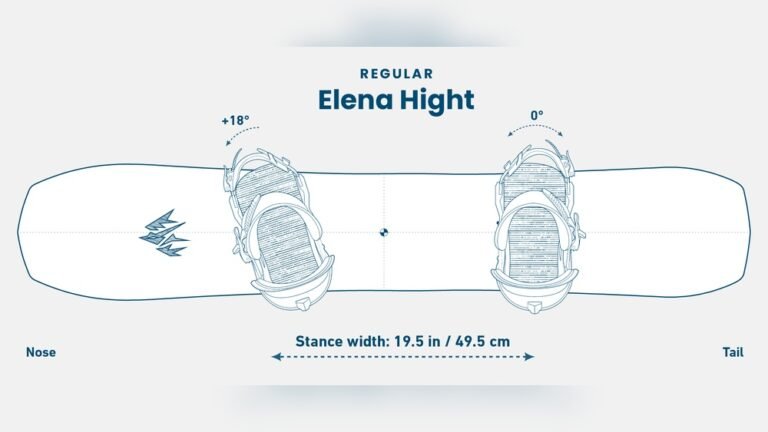
Finding the right snowboard stance width can change how you ride, turn, and balance on your board. Many beginners just copy what they see on rental boards, but the perfect stance is not the same for everyone. It depends on your body, skill level, riding style, and even the snow conditions. Understanding how wide your snowboard stance should be will help you ride with more comfort, control, and fun.
Some riders spend years with the wrong stance, leading to poor technique and even knee or hip pain. But with a bit of guidance, you can quickly find your own ideal setup. This article will break down everything you need to know, from measuring your stance to adjusting it for freestyle or all-mountain riding.
You’ll also learn about common mistakes and how small changes can make a big difference.
What Is Snowboard Stance Width?
Your stance width is the distance between the centers of your two bindings on the snowboard. It is usually measured from the center of one binding’s disc to the other. This measurement is important because it affects your stability, turning ability, and comfort.
A stance that is too wide can make turns harder and put stress on your knees. Too narrow, and you lose balance and control. Finding the right width is about matching the board to your body, not just copying someone else’s setup.
Why Stance Width Matters
The stance width is not just a number. It changes how your body moves with the snowboard. Here’s why it’s so important:
- Balance: Too narrow and you wobble; too wide and you feel locked.
- Turning: The width affects how quickly you can shift your weight to start a turn.
- Pressure on Joints: The wrong stance forces your knees, hips, and ankles to work in uncomfortable angles.
- Board Control: Freestyle riders often use a wider stance for more control, while carvers may go narrower for quick edge changes.
Many people don’t realize that a small change in stance width can solve problems like toe drag, heel drag, or even fatigue after riding.
How To Measure Your Ideal Stance Width
Finding your correct snowboard stance width starts with your body. Here are three common methods:
1. Shoulder Width Method
Stand up straight and measure the distance between the outsides of your shoulders. For many, this is a good starting point for stance width.
2. Height-based Calculation
A common formula is to take your height in centimeters and multiply by 0.27. For example, if you are 170 cm tall:
170 X 0.27 = 45.9 Cm Stance Width
This is just a guideline, not a strict rule.
3. Jump Test
Jump into the air and land comfortably, as if you were about to squat. Look at where your feet land. This is often your natural stance width.
Which Method Is Best?
Most riders start with the shoulder width or height-based calculation, then fine-tune based on how they feel on the snow. The jump test is good for finding a width that feels natural, especially for freestyle riders.
Common Stance Width Ranges
For most adults, the stance width falls between 46 cm and 58 cm. Beginners often start near the lower end, while advanced riders may go wider for tricks or stability.
Here’s a quick comparison:
| Rider Height | Typical Stance Width (cm) | Riding Style |
|---|---|---|
| 150-160 cm | 44-49 | All-mountain, beginner |
| 161-170 cm | 46-52 | Freestyle, all-mountain |
| 171-180 cm | 50-56 | Freeride, park |
| 181-190 cm | 54-58 | Stability, jumps |
Remember, these are only guidelines. Your comfort and riding style are more important than a fixed number.

How Riding Style Affects Stance Width
Your riding style is a big factor. Let’s look at how different styles influence stance width:
Freestyle
Freestyle riders often use a wider stance, usually 2-4 cm wider than shoulder width. This gives more control for spins and jumps.
Freeride
Freeride (riding off-trail) often works better with a slightly narrower stance. This helps with quick turns and carving in deep snow.
All-mountain
All-mountain riders usually choose a stance near their shoulder width. It’s a balance between stability and maneuverability.
Park Riding
Park riders like a wider stance for landing jumps and riding rails. But too wide can limit your turning power.
Adjusting Stance Width: Step-by-step
Changing your stance is simple but requires careful steps:
- Loosen the binding screws.
- Slide the bindings wider or narrower, using the board’s reference marks.
- Tighten the screws, ensuring the bindings are centered.
- Stand on the board and see how it feels.
- Test on snow for at least 2-3 runs before making more changes.
Small adjustments (about 1 cm at a time) are best. Your body may need time to adapt to a new stance.
Stance Width And Board Flex
Many riders miss this: your stance width changes the flex of your snowboard. Most boards are designed to flex best when your bindings are near the “reference stance” marked by the brand.
If you go much wider or narrower, the board may not flex as the designer intended. This can affect edge grip and pop.
| Stance Position | Board Flex | Effect |
|---|---|---|
| Reference (centered) | Natural flex | Best performance |
| Wider than reference | Stiffens board center | More stable, less playful |
| Narrower than reference | Softer board center | Easier turns, less stability |
Common Mistakes When Setting Stance Width
Many beginners and even some experienced riders make the following mistakes:
- Copying pros or friends without thinking about their own body.
- Ignoring pain or fatigue: Knee or hip pain is often a sign your stance is wrong.
- Not testing adjustments: It takes a few runs to know if a change works.
- Going too wide: It can look cool but makes riding harder for many people.
- Not centering bindings: Your stance should be centered on the board for most types of riding.
A non-obvious insight: Some riders keep their old stance for years, even as their body or skill level changes. Re-check your stance every season.
How Boot Size And Angles Affect Stance Width
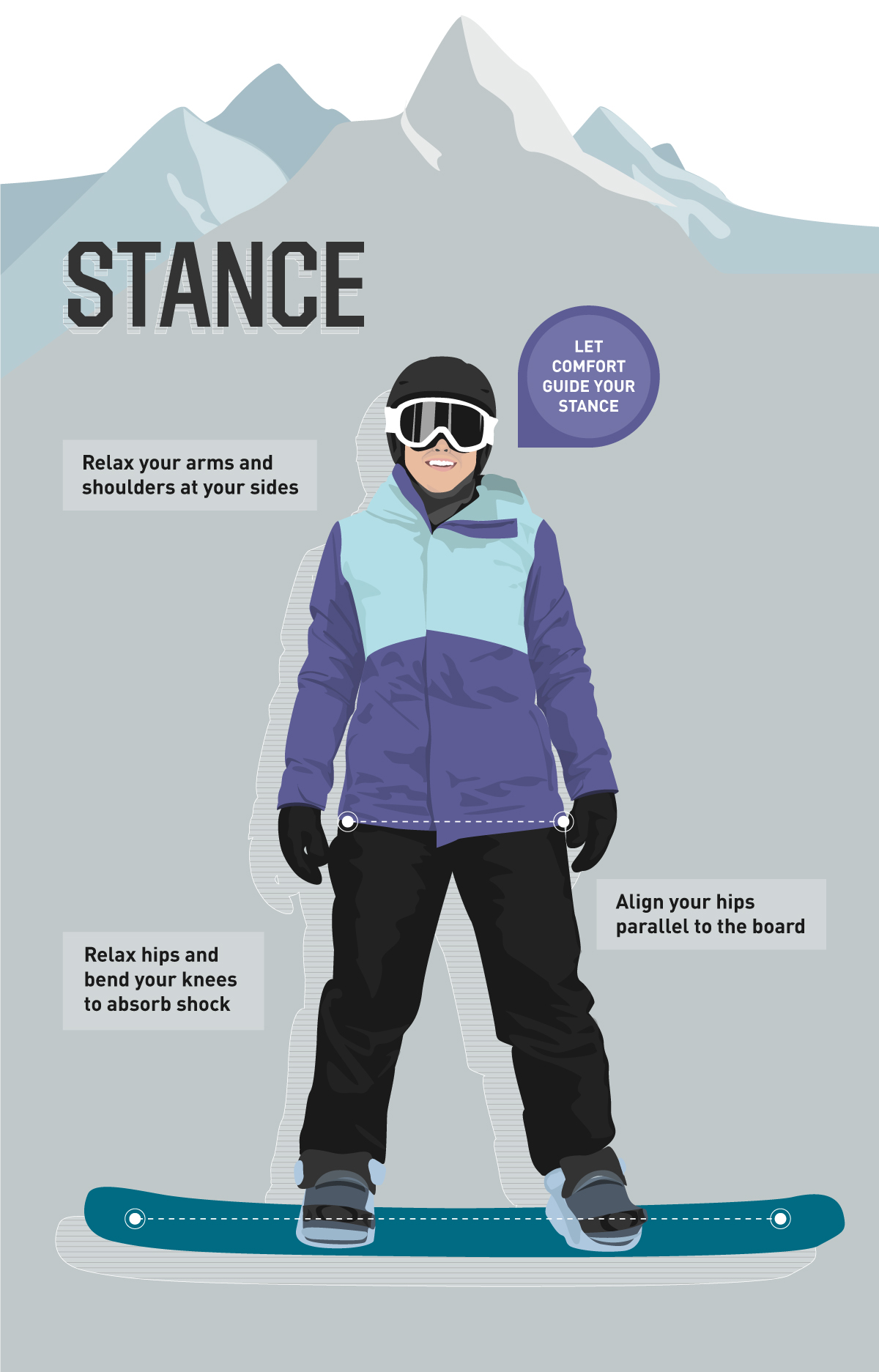
Your boot size and binding angles also play a role. Larger boots may require a wider stance to avoid dragging your toes or heels in the snow, especially on narrow boards.
Binding angles (like +15° front, -6° back) do not change your stance width directly, but they affect how your knees and hips line up. If you ride “duck stance” (toes out, heels in), you may feel better with a slightly wider width.
How To Fine-tune Your Stance Width
After you find a starting point, make small changes and pay attention to:
- How your knees feel after a long day
- Balance when riding switch (opposite foot forward)
- Power when carving or jumping
- Comfort when standing still
Write down your settings after each adjustment. This helps you remember what worked and what didn’t.
Youth And Women’s Snowboard Stance Width
Younger riders and many women have narrower hips and shorter legs. Their stance width will often be less than adult men of the same height. Most brands offer women-specific boards with reference stances that match average hip width and leg length.
For kids, always start with a stance close to shoulder width. It’s better to go a little narrower and widen later as they grow and improve.
Stance Width For Different Snowboards
Snowboards come in different shapes: twin, directional, and volume-shifted. Each type may have a different reference stance.
- Twin boards (same nose and tail): Center your stance for best balance.
- Directional boards: Often have a setback stance (closer to the tail) for deep snow or carving.
- Volume-shifted boards: Short and wide, sometimes need a slightly wider stance to stay centered.
Always check the manufacturer’s recommended stance for your board model.
Testing And Adjusting On The Mountain
Real testing is done on snow. Bring a screwdriver so you can make small changes during the day. Try different terrain (groomers, powder, park) to see how your stance feels. If you feel pain, fatigue, or lack of control, try moving your bindings in or out by 1 cm.
A good stance should let you ride all day without discomfort.
How Professionals Set Their Stance
Professional riders often experiment with their stance width for weeks before a big competition. They work with boot fitters, coaches, and board techs to find the best setup for their style and the course.
But remember, their body shape, flexibility, and board are unique. Use pro setups for inspiration, but always adjust for your own needs.
Data And Research On Stance Width
Research shows that a stance width about 25% to 27% of your height gives most riders the best balance between power and mobility. A study of competitive snowboarders found that those with the right stance had better jump landings and fewer injuries.
Another insight: As riders improve, they sometimes prefer a slightly wider stance for aggressive riding, but too wide can lead to knee problems over time.
For more technical details and biomechanics, you can read about snowboard stance in this Wikipedia article.
Quick Reference: Stance Width By Height
Here’s a handy comparison to check your starting stance width:
| Height (cm) | Stance Width (cm) | Notes |
|---|---|---|
| 150 | 40-44 | Kids/Small adults |
| 160 | 43-48 | Teens/Women |
| 170 | 46-51 | Average adult |
| 180 | 48-54 | Taller riders |
| 190 | 51-58 | Very tall riders |

Frequently Asked Questions
What Is The Best Snowboard Stance Width For Beginners?
Most beginners do well with a stance about shoulder width apart, or around 25-27% of their height. This gives good balance and control. You can adjust wider or narrower as you gain experience.
Can A Stance That Is Too Wide Hurt My Knees?
Yes, a stance that is much wider than your natural position can stress your knees and hips. If you feel pain, try narrowing your stance by 1-2 cm and see if it helps.
How Do I Know If My Stance Width Is Wrong?
Signs of a wrong stance include knee or hip pain, feeling unstable, or having trouble making smooth turns. If you feel tired quickly or your board feels hard to control, check your stance width.
Does Stance Width Change For Park, Powder, Or Carving?
Yes. Park and freestyle riders often go a bit wider for stability on jumps. Carvers and powder riders may go narrower for faster edge-to-edge movement. Adjust based on your riding style.
Should My Stance Width Change As I Get Better?
As you improve, you might find a slightly wider stance helps with tricks or stability at high speeds. But always listen to your body—comfort and control are more important than copying advanced setups.
Choosing the right snowboard stance width is not just about numbers. It’s about how you feel on your board and how your body moves. Start with a recommended width, test it on the mountain, and make small changes until you find what works best. A good stance gives you confidence, reduces injury risk, and makes every ride more fun. Don’t be afraid to experiment—your perfect stance could be just a few centimeters away.
