Snowboarding is an amazing way to enjoy winter. The sound of your board slicing through fresh powder, the rush of cold air on your face, and stunning mountain views make for an unforgettable experience. But there’s one thing that can ruin a perfect day on the slopes: getting cold. Staying warm is not just about comfort—it’s about safety and performance too. If you want to ride longer, avoid injuries, and actually have fun, knowing how to stay warm while snowboarding is essential.
Many riders, especially beginners, think more layers mean more warmth. But it’s not that simple. Sweat, wind, and even the wrong socks can make you shiver, no matter how much you wear. This guide will show you exactly how to stay warm, from choosing the right gear to what you eat and drink, and even how you move on the mountain.
Whether you’re a new snowboarder or looking to solve old cold-weather problems, you’ll find practical tips and a few insider secrets here.
Understanding The Cold On The Slopes
Before you learn how to stay warm, it helps to understand why you get cold while snowboarding. The mountain environment is unique. Temperatures can be much lower than in the city. Wind chill can make it feel even colder, and snow soaks through clothing quickly if you fall.
Plus, when you ride up on chairlifts, you’re exposed to the wind and sitting still, which cools your body fast.
Another important factor: your body sweats even in the cold. If sweat stays trapped, it cools down, pulling heat from your body. That’s why proper clothing and a few smart habits matter more than simply piling on layers.
Layering: The Foundation Of Warmth
The most important secret to staying warm is layering—wearing several pieces of clothing designed to work together. Each layer has a specific job.
Base Layer: Moisture Management
The base layer touches your skin. Its main job is to pull sweat away from your body so you stay dry. Dry skin stays warm. Look for:
- Materials: Merino wool or synthetic fabrics like polyester. Avoid cotton—it holds moisture and cools you down.
- Fit: Snug but not tight.
For most snowboarders, a midweight base layer works well. On very cold days, use heavyweight, but remember that too much can cause overheating and sweating.
Mid Layer: Insulation
The mid layer traps body heat. This can be a fleece, down, or synthetic jacket. Fleece is popular because it’s light and warm even when wet. Down is warmer but loses heat if it gets wet.
Tip: For high-intensity riding, use a thinner mid-layer. For slow, cold days, a thicker one.
Outer Layer: Weather Protection
The outer layer, or snowboard jacket and pants, should block wind and keep out snow. Look for:
- Waterproofing: Materials like Gore-Tex or other waterproof/breathable fabrics.
- Windproofing: A must for chairlifts.
- Vents: Zippers under the arms or along the legs for air flow, so you can cool off if you get too hot.
Accessories: Head, Hands, Feet
Don’t forget the small things—they make a big difference.
- Helmet liner or balaclava: Keeps head and ears warm.
- Goggles: Seal out wind and snow.
- Neck gaiter or scarf: Prevents cold air from sneaking in.
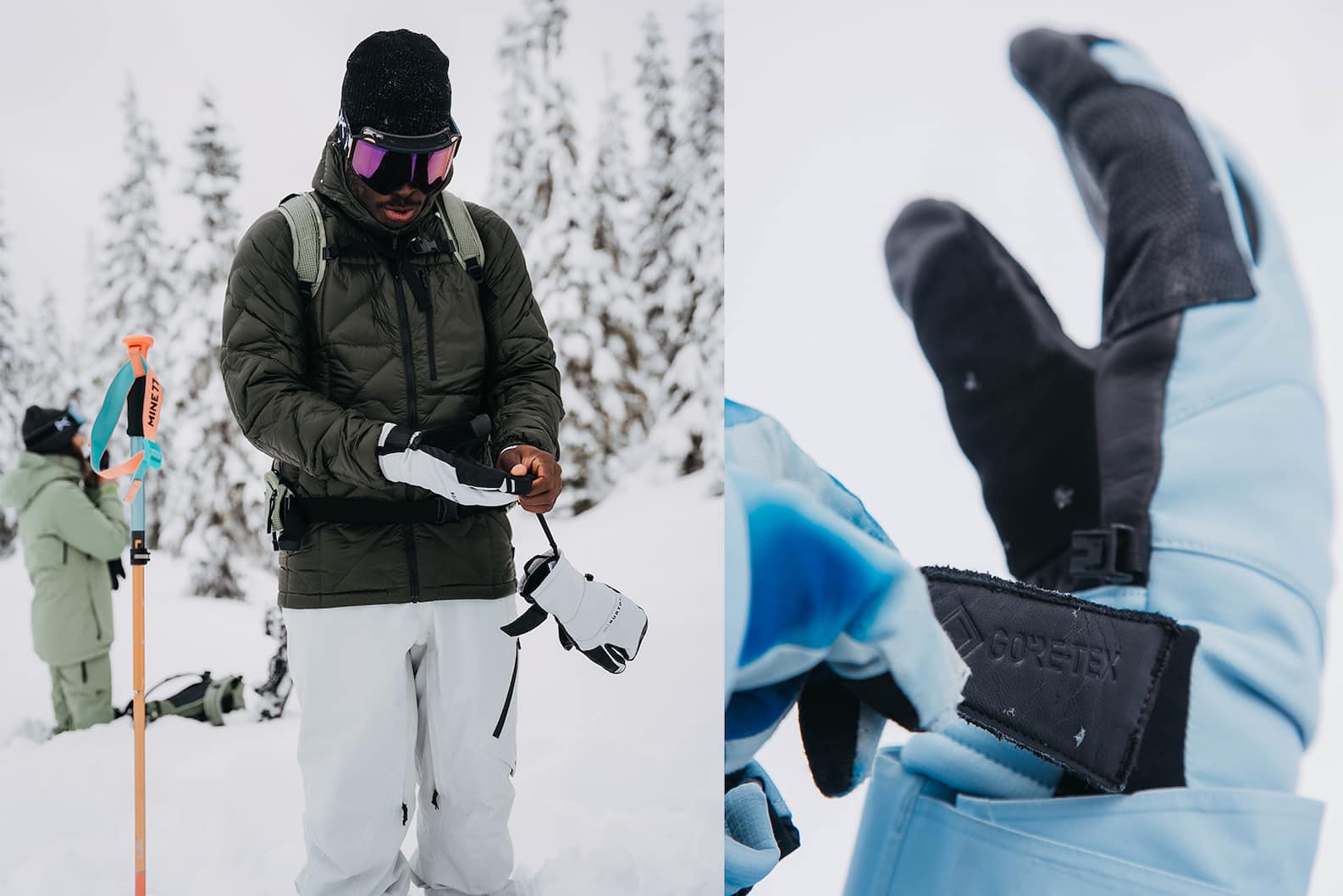
- Gloves or mittens: Mittens are warmer than gloves for most people.
- Socks: One pair of thick, synthetic or wool socks—never wear two pairs as it cuts off circulation.
Here’s a quick reference for materials:
| Clothing Item | Best Material | What to Avoid |
|---|---|---|
| Base Layer | Merino wool, Polyester | Cotton |
| Mid Layer | Fleece, Down, Synthetic | Cotton |
| Outer Layer | Waterproof/Breathable (Gore-Tex) | Non-waterproof |
| Socks | Wool, Synthetic blend | Cotton, Multiple pairs |
Choosing The Right Gear
All snowboarding gear is not created equal. Here’s what matters most.
Snowboard Jacket And Pants
A good snowboard jacket and pants are your first defense against cold and wetness. Look for:
- Waterproof rating: At least 10,000mm is decent; 15,000mm or more is better for wet snow.
- Breathability: Keeps sweat moving out. 8,000g or higher is good.
- Sealed seams: Prevent snow from getting in.
- Powder skirt: Stops snow from going up your back.
Gloves Vs. Mittens
Mittens are warmer because fingers share heat, but gloves give better grip and control. On very cold days, mittens with liners work best. Some gloves have hand warmer pockets—a big plus.
Helmets And Head Protection
A helmet does more than protect from falls—it keeps your head warm. Modern helmets have adjustable vents and ear pads. Add a thin beanie or balaclava for extra insulation.
Boots And Socks
Cold feet end your day fast. Make sure boots fit snugly but don’t cut off circulation. Use a single pair of warm, moisture-wicking socks. Too-tight boots or wearing two pairs of socks can make feet colder.
For very cold conditions, consider boot heaters or disposable foot warmers.
Comparison: Gloves Vs. Mittens
| Feature | Gloves | Mittens |
|---|---|---|
| Warmth | Good | Excellent |
| Dexterity | High | Medium |
| Use with Touchscreens | Easier | Harder |
| Best For | Mild to cold days | Very cold days |
Smart Habits For Staying Warm
Gear matters, but how you use it can make you warmer or colder. These habits separate comfortable snowboarders from the ones who freeze.
Dress At The Last Minute
Don’t gear up fully in the warm lodge. You’ll start sweating before you hit the snow. Put on your jacket, gloves, and helmet just before stepping outside.
Keep Moving
Your body creates heat when you move. If you stop too long, especially on lifts or waiting for friends, you’ll cool down fast. Swing your arms, wiggle your toes, and gently move fingers to keep blood flowing.
Use Hand And Foot Warmers
Disposable warmers are a lifesaver on very cold days. Place them in gloves or boots, but never against bare skin.
Dry Out During Breaks
If you take a break, open your jacket and remove gloves. Let sweat evaporate, then close up before heading back outside. This prevents dampness from chilling you.
Avoid Alcohol And Caffeine
Alcohol can make you feel warm but actually lowers your core temperature. Caffeine reduces circulation to fingers and toes. Drink water or warm tea instead.
Nutrition And Hydration
What you eat and drink impacts how warm you feel. Calories are fuel for your body’s heater.
- Eat a good breakfast: Oatmeal, eggs, or whole grain toast give lasting energy.
- Snack often: Nuts, chocolate, and energy bars keep your metabolism working.
- Stay hydrated: Dehydration makes you cold. Carry a water bottle and take sips all day.
- Warm drinks: Herbal teas or warm water help, but avoid too much coffee.
Non-obvious insight: If you start shivering, eat a quick snack. Sometimes your body needs fast energy to make more heat.
Taking Care Of Extremities
Your fingers, toes, and face are the first to get cold. Here’s how to protect them:
- Keep gloves and socks dry: Wet gear chills fast. Carry a spare pair if possible.
- Use glove liners: Thin liners add warmth without bulk.
- Protect your face: Windburn and frostbite are real risks. Use a face mask or balaclava.
- Check for numbness: If fingers or toes go numb, go indoors right away. Warm them gradually—don’t use hot water, which can cause injury.

Common Mistakes Snowboarders Make
Even experienced riders make errors that lead to getting cold. Avoid these:
- Wearing cotton anywhere: Even underwear or a t-shirt can ruin your layering.
- Doubling up on socks: This cuts off blood flow and makes feet colder.
- Not adjusting layers: If you sweat, remove a layer before you get soaked.
- Ignoring weather forecasts: Wind and humidity change what you need.
- Waiting too long to eat or drink: Hunger and thirst lower your body’s defense against cold.
When To Call It A Day
Sometimes, the best way to stay warm is to stop. If you start shivering uncontrollably, can’t feel your fingers or toes, or your skin turns white or gray, go inside. Frostbite and hypothermia are serious risks, even for advanced snowboarders.
Extra Tips For Staying Warm
- Pre-warm gear: Store gloves and boots near a heater before you put them on.
- Use your jacket pockets: Tuck hands in pockets to boost warmth between runs.
- Layer your face protection: Combine goggles, balaclava, and a neck gaiter.
- Don’t forget sunscreen: Sunburn increases heat loss.
Here’s a quick overview comparing key strategies:
| Strategy | When to Use | Effectiveness |
|---|---|---|
| Layering | All conditions | High |
| Hand warmers | Very cold days | Medium |
| Moving regularly | Anytime stopped | High |
| Eating snacks | Low energy | Medium |
| Drinking water | All day | High |
Frequently Asked Questions
How Many Layers Should I Wear For Snowboarding?
Most snowboarders do well with three layers: a base layer, a mid-layer, and an outer layer. Adjust thickness based on weather—use heavier layers for very cold days, lighter for mild days.
Can I Wear Regular Winter Clothes For Snowboarding?
Regular winter clothes often lack waterproofing and breathability. Snowboard-specific gear is designed to keep you dry and comfortable, even after falls or heavy snow.
What Should I Do If My Hands Or Feet Get Very Cold?
Go inside immediately. Remove wet gear, warm up slowly with dry gloves or socks, and avoid direct heat sources. If numbness continues, seek medical help for possible frostbite.
Are Heated Gloves Or Boots Worth It?
Heated gloves and boots can be very effective, especially for people with poor circulation. They’re more expensive but can keep you riding longer in extreme cold.
Where Can I Learn More About Snowboarding Safety And Gear?
A great resource for in-depth gear advice and safety tips is the REI Snowboarding Advice Center.
Staying warm while snowboarding is about smart choices, not just thick jackets. With the right layers, habits, and gear, you’ll be ready to enjoy every run—no matter how low the temperature drops. Remember, comfort and safety go hand in hand.
Happy riding!