
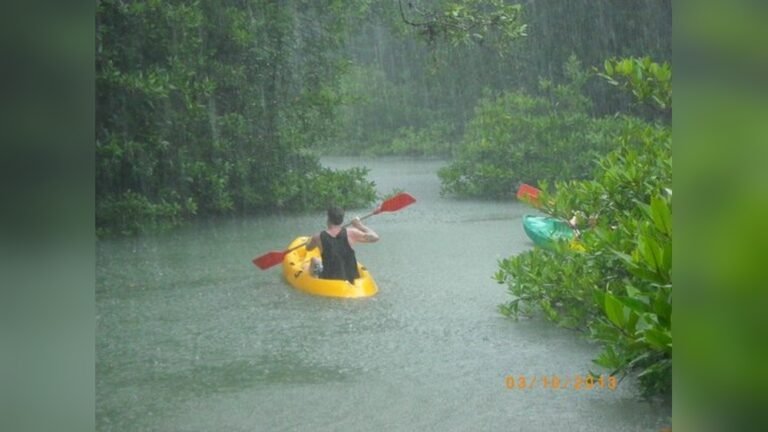
Kayaking in the rain might sound challenging, but it can be a thrilling experience if you know how to stay safe and comfortable. The sound of raindrops on the water creates a unique atmosphere, and the scenery changes in fascinating ways.
Many experienced kayakers say paddling in wet weather helps them connect more deeply with nature. However, rain brings extra risks and requires careful preparation. Whether you are a beginner or have some paddling experience, understanding how to kayak in the rain will help you enjoy the adventure while minimizing dangers.
Is It Safe To Kayak In The Rain?
Safety is the first concern when kayaking in rainy conditions. The truth is, kayaking in light or moderate rain is usually safe if you prepare well. However, heavy storms, lightning, and high winds can make paddling dangerous. Always check the weather forecast before heading out. If there is a risk of thunderstorms, avoid kayaking entirely. Rain reduces visibility, so make sure you have bright clothing and signaling devices. Also, remember that rain can cause water levels to rise and currents to get stronger, especially in rivers. If you are kayaking in an area with fast-moving water, be extra cautious.
A useful tip many beginners miss is to always have an exit plan. Know where you can safely get out of the water if conditions worsen. Rain can create slippery banks, so choose landing spots carefully. Another non-obvious insight is that rain often reduces boat traffic, which can actually make some areas safer for paddling, as long as you avoid strong currents.
How Rain Changes The Kayaking Experience
Rain affects kayaking in several ways. First, it cools both the air and the water, which means you can get cold faster. Second, rain makes surfaces slippery, increasing the risk of falls when entering or exiting your kayak. Third, it dampens sounds, so you may not hear approaching boats or wildlife as easily.
Visibility drops, both for you and others on the water, so be extra alert. Finally, rain can wash debris into rivers and lakes, so watch for floating branches or trash.
Some kayakers find the rain calming, while others find it stressful. If you are new to kayaking in the rain, start with short trips close to shore. This way, you can get used to the conditions without taking big risks.

Essential Gear For Kayaking In Rain
Having the right gear makes all the difference when paddling in wet weather. Here’s what you need:
- Waterproof clothing: Wear a rain jacket and pants made from breathable, waterproof material. Avoid cotton—it stays wet and cold.
- Dry bags: Keep your valuables and extra clothing in dry bags. This protects them from rain and splashes.
- Hat with brim: A wide-brimmed hat helps keep rain out of your eyes.
- Gloves: Waterproof paddling gloves protect your hands and help you grip the paddle.
- Bright colors: Choose gear in bright colors for visibility.
- Personal flotation device (PFD): Always wear a PFD, rain or shine.
- Spray skirt: For sit-in kayaks, a spray skirt keeps water out of the cockpit.
- First aid kit: Rain increases the risk of slips and minor injuries, so carry a small first aid kit.
- Emergency whistle: If visibility drops, a whistle helps you signal for help.
- Backup paddle: Rain can make paddles slippery, so bring a spare.
A mistake many beginners make is forgetting spare dry clothes. If you get soaked, changing into dry clothing can prevent hypothermia.
Choosing The Right Kayak For Rainy Weather
Not all kayaks handle rain equally well. Let’s compare different types:
| Kayak Type | Rain Suitability | Pros | Cons |
|---|---|---|---|
| Sit-in Kayak | Best | Protected from rain, stays warmer | Needs spray skirt, harder to exit |
| Sit-on-top Kayak | Fair | Easy to get on/off, good for warm rain | Exposed to rain, gets colder |
| Inflatable Kayak | Good | Lightweight, easy to store | Can collect water, less stable in wind |
For rainy conditions, a sit-in kayak with a spray skirt offers the most protection. If you use a sit-on-top, dress warmly and plan short trips. Inflatable kayaks are fine for calm lakes but avoid them in strong currents or wind.
Preparing For Rainy Kayaking
Preparation is key for a safe and enjoyable trip. Here’s how to get ready:
- Check the weather: Look for updates right before you launch.
- Plan your route: Choose areas with easy exits and shelter nearby.
- Tell someone your plan: Let a friend or family member know where you’ll be and when you expect to return.
- Pack extra: Bring more water, snacks, and dry clothes than usual.
- Inspect your gear: Make sure everything is waterproof and in good shape.
- Check water levels: Rain can change river conditions fast. Research local water levels and warnings.
- Practice wet exits: Know how to leave your kayak safely if it fills with water.
Many beginners overlook the importance of checking river flow rates after heavy rain. Flooded rivers can be very dangerous, even if they look calm on the surface.
Techniques For Kayaking In The Rain
When paddling in wet weather, adjust your technique for safety and comfort:
- Paddle smoothly: Avoid sudden movements, as wet gear can slip.
- Stay low: Keep your center of gravity low to reduce tipping risk.
- Watch for hazards: Scan for floating debris, submerged logs, or trash.
- Keep your paddle grip firm: Rain makes paddles slippery, so hold them tight.
- Slow down: Visibility drops in rain, so reduce speed and stay alert.
- Avoid sharp turns: Wet surfaces are slippery, so make gentle maneuvers.
- Communicate: Use hand signals or whistles if paddling with others.
A helpful tip is to use anti-slip tape on your paddle shaft. This gives extra grip when your hands are wet.
Staying Warm And Dry
Hypothermia is a real risk when kayaking in the rain, even in mild weather. Here’s how to stay warm:
- Layer your clothing: Wear moisture-wicking base layers, then waterproof outer layers.
- Avoid cotton: It loses heat when wet.
- Bring a thermos: Hot drinks help maintain body temperature.
- Take breaks: If you feel cold, stop and change into dry clothes.
- Use a spray skirt: Keeps water out of sit-in kayaks.
- Keep moving: Paddling generates heat, so avoid sitting still for long.
Many kayakers underestimate how quickly rain and wind can sap your strength. Always plan to finish your trip before sunset—temperatures drop quickly after dark.
Visibility And Navigation In Rain
Rain makes it harder to see and be seen. Here’s what you can do:
- Wear bright clothing: Orange, yellow, or neon colors stand out.
- Use lights: Attach waterproof lights to your kayak if visibility is low.
- Carry a map and compass: GPS devices can fail in wet weather. Old-fashioned tools are reliable.
- Mark your route: Use landmarks and check your location often.
Kayakers often forget that rain also makes it harder for other boats to spot you. Stay near the shore and avoid busy areas.
Handling Emergencies
Rain increases the risk of accidents. Be ready for emergencies:
- Know self-rescue techniques: Practice getting back into your kayak if you capsize.
- Carry a whistle: Three blasts means “help.”
- Bring a waterproof phone: Carry your phone in a dry bag for emergencies.
- Watch for signs of hypothermia: Shivering, confusion, and slurred speech are danger signs.
- Find shelter: If conditions worsen, get off the water quickly.
A common mistake is paddling too far from shore. In rain, always stay within reach of a safe exit.
Group Kayaking Vs. Solo Kayaking In Rain
Is it better to paddle alone or with others in wet weather? Let’s compare:
| Group Kayaking | Solo Kayaking |
|---|---|
| Safer, help is nearby, easier to signal for help | More freedom, but higher risk if something goes wrong |
| Shared gear and knowledge | Must carry all safety gear yourself |
| Better visibility, easier to spot each other | Harder for others to see you |
For beginners, group kayaking is much safer in the rain. If you paddle solo, take extra precautions and make sure someone knows your route.
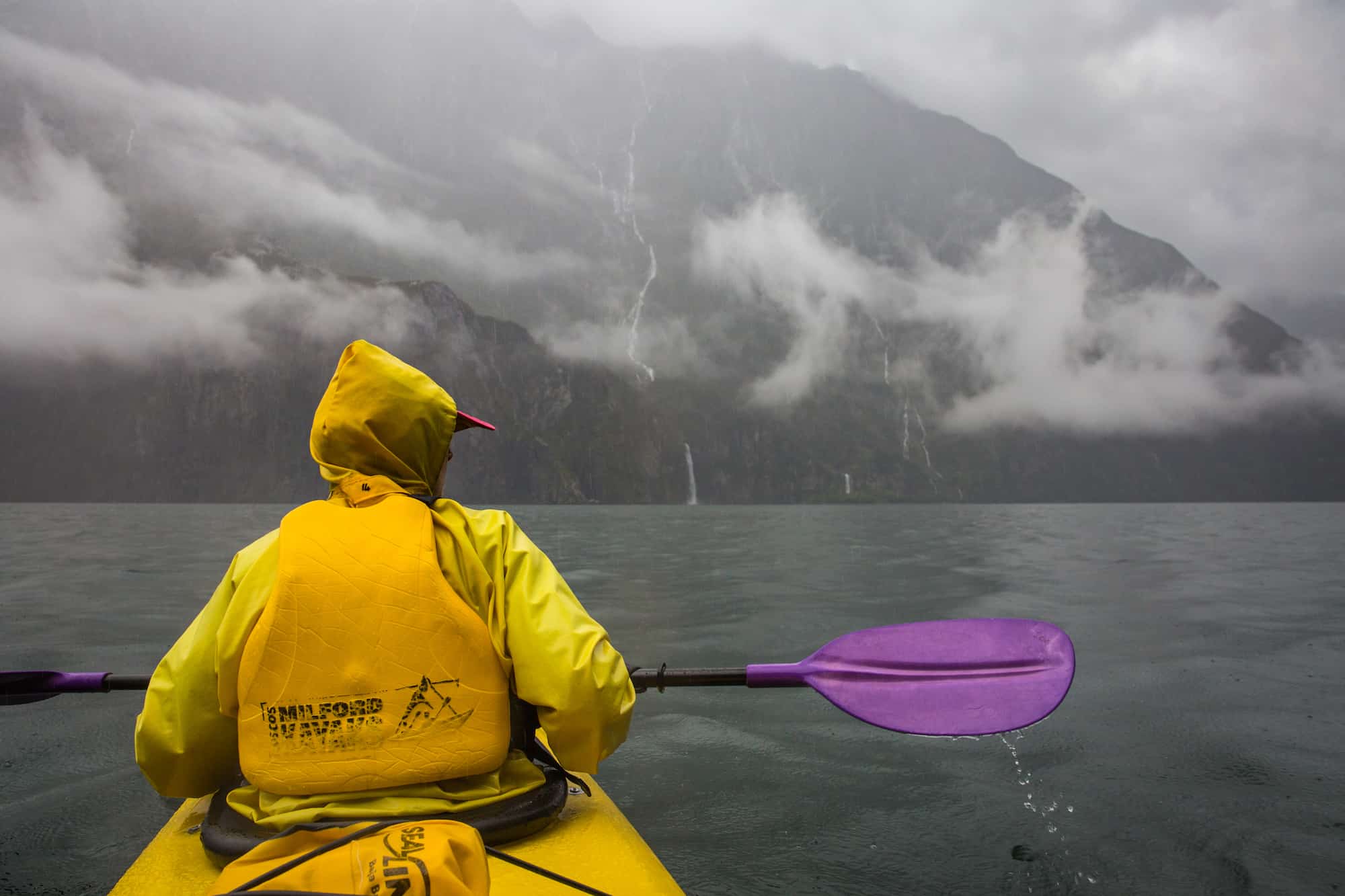
Common Mistakes When Kayaking In Rain
Even experienced paddlers make mistakes. Here are some to avoid:
- Ignoring weather warnings: Always check for storms or high winds.
- Wearing cotton: It gets cold and heavy when wet.
- Skipping dry bags: Rain can ruin phones and wallets quickly.
- Forgetting extra layers: Rain cools you faster than you expect.
- Not practicing self-rescue: If you capsize, know how to get back in.
- Overestimating your skills: Rain makes paddling harder.
- Going too far from shore: Stay close so you can exit quickly.
- Leaving gear exposed: Store everything in waterproof bags.
- Not telling someone your plans: Always have a check-in buddy.
- Ignoring water levels: Rain changes rivers fast.
A non-obvious error is failing to check local regulations. Some areas close to paddlers during heavy rain due to safety risks.
Planning Routes For Rainy Days
Choosing the right route is crucial in wet weather. Look for:
- Short loops close to shore
- Protected bays or lakes with shelter
- Rivers with slow currents and easy exits
- Avoid open water and areas with strong currents
Research local paddling clubs or park rangers for advice. Many parks post updates about water conditions after rain.

Environmental Impact Of Kayaking In Rain
Rain washes debris and pollutants into rivers and lakes. Kayaking in these conditions means you might encounter floating trash or oil slicks. Avoid paddling in areas with visible pollution. Also, be careful not to disturb wildlife—animals often shelter during rain and can be stressed by human activity.
To help protect nature, pack out all trash and avoid stepping on fragile plants when entering or leaving the water.
Useful Apps And Online Tools
Modern technology helps you prepare for rainy trips. Use weather apps for updates, river flow trackers, and navigation tools. For example, the National Weather Service provides real-time alerts about storms and water levels.
Frequently Asked Questions
Is Kayaking In The Rain Safe For Beginners?
Kayaking in light or moderate rain can be safe for beginners if you prepare well. Avoid heavy storms and always wear a life jacket. Start with short trips and stay close to shore.
What Should I Wear For Kayaking In The Rain?
Wear waterproof, breathable clothing. Avoid cotton. Use layers, a rain jacket, and waterproof gloves. Always have extra dry clothes in a dry bag.
How Do I Keep My Gear Dry?
Use dry bags for valuables and extra clothes. Store electronics in waterproof cases. Cover your kayak seat with a waterproof pad if possible.
What If I See Lightning While Kayaking?
Get off the water immediately. Lightning is extremely dangerous for kayakers. Find shelter and wait for the storm to pass before paddling again.
Can I Kayak In The Rain With Children?
Yes, but take extra precautions. Dress them warmly, use child-sized PFDs, and choose calm, sheltered waters. Never kayak in storms or strong winds with children.
Kayaking in the rain can be both fun and rewarding if you take the right steps. With proper gear, planning, and awareness, you can enjoy the peaceful side of wet-weather paddling while staying safe. Always respect nature and your limits, and you’ll find that rainy days open up new adventures on the water.
