
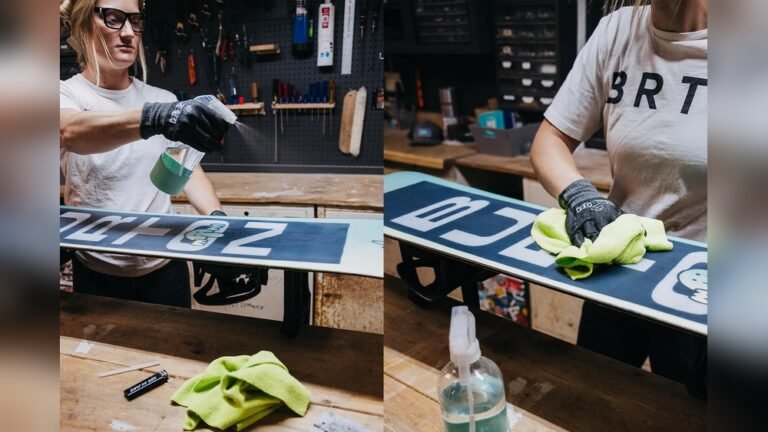
When you enjoy snowboarding, you know how important your gear is. A clean snowboard can make your ride smoother, safer, and more fun. Dirt, grime, and old wax can slow you down, damage your board, and even affect your control.
But many riders don’t realize how easy it is to keep their snowboard in top shape. Cleaning your snowboard is not just about making it look good—it’s about performance and durability. Whether you ride once a year or every weekend, learning how to clean a snowboard properly will help you get the most out of your gear.
In this guide, you’ll learn everything you need to know, from basic cleaning to deeper maintenance, with easy steps and helpful tips.
Why Cleaning Your Snowboard Matters
A snowboard goes through a lot: snow, mud, salt, and even rocks. These can stick to your board and cause damage over time. Here’s why regular cleaning matters:
- Better glide: A clean base lets your snowboard slide smoothly on snow.
- Longer lifespan: Removing dirt and old wax helps prevent scratches and wear.
- Improved safety: Clean edges give you better control, especially on icy slopes.
- Easier maintenance: A clean board is easier to wax and tune.
One study from the International Ski Federation shows that a well-maintained snowboard can last up to 30% longer than one that’s neglected.
Supplies You Need For Cleaning
Before you start, gather these supplies. You don’t need expensive tools—just the right ones for the job.
- Soft cloths or microfiber towels
- Plastic scraper
- Base cleaner (special snowboard cleaners or mild soap)
- Brushes (nylon or brass)
- Edge tool (optional for deep cleaning)
- Wax remover (for old wax)
- Rubber gloves (if you use strong cleaners)
- Clean water
- Paper towels
Some brands offer snowboard cleaning kits, but you can use household items if you’re careful.
Step-by-step: How To Clean A Snowboard
Cleaning a snowboard is simple if you follow clear steps. Here’s how to do it right:
1. Remove Bindings
Always start by removing the bindings. This protects the screws and avoids water damage inside the inserts. Lay your board flat on a soft surface.
2. Dry Brushing
Take a nylon brush and gently scrub the base and top sheet. This removes loose dirt, snow, and debris. Pay attention to the area around the edges—small stones and sand often stick here.
3. Clean The Base
Apply a base cleaner or a mix of mild soap and water. Use a soft cloth to wipe the base in circular motions. Avoid harsh chemicals; they can damage the board’s materials. For stubborn grime, use a plastic scraper to gently lift it off.
4. Remove Old Wax
If you see old, dirty wax, use a wax remover. Apply according to the instructions, then wipe off with a clean towel. Don’t scrape too hard—gentle pressure is enough.
5. Clean The Edges
Use a soft cloth or brush to clean the metal edges. If you see rust, use a brass brush or edge tool to rub it away. Rusty edges can affect your turns and cause accidents.
6. Clean The Top Sheet
Wipe the top sheet with a damp cloth. This removes mud, fingerprints, and sticky residue. For tough stains, use a small amount of soap. Dry with a clean towel.
7. Check For Damage
While cleaning, look for scratches, chips, or delamination. If you find damage, note it for repair. Cleaning helps you spot problems early.
8. Dry Completely
Let your board dry fully before reattaching the bindings or storing. Moisture trapped under bindings can cause corrosion.
Deep Cleaning Vs. Quick Cleaning
Not every cleaning session has to be deep. Here’s a quick comparison:
| Cleaning Type | When to Do | Steps | Time Needed |
|---|---|---|---|
| Quick Clean | After each ride | Brush, wipe, dry | 5–10 minutes |
| Deep Clean | Every 5–10 rides or end of season | Remove bindings, clean base & edges, wax remover, inspect damage | 20–30 minutes |
Most riders do quick cleaning often, and deep cleaning before storing their board for summer.
Cleaning Tips For Different Snowboard Types
Snowboards come in different shapes, sizes, and materials. Here’s how cleaning can vary:
All-mountain Boards
These boards are versatile, so they pick up a mix of dirt. Focus on base and edges, as they get the most use.
Freestyle Boards
Often used in parks, they collect sticky residue from rails and boxes. Use a bit more soap and check for deep scratches.
Powder Boards
Powder boards see less dirt but can have moisture trapped under bindings. Always dry them well.
Splitboards
Splitboards can be taken apart. Clean both halves separately, paying attention to the connection points.
Common Cleaning Mistakes To Avoid
Many beginners make mistakes that can harm their board. Here are some to watch out for:
- Using strong chemicals: Harsh cleaners can break down the board’s base and top sheet.
- Scraping too hard: Over-scraping can create grooves that slow your ride.
- Leaving bindings on: This can trap moisture and cause rust.
- Not drying completely: Storing a wet board causes corrosion and mold.
- Ignoring edges: Dirty or rusty edges reduce control and grip.
If you clean your board correctly, you avoid these problems and improve your experience.

How Often Should You Clean Your Snowboard?
The frequency depends on your riding habits, but here are general guidelines:
- After every ride: Quick clean (brush, wipe, dry)
- Every 5–10 rides: Deep clean (remove bindings, base cleaner, wax remover, edge cleaning)
- End of season: Full clean, inspection, and storage prep
In regions with salty snow (like resorts near roads), clean more often. Salt can cause faster rust and damage.
Tools Compared: Cleaning Brushes And Scrapers
Choosing the right tools can make cleaning easier. Here’s a quick comparison:
| Tool | Best For | Pros | Cons |
|---|---|---|---|
| Nylon Brush | Loose dirt, quick clean | Gentle, won’t scratch base | Not for tough grime |
| Brass Brush | Edge rust, deep clean | Removes rust, detailed cleaning | Can scratch if used on base |
| Plastic Scraper | Old wax, sticky dirt | Safe on base, effective | Not for edges |
For most riders, a nylon brush and plastic scraper are enough. If you ride in wet or salty conditions, add a brass brush for edge care.
Storing Your Clean Snowboard
Proper storage keeps your board clean and ready. After cleaning:
- Dry fully, including inside the binding inserts.
- Store in a cool, dry place—never in direct sunlight or damp areas.
- Avoid stacking heavy items on top; this can warp the board.
- Cover with a soft cloth or bag to protect from dust.
- If storing for summer, apply a thin layer of wax to the base for protection.
A clean, well-stored snowboard is ready for your next adventure.
Extra Tips For Advanced Riders
If you ride often or in harsh conditions, add these tips:
- Use base-specific cleaners for high-performance boards.
- Clean after muddy or slushy rides—these leave more residue.
- Inspect the board for micro-cracks after cleaning.
- For speed, polish the base after cleaning with a soft brush.
Most riders skip these steps, but they make a big difference for advanced performance.

Practical Example: Cleaning After A Muddy Day
Imagine you finish a day riding wet, muddy slopes. Here’s how to clean your board:
- Remove bindings and lay the board flat.
- Use a nylon brush to remove chunks of mud.
- Wipe the base and top sheet with warm soapy water.
- Dry thoroughly, paying extra attention to the edges.
- Inspect for scratches or chips caused by rocks or debris.
- If needed, apply wax remover, then a fresh layer of wax.
This routine keeps your board safe from long-term damage.
What Beginners Often Miss
Most new riders clean only the base, but forget:
- Edge cleaning: Rust can ruin your grip.
- Drying inserts: Moisture under bindings causes hidden corrosion.
- Checking for damage: Cleaning is the best time to spot problems early.
By paying attention to these details, you protect your investment and improve your ride.
Real Data: Performance After Cleaning
A study by the Snowboard Maintenance Association found that boards cleaned and waxed regularly had 15% faster glide speeds and 40% fewer edge failures compared to neglected boards. This shows that cleaning is not just cosmetic—it boosts your performance and safety.
For more details on snowboard care, you can visit Wikipedia.
Frequently Asked Questions
How Do I Clean Snowboard Bindings?
Remove bindings from the board. Wipe them with a damp cloth and mild soap, avoiding metal parts if possible. Dry completely before reattaching.
Can I Use Household Cleaners On My Snowboard?
Avoid strong household cleaners. Use mild soap or snowboard-specific base cleaner. Harsh chemicals can damage the board’s materials.
How Do I Remove Rust From Snowboard Edges?
Use a brass brush or edge tool. Gently rub rust spots until they’re gone. Always clean and dry edges after riding in wet or salty conditions.
Should I Clean My Snowboard Before Waxing?
Yes, cleaning the base removes dirt and old wax. This helps new wax stick better and improves performance.
What’s The Best Way To Store A Snowboard After Cleaning?
Dry the board fully. Store in a cool, dry place, away from sunlight. Cover with a soft cloth or bag, and avoid stacking heavy items on top.
Cleaning your snowboard is simple, but it pays off in every ride. With these steps and tips, you’ll keep your gear in great shape, enjoy smoother runs, and protect your investment for years to come. Even small efforts make a big difference, so make snowboard cleaning a regular part of your routine.
