
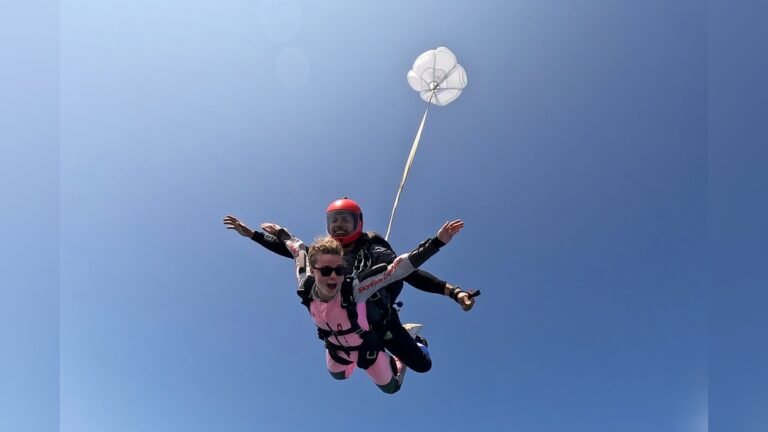
Every year, thousands of people jump from planes for the thrill of skydiving. Whether it’s a first-time tandem skydive or a solo jump by an experienced skydiver, one question often comes up: How many parachutes do skydivers use? This question is more important than many realize because safety in skydiving depends heavily on parachute systems. Understanding how parachutes work in skydiving, why there’s more than one, and what makes each part of the system essential can make the sport less mysterious and much safer for newcomers.
The Standard Parachute Setup
Most people imagine a skydiver jumping with a single big parachute. In reality, every licensed skydiver uses a system with two main parachutes: a main parachute and a reserve parachute. In addition, there is a small device known as an Automatic Activation Device (AAD), and some systems include a pilot chute as well.
Main Parachute
The main parachute is the one that skydivers deploy for a normal landing. It is carefully packed and checked before every jump. Modern main parachutes are usually rectangular, “ram-air” designs, which provide better steering and softer landings compared to old round parachutes.
Reserve Parachute
The reserve parachute is the backup. If the main parachute fails—due to a twist, tangle, or any malfunction—the skydiver can release the main and open the reserve. Reserve parachutes are packed and inspected by licensed riggers, following strict rules.
Pilot Chute
The pilot chute is a small parachute that pulls the main or reserve parachute out of its container. It may seem minor, but without it, the main canopy might not deploy at all.
Automatic Activation Device (aad)
The AAD is an electronic device that automatically opens the reserve parachute if the skydiver is still falling fast at a low altitude. It’s a silent safety net, especially if the skydiver is unconscious or unable to pull their own parachute.
Why Two Parachutes Are Standard
Skydiving involves risks, but having two parachutes is a major safety feature. The main parachute is used in 99% of jumps, but malfunctions do happen. Statistically, one in every 700 to 1,000 jumps experiences a main canopy malfunction that requires the use of the reserve parachute. Reserve parachutes have a much higher safety standard. In the United States, reserve parachutes must be inspected and packed by a certified rigger every 180 days, even if unused.
The redundancy is not just for show. In rare cases, both parachutes may fail, but this is extremely unlikely. Modern skydiving gear is designed to minimize even these rare double malfunctions.
Parachute Systems For Different Types Of Skydiving
Not all skydiving is the same. The number and type of parachutes can change depending on the kind of jump.
Tandem Skydiving
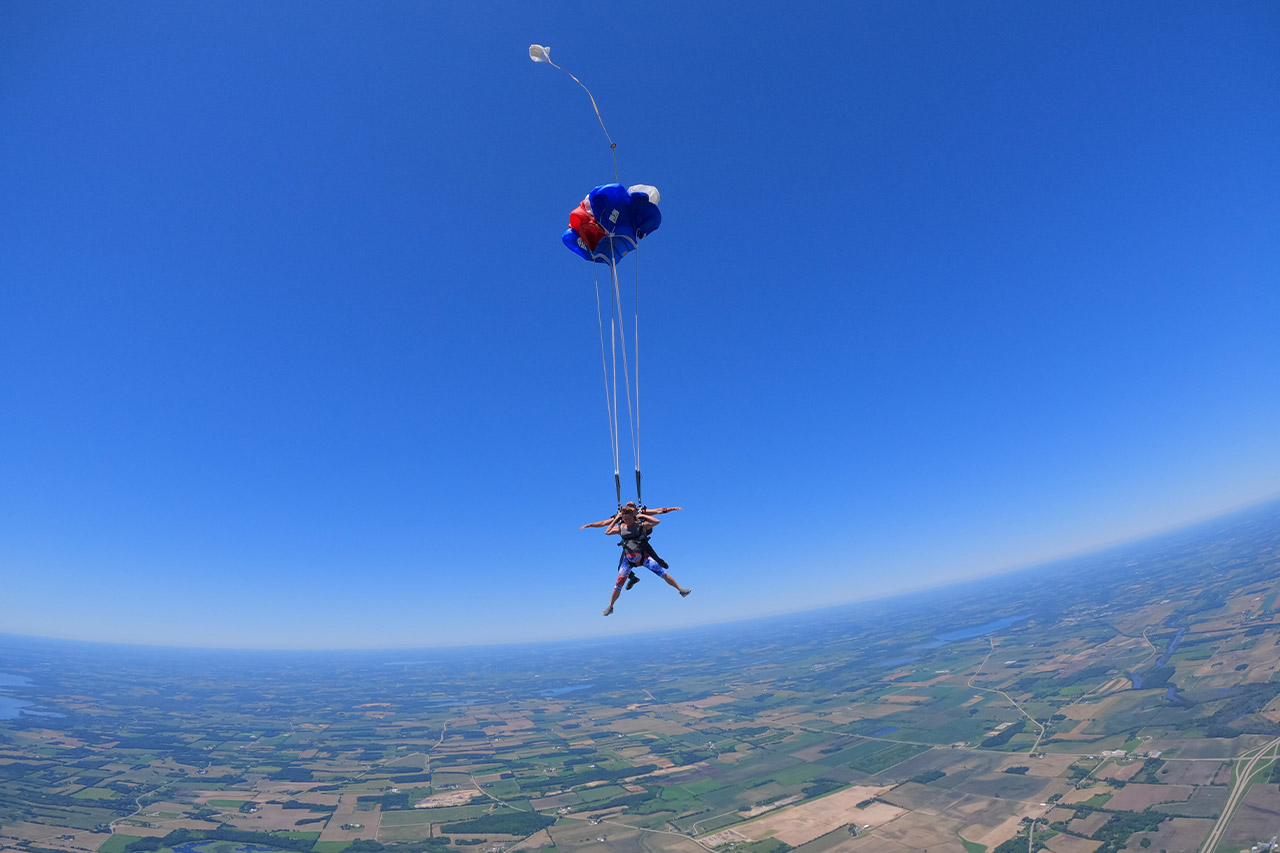
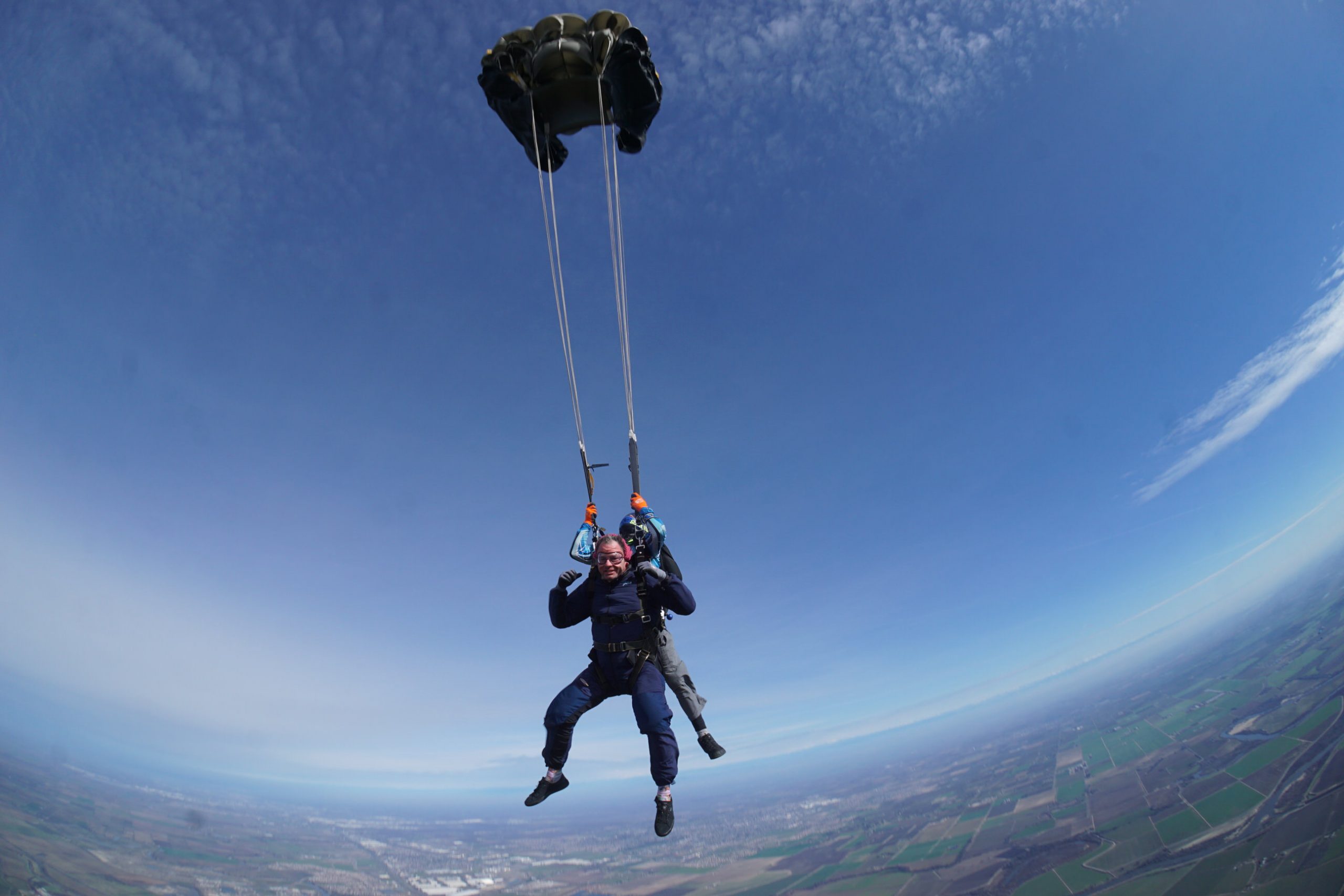
When a beginner jumps attached to an instructor, the setup includes a main parachute, a reserve parachute, and an AAD. The parachutes are larger to support the weight of two people. Instructors are trained to handle emergencies, and the gear is even more robust.
Solo Skydiving
Solo skydivers use the standard two-parachute system. Students often begin with a static line or accelerated freefall (AFF) system, but both still require a main and a reserve.
Military Parachuting
Military parachutists sometimes use different gear. For example, static-line jumps from low altitudes often use round parachutes, but most modern military systems also have a reserve. Specialized jumps (like HALO—High Altitude Low Opening) use gear similar to sport skydiving, with two parachutes.
Base Jumping
BASE jumping, which involves jumping from Buildings, Antennas, Spans (bridges), and Earth (cliffs), is different. Most BASE jumpers use only one parachute. This is because of the low altitude and fast deployment needed. However, this increases the risk.
How Parachutes Are Packed And Maintained
Safety in skydiving starts with packing. The main parachute is usually packed by the skydiver or a trained packer. Packing correctly is crucial; even a small mistake can cause a malfunction. The reserve parachute, by law in many countries, must be packed by a certified rigger.
Reserve parachutes are also inspected for damage, wear, or improper packing. The AAD is checked for battery life and correct settings before each jump.

Parachute Deployment Sequence
Understanding how parachutes are used during a skydive helps explain why two parachutes are necessary.
- Main Parachute Deployment: At a safe altitude (usually between 3,000 and 5,000 feet), the skydiver deploys the main parachute using a pilot chute.
- Malfunction Procedure: If the main parachute fails, the skydiver cuts away the main (using a handle) and deploys the reserve parachute.
- Automatic Activation: If the skydiver is unable to deploy either parachute (for example, if unconscious), the AAD will open the reserve at a preset altitude.
Comparing Parachute Types
To understand why sport skydivers use two parachutes, it’s helpful to see how their gear compares to other types of parachute systems.
| Type of Jump | Main Parachute | Reserve Parachute | AAD |
|---|---|---|---|
| Sport Skydiving | Yes | Yes | Usually |
| Tandem Skydiving | Yes (Large) | Yes (Large) | Always |
| Military Static Line | Yes | Yes | Rare |
| BASE Jumping | Yes | No | No |
How Often Parachutes Fail
Skydivers sometimes worry about parachute failure. In reality, modern skydiving gear is very reliable. According to the United States Parachute Association (USPA), the fatality rate in skydiving is about 1 in 167,000 jumps (as of recent statistics). Most injuries are minor and not related to both parachutes failing. Main parachute malfunctions are rare, and reserve parachute malfunctions are even rarer—less than 1 in 1,000 for the main, and 1 in 1,000,000 for the reserve.
The Role Of Training
Having two parachutes is only part of skydiving safety. Training is equally important. Skydivers learn emergency procedures from the first day. They practice what to do if the main parachute fails, including how to cut away the main and deploy the reserve.
Regular refresher courses and “dirt dives” (ground practice) keep these skills sharp.
What Beginners Often Miss
Many new skydivers think the reserve parachute is just a copy of the main. In fact, the reserve parachute is packed and designed to a higher standard. It opens faster, is checked more often, and is less likely to malfunction. Also, beginners may not realize that the AAD is not magic—it has to be set for the correct altitude and discipline (for example, swooping or wingsuit flying needs different settings).
How Parachute Systems Have Evolved
Parachute systems have improved dramatically over the decades. Early skydivers used only one round parachute. Today’s gear is lighter, more reliable, and safer. The introduction of the AAD in the 1990s reduced fatalities from “no-pull” and “low-pull” accidents. Modern materials also last longer and resist wear better.
Parachute System Components At A Glance
Here is a summary of the main parts of a modern skydiving parachute system.
| Component | Purpose |
|---|---|
| Main Parachute | Primary canopy for safe landing |
| Reserve Parachute | Backup if main fails |
| Pilot Chute | Deploys the main or reserve |
| Automatic Activation Device (AAD) | Automatically deploys reserve if needed |
| Container/Backpack | Holds all components securely |
Common Mistakes And Myths
Some believe that more parachutes mean more safety. In reality, the two-parachute system is a balance between safety, weight, and complexity. Adding more parachutes would make the system heavier and harder to use. Another myth is that reserve parachutes are rarely used.
In fact, experienced skydivers may use their reserve once every few hundred jumps.
Some beginners also think the reserve parachute is smaller or less effective than the main. In most cases, the reserve is just as large or even larger than the main, to ensure a soft, safe landing.
What Really Matters When Choosing A Parachute System
If you plan to skydive, focus on these key factors:
- Proper fit: The harness and container must fit your body size.
- Certification: Both main and reserve parachutes should be from trusted manufacturers and certified by authorities like the FAA or EASA.
- Fresh packing: The reserve must be packed recently by a certified rigger.
- Working AAD: Check battery and settings before every jump.
- Training: Know how to use all handles and practice emergency procedures.
If you rent gear, ask when the reserve was last packed and if the AAD is set correctly for your jump type.
Real-world Example: A Malfunction In Action
Imagine a skydiver named Lisa. On her 200th jump, she deploys her main parachute, but it starts spinning uncontrollably. She tries to fix it but cannot. She pulls the cutaway handle, detaching the main. Then she pulls the reserve handle, and the reserve parachute opens perfectly.
Lisa lands safely—proof that the two-parachute system works. Incidents like this are not uncommon, but because of training and equipment, they rarely lead to injury.
How Regulations Keep Skydivers Safe
Authorities like the Federal Aviation Administration (FAA) in the U.S. and the European Union Aviation Safety Agency (EASA) set rules for skydiving gear. For example:
- Reserve parachutes must be inspected and repacked every 180 days by certified riggers.
- AADs are required for student and tandem jumps.
- Equipment records are kept for all maintenance and repairs.
These rules save lives and are strictly enforced at reputable dropzones.
Expert Tips For Staying Safe
- Double-check your gear before every jump, even if you trust your packer.
- Ask questions if you’re unsure about any part of your parachute system.
- Don’t skip training—even experienced jumpers need refreshers.
- Stay calm in an emergency—remember your procedures.
- Never jump with unfamiliar gear unless you get a full briefing.
Frequently Asked Questions
How Many Parachutes Do Skydivers Use?
Most skydivers use two parachutes: a main parachute and a reserve parachute. There is also a small pilot chute and usually an AAD for extra safety.
Why Do Skydivers Need A Reserve Parachute?
The reserve parachute is a backup in case the main parachute fails. It is packed to higher standards and checked more often to guarantee it works if needed.
What Happens If Both Parachutes Fail?
It is extremely rare for both parachutes to fail. Modern gear and training make this almost impossible. Most skydiving accidents are not from total gear failure but from other mistakes.
Do Base Jumpers Use Two Parachutes?
No, BASE jumpers usually use only one parachute. The jumps are from much lower altitudes, so there’s not enough time or height to safely use a reserve.
How Often Do Skydivers Use Their Reserve Parachute?
On average, a skydiver might use the reserve parachute once every 700 to 1,000 jumps. Most skydivers will use their reserve at least once in their career.
Skydiving is thrilling but safe if you understand your gear. The two-parachute system is the foundation of skydiving safety. With good training, reliable equipment, and respect for the rules, skydivers can enjoy the sport with confidence. For more technical details on parachute systems, visit the Wikipedia Skydiving Equipment page.
