If you’ve ever watched surfers catching waves and wondered, “How many calories does surfing burn? ” you’re not alone. Surfing looks physically demanding, but the real calorie burn often surprises people. Whether you’re considering taking up surfing, already surf, or just want to compare it to other sports, knowing the actual calorie expenditure helps you plan workouts and reach fitness goals.
This guide explains everything you need to know, from calories burned by different body types to factors that affect the numbers. Plus, you’ll discover non-obvious insights most beginners miss.
Why Calorie Burn Matters In Surfing
Surfing is not just fun; it’s a full-body workout. Every session combines paddling, balance, quick bursts of power, and continuous movement. Understanding calorie burn helps you:
- Plan nutrition for better performance and recovery
- Track fitness progress more accurately
- Set realistic weight loss or maintenance goals
Many new surfers underestimate how much energy they use in the water. Surfing sessions can feel less tiring due to the excitement and adrenaline, but the calorie demand is real.
Average Calories Burned Surfing
Let’s get straight to the numbers. The calories burned surfing depend on several factors, but on average:
- A 125-pound (57 kg) person burns about 210–340 calories per hour
- A 155-pound (70 kg) person burns about 260–420 calories per hour
- A 185-pound (84 kg) person burns about 310–480 calories per hour
These are average ranges for recreational surfing. More intense sessions or challenging conditions can increase the numbers.
Here’s a comparison of calorie burn for different body weights per hour of moderate surfing:
| Body Weight | Calories Burned (per hour) |
|---|---|
| 125 lbs (57 kg) | 210–340 |
| 155 lbs (70 kg) | 260–420 |
| 185 lbs (84 kg) | 310–480 |
Factors That Affect Calorie Burn While Surfing
Surfing is not the same every day. How many calories you burn will change based on these factors:
Body Weight
People with higher body weight burn more calories because their bodies use more energy to move and stay balanced.
Wave Conditions
- Big, powerful waves require more paddling and strength, increasing calorie burn.
- Small, gentle waves mean less effort and lower calorie expenditure.
Surfing Skill Level
Beginners often burn more calories. They paddle more, fall often, and spend energy getting back on the board. Advanced surfers are more efficient but can still burn lots of calories with bigger moves.
Water Temperature
Cold water makes your body work harder to stay warm, burning extra calories. Wearing a wetsuit can help, but you still burn more than in warm water.
Session Length And Intensity
Longer, more intense sessions burn more calories. Quick, short sessions or waiting a lot in the lineup reduce calorie use.
Type Of Surfing
Different styles have unique demands. For example:
- Shortboarding: Quick bursts, fast paddling, high intensity.
- Longboarding: Smoother, more relaxed, but still a workout.
- Big wave surfing: Extreme energy, much higher calorie burn.
Calorie Burn: Surfing Vs Other Sports
How Does Surfing Stack Up Against Other Activities?
| Activity | Calories Burned (155 lbs person/hour) |
|---|---|
| Surfing (moderate) | 260–420 |
| Swimming (moderate) | 500–600 |
| Running (5 mph) | 590 |
| Cycling (light) | 280 |
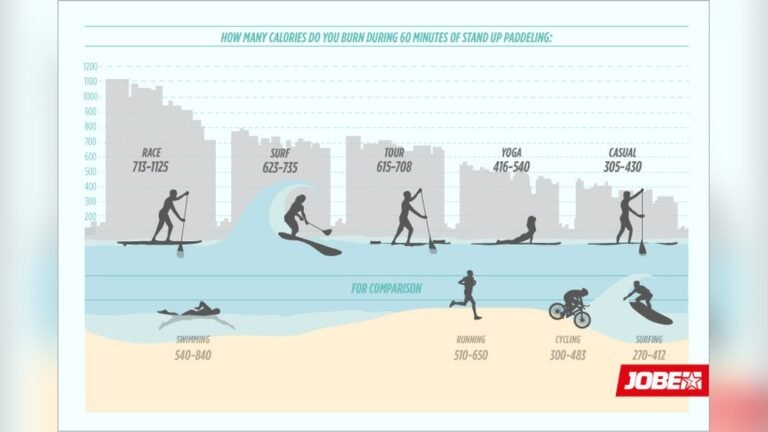
| Stand-Up Paddleboarding | 305–430 |
| Yoga | 180–250 |
Surfing burns more calories than yoga or light cycling, but less than running or swimming at a steady pace. However, surfing’s calorie use can spike during powerful paddling and wave-riding.
Breaking Down The Surfing Session
Surfing is not a steady activity. A typical session includes:
- Paddling out: High-intensity, burns lots of calories.
- Waiting for waves: Low-intensity, calorie burn drops.
- Catching and riding waves: Short, intense bursts.
- Wipeouts and recovery: Climbing back on the board, using core and upper body.
It’s important to remember that you don’t burn the same amount every minute. Some parts are like sprinting, others like resting. Over an hour, these differences average out.
How To Estimate Your Own Calorie Burn
You can get a more personal estimate by considering your weight, session intensity, and time spent. Use this simple formula:
Calories burned per hour = MET value × weight in kg × 1 hour
- Moderate surfing MET value: 6
- Vigorous surfing MET value: 8
Example: A 70 kg person surfing moderately for 1 hour:
6 × 70 × 1 = 420 Calories
If your session is more intense, use 8 instead of 6.
Real-world Examples
Let’s look at two scenarios:
Beginner Surfer
- 60 minutes in the water
- Falls often, paddles a lot
- Weight: 140 lbs (63.5 kg)
- Moderate intensity
Estimated Calories Burned: 6 × 63.5 = 381 Calories/hour
Advanced Surfer, Bigger Waves
- 90 minutes in the water
- Weight: 175 lbs (79.5 kg)
- High intensity
Estimated calories burned: 8 × 79.5 × 1.5 = 954 calories/session
Many surfers don’t realize how much calories add up over longer sessions.
Common Mistakes When Estimating Surfing Calorie Burn
Most people make these errors:
- Ignoring rest time – Not every minute is high intensity.
- Using generic numbers – Your body and session are unique.
- Forgetting cold water effect – Chilly surf can boost calorie burn, sometimes by 10–20%.
To be accurate, consider all factors and use a fitness tracker if possible.
How To Burn More Calories Surfing
If you want to increase your calorie burn, try these ideas:
- Stay active between sets: Lightly paddle, don’t just sit waiting.
- Surf bigger waves: But only if you’re ready.
- Extend your session: More time = more calories.
- Try new moves: Turns, cutbacks, or tricks use different muscles.
- Wear less insulation in warmer water (safely) to let your body work harder.
But remember, quality matters as much as quantity—overdoing it leads to fatigue or injury.
Benefits Beyond Calorie Burn
Surfing offers more than just a calorie workout:
- Full-body strength: Shoulders, core, legs—all get stronger.
- Improved balance and coordination
- Mental health boost: The ocean and physical activity help reduce stress.
- Cardiovascular fitness: Regular surfing supports a healthy heart.
Many surfers report feeling healthier and more energetic, even if the scale doesn’t change much.
Non-obvious Insights Most Beginners Miss
Here are two key things many overlook:
- Calorie burn continues after you leave the water. Surfing is intense enough to create an “afterburn” effect (EPOC), where your body keeps burning calories as you recover.
- Nutrition is critical for performance and recovery. Many surfers focus on fun, but without enough calories and hydration, energy drops quickly, and progress slows.
Sample Surfing Session Calorie Breakdown
Let’s break down a 90-minute session for a 160-pound (73 kg) surfer:
| Activity | Time Spent | MET Value | Calories Burned |
|---|---|---|---|
| Paddling Out | 25 min | 8 | 243 |
| Waiting for Waves | 25 min | 2.5 | 76 |
| Riding Waves | 20 min | 9 | 219 |
| Paddling Back | 20 min | 7 | 170 |
Total calories burned: About 708 calories in one session.
This breakdown shows why wearing a fitness tracker or using a surf app can help you understand your own numbers more accurately.

Is Surfing Good For Weight Loss?
Because surfing burns a lot of calories, it can help with weight loss if combined with a healthy diet. But don’t focus on calorie burn alone. Surfing builds muscle, which raises your resting metabolism. Also, sessions are so enjoyable that you may surf longer than you’d stay on a treadmill.
The key is consistency. Surfing once a month won’t have a big effect, but regular sessions (2–4 times a week) can create noticeable changes in body shape and energy.
Practical Tips For Surfers Who Want To Track Calories
- Use a waterproof fitness tracker—Some watches and apps estimate calories during surfing.
- Note how you feel after sessions—Low energy may mean you’re burning more than you eat.
- Eat enough protein and carbs—They help with muscle repair and refueling.
- Hydrate well—You lose water even in cool surf.
Surfing For All Ages And Fitness Levels
One of surfing’s best features is its adaptability. Young kids, teens, adults, and even seniors can all enjoy it. You can adjust your session’s length and intensity to match your goals. For older adults, calorie burn remains high due to the balance and core demands.
How To Recover And Refuel After Surfing
After a big session, your body needs:
- Carbohydrates to refill energy stores
- Protein for muscle repair
- Fluids to rehydrate
A good post-surf snack could be a banana with peanut butter, a smoothie, or a turkey sandwich. This helps you recover faster and get ready for the next session.

Surfing And Long-term Health
Surfing offers lifelong benefits beyond calorie burning. Regular sessions help:
- Lower stress
- Improve sleep
- Boost immune system
- Build a strong, flexible body
People who surf regularly often report fewer aches and a greater sense of well-being. These “hidden” benefits are a big reason why so many stick with surfing for decades.
Where To Find More Research
If you want detailed data or scientific studies on calories and surfing, check out the Wikipedia page on surfing. It links to research and expert analysis that can deepen your understanding.
Frequently Asked Questions
How Many Calories Does 2 Hours Of Surfing Burn?
A 155-pound (70 kg) person can burn between 520 and 840 calories in 2 hours of moderate surfing. If the session is intense, numbers can reach 1,000 calories or more.
Does Surfing Burn More Calories Than Swimming?
Swimming generally burns more calories per hour, especially at a steady pace. However, surfing includes short, powerful bursts that can match or exceed swimming, especially during big wave sessions.
Is Surfing Good For Building Muscle?
Yes, surfing is excellent for building upper body, core, and leg muscles. The combination of paddling and balancing works many muscle groups at once.
Do You Burn Calories Even When Waiting For Waves?
Yes, but much less than during active paddling or wave-riding. Waiting still uses energy to balance and stay afloat, but the calorie burn is low compared to the active parts.
Can You Lose Weight Just By Surfing?
Surfing can help you lose weight if you surf regularly and combine it with healthy eating. The key is burning more calories than you consume over time.
Surfing is more than just a way to burn calories—it’s a lifestyle and a path to better health. Whether you’re looking to lose weight, build strength, or just enjoy the ocean, every session brings unique benefits. Remember, the calorie burn depends on your effort, session length, and conditions.
Stay safe, have fun, and let the waves do the work!
