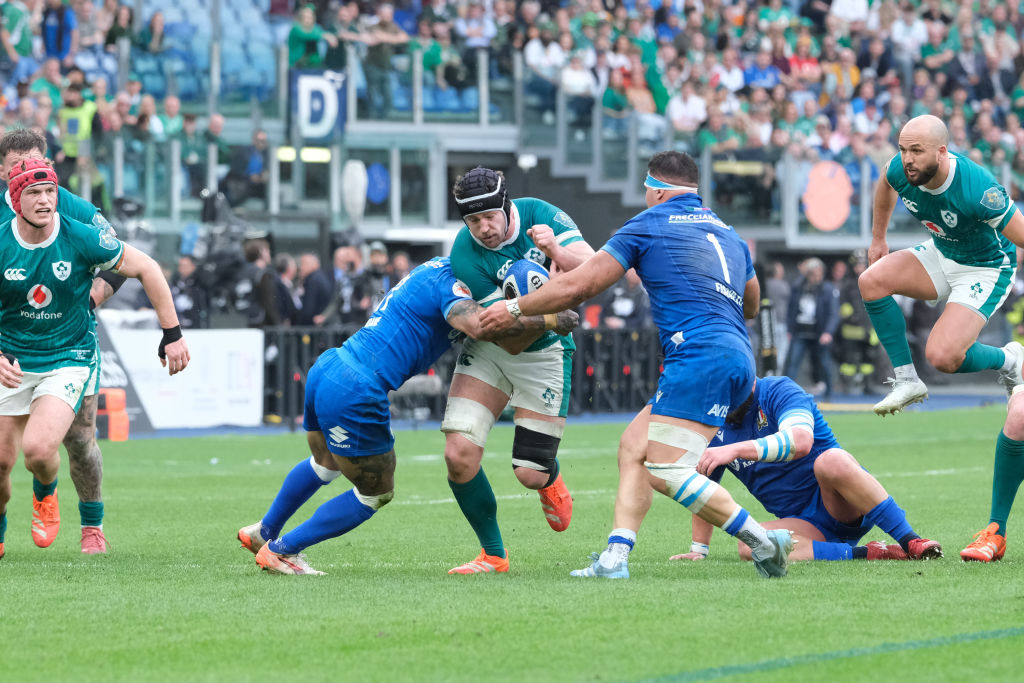

Every rugby fan, new or experienced, wonders about the timing of the game at some point. Whether you are watching your first match or considering playing, understanding how long a rugby match is makes the experience much clearer. Rugby is a sport with rich traditions, but its timing rules are simple once you know them. However, the match length can differ by age group, competition type, and rugby format. Let’s explore how much time you’ll spend on the field or in the stands, and what affects the clock in rugby.
Standard Rugby Match Length
The most common form is Rugby Union played at the professional and international level. A standard adult Rugby Union match lasts 80 minutes. This is split into two halves of 40 minutes each. There is a 10-minute halftime break between the halves. The clock counts up from zero, not down.
Unlike some sports, the clock keeps going even when the ball is not in play. However, the referee can stop the clock for injuries, substitutions, or TMO (television match official) reviews. This means the match can run longer than 80 minutes in real time, but only 80 minutes of playing time is counted.
Key facts about Rugby Union match length:
- 40 minutes per half
- 10-minute halftime
- Total time: 80 minutes (not including stoppages)
- Stoppage time added at referee’s discretion
Rugby League: How It Differs
Rugby League, another popular rugby code, also has two halves of 40 minutes each. The main difference is in the way stoppages are handled. In Rugby League, the clock is stopped for injuries and certain other delays, so the real time of the game is usually closer to 80 minutes.
Rugby League match structure:
- 2 halves, 40 minutes each
- 10-minute halftime
- Stoppages handled by the official timekeeper
The game is often faster because the ball is put back into play more quickly. Some people say Rugby League matches feel shorter due to fewer stoppages for scrums and lineouts.
Youth And Amateur Rugby Match Length
Matches for younger players are shorter to reduce fatigue and risk. Here’s how match length typically changes by age group:
| Age Group | Half Length (minutes) | Total Match Time (minutes) |
|---|---|---|
| Under 9-10 | 15 | 30 |
| Under 11-12 | 20 | 40 |
| Under 13-14 | 25 | 50 |
| Under 15-16 | 30 | 60 |
| Under 17-18 | 35 | 70 |
| Senior (Adult) | 40 | 80 |
Note: Local rugby unions may set slightly different times, but this table covers the standard guidelines.
Sevens And Other Rugby Formats
Not all rugby is played with 15 players a side. Rugby Sevens is a fast-growing version, especially in the Olympics. The matches are much shorter because the game is more intense.
Rugby Sevens match structure:
- 2 halves, 7 minutes each
- 1-minute halftime
- Total time: 14 minutes (finals may have longer halves)
Sevens tournaments often have many games in one day, so short matches are necessary. There is also Tens rugby (10 players per side), usually with two 10-minute halves.
Here’s a simple comparison of the main rugby formats:
| Format | Players per Side | Half Length | Total Match Time |
|---|---|---|---|
| Union | 15 | 40 min | 80 min |
| League | 13 | 40 min | 80 min |
| Sevens | 7 | 7 min | 14 min |
| Tens | 10 | 10 min | 20 min |
Extra Time And Tie-breakers
Sometimes, a rugby match is tied at the end of normal time. How is the winner decided? This depends on the competition.
- Knockout matches (like finals) may use extra time: Two halves of 10 minutes each.
- If still tied, some tournaments use a “golden point”—the first team to score wins.
- In pool matches or leagues, a tie might stand.
Not all matches allow for extra time, so check the rules for the specific event.
How Stoppage Time Works
The referee is in charge of the official match clock. In Rugby Union, the clock keeps running most of the time. But the referee can stop the clock for:
- Serious injuries
- TMO (video review) checks
- Disciplinary issues (like red cards)
When the match time reaches 80 minutes, the referee allows play to continue until the next stoppage (e. g. , the ball goes out, or a penalty is given). This is called “playing over time. ” The match ends when the ball is dead after 80 minutes.
A common beginner mistake is thinking the match ends exactly when the clock hits 80. In fact, the referee decides the final whistle, not the stadium clock.

Real-world Match Duration
If you attend or watch a rugby match, expect to spend more than 80 minutes. With halftime, stoppages, and possible injury delays, a typical professional game lasts 90–100 minutes in real time.
Example: The 2019 Rugby World Cup final (England vs. South Africa) had 80 minutes of playing time, but the event lasted almost two hours with pre-game ceremonies and post-match celebrations.
Another detail: international matches often have water breaks in hot climates, adding a few more minutes.
Why Do Match Times Vary?
Two main reasons make match length seem different:
- Level of Play: Youth and amateur matches are shorter for safety.
- Rugby Code: Union and League have slightly different timing rules.
- Competition Format: Sevens and Tens are designed for fast tournaments.
- Stoppages: Injuries, TMO checks, and weather can add time.
Beginners often forget that injury time and “playing over time” are at the referee’s control—not shown on the stadium clock.

Tips For Players And Fans
- Arrive early to see warm-ups and avoid missing the start.
- Check local rules if playing youth or amateur rugby, as match lengths can change.
- Stay alert after 80 minutes—the most exciting tries can happen in overtime.
Frequently Asked Questions
How Long Is A Rugby Match For Adults?
A standard adult rugby match is 80 minutes: two halves of 40 minutes each, with a 10-minute halftime break. This applies to both Rugby Union and Rugby League.
How Long Is Halftime In Rugby?
Halftime is usually 10 minutes in adult matches. Youth matches may have shorter breaks.
Can A Rugby Match End Before 80 Minutes?
No, the match cannot end before 80 minutes unless stopped by the referee for special reasons (for example, dangerous weather). Play continues until the ball is dead after 80 minutes.
What Happens If A Rugby Match Is Tied?
In knockout rounds, the match may go into extra time. If still tied, some competitions use the “golden point” rule, or a kicking competition. In league matches, a tie is usually allowed.
Is Rugby Sevens Shorter Than Normal Rugby?
Yes, Rugby Sevens matches are much shorter: two halves of 7 minutes, for a total of 14 minutes. Finals may be slightly longer.
For more on rugby rules, check the official World Rugby website: World Rugby Laws.
Rugby’s timing is part of its excitement. Whether you’re a fan or a player, knowing how long a rugby match is helps you enjoy the game even more.