Skydiving is a thrilling sport that pushes the limits of human experience. Many people wonder how skydivers land safely after jumping from an airplane thousands of feet in the air. The answer is simple, but fascinating: the parachute. While a parachute looks like a simple fabric canopy, it is actually a complex piece of technology built for performance and safety. Understanding how a skydiving parachute works can make the experience less mysterious and more exciting for anyone considering a jump.
What Is A Skydiving Parachute?
A skydiving parachute, also called a canopy, is a device that uses air resistance to slow a person’s fall. When a skydiver jumps from a plane, gravity pulls them toward the ground at high speed. The parachute, once deployed, creates enough drag to slow the descent and allow for a controlled, safe landing.
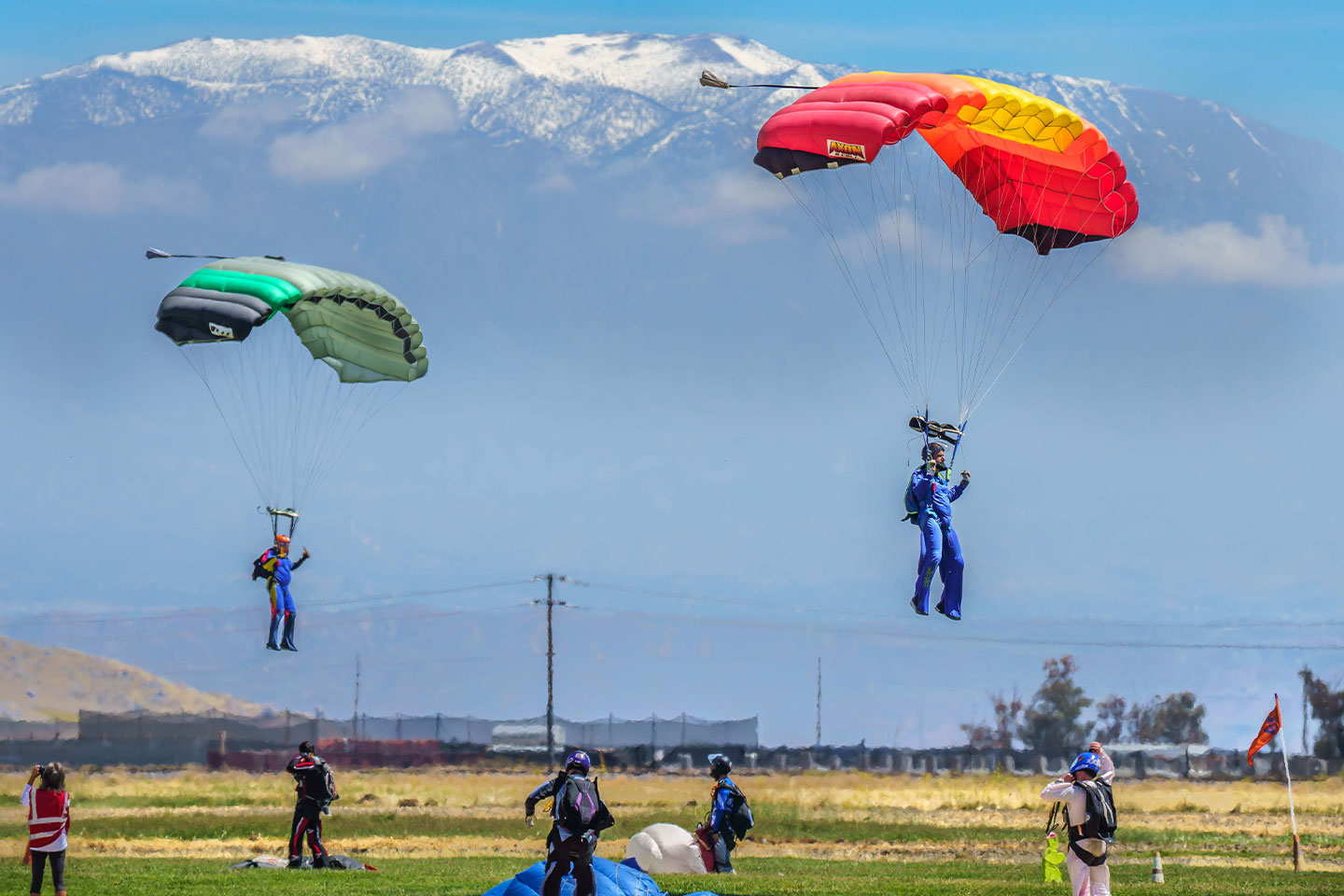
Unlike the old-fashioned round parachutes used in the military, modern skydiving parachutes are mostly rectangular or ram-air canopies. They are designed for precision, control, and a soft landing. These parachutes are made from lightweight, strong materials like nylon or zero-porosity fabric.
Main Parts Of A Skydiving Parachute
A skydiving parachute system includes several important parts. Each part has a specific job and works together to ensure safety.
1. Main Canopy
This is the primary parachute used for most jumps. It is packed in a special way so it will open cleanly and reliably.
2. Reserve Canopy
A backup parachute called the reserve is always present. If the main parachute fails, the reserve can be deployed. Reserve parachutes are inspected and packed by trained professionals.
3. Container (harness)
The container holds both the main and reserve parachutes. It is also the harness that attaches the skydiver to the system. The harness is designed for comfort and strength.
4. Pilot Chute
This is a small, round parachute that helps pull the main canopy out of the container. It is the first part to deploy when the skydiver pulls the ripcord.
5. Risers And Lines
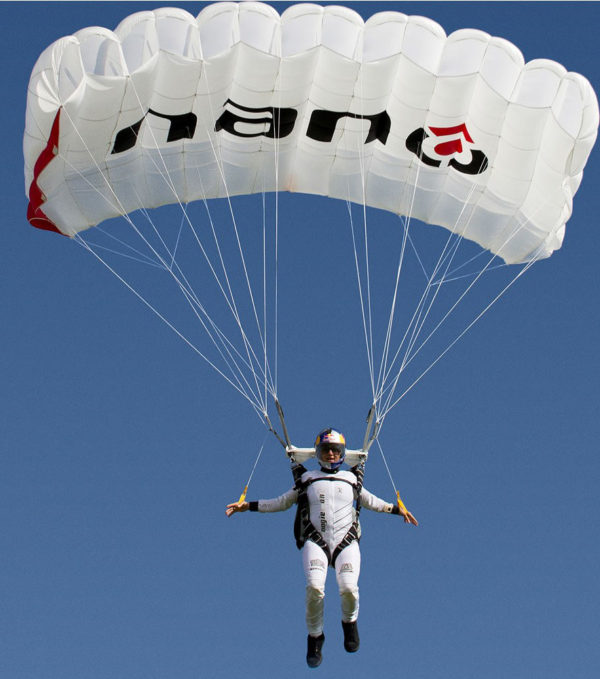
The risers are strong fabric straps that connect the harness to the canopy. Lines are thin cords that attach the risers to the parachute. They help keep the canopy stable and allow for steering.
6. Deployment Bag
The main canopy is packed inside a deployment bag. This bag controls the way the parachute opens, making it smooth and predictable.
7. Automatic Activation Device (aad)
Many parachutes have an AAD, an electronic device that will automatically deploy the reserve parachute if the skydiver is too low or not slowing down as expected.
How Parachutes Slow You Down
When a skydiver exits a plane, they quickly reach terminal velocity—a speed where air resistance balances gravity. For a belly-to-earth position, this is about 120 mph (193 kph). If the parachute did not open, the person would hit the ground at this high speed.
The parachute works by creating drag, a force that opposes the motion. When the canopy inflates, it catches a large volume of air. This increases the surface area, slowing the skydiver to around 10-15 mph (16-24 kph) for landing. The change in speed is dramatic, but the parachute is designed to open gradually to avoid a sudden jerk, known as a hard opening.
The Skydiving Sequence: Step By Step
Understanding what happens during a skydive helps explain how the parachute works in practice.
- Exit the Aircraft: The skydiver jumps from the plane, starting freefall.
- Freefall: The skydiver falls rapidly, enjoying the sensation of flying. This usually lasts from 30 seconds to over a minute, depending on the jump altitude.
- Deployment: At a safe altitude (usually around 2,500 to 5,000 feet), the skydiver deploys the main parachute by pulling the ripcord or handle. The pilot chute is released into the wind.
- Canopy Inflation: The pilot chute pulls out the deployment bag and the main canopy. The canopy inflates as air rushes in, slowing the descent.
- Canopy Flight: The skydiver controls the canopy using steering toggles. They can turn, slow down, or speed up, and prepare for landing.
- Landing: The skydiver flares the canopy just before landing, reducing speed and touching down gently.
How A Ram-air Parachute Works
Modern sport parachutes are not just big sheets of fabric. The ram-air design is the secret to their performance.
A ram-air canopy is made of two layers of fabric sewn together to form a series of cells. These cells have open front edges. As the skydiver falls, air rushes into the cells, inflating them like an air mattress. The inflated shape gives the parachute an airfoil profile—similar to an airplane wing—which allows it to glide forward as well as down.
This design offers several advantages:
- Steering: The canopy responds to input from steering lines, allowing precise control.
- Flare: By pulling both steering toggles, the skydiver can slow down even more for a soft landing.
- Stability: The airfoil shape helps keep the canopy stable in flight.
Here’s a comparison between old round parachutes and modern ram-air canopies:
| Feature | Round Parachute | Ram-Air Parachute |
|---|---|---|
| Shape | Circular | Rectangular |
| Control | Limited | Highly maneuverable |
| Landing | Harder | Softer, more controlled |
| Glide Ratio | Low | High (can travel forward) |
Parachute Deployment: The Process
The deployment process is carefully designed for safety. Here’s how it usually works:
- Pilot Chute Release: The skydiver throws the pilot chute into the airflow.
- Deployment Bag Extraction: The pilot chute pulls the deployment bag out of the container.
- Line Stretch: The parachute lines stretch out, ensuring the canopy opens cleanly.
- Canopy Inflation: The cells fill with air, and the parachute takes its full shape.
- Slider Descent: The slider, a small fabric square, moves down the lines. It slows the opening to prevent a hard jerk.
Skydivers must pack their parachutes carefully to ensure this sequence happens smoothly. A tangled or misrouted line can cause a malfunction.
How Steering And Landing Work
Skydivers are not just passengers under a parachute—they are pilots. Steering is done with toggles attached to the back corners of the canopy.
- Pull left toggle: Turn left.
- Pull right toggle: Turn right.
- Pull both toggles: Slow down and flare for landing.
Advanced skydivers can perform sharp turns, slow spirals, or even swoop close to the ground at high speed. However, steering too aggressively or flaring too early/late can lead to hard landings or loss of control.
Here’s a quick look at how steering inputs affect the canopy:
| Action | Canopy Response |
|---|---|
| Left toggle down | Canopy turns left |
| Right toggle down | Canopy turns right |
| Both toggles down | Canopy slows, flares for landing |
| No input | Canopy glides straight |
Safety Features: Why Skydiving Is Reliable
Skydiving has become much safer over the years, thanks to technology and training. Here are the main safety features:
- Reserve parachute: Always packed and checked by a certified rigger.
- Automatic Activation Device (AAD): Deploys the reserve if the skydiver cannot.
- Three-ring release system: Allows the skydiver to cut away the main canopy if there is a problem, so the reserve can be deployed.
- Audible altimeter: Sounds an alarm if the skydiver is getting too low.
Modern skydiving equipment is built to strict standards. For example, in the United States, the USPA (United States Parachute Association) sets rules and guidelines for packing, training, and safety.
Here is a comparison of main and reserve parachute characteristics:
| Feature | Main Parachute | Reserve Parachute |
|---|---|---|
| Packing | Self or packer | Certified rigger only |
| Use Frequency | Every jump | Emergencies only |
| Deployment | Manual | Manual or automatic (AAD) |
| Design Focus | Performance | Reliability |
Common Parachute Problems And Solutions
Even the best parachute can have problems. Here are a few issues and how they are solved:
- Line twists: Sometimes the lines get twisted during opening. The skydiver kicks or spins to untwist them.
- Canopy does not inflate: This is rare, but if it happens, the skydiver cuts away the main and deploys the reserve.
- Hard opening: If the parachute opens too quickly, it can be uncomfortable, but usually not dangerous.
- Canopy collapse: In strong turbulence, the canopy can lose air. Good design and pilot skill reduce this risk.
Skydivers train for these events and practice emergency procedures regularly.
Real-world Data: Parachute Reliability
Modern parachutes are highly reliable. According to the USPA, the chance of a main parachute malfunction is about 1 in 1,000 jumps. Reserve parachutes are even more reliable, with careful packing and inspection.
Skydiving accidents are rare. In the United States, the fatality rate is less than 1 in 100,000 jumps. Most incidents are due to human error, not equipment failure.

How Parachutes Have Changed Over Time
Parachutes have a long history. The first recorded parachute jump was in 1797 by André-Jacques Garnerin. Early designs were round and made of silk. Modern canopies use advanced materials and computer-aided design.
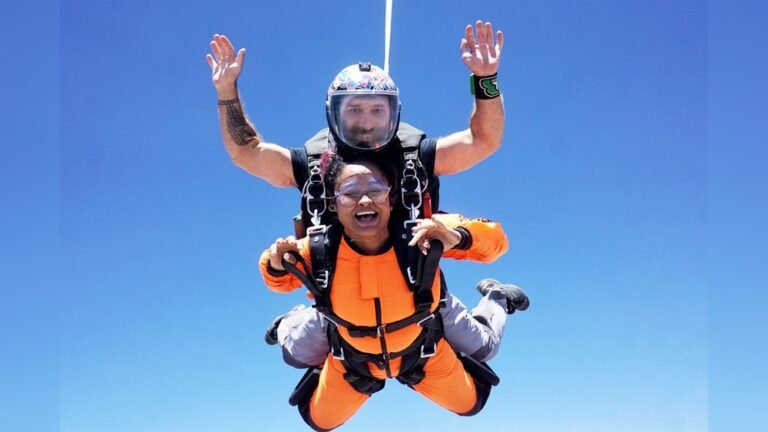
Today, parachutes are used for sport, military, and emergency purposes. Tandem parachutes allow beginners to jump safely with an instructor. BASE jumping uses small, specialized canopies for jumping from cliffs or buildings.
If you want more details on the history and science of parachutes, Wikipedia offers in-depth information.
Frequently Asked Questions
How Fast Do You Fall With A Parachute?
After deploying a parachute, the descent speed slows from about 120 mph (193 kph) in freefall to 10-15 mph (16-24 kph) under the canopy. The exact speed depends on the parachute size, weight of the skydiver, and wind conditions.
What Happens If The Main Parachute Fails?
If the main parachute does not work, the skydiver can cut it away using the three-ring release system. The reserve parachute is then deployed, either by hand or automatically using the AAD.
Can You Steer A Parachute?
Yes. Modern ram-air parachutes are highly maneuverable. Skydivers use steering toggles to turn left, right, or slow down for landing. With training, they can land in a small target area.
How Big Is A Skydiving Parachute?
The size depends on the weight of the skydiver and the type of jump. Most sport parachutes are between 100 and 300 square feet (9 to 28 square meters).
Is Skydiving Safe?
Skydiving is much safer today thanks to better equipment, training, and safety rules. While there is some risk, most injuries are minor and serious accidents are rare. Proper training and equipment checks are essential.
Skydiving parachutes are a triumph of engineering, combining simplicity and advanced design to keep people safe at thousands of feet. If you ever decide to jump, you can trust that your parachute is ready for the challenge—if you know how to use it.