
Strapping on a pair of ski boots is more than just a step before hitting the slopes—it’s a decision that can change your entire skiing experience. The right ski boots can mean the difference between joy and frustration, comfort and pain, or even safety and injury.
Yet, for beginners and even some seasoned skiers, choosing the best fit can feel confusing. There are so many options, technical terms, and personal factors to consider. If you want to enjoy skiing and perform your best, finding the right pair of ski boots is as important as choosing your skis.
This guide will break down every key point you need to know about choosing the right ski boots. We’ll cover fit, flex, type, sizing, and more, using plain English. You’ll also find some insights that most beginners overlook, plus practical comparisons to help you make the best choice for your feet and skiing style.
Why The Right Ski Boots Matter
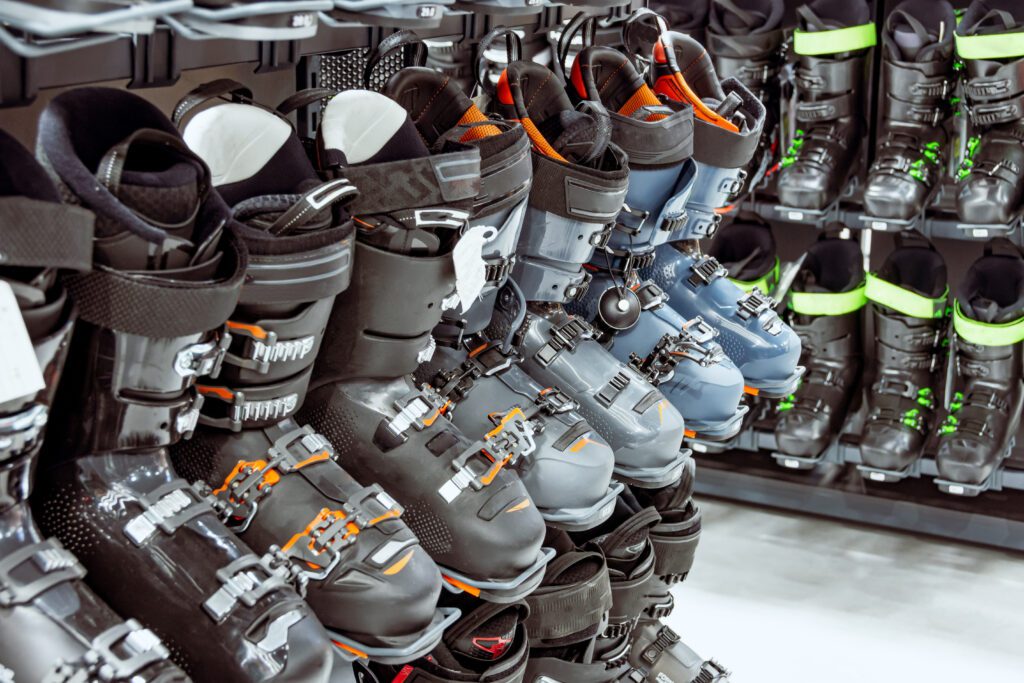
Most people spend time picking skis or jackets, but ski boots impact your experience more than anything else. A well-fitted boot transfers every movement from your legs directly to your skis. If boots are too tight, you’ll feel pain or numbness. If they’re too loose, you lose control and risk falling.
An uncomfortable boot can ruin a ski trip—even if you have top-quality skis. Painful feet, cold toes, or blisters distract you and drain your energy. On the other hand, comfortable boots let you ski longer and with better technique.
Understanding Ski Boot Types
There are different types of ski boots. Picking the right type makes your skiing easier and more enjoyable. Here are the main options:
Alpine (downhill) Ski Boots
Alpine ski boots are the most common. They’re designed for going downhill at ski resorts. These boots are stiff to give you strong control when turning or stopping. They fit into standard alpine bindings.
Alpine Touring (at) Boots
If you like to hike up mountains and ski down, alpine touring boots (also called randonnée or AT boots) are for you. They have a “walk mode” that lets your ankle move more for climbing uphill. But, they still lock in place for downhill skiing.
Freestyle Boots
Freestyle or park boots are made for tricks and jumps in terrain parks. They’re usually softer and more flexible, which helps absorb landings and makes them more forgiving.
Cross-country Ski Boots
These are for cross-country (Nordic) skiing. Cross-country boots are lightweight and flexible, giving you more freedom to move your ankles as you ski over flat or rolling terrain.
Women’s And Junior Boots
There are boots made especially for women and kids. Women’s boots often have a lower cuff to fit smaller legs and are warmer. Junior boots are smaller, lighter, and easier for children to manage.
Finding The Right Fit: Size And Shape
Fit is the most important factor when choosing ski boots. Even the best boot will cause trouble if it doesn’t match your foot.
How To Measure Ski Boot Size
Ski boots use mondopoint sizing. This is simply the length of your foot in centimeters. For example, if your foot is 26.5 cm long, you’ll look for a size 26.5 boot. Most people have never measured their feet in centimeters, so use a ruler or ask a ski shop to help.
But length isn’t the only thing that matters. The width (also called last) of the boot is just as important. If you have a wide or narrow foot, look for boots made to fit your shape.
Here’s a quick comparison of boot fit widths:
| Width (Last, mm) | Foot Type | Feel |
|---|---|---|
| 97-98 mm | Narrow | Precise, snug |
| 100-102 mm | Average | Comfortable |
| 104+ mm | Wide | Roomy |
Tips For A Good Fit
- Try boots on with ski socks (not thick regular socks).
- Your toes should gently touch the end when standing upright, but pull back when you bend your knees.
- Your heel should not lift when you flex forward.
- Walk around the store for 10–15 minutes to check for pressure points.
- If you feel pain quickly, the boots are not right for you.
- Remember, boots feel tighter in the shop and will loosen a bit after a few days of skiing.
Non-obvious insight: Many beginners buy boots too big because they feel more comfortable at first. But once the liners compress, these boots become sloppy and hard to control. Always start with a snug fit.
Flex: How Stiff Should Your Boots Be?
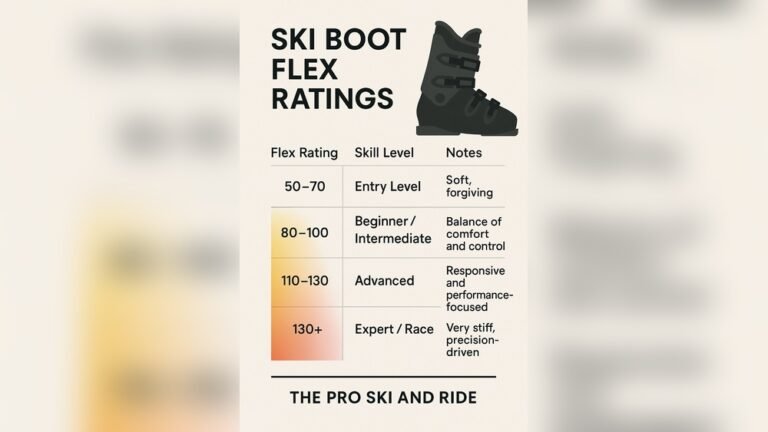
Flex is how hard it is to bend the boot forward. It’s measured by a flex index number, usually between 60 and 130. A higher number means a stiffer boot.
| Flex Index | Skier Type | Best For |
|---|---|---|
| 60–80 | Beginner | Comfort, easy turning |
| 90–110 | Intermediate | Balanced control |
| 120–130+ | Advanced/Expert | Maximum power, racing |
A softer boot is more forgiving and comfortable, good for beginners. A stiffer boot offers better control for aggressive or expert skiers. Your weight also matters—a heavier skier needs a stiffer boot than a lighter person of the same skill.
Practical example: A 65 kg beginner would likely enjoy a flex of 70–80, while a 90 kg advanced skier may prefer 120+.
Non-obvious insight: Flex ratings are not the same between brands. One company’s “100” may feel like another’s “90.” Always try them on instead of trusting the number alone.
Boot Liners: Comfort And Warmth
The liner is the soft, padded part inside the hard plastic shell. Liners keep your feet warm and help the boot fit better.
There are three common types:
- Non-moldable liners: Standard, basic comfort, lower price.
- Thermoformable liners: Can be heated and shaped to your foot in the shop.
- Custom-moldable liners: Highest comfort, shaped by professionals for a perfect fit.
Liners pack out (become thinner) over time, making boots feel looser. If you ski often, consider boots with thermoformable or custom liners.
Buckles And Straps
Most ski boots have 3 or 4 buckles and a top power strap. These keep your foot secure and help transfer energy to the ski.
- Four-buckle boots: More precise fit and control, common for all-mountain and racing boots.
- Three-buckle boots: Slightly lighter and easier to get on/off, often found on freestyle or beginner boots.
- Power strap: Adds support at the top, helps with forward flex.
Some boots use “micro-adjustable” buckles, letting you fine-tune the tightness. If you have high or low-volume feet, these can make a big difference.
Custom Footbeds And Insoles
Most stock footbeds are flat and offer little support. A custom insole can improve comfort, warmth, and performance. They match the shape of your foot and support your arch.
- Better alignment reduces fatigue
- Prevents foot pain and numbness
- Great for people with flat feet, high arches, or foot problems
You can get custom insoles made at most ski shops.
Ski Boot Categories By Ability And Use
Choosing boots for your skill level and skiing style is key. Here’s a breakdown to help guide your search:
Beginner
- Softer flex (60–80)
- Wider fit for comfort
- Simple buckles, easy entry/exit
- Focus on warmth and forgiveness
Intermediate
- Medium flex (90–110)
- Medium width, more precise fit
- More support and control
- Thermoformable liners common
Advanced/expert
- Stiff flex (120+)
- Narrow fit, close to foot shape
- Maximum response and power
- Custom liners, advanced features
Freestyle
- Softer flex
- Shock-absorbing features
- Lightweight and flexible
Touring
- Walk mode
- Rockered sole for walking
- Lighter construction
When To Buy Or Rent Ski Boots
If you’re new to skiing, you may wonder whether to rent or buy. Here’s a quick comparison:
| Renting | Buying |
|---|---|
| Cheaper for short trips | Better fit and comfort |
| No maintenance needed | Consistent performance |
| May not get perfect fit | Customizable to your foot |
| Less hygienic | Long-term investment |
Practical advice: If you ski more than 7–10 days per year, buying your own boots is usually worth it. You’ll get a better fit and avoid the “break-in” process every trip.
Common Mistakes To Avoid
Many first-time buyers fall into the same traps. Watch out for these mistakes:
- Choosing boots that are too big: A snug fit is necessary for control.
- Ignoring width/last: Not all boots fit the same width. Try different ones.
- Focusing only on price: Cheap boots can cause pain or performance issues.
- Skipping custom footbeds: These can solve many comfort problems.
- Buying without professional fitting: A boot fitter can spot problems you might miss.
Non-obvious insight: Your feet swell during a day of skiing. Try boots on in the afternoon or after walking to get a more realistic fit.
Getting Fitted By A Professional
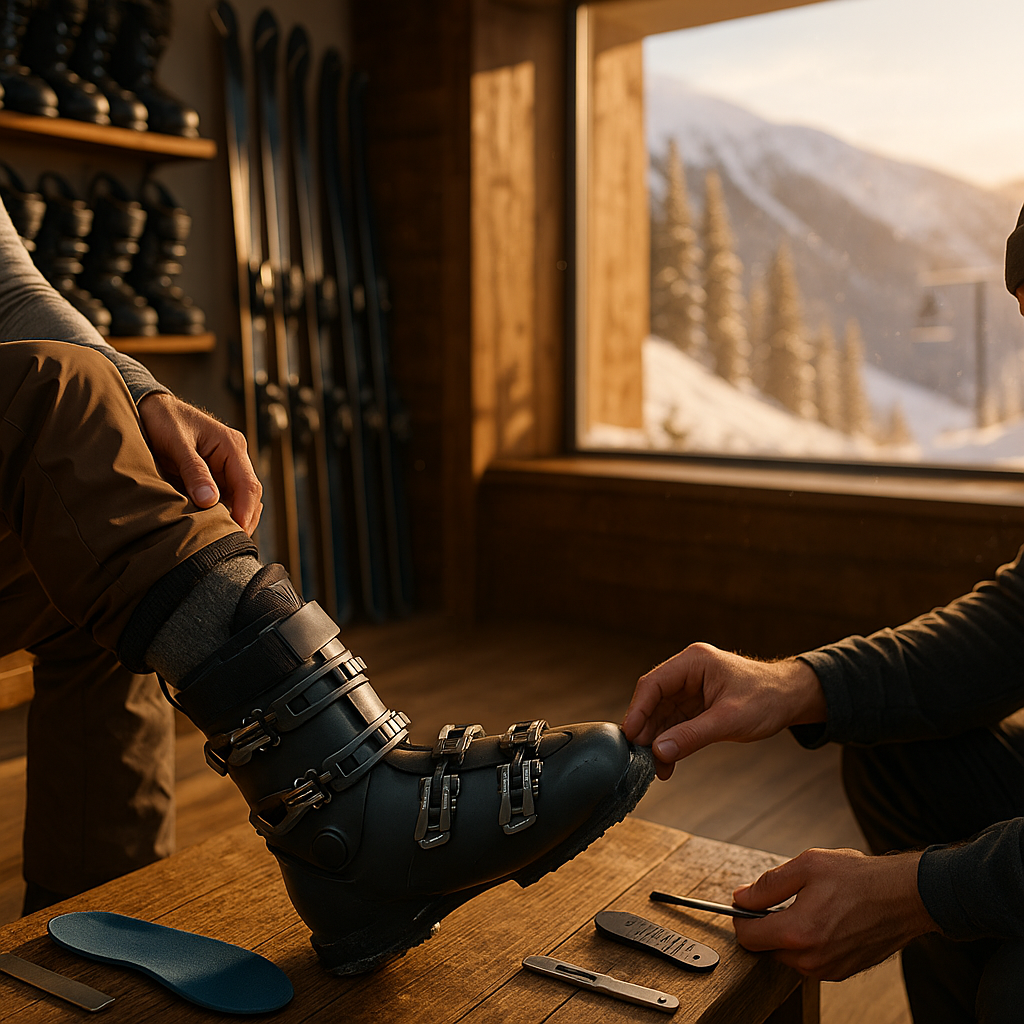
A skilled boot fitter can make all the difference. They’ll measure your feet, check your arches, and spot any special needs. They may suggest custom liners, footbeds, or minor shell adjustments to get the perfect fit.
Even if you buy online, try on boots in a store first to compare brands and models. Different brands fit differently—Salomon may be wider, while Lange or Atomic could be narrower.
If you have foot issues (like bunions or high arches), professional fitting is even more important.
Caring For Your Ski Boots
Good ski boots can last 5–10 years if you care for them:
- Always dry liners after skiing. Remove them from the shell and let them air out.
- Buckle the boots loosely when storing to keep their shape.
- Keep boots away from high heat (like radiators), which can damage liners and plastics.
- Check buckles and straps regularly for wear or damage.
Where To Buy Quality Ski Boots
Look for ski shops with expert boot fitters. Ask about return policies, custom fitting options, and liner molding. Avoid buying just by price online unless you know your exact fit and model.
For more details on boot types and fitting, the Wikipedia Ski Boot page offers a deep overview.
Frequently Asked Questions
What Is The Most Important Factor When Choosing Ski Boots?
The most important factor is fit. Boots that match your foot’s length, width, and shape will give you comfort and control. Don’t settle for boots that are too big or small.
How Do I Know If My Ski Boots Are Too Tight Or Too Loose?
If your toes are painfully pressed or your feet go numb, the boots are too tight. If your heel lifts up or your foot slides side-to-side, they’re too loose. A good fit feels snug but not painful.
Can I Use The Same Boots For Different Types Of Skiing?
It depends. Alpine boots are for downhill skiing. Touring boots are made for climbing. Cross-country boots are not compatible with alpine bindings. Some hybrid boots work for more than one style, but check compatibility before buying.
How Long Do Ski Boots Last?
Most ski boots last 5–10 years, depending on how often you ski and how well you care for them. Liners may wear out faster and can often be replaced separately.
Are Custom Footbeds Worth It?
Yes, for most people, custom footbeds improve comfort, support, and performance. They help prevent foot pain and fatigue, especially if you have unique foot shapes or ski often.
Choosing the right ski boots takes time, but the rewards are worth it. Comfortable, well-fitted boots let you ski longer, safer, and with more fun—no matter your level. Don’t rush the decision, and don’t be afraid to ask for expert help.
Your feet will thank you every run down the mountain.

