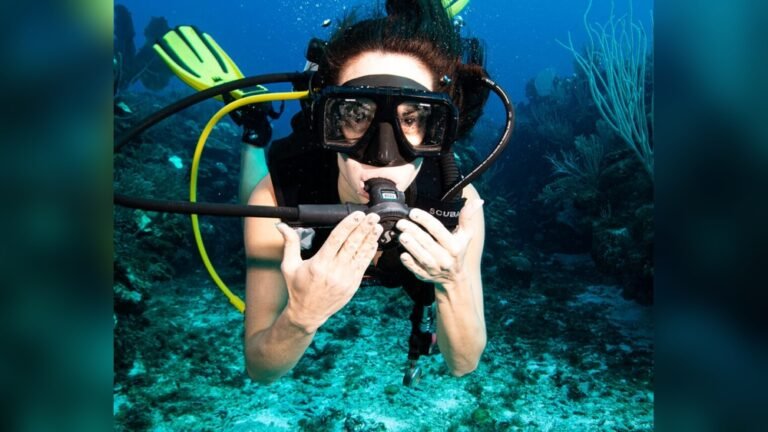
Breathing underwater is one of the most unique experiences you can have. When you first try scuba diving, even the simple act of taking a breath can feel new and a little intimidating. Many beginners worry: how do you breathe while scuba diving? Is it different from how you breathe on land? Can you run out of air? These are common questions, and understanding the answers can make your dives safer and more enjoyable.
This guide explains in clear, simple language how breathing works while scuba diving. You’ll learn about the equipment, the right breathing techniques, and common mistakes. You’ll also discover practical tips to help you stay calm and confident underwater. By the end, you’ll know exactly what to expect and how to handle your breathing, whether you’re a first-time diver or want to improve your skills.
The Basics Of Breathing Underwater
Scuba diving uses a special system called Self-Contained Underwater Breathing Apparatus (SCUBA). This system allows you to breathe air from a tank through a device called a regulator. The regulator delivers air at the same pressure as the water around you, so breathing feels almost as easy as on land.
Many people think scuba tanks are filled with pure oxygen. In reality, they usually contain compressed air, which is about 21% oxygen and 79% nitrogen—just like the air we breathe every day. Some advanced divers use different gas mixes, but beginners always start with normal air.
When you breathe in through the mouthpiece, air flows directly into your lungs. When you exhale, your breath leaves through a one-way valve, making bubbles in the water. You cannot breathe through your nose while using a standard scuba mask, so you must get used to mouth breathing.
Scuba Diving Equipment For Breathing
Your breathing experience depends a lot on the equipment you use. Here’s what matters most:
| Equipment | Main Function | Common Issues |
|---|---|---|
| Regulator | Delivers air to your mouth at water pressure | Leaks, free-flow, dry mouth |
| Scuba Tank | Stores compressed air | Low air, heavy weight |
| Mask | Keeps water out of your eyes and nose | Fogging, leaking |
Regulator
The regulator is your life support. It reduces the high-pressure air from your tank to a safe, breathable pressure. The second stage (mouthpiece part) gives you air “on demand” when you inhale. Most regulators are easy to breathe from, but older or poorly maintained ones can make breathing feel harder. Always test your regulator before diving.
Tank
The scuba tank holds your air. Standard tanks carry enough for a 30-60 minute dive, depending on your depth, breathing rate, and tank size. Divers should regularly check their air gauge during a dive. Running low on air is rare if you monitor your pressure.
Mask
A well-fitting mask is important because it prevents water from entering your nose. If water does get in, you can clear it by tilting your head back, pressing the top of the mask, and blowing out gently through your nose.
How To Breathe Correctly While Scuba Diving
Breathing underwater is not exactly the same as on land. Here are the key differences and techniques:
- Breathe slowly and deeply. Quick, shallow breaths waste air and can make you feel anxious. Slow breathing helps you relax and extends your dive time.
- Inhale through your mouth. The regulator fits between your lips. Breathing through your nose isn’t possible with a standard mask.
- Exhale completely. Make sure to breathe out fully. This keeps carbon dioxide from building up, which can make you feel tired or dizzy.
- Avoid holding your breath. On land, holding your breath is harmless. Underwater, it’s dangerous. As you move up (ascend), holding your breath can cause lung injuries because the air in your lungs expands. Always breathe continuously.
- Pause between breaths. A gentle pause after each exhale can help you relax and save air.
Example Breathing Pattern
A good underwater breathing pattern is:
- Breathe in slowly for 3–4 seconds through your mouth
- Breathe out gently for 4–5 seconds
- Pause briefly
- Repeat
Practicing this rhythm on land before your dive can make it feel more natural underwater.
Why Slow Breathing Is So Important
Slow breathing is more than just a way to save air. It also helps you:
- Stay calm: Slow breaths signal your body that you’re safe, lowering anxiety.
- Control buoyancy: Fast, shallow breaths make you float up and down more, which can be uncomfortable and unsafe.
- Reduce air consumption: The slower you breathe, the longer your air lasts.
Many experienced divers use meditation or yoga breathing techniques before a dive. This helps them stay relaxed and focused.
Dealing With Common Breathing Problems
Even with good technique, problems can happen. Here’s how to handle them:
Feeling Out Of Breath
This usually happens if you swim too fast, feel anxious, or forget to breathe slowly. Stop, grab onto something stable (like a rock or the anchor line), and focus on slow, deep breaths until you feel better.
Dry Mouth
Regulators can dry out your mouth. To reduce this, stay hydrated before your dive and avoid salty or spicy foods.
Water In The Regulator
If you feel water in your mouthpiece, don’t panic. Blow out sharply to clear it, or press the regulator’s purge button while exhaling.
Mask Squeeze
If you forget to breathe out through your nose, your mask may press uncomfortably against your face as you go deeper. Gently exhale through your nose to equalize the pressure.
How Depth Changes Breathing
The deeper you go, the higher the pressure. At 10 meters (33 feet), the pressure is double that at the surface. Your regulator adjusts for this, so breathing always feels natural—but there are two important effects:
- You use more air. Air is denser at depth, so each breath uses more air from your tank.
- Nitrogen absorption increases. More nitrogen dissolves in your blood at higher pressure, which is why you must follow dive tables and not stay too long at depth.
Here’s how air usage changes with depth:
| Depth (meters) | Pressure (bar) | Air Used per Minute |
|---|---|---|
| 0 (surface) | 1 | 1x |
| 10 | 2 | 2x |
| 20 | 3 | 3x |
| 30 | 4 | 4x |
So, at 20 meters, you use air three times faster than at the surface.
Equalizing Pressure While Breathing
Your body has air spaces: ears, sinuses, and mask. As you go deeper, you must equalize the pressure to avoid pain or injury.
- For your ears, pinch your nose and gently blow (the Valsalva maneuver) as you descend.
- For your mask, breathe out through your nose.
- Never force it—if you feel pain, stop descending until you equalize.
If you have a cold or blocked sinuses, don’t dive. You won’t be able to equalize easily.
Special Breathing Situations In Scuba Diving
Some diving situations require extra care with breathing:
Ascending (going Up)
You must never hold your breath while ascending. As you rise, air expands in your lungs. If you hold your breath, this can cause lung overexpansion injuries (pulmonary barotrauma), which are extremely serious. Always breathe normally and continuously.
Emergency Out-of-air
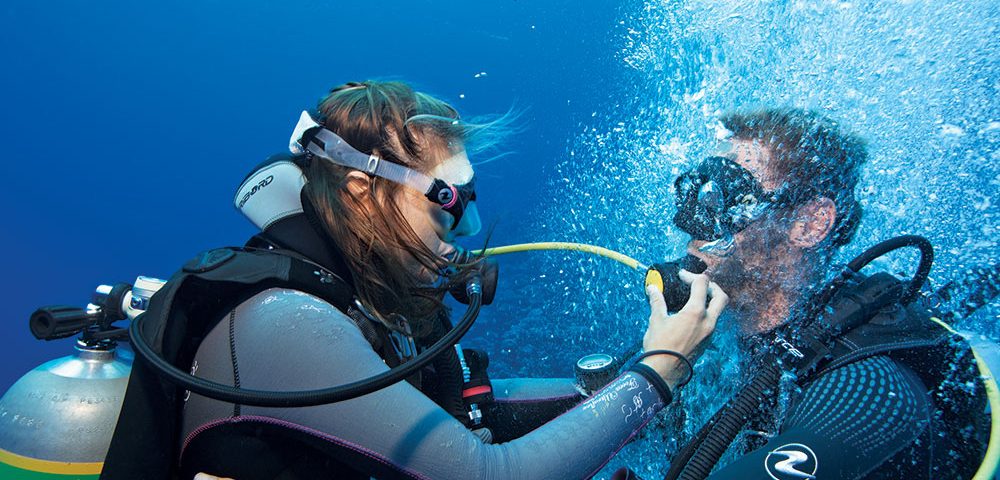
If you ever run out of air, you can use your buddy’s alternate air source (an “octopus”) or surface with a controlled emergency ascent (exhaling gently all the way). These skills are practiced in every dive course.
Stress Or Panic
If you feel anxious, focus on slow, steady breathing. Signal your buddy if you need help. Panic is rare but dangerous because it can lead to rapid breathing or even removing your mask or regulator.
Tips For Improving Underwater Breathing
- Practice breathing through your mouth before your dive. Try using a snorkel in a pool.
- Swim slowly and calmly. Fast swimming increases breathing rate and air use.
- Relax your body. Tension uses more oxygen.
- Stay streamlined. Good trim and body position reduce effort and help you breathe easier.
- Monitor your air supply. Check your gauge every few minutes so you don’t worry about running out.
- Use your fins efficiently. Kick from the hips, not the knees, to save energy and air.
- Take a specialty course. Courses like “Peak Performance Buoyancy” teach advanced breathing and air-saving techniques.
Common Mistakes Beginners Make
- Holding their breath: This is the most dangerous mistake. Always keep breathing.
- Breathing too fast: Wastes air and can cause anxiety.
- Not equalizing early and often: Waiting until you feel pain to equalize can cause injury.
- Ignoring air gauge: Some beginners forget to check their air and risk running low.
- Swimming too hard: Move slowly and let your breathing set your pace.

Non-obvious Insights Most Beginners Miss
1. Breathing affects buoyancy. Many new divers don’t realize that the size of their lungs changes their position in the water. When you take a deep breath, you rise a little. When you breathe out, you sink a bit. Fine-tuning your buoyancy with your breath (sometimes called “lung power”) is a skill that makes diving easier and more comfortable.
2. Exhaling slowly helps clear water from your mask. If a little water enters your mask, exhaling slowly through your nose while looking slightly up often clears it without stopping your dive.
3. Anxiety changes how your brain interprets breathing resistance. Underwater, if you are nervous, even normal breathing can feel “hard.” Practicing relaxation and trusting your equipment helps you overcome this.
Comparing Scuba Breathing To Snorkeling And Freediving
Many people think scuba is similar to snorkeling or freediving, but there are important differences:
| Activity | Breathing Method | Key Difference |
|---|---|---|
| Scuba Diving | Mouth, through regulator | Breathes pressurized air, can stay underwater for long periods |
| Snorkeling | Mouth, through snorkel | Breathes surface air, must stay near surface |
| Freediving | Mouth or nose, holds breath | No air supply, single breath per dive |
Preparing For Your First Dive
If you’re about to try scuba for the first time, here are some steps to make breathing easy:
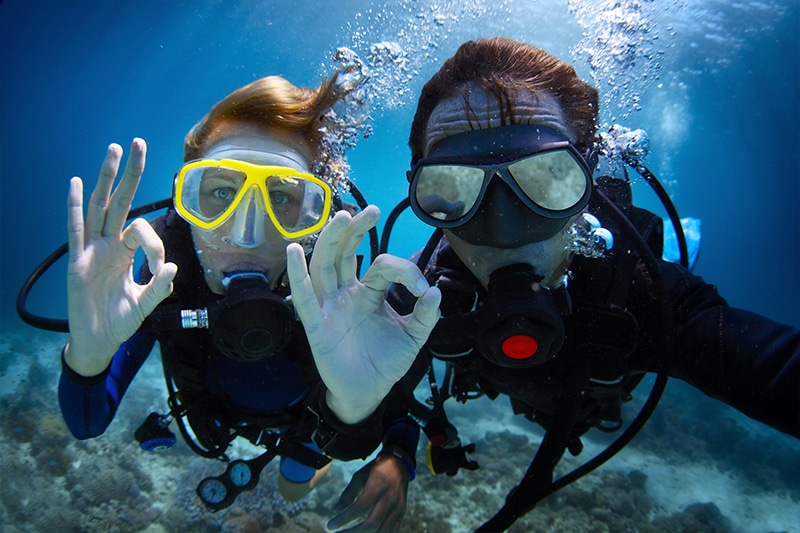
- Get comfortable with the gear: Practice using the mask and regulator in shallow water before your first real dive.
- Communicate with your instructor: If you have any concerns or questions about breathing, tell your instructor right away.
- Take your time: Don’t rush. Spend time at the surface getting used to breathing through the regulator.
- Remember to relax: Most breathing problems go away when you stay calm.
For more in-depth information, you can check the Wikipedia page on scuba diving.
Frequently Asked Questions
How Long Can You Breathe Underwater With A Scuba Tank?
It depends on tank size, depth, and how fast you breathe. Most beginners can stay underwater for 30–60 minutes with a standard tank at shallow depths. Deeper dives use air faster. Always check your air gauge and follow your instructor’s advice.
Can You Breathe Through Your Nose While Scuba Diving?
No, you cannot breathe through your nose with a standard scuba mask and regulator. All breathing is done through your mouth. Some full-face masks allow nose breathing, but these are rare for beginners.
What Happens If You Hold Your Breath While Scuba Diving?
Holding your breath is dangerous because as you ascend, the air in your lungs expands. This can cause lung injury (barotrauma) or even an air embolism, which is life-threatening. Always breathe continuously and never hold your breath underwater.
Why Does Breathing Feel Harder At Depth?
At greater depths, water pressure increases, and the air you breathe is denser. Your regulator adjusts the pressure, but you might feel more resistance when inhaling. Slow, relaxed breaths help make it easier.
How Do You Know If You’re Running Out Of Air?
Your scuba setup includes an air pressure gauge. Check it often during your dive. When you reach the reserve level (usually 50 bar or 700 psi), it’s time to end your dive and surface calmly. Never wait until your tank is empty.
Breathing underwater is a skill that every diver can learn. With practice and the right knowledge, it becomes a natural, enjoyable part of exploring the ocean. Remember to stay relaxed, trust your equipment, and always follow safe diving practices.
