Skiing is an exciting sport that gives you a rush of speed and the beauty of snowy mountains. But with the thrill comes the risk of getting hurt. Many skiers, even those with experience, can end up with injuries if they don’t take the right steps to stay safe.
The good news is that most skiing injuries can be avoided by following practical advice and being prepared. Whether you’re planning your first ski trip or have been skiing for years, it’s important to learn how to protect your body on the slopes.
This guide will show you how to avoid injuries while skiing, with clear tips, examples, and expert advice you can use before, during, and after your time on the mountain.
Understand The Most Common Ski Injuries
Knowing what types of injuries happen most often can help you avoid them. The most frequent skiing injuries include:
- Knee ligament tears, especially to the ACL (anterior cruciate ligament)
- Wrist fractures and hand injuries from falls
- Shoulder dislocations
- Head injuries (including concussion)
- Thumb sprains (often called skier’s thumb)
- Lower leg and ankle injuries
According to the American College of Sports Medicine, knee injuries make up about 30-40% of all skiing injuries. Wrist and thumb injuries are common, especially for beginners who tend to fall more.
Choose The Right Equipment
Using the correct gear is one of the best ways to reduce your risk of injury. Poorly fitted boots or outdated bindings can make injuries much more likely.
Ski Boots
Good ski boots should be snug but not painful. They support your ankles and help control your skis. Avoid borrowing boots that don’t fit, as loose boots increase the risk of ankle injuries.
Skis And Bindings
Skis should match your height, weight, and skill level. Bindings must be adjusted by a professional so they release during a fall, which protects your knees. Outdated bindings or incorrect settings are a major cause of leg injuries.
Helmets And Protective Gear
A helmet is essential to protect your head. Modern ski helmets are lightweight, warm, and comfortable. Wrist guards, knee pads, and padded shorts can add protection, especially for children or beginners.
Here is a quick comparison of gear features:
| Equipment | Main Protection | Common Beginner Mistake |
|---|---|---|
| Helmet | Head injury prevention | Wearing a bike helmet instead |
| Ski boots | Ankle and lower leg support | Boots too loose or too tight |
| Bindings | Knee and leg safety during falls | Ignoring professional adjustment |
| Wrist guards | Wrist and hand protection | Not using them when learning |
Warm Up And Stretch Before Skiing
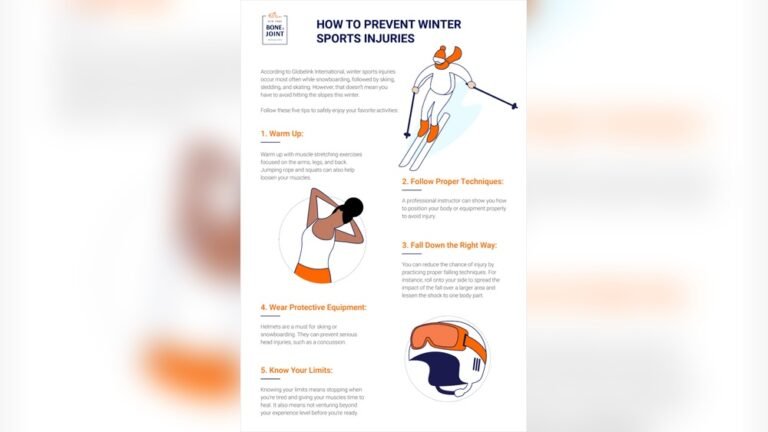
Your muscles, joints, and ligaments work hard while skiing. Cold, tight muscles are much more likely to get injured. Warming up boosts your blood flow and makes your body ready for action.
Start with 5-10 minutes of light aerobic activity like walking, gentle jogging, or jumping jacks. Then do stretches for your legs, hips, back, and shoulders. Focus on the muscles you’ll use the most, such as:
- Quadriceps (front of thigh)
- Hamstrings (back of thigh)
- Calves
- Back muscles
Research shows that warming up reduces injury risk by up to 50% in high-speed sports.
Take Lessons And Know Your Limits
Proper technique is key to skiing safely. Beginners often get hurt because they don’t know how to fall, turn, or stop correctly. Taking a lesson with a certified instructor will help you learn:
- How to balance and shift your weight
- How to fall safely (try to relax and keep limbs together)
- How to get up after a fall
- How to control your speed on different slopes
Even experienced skiers can benefit from a refresher lesson, especially if they have not skied in a while.
Pushing past your limits—going too fast, trying tough slopes, or skiing in bad weather—greatly increases your chance of injury. Listen to your body, and don’t be afraid to take it slow.
Wear Layers And Stay Warm
Cold muscles and numb fingers or toes can lead to accidents. Hypothermia and frostbite are also real dangers on the mountain. Wear layers to keep your body temperature steady:
- Base layer: Wicks sweat away from your skin (avoid cotton).
- Insulation layer: Keeps you warm (like fleece).
- Outer layer: Protects from wind and water (waterproof jacket and pants).
Don’t forget gloves, a hat under your helmet, and ski socks. Staying warm helps your muscles work better and keeps your focus sharp.
Use Proper Technique
Good form makes skiing safer and more enjoyable. Here are a few technique tips:
- Keep your knees slightly bent and weight centered over your skis.
- Don’t lean back—this puts stress on your knees and can cause falls.
- Use your poles for balance, not for stopping yourself.
- Look ahead, not just at your skis, to spot obstacles early.
Many injuries happen when skiers get tired and let their technique slip. If you feel your form getting worse, take a break.
Stay Hydrated And Eat Well
Skiing burns a lot of energy. Dehydration and low blood sugar can make you dizzy, slow your reaction time, and increase your risk of falling. Drink water regularly throughout the day—don’t wait until you’re thirsty.
Eat a good breakfast with complex carbs (like oatmeal or whole-grain bread) and some protein (eggs, yogurt, or nuts). Bring snacks like energy bars or fruit for the slopes.
Here’s a quick look at how food and drink can affect your performance:
| What You Eat/Drink | Effect on Skiing | Common Problems |
|---|---|---|
| Water | Maintains focus and energy | Forgetting to drink in cold weather |
| Sugary snacks | Quick energy, then crash | Sudden fatigue mid-ski |
| Balanced meal | Steady energy | Skipping breakfast |
Know The Ski Area And Follow Rules
Every ski resort posts signs, maps, and rules for a reason. Going off marked trails or ignoring warning signs is dangerous. Study the trail map before you ski. Note which runs are for beginners, intermediates, or experts. Stay on trails that match your skill level.
Learn the meaning of slope signs:
- Green circle: Easy (beginner)
- Blue square: Intermediate
- Black diamond: Advanced/expert
Respect closed areas and slow zones. Many accidents happen in crowded or off-limit areas.

Ski With A Buddy
Skiing with a partner is much safer than going alone. If you fall or get injured, your buddy can help or call for help. Agree on meeting points and check in with each other often.
If you must ski solo, carry a fully charged phone and let someone know your plans.
Take Breaks To Avoid Fatigue
Fatigue is a hidden cause of many skiing injuries. Tired muscles lose strength and coordination. Most injuries happen in the afternoon, especially after lunch or during the last run of the day. Don’t push through exhaustion—take breaks, eat, and drink water.
Aim to ski for 60–90 minutes, then rest for 15–20 minutes.

Learn How To Fall Safely
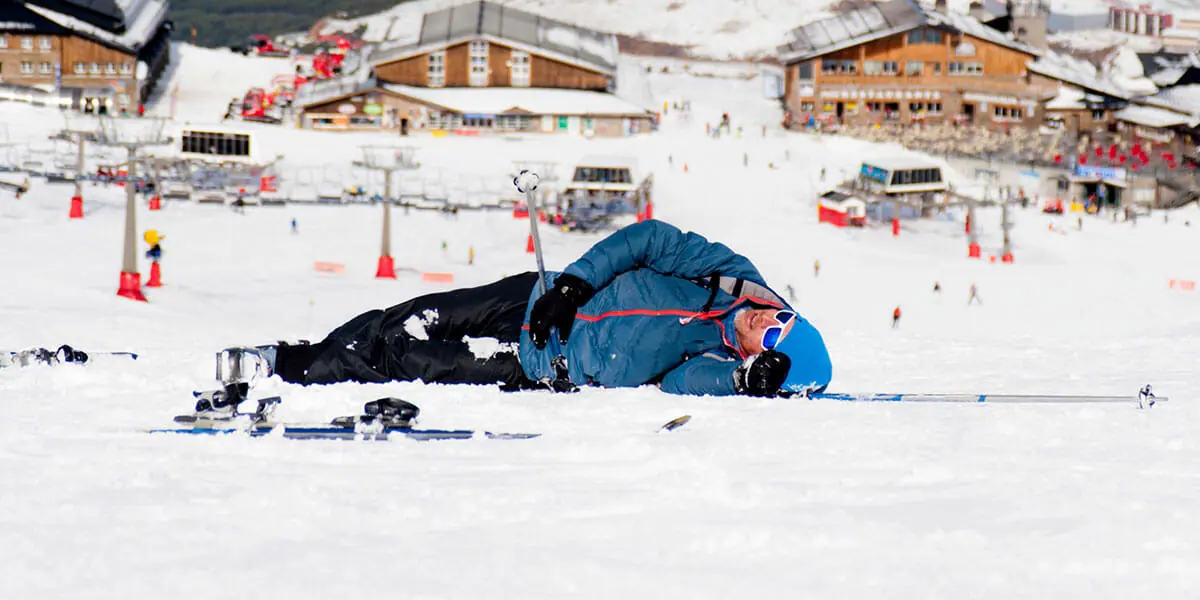
Falling is a normal part of skiing. Learning how to fall correctly can help you avoid serious injuries.
- Try to keep your limbs close to your body.
- Don’t try to break your fall with your hands (this can cause wrist injuries).
- Let your skis come off if you fall hard—bindings are designed for this.
- After a fall, check yourself for pain before getting up.
Many beginners make the mistake of stiffening up or reaching out during a fall, which leads to more injuries.
Pay Attention To Weather And Snow Conditions
Conditions on the mountain change quickly. Icy slopes, heavy snow, fog, or poor visibility all make skiing more dangerous. Always check the weather forecast and avalanche risk before you head out.
If conditions are bad (ice, low visibility, or heavy snowfall), stick to easier slopes or take a break. Don’t be afraid to end your day early if it feels unsafe.
Be Aware Of Other Skiers
Ski slopes can be crowded, especially on weekends and holidays. Collisions with other skiers cause many injuries. Stay in control and give space to those below you, as they can’t see you coming. Slow down when approaching crowded areas, lift lines, or intersections.
Use Sun Protection
Snow reflects sunlight, which increases your risk of sunburn—even on cloudy days. Wear sunscreen with at least SPF 30, and apply it to your face, ears, and neck. Use goggles or sunglasses with UV protection to prevent eye damage and improve visibility.
Prepare For Emergencies
Carry a small first aid kit, your phone, and any needed medications. Know the location of ski patrol and how to call for help. Most resorts have emergency numbers posted near lifts and main buildings.
If you see someone injured, don’t move them unless necessary. Call for help and give ski patrol the location using trail names or numbered markers.
Don’t Ignore Pain Or Minor Injuries
Skiers sometimes ignore pain and keep going, hoping it will go away. This can turn a small problem into a serious injury. If you feel pain, swelling, or stiffness, stop skiing and get it checked out. Early rest or treatment can prevent bigger problems later.
Two Insights Beginners Often Miss
- Ski tuning matters: Dull or damaged ski edges make it harder to control speed and turns, especially on ice. Check and tune your skis at least once per season or before a big trip.
- Altitude effects: High altitudes can cause dehydration and fatigue faster than you expect. Drink extra water and take it easy your first day on the mountain to let your body adjust.
Frequently Asked Questions
What Should I Do If I Feel Pain While Skiing?
Stop immediately and assess the pain. If it’s sharp or you can’t move a joint, don’t continue skiing. Seek help from ski patrol or visit the resort’s medical center. Ignoring pain can make injuries worse.
Are Helmets Really Necessary For Skiing?
Yes, helmets reduce head injuries by up to 60%. They are now standard at most resorts and are required for children in many places. Always choose a helmet designed for skiing, not biking or other sports.
How Can I Tell If My Ski Bindings Are Set Correctly?
Bindings should be set by a qualified technician based on your weight, height, skill level, and boot size. If your skis don’t release during falls, or release too easily, have them checked before your next outing.
How Often Should I Take Breaks While Skiing?
Aim to take a short break every 60–90 minutes. This helps prevent fatigue and keeps your reflexes sharp. Most injuries happen when skiers are tired, especially at the end of the day.
Where Can I Learn More About Ski Safety?
For more in-depth safety information and tips, visit the official website of the National Ski Areas Association.
Skiing is about having fun and enjoying the mountains, but safety should always come first. By preparing well, using the right gear, and listening to your body, you can avoid most injuries and make every ski trip a great experience.
Stay alert, ski smart, and you’ll be ready for many adventures on the snow.
